Sanctuary for the Abused
Saturday, February 25, 2023
Why Not Everyone Can Just "Move On" and "Get Over It"

Victim, survivor, victimology, victim abuse... why are victims being told to deny their reality?
You have been methodically and diabolically abused and suddenly you hear "don't be a victim, choose to be a survivor." The concept that a victim can always consciously choose how to proceed, is wrong.
The phrase, "move on with your life" is common. In a commanding, offhand and arrogant tone, those who have fought and lost a custody battle, their home, car and savings, family, job and may be suffering physically (adrenal fatigue, fibromyalgia, chronic fatigue syndrome, lupus, crohn's disease, etc. are common) are stunned to be told, "well, better move on with your life."
The entire infrastructure of a life is often destroyed leaving the victim, stunned, numb, hypervigilant, indigent, betrayed and perplexed as to why they are expected to "choose" to not be a victim. Give them a time machine and this can be done. Give them revictimization abuse and it cannot. They are victims.
It's time to give that word back its status and in doing so, give respect to the abused. Respect comes in the form of providing help. An empowering, compassionate approach to those who have been stripped of dignity through repeated abuse in courts of law, or by their partners, begins with recognizing and defining the situation of the victim.
What is the definition of a "victim"?
According to the dictionary a victim is: One who is harmed by, or made to suffer from an act, circumstance, agency, or condition; a person who is tricked, swindled, or taken advantage of.
The victim of a narcissist or abuser is traumatized. There are biochemical changes in the body and structural changes in the brain. Thought patterns change, memories are lost, immune system strongly affected, brain cells die, there is chest pain, muscle pain, feelings are intense and emotions chaotic. Victimization is never deserved.
Why are victims revictimized?
So why does someone brutalized, abused, and traumatized have to be afraid of the word "victim" ? Because it's politically correct to say, "I'm not a victim, I'm a survivor." Much the same way, people think the capitalist economy gives everyone an equal chance to become wealthy (which of course it does not - if everyone started with the same funding, self esteem, contacts, educational background, health, then that would be true) but when the playing field is not level some have an advantage.
Not everyone who is the victim of emotional, verbal, and narcissistic abuse are the same. Some have more resiliency than others. Some are numb, some are without any resources or support. Many have physiological changes that need to be addressed. And when those who need help come looking for it, instead of being welcomed, they find "helpers" that tell them they are responsible for their healing and they better choose it now or they will always be a victim and never a survivor. These people are revictimizing those they want to help because "choice" is NOT always an option.
Dr. Frank Ochberg, Harvard trained MD and trauma expert, says our culture now disparages, blames, isolates, and condemns someone for being a victim.We must reclaim the word "victim" and renew our commitment to those who are victims. We should examine the role of a victim impact statement and victim advocate for those who are traumatized emotionally as well as from a criminal act.
Are you being victimized again by someone who says, "if you won't stop being a victim. I won't help you"? Maybe your attorney, therapist. siblings, or friends are claiming you can just choose to stop being a victim. Maybe they think you can start a company without money, and buy a house with bad credit. Maybe they don't know what they are talking about.
As a victim of any kind of abuse you deserve:
1. Compassion
2. Validation
3. Freedom from therapeutic verbal abuse
4. A support team to open doors to resources
5. A friend, therapist or counselor who can teach you the skills to rebuild your life.
Depending on who you are, this may take a long time or not. Variables include amount and length of abuse, health, supportive family or not, finances, genetic explanatory style (optimism or pessimism), coping skills you may already have and many others. As a victim, you have the right to say, "STOP" to those who blame the victim. An entire self help industry has arisen that believes if you just really really wanted to, you can be happy and healthy and fully functional as soon as you choose to be. A starting point for recovery are post traumatic stress sites. There you will find trained and compassionate support people with articles that explain trauma healing methods.
The Scientific Basis of Healing, Happiness and Recovery
It doesn't matter if you call yourself a victim, survivor or Martian. No one should deny you victim status. It is what is. A victim is not a slothlike creature, nor stupid. Nor is a victim responsible for what happened to her and we must stop worrying about language and start helping. A victim is a person with a life in chaos. What matters is that you get the help you need and the compassionate trained person to give you the skills.
The good news is that happiness is trainable, resiliency comes back and psychologists are moving from the Freudian model which has dominated psychology for too long and was wrong to boot, to a model that moves from pathology as the dominant scheme. The process of de-traumatization begins with validation. It then moves to retraining explanatory style. Depending on the depth and time of the abuse, it may take a long or short time to process to empowerment and control. IT IS NOT NECESSARY to analyze every event. It IS necessary to be heard and listened to and to tell your story. Validation is critical.
SOURCE
Labels: abuse survivors, blame the victim, cognitive dissonance, denial, empower, get over it, move on, narcissism, psychopathy, ptsd, sociopathy


Monday, August 01, 2022
"Get Over It"
Neuroscientistific research shows that our memory is strongest and lasts the longest when our emotions are heightened. This helps explain why we might remember every nuance of our wedding day or our valedictory speech in college.
It also holds true for our memories of traumatic events such as abuse or even one-time events such as severe accidents.
Trauma and abuse seem etched in people’s memories, while “important” information, such as remembering the Capitols of the states, is more easily forgotten. Often, treatment techniques used in the treatment of PTSD (and other disorders such as depression and anxiety which are sometimes related to painful memories), assume that traumatic memories are the hardest to let go of.
Now, new research seems to show that if you really want to forget a memory—you might be able to. Researcher Gerd Waldhauser from Lund University in Sweden says that we can learn to control our memory in the same way as we can control our motor impulses.
EEG measures of the brain show that the same parts of the brain are activated when we stop our motor impulses as when we suppress a memory. Waldhauser believes that just as we can practice restraining motor impulses, we can also actively train ourselves to repress memories and maybe even forget painful or traumatic events.
In general, science says that some of our less-necessary memories are “erased” when current events or other information need new “space” in which to “write” new memories. But emotionally-charged memories (both positive and negative) seem to stubbornly hang on, and sometimes, as in the case of PTSD, haunt us.
Therapists and their clients know that painful memories can also be suppressed or repressed to the point of near-total forgetfulness. In some cases, patients might have to access these painful memories in order to come to a deeper understanding of why they feel/act the way they do. When uncovering these memories, they sometimes feel so “new” and raw that they can, in effect, be re-traumatized all over again.
Traumatized patients often have a hard time coping with everyday life, let alone the work they need to do in order to uncover and resolve painful memories. That’s why many therapists who work with victims of trauma and abuse prefer to first focus on helping the patient build coping skills before uncovering and exploring the painful past.
Not every inability to cope is linked to a traumatic memory. Sometimes many years of maladaptive conditioning and numerous instances of inappropriate messages from caregivers “build up”.
A tip about trauma, memory, and coping skills: If you are involved in any way (as a family member, friend or even therapist), with someone who seems to be “stubbornly” clinging to a painful memory, there’s a right way and a wrong way to help them.
It comes down to a fine line between gently but repeatedly encouraging someone in their efforts to build proactive coping skills and/or a more positive outlook OR telling them to “get over it” and “move on.” The first is about the needs of the person who is suffering; the second is about your needs.
Richard Zwolinski, LMHC, CASAC is the author of Therapy Revolution: Find Help, Get Better, and Move On Without Wasting Time or Money and is an internationally licensed psychotherapist and addiction specialist with over 25 years experience as well as a consultant to organizations and companies in the fields of mental health and addiction.
SOURCE
Labels: bullying, complex ptsd, cruelty, dismissed, get over it, invalidated, ptsd
Saturday, August 01, 2020
WHY DOES IT TAKE SO LONG TO GET OVER A PATHOLOGICAL PARTNER?
by Peace
Relationships with psychopaths take an unusually long time to recover from. Survivors often find themselves frustrated because they haven't healed as fast as they'd like. They also end up dealing with friends & therapists who give them judgmental advice about how it's "time to move on".
Whether you were in a long-term marriage or a quick summer fling, the recovery process will be the same when it comes to a psychopathic encounter. It takes at least 18-24 months to get your heart back in a good place, and even after that, you might have tough days. I certainly do!
The important thing here is to stop blaming yourself. Stop wishing it would go faster. Stop thinking that the psychopath somehow "wins" if you're still hurting. They are out of the picture now. This journey is about you. If you come to peace with the extended timeline, you'll find this experience a lot more pleasant. You can settle in, make some friends, and get cozy with this whole recovery thing.
So why is it taking so long?
You were in love
Yes, it was manufactured love. Yes, your personality was mirrored and your dreams manipulated. But you were in love. It's the strongest human emotion & bond in the world, and you felt it with all your heart. It is always painful to lose someone you loved - someone you planned to be with for the rest of your life.
The human spirit must heal from these love losses. Regardless of your abuser's intentions, your love was still very real. It will take a great deal of time and hope to pull yourself out of the standard post-breakup depression.
You were in desperate love
Here's where we branch off from regular breakups. Psychopaths manufacture desperation & desire. You probably worked harder for this relationship than any other, right? You put more time, energy, and thought into it than ever before. And in turn, you were rewarded with the nastiest, most painful experience of your life.
In the idealization phase, they showered you with attention, gifts, letters, and compliments. Unlike most honeymoon phases, they actually pretended to be exactly like you in every way. Everything you did was perfect to them. This put you on Cloud 9, preparing you for the identity erosion.
You began to pick up on all sorts of hints that you might be replaced at any time. This encouraged your racing thoughts, ensuring that this person was on your mind every second of the day. This unhinged, unpredictable lifestyle is what psychopaths hope to create with their lies, gas-lighting, and triangulation.
By keeping them on your mind at all times, you fall into a state of desperate love. This is unhealthy, and not a sign that the person you feel so strongly about is actually worthy of your love. Your mind convinces you that if you feel so powerfully, then they must be the only person who will ever make you feel that way. And when you lose that person, your world completely falls apart. You enter a state of panic & devastation.
The Chemical Reaction
Psychopaths have an intense emotional & sexual bond over their victims. This is due to their sexual magnetism, and the way they train your mind to become reliant upon their approval.
By first adoring you in every way, you let down your guard and began to place your self worth in this person. Your happiness started to rely on this person's opinion on you. Happiness is a chemical reaction going off in your brain - dopamine and receptors firing off to make you feel good.
Like a drug, the psychopath offers you this feeling in full force to begin with. But once you become reliant on it, they begin to pull back. Slowly, you need more and more to feel that same high. You do everything you can to hang onto it, while they are doing everything in their power to keep you just barely starved.
Triangulation
There are thousands of support groups for survivors of infidelity. It leaves long-lasting insecurities and feelings of never being good enough. It leaves you constantly comparing yourself to others. That pain alone takes many people out there years to recover from.
Now compare that to the psychopath's triangulation. Not only do they cheat on you - they happily wave it in your face. They brag about it, trying to prove how happy they are with your replacement. They carry none of the usual shame & guilt that comes with cheating. They are thrilled to be posting pictures and telling their friends how happy they are.
I cannot even begin to explain how emotionally damaging this is after once being the target of their idealization. The triangulation alone will take so much time to heal from.
You have encountered pure evil
Everything you once understood about people did not apply to this person. During the relationship, you tried to be compassionate, easy-going, and forgiving. You never could have known that the person you loved was actively using these things against you. It just doesn't make any sense. No typical person is ready to expect that, and so we spend our time projecting a normal human conscience onto them, trying to explain away their inexplicable behavior.
But once we discover psychopathy, sociopathy, or narcissism, that's when everything starts to change. We begin to feel disgusted - horrified that we let this darkness into our lives. Everything clicks and falls into place. All of the "accidental" or "insensitive" behavior finally makes sense.
You try to explain this to friends and family members - no one really seems to get it. This is why validation matters. When you come together with others who have experienced the same thing as you, you discover you were not crazy. You were not alone in this inhuman experience.
It takes a great deal of time to come to terms with this personality disorder. You end up having to let go of your past understanding of human nature, and building it back up from scratch. You realize that people are not always inherently good. You begin to feel paranoid, hyper-vigialant, and anxious. The healing process is about learning to balance this new state of awareness with your once trusting spirit.
Your spirit is deeply wounded
After the eventual abandonment, most survivors end up feeling a kind of emptiness that cannot even be described as depression. It's like your spirit has completely gone away. You feel numb to everything and everyone around you. The things that once made you happy now make you feel absolutely nothing at all. You worry that your encounter with this monster has destroyed your ability to empathize, feel and care.
I believe this is what takes the longest time to recover from. It feels hopeless at first, but your spirit is always with you. Damaged, for sure, but never gone. As you begin to discover self-respect & boundaries, it slowly starts to find its voice again. It feels safe opening up, peeking out randomly to say hello. You will find yourself grateful to be crying again, happy that your emotions seem to be returning. This is great, and it will start to become more and more consistent.
Ultimately, you will leave this experience with an unexpected wisdom about the people around you. Your spirit will return stronger than ever before, refusing to be treated that way again. You may encounter toxic people throughout your life, but you won't let them stay for very long. You don't have time for mind games & manipulation. You seek out kind, honest, and compassionate individuals. You know you deserve nothing less.
This new found strength is the greatest gift of the psychopathic experience. And it is worth every second of the recovery process, because it will serve you for the rest of your life.
If you're worried that your recovery process is taking too long, please stop worrying. You've been through hell and back - there is no quick fix for that. And what's more, when all is said and done, these few years will be some of the most important years of your life.
from this fantastic site
Labels: bad relationship, cruel, damaged, devalue, discard, get over it, healing, idealize, move on, narcissism, narcissist, no empathy, pathological, psychopath, psychopathy, ptsd, recovery, sociopath, sociopathy
Tuesday, July 02, 2019
Blaming the Victim

The first thing the victims of narcissists need to know is that they are not to blame.
Not one bit.
In other words, he didn't get mad because dinner was was late. She didn't blow up because you are "too this" or "too that." You didn't "ask for it" by speaking up and saying that you deserved some attention and respect.
The narcissist attacked you just because you are there, period. Don't you have a right to be there?
Let's get real. Narcissists think they have a right to punish you just for being the way you are. Think, don't you have the right to be the way you are? Do you have to be some character in the narcissist's fiction that conforms to his or her specifications?
Does that make any sense? That's as hateful as the crime against humanity of attacking people just for being a certain KIND or nationality.
The narcissist attacks because he or she is a predator, period. Predators attack any vulnerable prey that crosses their sights, period. Therefore, the prey is NEVER the one bit to blame.
It would make as much sense to blame a sheep for getting attacked by a wolf. So what if the wolf says, "I attacked her because she is an obnoxious sheep!" What idiot falls for that line? Yet narcissist sympathizers are doing precisely this and are therefore being irrational.
The narcissist attacked just to do it, and he or she attacks any prey they have some unfair advantage over. They never pick a fair fight. They are bullies, period.
They do it to vaunt themselves on others. It gives them a high. Like as in a high from a hit on drug.
Does this mean you are a saint? Of course not. Does it mean you have never said or done anything in an argument with a narcissist that you should regret? Of course not.
You are like a bank teller who gets shot in a holdup. You are totally innocent of getting shot. Don't let the sloppy thinkers like narcissists and their sympathizers convince you that you are to blame because you were rude, or because you were embezzling, or because you are a drug addict. All that is irrelevant TO HIM SHOOTING YOU.
Of course you should change those things about yourself, but the "intellectual" clowns who make out your character flaws as justifying abuse of you are complete idiots unable to see the relationship between cause and effect.
- Being late with dinner is no excuse for the narcissist to attack you.
- Being "too this" or "too that" for his taste is no excuse for the narcissist to attack you.
- Demanding decent and respectful treatment is no excuse for the narcissist to attack you.
Blow off this absurd "It takes two to Tango" crap.
Doubtless, you will discover that there are certain things you should stop doing. Good. Now you wise up and stop being manipulated in ways that play right into the narcissist's hands. Now you cannot be victimized.
THIS is how you stop being a victim.
But foggy-headed idiots (like those espousing the co-dependence theory) try to claim that you stop being a victim by pretending that you have never been made one. That's crazy.
That is magical thinking, like the narcissist's.
You HAVE been made a victim. That's a FACT, like it or not. And "victim" is not a dirty word. Though being a victim is nothing to aspire to and is something to avoid, being a victim is NOT a sin. It is nothing to be ashamed of.To the contrary, the most innocent are the most unsuspecting and most easily victimized... until they have learned the hard way not to assume that other people are good. And these foggy-headed idiots who blame the victim should be able to see that. (Maybe if they stopped thinking in buzzword-laden slogans, like robots, they would.)
As I’ve said in other posts, the victim WILL feel shame for bending over for it, to the extent that he or she failed to resist as much as possible. And, as I’ve said, this is why the victim must never be condemned for fighting back.You stop being a victim by wising up so that you are never again victimized. It requires nothing beyond COMMON SENSE to realize that.
But, come on, knuckling under to abuse isn’t the same thing as liking it and wanting it. Normal people may knuckle under. But only sick-in-the-head people could like it and ask for it. So, my hunch is that cases of co-dependence in narcissism are either rare or never occur.
People ASSUME that the victim wants abuse in their IGNORANCE of the real and understandable reasons why the victim doesn’t fight back or run away.
You stop being a victim when you win justice and get it back, period.
FOR MORE ON THE FALLACY OF CO-DEPENDENCE CLICK HERE
SOURCE
Labels: blame the victim, codependence, cycle of abuse, get over it, irresponsible, magical thinking, manipulation, move on, narcissist, pathological, psychopath, ptsd, shame, sociopath, trauma
Saturday, June 09, 2018
Reality & Revictimization
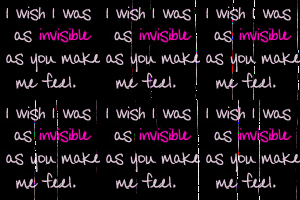
and "choose a happy future"
-------------------------------------------------------------------------------
The concept that a victim can always consciously choose how to proceed, is wrong. Abuse is trauma and the ability to take steps forward is often impaired. Sometimes, help is needed.
The phrase, "move on with your life" is common. Sometimes said to those who have lost a custody battle, lost a home, or savings, a family or job this phrase can be another betrayal. Just when a victim needs support, they are asked to go it alone.
The entire infrastructure of a life is often destroyed leaving the victim, stunned, hypervigilant, indigent, betrayed and perplexed as to why they are expected to "choose" to not be a victim. Give them a time machine and this can be done. Give them revictimization and it cannot.
It's time to give that word back its status and in doing so, give respect to the abused. Respect comes in the form of providing help with a compassionate approach to those who have been stripped of dignity through abuse in courts of law, or by their partners.
What is the definition of a "victim"?
According to the dictionary a victim is: One who is harmed by, or made to suffer from an act, circumstance, agency, or condition; a person who is tricked, swindled, or taken advantage of.
The victim of a pathological is traumatized. There are biochemical changes in the body and structural changes in the brain. Thought patterns change, memories are lost, immune system strongly affected, brain cells die, there is chest pain, muscle pain, feelings are intense and emotions chaotic.
Why are victims revictimized?
Because it's politically correct to say, "I'm not a victim, I'm a survivor."
Not all victims are the same.
Some have more resiliency than others. Some are without resources or support. Many have physiological changes that need to be addressed. And when those who need help come looking for it, instead of being welcomed, they find "helpers" that tell them they are responsible for their healing NOW.
These people are revictimizing because "choice" is NOT always an option.
Reclaim the Word Victim
We must reclaim the word "victim" and renew our commitment to those who are victims. We should examine the role of a victim impact statement and victim advocate for those who are traumatized emotionally as well as from a criminal act.
- Are you being victimized again by someone who says, "if you won't stop being a victim. I won't help you"?
- Maybe your attorney, therapist, siblings, support board or friends are claiming you can just choose to stop being a victim.
- Maybe they think you can start a company without money, and buy a house with bad credit.
As a victim of any kind of abuse you deserve:
1. Compassion
2. Validation
3 Freedom from 'therapeutic' verbal abuse (i.e. "make positive choices" or "better your life" or "have hope" is just nonsense!)
4. A support team to open doors to resources
5. A friend, therapist or counselor who can teach you the skills to rebuild your life.
Depending on who you are, this may take a long time or not. Variables include amount and length of abuse, health, supportive family or not, finances, genetic explanatory style (optimism or pessimism), coping skills you may already have and many others.
As a victim, you have the right to say, "STOP" to those who blame the victim.
An entire self help industry has arisen that believes if you just really really wanted to, you can be happy and healthy and fully functional as soon as you choose to be.
A starting point for recovery are post traumatic stress sites. There you will find trained and compassionate support people with articles that explain trauma healing methods.
The Scientific Basis of Healing, Happiness and Recovery
It doesn't matter if you call yourself a victim, survivor or Martian. No one should deny you victim status. It is what is.
A victim is not a slothlike creature, nor stupid. Nor is a victim responsible for what happened to her and we must stop worrying about language and start helping. A victim is a person with a life in chaos. What matters is that you get the help you need and the compassionate trained person to give you the skills.
The good news is that happiness is psychologists are moving from the Freudian model which has dominated psychology for too long and was wrong to boot, to a model that moves from pathology as the dominant scheme. The process of de-traumatization begins with validation. It then moves to retraining explanatory style. Depending on the depth and time of the abuse, it may take a long or short time to process to empowerment and control.
Validation is critical.
Labels: blame the victim, codependence, get over it, just move on, ptsd, reality, revictimization, trauma, validation