Sanctuary for the Abused
Sunday, June 10, 2018
Cyberstalking and Online Harassment
A Real Life Problem
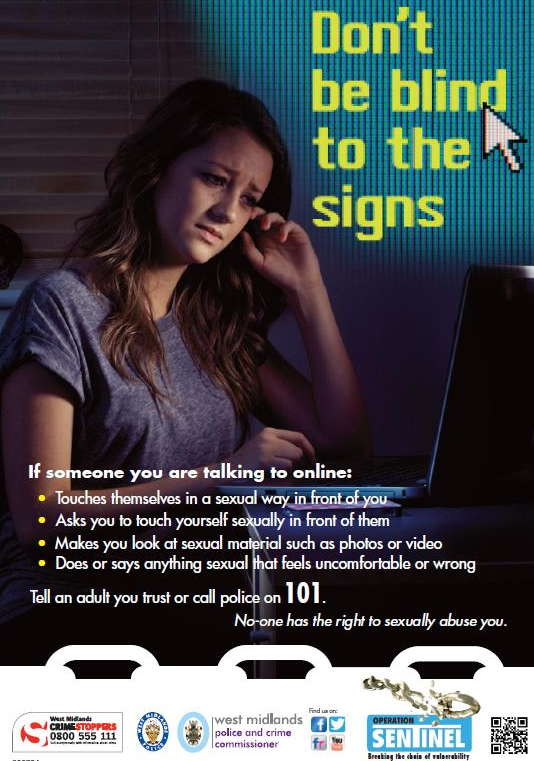
The Internet is a wonderful place to work, play and study. But don't let that fact make you blind to its down side. The Net is no more and no less than a mirror of the real world, and that means it also contains electronic versions of real life problems. Stalking and harassments are problems that many people especially women, are familiar with in real life. These problems can also occur on the Internet, in what has become know as "cyberstalking" or "online harassment".
If you thought that owning a computer and having an Internet account would make a person considerate and respectful; then think again. There are just as many predators in cyberspace as anywhere else. It is only their methods that have changed. Some predators might harass you by trailing around after you in live channels like lovesick puppies; unable to take NO for an answer and pestering you with email messages. In other cases this harassment may become a systematic campaign against you; where your harasser bombards you with threatening messages of hate and obscenities. Although distressful enough, the situation can even escalate to the point where your harasser traces your home address and telephone number; causing you to face not just emotional distress but also physical danger. It should come as no surprise to you that the "bad guys" are making use of this wonderful technology to harass people and prey on the innocent. Why wouldn't they? Not all bad guys are street punks with no education. Some are university graduates with computers.
There have been many examples of cyberstalking crossing over to "IRL" stalking (In Real Life stalking). Sadly, those users who have been victims of cyberstalking, tell a similar story: That no one took the harassment seriously until it became "IRL". Cyberstalking can be a devastating experience for a person online. As they discover that the difference between the "Brave New World" of the Internet and the Real World is that in the real world people listen when you tell them you are being stalked and harassed. In cyberspace people say things like "well just turn off your computer". Such incomprehension is common. "You can't be hurt on the Internet - it's just words" is commonly heard and "If you can't handle it, then you shouldn't be online" is another commonly hear comment. The online stalking is just as frightening and distressing as off-line stalking, and just as illegal.
Men and women may be stalked on-line, but statistics show that the majority of victims are female. Women are the minority of the Internet population which means that their attention is generally a fierce competition between male users. This part of the Internet, resembles crude online single bars, with little in the way of politeness. Unfortunately the immediate and relative anonymity of live chat communications facilities enable users to be rude and insensitive. Cyberstalking and online harassment are also much easier to practice than real life stalking. In cyberspace, a stalker can harass their victim without ever have to leave the comfort of their own home, or have any witnesses to the incidents.
One reason for the lack of successful prosecution of cyberstalkers, is that there usually is a lack of sufficient evidence available for the officials to warrant "probable cause" in order to further investigate. Many law enforcement agencies are Internet illiterate, therefore unaware that the problem could and does exist. To date, the only legislation regarding cyberstalking is the Communications Decency Act, enacted by the US Congress on 2-1-96, and is still being challenged in the Supreme Court. The real life, anti-stalking laws deal with actual attacks, and until such an attack happens, are actually very limited in defending yourself, or preventing any progression of the stalker. There is very little done about threats or harassment in the early stages.
Online users are vulnerable to being targeted as cyberstalking victims in three areas.
1) Live Chats (Facebook, Yahoo, Skype, Messenger) or IRC (Internet Relay Chat): in which a user talks live with other users. This is the most common place for cyberstalking.
2) Message boards, Blogs, Reunion Sites, Support Groups and Newsgroups: a user interacts with others by posting messages, conversing back and forth. Boards for emotional issues such as divorce; death; domestic violence are especially prone. Disordered persons can track others they disagree with for years reeking all sorts of havoc.
3) Email box: a user has the ability to write anything and even attach files to the email.
Example: a user enables your email, via live chat or newsgroup postings, then emails you with obscenities, and attaches porno pictures. A common area regarding cyberstalking is at the "edu" sites, which are educational institutes, such as colleges and universities.
One user might know another user personally and interacts on the Internet anonymously, so starting the cyberstalk. One student can enter the Internet as easily as another student, therefore not letting his true identity be known. And since user names can be unknown alias, who would ever know the identity or be able to prove the identity. In such cases, the stalker usually has the ability to trace the victim's phone number and sometimes the address of his victim. Another includes interpreting a posting you may have made on a message board regarding your opinion as an "attack" if it differs from theirs. The stalker then becomes fixated on proving you wrong.
Other forms of online harassment:
1) Unsolicited email
2) Live Chat
3) Hostile Postings about you, using a few "facts" to make an untrue picture
4) Spreading vicious, fabricated, untrue rumors about you (as opposed to telling the Truth at exposure sites)
5) Leaving untrue messages on site guestbooks
6) Impersonation of you online
7) Electronic sabotage, (sending viruses, trojans, etc)
8) Threatening phone calls
9) Threatening mail
10) Vandalism of property
11) Physical attack
12) Posing as you on groups, in emails or in postings.
There are many precautions that you can take NOW to protect yourself in advance from the unwelcome attention of a cyberstalker. Remember: The goal of a cyberstalker is CONTROL. Your task is to reverse this situation. Keep control of who you communicate with on the Internet. To do this, you may like to consider the advice below. Remember, the time to deal with cyberstalking is before you become a target.
CYBERSTALKING PREVENTION TIPS
If you are being harassed online by a cyberstalker, the chances are that you are not the first person they have stalked. Cyberstalkers, like other predators, are opportunists. They know what they are looking for and how to get it. "Stalking" is a "power" crime, the stalkers has the power to make you suffer and enjoys that power. Stalkers' self-esteem rises when they attack your self- esteem. The more pain and suffering they can cause, the better they feel about themselves. The best protection against becoming a target of stalking is not to reveal anything personal that you might have in common. Often, stalkers are mentally unstable, paranoid, delusional, and extremely jealous, and have extremely low self-esteem. Stalkers may display selfishness, malice, sadism, be very cunning and arrogant. Most are anti-social, and to put it in layman's terms, be a "control freak", enjoying manipulating other people. They crave power over others, and enjoy the type power that hurts other people. harassment is common enough in live chat on the Internet.
The three most common ways it can start are:
1) sexual harassment (or innuendo);
2) a flame war (argument that gets out of hand);
3)users that show their technological power by attacking innocent users, channels or even networks.
Those who regularly start flame wars online are rude and obnoxious people, often having poor social and communication skills. Their idea of fun is throwing obscene abuse at another just to upset them. These kind of harassers are often loners who don''t have a companion and their attempts to attract your attention is often clumsy and crude. Care should always be taken when turning the away, as the are highly sensitive to rejection and humiliation, and could cause a vendetta to start against you. Understand that although clumsy and crude in most cases, the stalker is not stupid, they are very organized and usually experienced in their war against you.
Stalking is a form of obsession. The difference between a normal cyber harasser and a cyberstalker, is this: harasser moves on to others and forgets you and a stalkers will come back to stalk you another day.
The Internet enables the stalker, his powers, in most cases, merely a knowledge of the technology is all required to have the ability to stalk another user. Most stalkers, having been rejected desire to instill fear in users, therefore, upsetting the normal enjoyment of the Internet.
Note that educated, smooth talking, responsible people also can be stalkers, appearing to be a perfect gentleman or lady with perfect manners. The major "clue" to cyberstalking, is when the stalker pushes for information regarding you personal life, private life, or life away from the net. Rule of thumb, as it may be referred to is: "NEVER GIVE ANY PERSONAL INFORMATION ACROSS THE INTERNET!"
Online meetings should stay online, the individuals are, in fact, strangers. Online, the physical warning signs usually in the "body language" are missing. Also the clues of personality within the voice and eyes are missing. All there is to determine a personality is the skill in which they type there messages. There is no code of honor in protecting privacy on the Internet. Each user should therefore take steps to protect their privacy online.
1) never specify gender
2) use neutral-gender names
3) change your password often
4) edit your online profiles often
5) review your email headers and signatures often
6) use secure chat programs that do not permit tracking of your isp#
7) use a good chat network
8) use standard names, passive names to as to not draw attention to you
9) use anonymous remailers
10)use an anonymous browser
11)use encryption to authenticate email
12) discuss privacy with your server.
And last: learn your technology. REMEMBER: PROTECT YOURSELF!
GRAFX-SPECS DESIGN & HOSTING
NOTE FROM BLOG OWNER: Ms. Kester and I have the same cyberharasser.
Labels: abuse, cyberstalking, harassment, internet addiction, online


Sunday, May 20, 2018
The Lying Game
In an Internet-hookup culture, even sensitive guys think they’re players.
By Amy Sohn
Men have always lied to women to get what they want, but these days many New York women are finding that mendacity has evolved from an isolated disease into a full-blown epidemic. Internet dating and the ease of casual sex have made men unwilling to play by anyone else’s rules but their own, even if it means they must deceive to get what they want. If one woman won’t sleep with a guy on the first date, he can lie to get her out of the house and find someone who will. And when men are caught, they are surprisingly unrepentant; the moral bar has been lowered so far that women who complain about deception come off as high-maintenance psychos. Worse, by the time men are caught, they’ve already reaped the benefits—which is their goal.
Kelly, a 29-year-old writer, met Todd, a guy in his late forties, at an art opening in Chelsea, and after they’d been dating for a year and a half, she discovered that he had another long-term girlfriend. “I had met his parents, he had met mine, I had helped him decorate his apartment, spent time at his Hamptons house, and gone on a vacation with him. It turned out he had met her the same time he met me and he couldn’t decide between us so he kept both things going.”
There had been suspicious signs: He was often “busy with work” or hard to get hold of. One day, she stole his computer address book and called every woman until she found her rival. “It turned out she had met his parents too, gone to his house on the weekends I wasn’t there, and helped him pick out all the things for his apartment that I hadn’t,” says Kelly.
Kelly was furious when she found out how far things had progressed. “This was the worst lie anyone ever told me because it was so continuous.” He didn’t act guilt-ridden when she confronted him, nor was he angry about how she found out. “I’d asked him many times if he was seeing someone else, and he always said no. He claimed that it wasn’t a lie, it was a sin of omission.”
Melinda, 31, a grad student, recently met a television executive named Dave on Nerve’s dating site. He wrote in his profile that he was looking for honesty, and she liked him when she met him. “He was like a good Boy Scout,” she recalls. “He seemed like someone looking for sincerity.”
She suggested they go back to his place, but it turned out he was house-sitting. When they got to the apartment, he became sexually aggressive. After she made it clear she didn’t want to go further, he went into the bathroom. When he came out, he was talking on his cell phone. “ ‘You’re at La Guardia?’ ” she heard him saying. “ ‘You’re back a week early?’”
“I didn’t hear the phone ring,” Melinda recalls, “and I couldn’t hear anyone on the other end. He was saying much more than you would need to. It seemed very unreal.”
Melinda thinks the New York social scene is responsible for men’s increasing propensity to lie. “With all the easy hook-ups and dispensable dates, it gives even the nerdiest guys a swagger,” she says. “In New York, even the guy-next-door type has learned to be a player.”
Lying is not just a heterosexual phenomenon. It is also rampant in the gay community, where many men will say almost anything to get out of a date if something better comes along. Charles, 42, an academic, had been dating Stephen, who often traveled on business trips. One night, while on manhunt.com (a site where gay men troll for sex), he found Stephen’s profile. “A friend of mine wanted me to see if his boyfriend was on there,” says Charles. “As I was checking the site, I stumbled across Stephen’s profile.
“He would often say, ‘I’m supposed to leave on business this weekend,’ and this was what he was doing instead. I didn’t know which was more pathological: that he was lying or that he was being so precise with his language, always saying he was ‘supposedly’ going away so he wouldn’t, technically, be lying.”
Though men may lie because they think it’s easier than telling the truth, all the aforementioned victims expressed confusion about the logic of lying as much as the ethics. “It was such an amazing thing to me,” says Kelly of her two-timing ex. “The emotional investment of maintaining two girlfriends just seemed so ridiculous. I didn’t see why he’d bother.”
A GOOD SITE ON INTERNET LIARS
Labels: emotional rape, internet predators, lies, lying, manipulative, online, online affair, online dating, pathological
Tuesday, February 06, 2018
The Sociopath or Narcissist At Play

Exploitation is easier to accomplish on-line. The level of exploitation is all over the place. Clearly the most dangerous are the Cyberpaths. These sociopaths, psychopaths -- unwholesome, psychologically scattered individuals -- can exploit you in truly damaging ways.
Despite common belief, a cyberpath is not always very easily identified, especially since you cannot see the person "in person." The more clever, the more intelligent the cyberpath is, the more you will not become aware of what you are dealing with, until it is too late.
What he (the psychopath) gets he spoils and wastes...
A psychopath, in this instance, the cyberpath, is merely looking for a way to fill in his time with empty exploits. They are highly narcissistic, and the internet provides fodder for them. I have known various cyberpaths, and they move from victim to victim, seeking people to feed their endless need for narcissism. When you've found them out, or they tire of you, they move on to the next victim, or target for narcissistic supply.
Dominance and power are recurring themes in the social relations of psychopaths.
Dominance, power, and having followers are very important to the cyberpath's need for total adulation and control. Cyberpaths absolutely bask in adulation, many using pity, in a most conniving way, to get the attention that they need. Sometimes the way a cyberpath asserts his control is done subtly.
The psychopath often plays jokes and tricks on others to humiliate them or to assert dominance.
Sadly, many are mistaken about the typical cyberpath. A cyberpath is not always looking for money or sex, quite often, he or she is merely interested in taking you along for a ride. I also do not believe that psychopaths/cyberpaths always know that they are hurting you. A psychopath behaves the same way with everyone. Most of them take pleasure merely in playing the rouse, and not much else. A psychopath has no interest in your inner emotional state because they themselves have no empathy. They merely enjoy "pulling one over" on people.
And to put rest to another common myth, very few psychopaths are stalkers, because they have no true emotional connections to anybody. They simply move on to another person who piques their interests. A psychopath cannot truly love and therefore cannot become obsessed with another individual. They are too egocentric, narcissistic, and lack emotional connection to any other human being.
The central theme of Don Juan's (the psychopaths's) seductions is not even the sexual enjoyment, but playing the trick... While he gives no real love, though he is quite capable of inspiring love of sometimes fanatical degree in others...
Again, this quote from Gordon Bank's work, "Don Juan as Psychopath," reveals that the cyberpath is mostly interested in playing tricks with his prey, almost in a playful way. To the cyberpath, such things are not really big deal, while for the victim, however, it becomes a rather big issue indeed.
Many of the victims of cyberpaths enter therapy as a result of this. Many victims believe themselves to be flawed after an experience with a cyberpath. Some of them are harrassed by the family and friends of the cyberpath, which makes matters worse.
He is motivated primarily by the need to dominate and humiliate either the person he is 'taking' or, very often someone connected to another person with whom he is involved.
Cyberpaths relish in another's humiliation, which may appear to us as a certain, perverse quality. They take pleasure in what we find obscene, because they are not like other people, they have no true connection to anybody, and are incapable of feeling real love. Messing with another person's emotions and life is merely a way to pass the time, pulling one over on you is fun and enjoyable.
Most of the crimes psychopaths commit, tend to be "crimes of the heart" and/or "casual cruelty", they are cruel, manipulative people who leave a trail of broken hearts and often broken lives behind them.
Again, most cyberpaths are common internet liars and predators. They are rampant on every single online dating site. Do not be fooled by someone who tells you that there is such a thing as a "harmless liar." A liar is never harmless. A person who lies should never be trusted, and once you find out they've lied to you even once, it's time to break it off.
Once having drained what they can from one source, they turn to others to exploit, bleed, and then cast aside; their pleasure in the misfortune of others is unquenchable. People are used as a means to an end; they are to be subordinated and demeaned ...the pleasure they gain from their ruse often flags once the rewards of deceit have been achieved.
Before long, their true unreliability may be revealed as they "stop working at" their deception or as their need grows to let others know how clever and cunning they have been
A cyberpath may keep you hooked for as long as they need your narcissistic supply. Once you start getting "wise" to them, however, or once he or she begins to tire of you and find that your narcissistic supply is becoming inadequate, you will soon find out, through some subtle manuevers, that your absolutely "perfect" future mate is nothing but a charade.
Some of these con men also relish in playing more expansive games. Once you have fallen in love with him and accepted a marriage proposal, it is not uncommon for this type to sudddenly send an email explaining that he is dying of an incurable disease or that he is an FBI agent and has to move to another country, therefore ending all contact with you. I have heard of this happening to many women.
http://www.geocities.com/lycium7/cyberpath.html
Despite common belief, a cyberpath is not always very easily identified, especially since you cannot see the person "in person." The more clever, the more intelligent the cyberpath is, the more you will not become aware of what you are dealing with, until it is too late.
What he (the psychopath) gets he spoils and wastes...
A psychopath, in this instance, the cyberpath, is merely looking for a way to fill in his time with empty exploits. They are highly narcissistic, and the internet provides fodder for them. I have known various cyberpaths, and they move from victim to victim, seeking people to feed their endless need for narcissism. When you've found them out, or they tire of you, they move on to the next victim, or target for narcissistic supply.
Dominance and power are recurring themes in the social relations of psychopaths.
Dominance, power, and having followers are very important to the cyberpath's need for total adulation and control. Cyberpaths absolutely bask in adulation, many using pity, in a most conniving way, to get the attention that they need. Sometimes the way a cyberpath asserts his control is done subtly.
The psychopath often plays jokes and tricks on others to humiliate them or to assert dominance.
Sadly, many are mistaken about the typical cyberpath. A cyberpath is not always looking for money or sex, quite often, he or she is merely interested in taking you along for a ride. I also do not believe that psychopaths/cyberpaths always know that they are hurting you. A psychopath behaves the same way with everyone. Most of them take pleasure merely in playing the rouse, and not much else. A psychopath has no interest in your inner emotional state because they themselves have no empathy. They merely enjoy "pulling one over" on people.
And to put rest to another common myth, very few psychopaths are stalkers, because they have no true emotional connections to anybody. They simply move on to another person who piques their interests. A psychopath cannot truly love and therefore cannot become obsessed with another individual. They are too egocentric, narcissistic, and lack emotional connection to any other human being.
The central theme of Don Juan's (the psychopaths's) seductions is not even the sexual enjoyment, but playing the trick... While he gives no real love, though he is quite capable of inspiring love of sometimes fanatical degree in others...
Again, this quote from Gordon Bank's work, "Don Juan as Psychopath," reveals that the cyberpath is mostly interested in playing tricks with his prey, almost in a playful way. To the cyberpath, such things are not really big deal, while for the victim, however, it becomes a rather big issue indeed.
Many of the victims of cyberpaths enter therapy as a result of this. Many victims believe themselves to be flawed after an experience with a cyberpath. Some of them are harrassed by the family and friends of the cyberpath, which makes matters worse.
He is motivated primarily by the need to dominate and humiliate either the person he is 'taking' or, very often someone connected to another person with whom he is involved.
Cyberpaths relish in another's humiliation, which may appear to us as a certain, perverse quality. They take pleasure in what we find obscene, because they are not like other people, they have no true connection to anybody, and are incapable of feeling real love. Messing with another person's emotions and life is merely a way to pass the time, pulling one over on you is fun and enjoyable.
Most of the crimes psychopaths commit, tend to be "crimes of the heart" and/or "casual cruelty", they are cruel, manipulative people who leave a trail of broken hearts and often broken lives behind them.
Again, most cyberpaths are common internet liars and predators. They are rampant on every single online dating site. Do not be fooled by someone who tells you that there is such a thing as a "harmless liar." A liar is never harmless. A person who lies should never be trusted, and once you find out they've lied to you even once, it's time to break it off.
Once having drained what they can from one source, they turn to others to exploit, bleed, and then cast aside; their pleasure in the misfortune of others is unquenchable. People are used as a means to an end; they are to be subordinated and demeaned ...the pleasure they gain from their ruse often flags once the rewards of deceit have been achieved.
Before long, their true unreliability may be revealed as they "stop working at" their deception or as their need grows to let others know how clever and cunning they have been
A cyberpath may keep you hooked for as long as they need your narcissistic supply. Once you start getting "wise" to them, however, or once he or she begins to tire of you and find that your narcissistic supply is becoming inadequate, you will soon find out, through some subtle manuevers, that your absolutely "perfect" future mate is nothing but a charade.
Some of these con men also relish in playing more expansive games. Once you have fallen in love with him and accepted a marriage proposal, it is not uncommon for this type to sudddenly send an email explaining that he is dying of an incurable disease or that he is an FBI agent and has to move to another country, therefore ending all contact with you. I have heard of this happening to many women.
http://www.geocities.com/lycium7/cyberpath.html
Labels: brainwashing, coercion, cyberpath, lying, narcissist, online, pathological, predators, projection, sociopath