Sanctuary for the Abused
Tuesday, July 24, 2018
Why You Blame Yourself for Bad Relationships — and How to Stop

by Craig Malkin, Ph.D.
“He gets into these irritable, bristly moods and I know I should give him space,” she explained. “But I just start worrying maybe he doesn’t even want me around."
“Has he said anything to suggest he’s upset with you?” I asked.
“Not really” she answered quickly. But she seemed to be pondering the question. "I’m sure there’s something I must have done. Otherwise he wouldn’t act that way around me.”
“What if it has nothing to do with you?” I challenged.
“I hope not,” she said with a hint of alarm. “Because if it’s not me, then I can’t ever do anything to make things better!”
Have you ever seen yourself as the problem when things seem to go wrong in your relationship? Or blamed yourself for not feeling happier with your partner? Tina certainly did. She firmly believed she could prevent Ken's moods, or at least avoid making them worse, if she simply changed her own behavior (by being quieter or more patient or less needy—the list went on). And the more she found herself culpable when trapped in the room with his unsettling silence, the more depressed she became. How can we understand her behavior?
It might have something to do with a difficult childhood. The people most prone to self-blame have often been invalidated or even abused in their families. It’s widely observed by researchers and clinicians, alike, that childhood emotional abuse leads to some of the harshest patterns of self-blame—a life long pattern of viewing oneself as the problem. Since the most stressful experiences are the ones we feel we can’t control or predict, no doubt one reason people turn to self-blame after abuse or neglect is that the alternative explanation—my parents or siblings are chaotic, hurtful people and the world is a dangerous place—is simply too terrifying to accept. Imagine being trapped in a home with two (or more) unpredictably cruel people. Better to think you can do something about your mistreatment—even if it means pointing the finger at yourself. In this way, children of abuse often trade their self-esteem for a sense of agency.
But it isn't just people who’ve been emotionally abused who fall prey to this sort of thinking. We all inevitably turn to self-doubt when we're afraid we can't control our experience. Once, for example, one of my daughters, then 9 months, was practicing a precocious (and terrifying) run-walk at the very moment my wife and were straightening a rug. She hit a lump in the carpet and slammed head first into the only one-inch square of exposed wood in our entire baby-proofed living room. It happened just inches away from me, and I played the scene over and over in my mind, searching for the exact moment I could have blocked her fall.
Rationally, of course, I knew there wasn’t anything we could have done differently. But I still blamed myself. At least if my lack of vigilance was the problem, I could prevent a future tragedy by watching more closely. But if the accident simply reflected the cold randomness of the universe, that meant something far worse: no planning or foresight could ever prevent bad things from happening to the people I cared about. Even psychologists have trouble swallowing that pill. So I kicked myself instead. After all, that’s when we all turn to self-blame: at those very moments we can’t accept how helplessness we are to control our fate. Beneath self-blame, there’s often a powerful wish for control.
This is also the key to understanding Tina's behavior. She really doesn't believe Ken can change—nor do most people who blame themselves for a bad relationship. If we’re not the problem, then our partner’s surly moods or disinterest can only be altered through their efforts. And the less faith we have—as Tina seemed to—that they can ever make those changes, the more we risk finding fault with ourselves. If our hope for a happy relationship lies in our partners’ hands, and they're not up to the task, then the situation truly is hopeless. And hopelessness is a far worse pain than self-doubt.
Tina, for example, focused most of her efforts on changing herself. But for all her frantic attempts to be a better partner, she remained afraid or unwilling to ask more of Ken, terrified that he either didn’t care to—or even worse, couldn’t— change for her. She hid that fear, even from herself, beneath layers of self-blame.
If you’re a self-blamer, like Tina, the way out, of course, is to start considering what other people can do to help you feel better. And you can only do that if you accept that your partner not only can, but should change their hurtful behaviors—not because you've tried to do something different (again), but because they care enough about how you feel to do something different themselves (renowned marriage researcher, John Gottman, calls this “openness to influence”).
In other words, the onslaught of self-blame only stops once you realize that your own feelings of disappointment are legitimate enough to be heard. It's when you finally tell someone you feel hurt or upset by their behavior—and exactly what they can do to help you feel better—that you truly learn whether or not they care enough to change what's hurting you. And if they don’t care about that, you need to know as soon as possible. Or you could end up stuck in an unhappy relationship, blaming yourself for feeling bad. And that would depress anyone.
Check out www.drcraigmalkin.com for more tips and advice, as well as information on his book in progress.
Labels: abuser, ACONs, adult children of narcissists, bad relationship, belief, blame, childhood abuse, daughter of narcissistic mother, doubt, invalidation, loser, self-blame, twisted thinking, unhappy, voicelessness


Friday, April 27, 2018
Adult Children of Narcissistic Parents (ACONS)
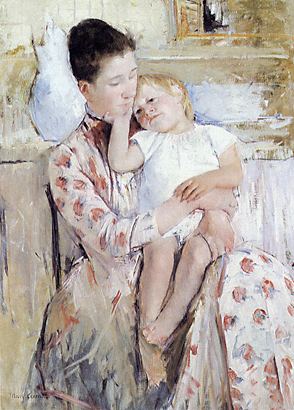
Parental love is a very complicated emotion. If a parent compulsively looks after their children's health, insisting they eat only organic food, and natural vitamins, is this a form of love? How about if a parent makes a child come home after school and forbids any socializing until the studies are completed to her satisfaction--because this way the child will get into Harvard. Is this love? If the parent is looking after the child's best interests, then arguably their actions reflect love. But where is the line drawn? Some parents say to their children:
"Everything I did, I did for you--fed you, clothed you, put a roof over your head--all of it for you."While probably an exaggeration, there is still a bit of truth here. Was there love? Probably. One can usually find a kernel of love towards their children in even the most narcissistic of parents. "I love you because you reflect well on me" is still love, however sullied. (One might argue that love in the service of selfish needs is not really love--but the line between selfish and unselfish love is a fuzzy one indeed.) Furthermore, the tears a narcissistic parent sheds when their child dies are absolutely real.
Simply put, love is too complicated an emotion to be of much use in distinguishing narcissistic and healthy parents. In my experience, if you ask adult children of narcissistic parents whether they were loved, many if not most will say "yes, in a controlling, self-centered way" even after they've completed therapy. Another variable, however, is far more telling. The critical questions are: "Did my parent respect and value what I said, see myself as independent from them in a positive way, and feel that my thoughts and feelings were as important as theirs." In other words, did my parent allow me "voice?" No adult child of a narcissistic parent can answer these questions in the affirmative.
These questions define the critical injury to adult children with narcissistic parents. Interestingly, many such people have no problem finding "love." But deep affection does not satisfy them unless accompanied by the granting of "voice" by a powerful person. As a result, adult children of narcissistic parents often go from bad relationship to bad relationship in search of "voice."
For parents, the implications are clear. Love is not enough. Client after client has taught me this unequivocal lesson:
If you want to raise emotionally healthy children, you must give them the gift of "voice."
A SITE BY THE DAUGHTER OF A NARCISSISTIC MOTHER
FACEBOOK SUPPORT GROUP FOR DAUGHTERS OF NARCISSISTIC MOTHERS
Labels: abuse, adult children of narcissists, bloggersunite, emotionally unavailable, love, narcissistic father, narcissistic mother, parents, raised by narcissists, rbn, voicelessness