Sanctuary for the Abused
Sunday, July 08, 2018
When The Abuser is a Police Officer

Many of the same qualities valued in on-duty police officers can make those same officers dangerous perpetrators of domestic violence. All abusers employ similar methods to control and abuse their intimate partners. Officers however, have an arsenal of skills and tactics not commonly possessed by civilians. Professional training in the use of force and weapons, intimidation, interrogation and surveillance techniques along with the cultural climate coalesce into a dangerous and potentially lethal combination in a domestic situation. Victims face the bias of law enforcement agencies and the legal system, psychological intimidation, and high risk of lethality.
This article examines the dynamics of police-perpetrated domestic violence and how it impacts the victim, the department, and the community. It explores how a police officer's training and professional life contribute to his arsenal of techniques and tactics of abuse. Finally, the article describes in detail the unique dilemma encountered by victims whose abusers are members of law enforcement.
Historical Challenges
Domestic violence is unique in that the parties share a personal, emotional and sexual relationship. By definition, domestic violence occurs within the family and generally within the privacy of the home. Only physical abuse or the threat of physical abuse is against the law. Discussion of verbal, emotional, sexual or psychological abuse is thus often considered irrelevant.
However, domestic violence is not solely about physical abuse. Domestic violence is a pattern of coercive behaviors used to intimidate and manipulate the victim for the purpose of gaining and maintaining control. It is precisely because of the non-physical types of abuse that the physical abuse "works" to control the victim. Talking exclusively about physical abuse takes these acts out of context and makes them similar to assault or battery by a stranger.
This pattern of violence takes place in a confused climate of intimacy and love mixed with hope, fear, isolation and intimidation. It is common for a woman to tell her counselor that she cannot call the police on her intimate partner or have him arrested because she does not want to betray his trust. She defends his character and makes excuses for his behavior. She may take responsibility for the abuse believing that she provoked it. She feels she must protect him out of a combination of fear and love.
Twenty years ago domestic violence advocates were considered radical when they suggested that a woman call the police when battered by her intimate partner.
This notion confronted men's sense of entitlement to dominate and to rule in the privacy of their homes. In step with the civil rights movement, women's right to be safe from bodily harm, even within their own homes, was recognized. States passed laws to protect women from violent husbands and intimate partners, moving domestic violence into the criminal arena.
Some police officers were reluctant to recognize domestic violence as a criminal offense and avoided enforcing the law. Years ago, police commonly told us that breaking up "marital disputes" and "lovers' quarrels" was not police work, but social work.
Many police officers still express frustration when victims call for intervention and then plead with the officer not to arrest the abuser. Police are discouraged by the number of cases in which the victim drops criminal charges. Over time, and with education on the dynamics of domestic violence, most police officers have come to consider domestic violence within the range of legitimate police work.
Current Challenges
The final obstacle to overcome is police officers' reluctance to consider domestic violence a crime when it is perpetrated by one of their own.
Their strong sense of the police family dissuades them from considering police domestic violence a criminal offense, not unlike their attitude toward civilian domestic violence twenty years ago. Victims of police officers not only challenge the image of the personal family, they challenge the concept of the police family as well.
When domestic violence occurs in a police home, police departments choose to keep the incident a family secret and deal with it in-house. By treating the crime of domestic battery as a private matter or a marital problem, police departments regress to the approach of twenty years ago. The department hesitates to interfere in an employee's private life, and is extremely uncomfortable with the legal requirement to treat the offending officer like a common criminal. The victim, not the abuser, is identified as the traitor. The forces gather to silence her and to protect him.
Misuse of Institutional Power
Police abusers differ from other abusers only in that they are tougher and more dangerous. They have training, a badge, a gun and the weight of the police culture behind them. Smart police do not hit, slap, kick, or choke their partners. It is not necessary. They exercise their power and control by intimidating, isolating and terrifying the victim. These forms of abuse need to be addressed when the perpetrator is an officer. They are misuses of institutional power — the badge, the gun, the support of the department — and there is the constant threat that he will use them all against her.
Police are trained to walk in and take control of any situation. Their mere presence, voice and stance are used to establish their authority. They learn a full range of information-gathering techniques ranging from interviewing and interrogating to vigilant surveillance. The proficient use of these investigative techniques requires the ability to be manipulative and deceptive.
Training includes much instruction on the use of escalating degrees of force and the use of deadly force. The use of force by a police officer is a serious matter and force is to be used only when necessary to enforce his position of authority. Police know which situations justify the use of force and how to adequately explain it should they have to defend their actions in a court of law.
Tactics of Abuse
The same characteristics and skills that are developed in training to produce competent officers are those that, when used in an intimate relationship, make police officers the most dangerous abusers.
The problem occurs when the officer walks through the front door of his home with the same mind-set he has in his professional life. His sense of entitlement to authority and respect from civilians carries over to his intimate partner. He cannot conceive of an egalitarian relationship. He must always be dominant and in control. Even a minor disagreement is perceived as a challenge to his authority which he will not tolerate. He uses his many finely honed skills and tactics to impress upon the victim that he has total control over her life.
Police officers use professional skills, police equipment, and the mobility of the job to keep their partners under surveillance. They run license plates of her friends and have access to information about anyone with whom she associates. They follow in their squad cars, park their squads or unmarked cars outside the victim's home for hours on end. They install recording devices in the victim's home or on her telephone. They use binoculars to observe the victim's activities from a distance. These methods serve as a constant reminder to the victim that she is always within the abuser's reach. He comes to be seen as omniscient and omnipotent, almost god-like.
The abuser uses verbal intimidation and degradation to communicate to the victim that she has no power in their relationship. He uses words as weapons to embarrass and humiliate her. He screams at her as if she was a criminal on the street — his voice and face changes; he uses vile language. He tells the victim she is no better than the whores and scumbags he deals with on the job every day.
Sometimes the verbal attack is used to provoke a confrontation for which he can then retaliate. If the verbal intimidation fails to gain control or earn the appropriate level of respect desired, the police abuser uses his training in the use of physical force. He then blames the victim for pushing him too far and making him batter her.
Physical abuse in police-perpetrated domestic violence is extremely brutal. It includes punching, choking, kicking, choke holds and body slams as well as techniques that inflict great pain yet leave no bruises or broken bones. He may hold a loaded gun to the victim's head or a fire a shot in close proximity to her sleeping child.
The abuser reinforces the victim's sense of isolation and hopelessness by frequently reminding her that there is no escape. He tells her she can call the police, but asks her who she thinks they will believe — him, or her? He tells her she can leave, but wherever she goes he will hunt her down. She can press charges against him, but she does not have enough evidence or credibility to make them stick. If she does manage to get him convicted, he will lose his job and then she will have no financial support for their children. He threatens that if he loses his job, she will lose her life.
Community Response Missing
If the victim has ever tried to escape before, she knows the truth in what he is saying. The victim knows that he will find her if she goes to a shelter because he knows or can easily find out where shelters are located. Most of her family and friends are afraid of him and afraid to be involved.
In general, the smaller the town, the fewer options she has; and the higher his rank, the fewer people who are willing to help her.
If the woman calls the police, she sees that when the police arrive at the scene and learn that the alleged perpetrator is a police officer, a shift takes place. The responding officers are now responding not to the victim of a crime, but to an officer in need.
Because most police departments do not have a policy addressing police-perpetrated domestic violence, the responding officers, who are the abuser's colleagues, use their discretion in handling the call. The responding officers are likely to discourage the victim from signing a complaint. They urge her to consider his career, to think about all the good things they share, to think about their kids. They assure her that he's a good man and a good police officer, that he's just under a lot of stress. They promise to talk to him off the record and invoke the code of silence. The responding officers do not inform their superiors and life goes on, for the abuser, as if nothing ever happened.
Laws and Policy Backfire
Victims must overcome nearly insurmountable obstacles to pursue charges.
Where the victim does press charges, she is accused of being vindictive and going after his job. Obtaining a protective order is perceived as an act of aggression. The victim faces a legal system that is hostile and foreign to her, but is his daily work environment. He knows the system and the players in the system are his acquaintances and co-workers.
The court's leniency with perpetrators who are members of law enforcement has intensified since the passage of the Lautenberg amendment that prohibits anyone convicted of a domestic battery from possessing a firearm. The amendment provides no exemption for police officers even though the performance of their official duties requires possession of a firearm.
The law backfires on the victim because her complaint jeopardizes the officer's career. It is unlikely that losing his job will deter future wife abuse. Most often the violence will escalate because he will blame her for the loss of his job. In some cases the violence will be lethal because the abuser will feel he has nothing left to lose. His job is his identity. Confiscating the abuser's service weapon may protect the department from liability, but it does not protect the victim.
If the victim goes to the department, her complaint is received in a defensive or hostile manner. The victim is perceived as hysterical, exaggerating, or lying. After this initial response to her complaint, the victim reasonably can conclude that the subsequent investigation, should there be one, is often biased in favor of the abuser. The victim does not know where to turn.
When the victim is a police officer, her jeopardy is compounded. Her family, her career, and her life are at risk. She defies everyone's stereotype of a victim and image of a police officer. Her colleagues question her professional competence. If her abuser is also an officer, she is breaking the police code of silence by exposing him. Her colleagues may well turn against her and side with her abuser. Abused officers are often disciplined by the department whether they report or fail to report the abuse.
Confidentiality in Question
Some departments have an in-house victim advocate. Victims understandably are reluctant to confide in the advocate because the advocate is an employee of the department. The victims fear that their confidentiality will be compromised. For example, a department advocate may deem a breach of confidentiality to be in the victim's best interest. The advocate may decide to breach confidentiality in an effort to cooperate with the department or in response to a conflict between the advocate and the department.
Some departments employ social workers. Their crisis intervention in domestic violence cases frequently includes counseling both the victim and the offender. The same limitations that restrict the effectiveness of a department advocate restrict the effectiveness of a police social worker. The victim is acutely aware that the police social worker and the abuser are co-workers. The daily cooperative working relationship between the social worker and the officers presents a serious conflict of interest and loyalties. It is ludicrous to expect these victims, of all victims, to trust anyone employed by the police department.
In the same vein, many employees refuse to utilize Employee Assistance Programs when they have problems that jeopardize their careers. Employees simply do not trust that their confidentiality will be protected. Domestic violence advocates' concern is that many EAP-referred therapists and social workers lack training in the field of domestic violence.
Misinformation or unrealistic advice could have lethal consequences for all parties involved.
Mandated Batterers' Counseling
Departments could begin to address the problem by mandating abusive police officers into counseling affiliated with a domestic violence program. In Illinois, a certification process ensures that counselors who work with offenders follow a state-approved protocol.
Some police administrators suggest that offenders' treatment would be more palatable to the officers if there were groups exclusively for police officers. Rationalizations for an exclusive group must be closely examined. The primary assumption is that a police officer will be in an uncomfortable, embarrassing, or compromising position if he is required to attend batterers' counseling with civilians with whom he may later have professional contact. Surely doctors, lawyers, ministers and others in the community who attend batterers' groups have those same concerns regarding their personal reputations and careers.
Creating special groups for police officers only reinforces their elite status and reinforces the concept that they are somehow superior to the average criminal offender.
Police abusers differ from civilian abusers only in that they have the advantages of their training, their badge, their gun, and the weight of their tight-knit culture behind them.
This distinction makes their criminal behavior more egregious in that it is a misuse of official power and privilege. Perhaps it would be a good thing for an officer to be in a group with the guy down the street whom he arrested on a domestic violence call. He can see just how similar they are — except for the training, the badge, the gun, and the police to back him up.
Victims and abusers desperately seek ways to remove the burden of responsibility from the offender and to place it elsewhere. For example, the stress of police work, unstable working hours, and frustration with the system are often professed to be the factors that cause police officers to batter their intimate partners. Attributing the use of violence to a chemical imbalance or a personality disorder is also problematic. Alcohol and drug use, stress, posttraumatic stress, poor impulse control, intermittent explosive disorder, and poor anger management are common defenses.
However, these all beg the question as to why they manifest only in the presence of others who are powerless against the abuser. Rarely do we hear of police officers using violence against a superior officer or a judge in a court of law. We must remain focused on the dynamics of power and control in our analysis of police violence, and not be distracted by analysis of stress or anger management.
Confidential Victims' Advocacy
Victims of police-perpetrated domestic violence should be referred to a local domestic violence agency. There the victim has the protection of confidentiality. She knows that her counselor is not aligned with the police department that employs her abuser. She does not run the risk that her advocate will share information with the department. Domestic violence advocates in domestic violence agencies can learn the dynamics unique to police officer-involved domestic violence. Though vastly intensified, the dynamics of power and control are the same as in civilian cases.
An advocate can discuss numerous options with the victim, including the option of informing the police department of the abuse. A victim's desire to inform the department is often based on the hope that the department can somehow hold the abuser's violence in check. A realistic discussion of this option requires knowledge of the department's attitude, policy and procedures. Both a policy and a cooperative working relationship between the domestic violence agency and the police department are essential.
If a woman decides that she wants to talk to the chief, an advocate can act as a liaison and a source of emotional support and advocacy. The advocate works with the victim to set realistic expectations as to what intervention is within the chief's power.
Some victims want the department to discipline the abuser, others want the department to mandate that the abuser receive counseling. The advocate advises the victim that the department becomes liable once the chief is informed. Depending on the severity of the abuse, the chief may terminate the officer's employment. Many times this is not a practical solution for the victim because she and her children are financially dependent on his income. Other times, the victim fears that the abuser's retaliation would cost her life and so chooses to remain silent.
Cooperation Essential
Building a support system for the victim ideally includes assistance from the chief of the involved department. I met with police chiefs in our suburban area. They assured me that they do not condone the abuse of police power and privilege demonstrated by abusive police officers, nor do they wish to bear the liability for an abusive officer in their department. We discussed the risk to the victim in coming forward, what action the department would take to protect the victim, and what action the department might take to hold the officer accountable.
I informed them of the advantages of having a domestic violence agency, independent of the department, provide information and counseling to victims of police officers. We discussed the prevalence of police-perpetrated domestic violence and whether there is need for a formal policy and procedures in responding to officer-involved cases.
Impact on Community
There is serious impact on the community when police officers gain a reputation for getting away with domestic violence. The media have exposed many cases in which little or nothing has been done by police departments or the criminal justice system to hold the abuser accountable or to protect the victim. This breeds skepticism and distrust of the police in the general public, and affirms the worst nightmares of the victims. Abusive police officers are validated in their belief that they are above the law.
When I speak to community groups about our program, it is clear that members of the community are very concerned that the same police officer who terrorizes his family could respond to a domestic violence call in their own family or neighborhood.
It greatly disturbs their sense of safety when they learn that complaints are made by victims and the department looks the other way because the perpetrator is one of their own. When people doubt the integrity of the police officers in their community it undermines the effectiveness of the police and puts all citizens at risk.
We have grave concerns regarding how police officers who commit the crime of domestic battery respond to domestic violence calls in the community. Obviously, their attitude may be less than appropriate in dealing with either party. Moreover, a police officer who is sympathetic to an abuser may not adequately protect a victim, projecting his own beliefs that women exaggerate the danger.
An officer who feels he is unjustly restrained by court order from contact with his wife or children may feel that other men are also unjustly sanctioned. That officer may be reluctant to enforce a protective order. Another potential problem is that police officers frequently testify in criminal cases against civilian abusers. We fear that testimony may be tainted due to personal bias when the witness is himself an offender.
Conclusion
Most police perpetrators' greatest fear is the loss of their job. A department's policy and attitude may be the most influential factors in deterring police domestic violence. Police departments have a responsibility to their employees and their employees' families to confront this problem. Domestic violence is not a private matter in any household. It is a crime. The claim that society is holding police officers to a higher standard is clearly unfounded. Officers are sworn not only to enforce the law, but to abide by it.
FROM THIS MUST READ SITE: ABUSE OF POWER
Labels: abuse, abuse of power, denial, domestic violence, inadequate police response, intimidation, lethal, police


Wednesday, March 21, 2018
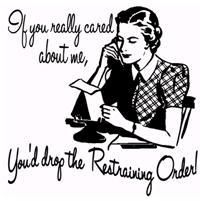
Restraining Orders May Restrain Nothing!
BE AWARE
Victims & Survivors need to know... RESTRAINING ORDERS ARE NOT THE BE-ALL ANSWER!
Psychopaths & Narcissists as well as other pathologicals often ignore or breach the restraining order -- and police far too often do not follow up!
~~~~~~~~~~~~~~
The increase in stalking cases a result of determined harassers looking for alternative methods to target victims
When it comes to harassment, there is a vast range of behavior. Much of it will not justify (or win) any lawsuits, but this doesn’t change the nature of what it is. And quite a few experts have described categories of harassers, and types of harassment, to help make some sense out of the confusion that most people feel about the issue.
Real harassers are abusers or predators who are out to exploit, and care only about their own needs and agendas.
A real harasser is someone who will continue to try to harass or predate despite sexual or other harassment law, and even after being given education about the seriousness of their actions, or the effects of their actions. In most cases, they will simply blame the victim. They rarely take responsibility themselves. They will just change their tactics so that they can continue to harass and exploit in such a way that the victim/s, or the law, can’t do anything about it.
One method for real harassers is stalking. Most forms of stalking are forms of sexual harassment because they are attempts to force a relationship with someone who is unwilling or unavailable. Stalking is the extreme, but covert, version of refusing to take ”No,” or “Leave me alone!” for an answer–you know, behaviors that were the catalysts for sexual harassment law.
Stalking has always been a problem, but experts will tell you that it is clearly on the rise.
I think the increase in stalking is partially a result of sexual harassment law, and real sexual harassers looking for ways to target their victims without fear of consequence for their actions. Because it is covert, it helps them get around sexual harassment law. It enables them to harass anonymously, and to more easily mask their motives and intentions. It also makes gathering evidence next to impossible for the victim, and without concrete evidence, there is no hope for them to even get an investigation.
On top of this, it makes the victim look paranoid, if not crazy, if they should report the problem to anyone.
In it’s most subtle forms (i.e. surveillance, sending anonymous “love” mail/ emails, hang-up phone calls), stalking can be like a chinese water torture. However, most stalking methods are more extreme, invasive, and destructive. (Breaking and entering, phone tapping, computer hacking, character defamation and slander, obscene mail or phone calls, etc.) Some stalkers will try to organize groups of people to assist them in their harassment campaign – called gang stalking or organized stalking. They usually seek out people in their victim’s community, utilizing the victim’s ”real world” community and/or Internet communities. In fact, stalkers often work to take control of, or destroy, a victim’s support network, resources, and options. This leaves the victim vulnerable, or even dependent on the stalker for survival, at least in the mind of the stalker.
Being stalked is NOT flattering – it is a form of psychological abuse and violence. And while stalking motives are usually sexual (or love obsessional), the stalking behaviors themselves may not be–that is another way real harassers can use it to get around sexual harassment law. (For example, watching someone over an extended period of time isn’t overtly sexual, at least not in of itself.)
Moreover, the psychological damage to the victim can be devastating. One expert writes,
”Stalking is a form of mental assault, in which the perpetrator repeatedly, unwantedly, and disruptively breaks into the life-world of the victim, with whom he (or she) has no relationship (or no longer has)….Moreover, the separated acts that make up the intrusion cannot by themselves cause the mental abuse, but do taken together (cumulative effect).”(Rokkers)
To most stalking victims, being stalked is like being put through a long, slow rape. For gang stalking victims, it’s like a gang rape. (The very insightful judge in the Christina Orozco case referred to her actions as akin to “murder.”)
And being stalked can be very frightening, regardless of whether or not the stalker’s activities are overtly violent. Physical attacks, even murders, can occur after long periods of ”more passive” stalking activities. Often, the violence is precipitated by the stalker’s being forced to face they have been rejected by their target.
Besides suffering the psychological damage, and damage to life, reputation, relationships, and options, most stalking victims live in fear that something will push their stalkers over the edge to physical violence.
Unfortunately, if a state or country recognizes stalking at all, this is mostly in the context of direct/overt violence, or clearly escalating violence. So, if a stalker avoids overtly violent acts, they can pretty much do as they please. In other words, if the stalker does not threaten or attack, a stalking victim is out of luck. They will not even be able to get a restraining order.
As long as they use stalking to disguise their motives, activities, and/or their identities, they are free from worry about being held accountable by sexual harassment law. And as long as they keep their stalking activities from being/seeming overtly violent, they will suffer no consequence from stalking law. Even better (for them), they can operate for as long as they wish.
And there is nothing the victim can do about it. (Suicides have been reported as victims use this as the only means they have to bringing an end to the harassment.)
It also makes stalking a good retaliation tactic for harassers who have been disciplined (i.e. been demoted, lost job) as many are using this as a way of getting revenge against an harassment target who filed a grievance against them – retaliation laws do not include stalking, either.
In my own situation, I took a course from the female professor who turned out to be a lesbian who quickly became interested in me. (That I’m not a lesbian didn’t deter her as she became obsessed with getting me to “try it” with her.) She began by making a pass, which she clearly saw right off the bat was a mistake, particularly since she did it in front of witnesses. But like most real harassers, she was not willing to give up. She simply revised her methods and began stalking me with an extraordinary determination. It is still amazing to me how far she went, and the depth and breadth or her obsession.
She used classic stalking tactics, such as surveillance and character defamation, the latter enabling her to destroy not only my reputation, but all my relationships and options, both personal and professional. She used cyberstalking extensively in her pursuit and surveillance, using this to watch me and try to interact with me at numerous Internet forums. She even organized groups of people to assist her (gang stalking), enlisting people not only in my “real world” but also in Internet communities I frequented, or she thought I might join. Because she was a department chair and a psychologist, no one questioned her character or motives.
Current stalking laws are woefully inadequate, and don’t even begin to confront the problem, let alone deal with it.
But even if the laws are revised to protect victims from the psychological violence of stalking, real harassers will simply find other ways to abuse. Any stumbling block placed before them, they will get around. It is a game to them. It is in their nature.
SOURCE
Labels: abuse, cyberstalking, defamation, harassment, inadequate police response, ptsd, restraining order, stalking
Wednesday, March 14, 2018
Law Enforcement & the Abuser
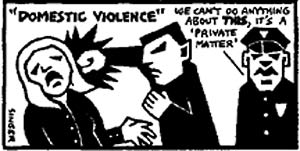
HOW ABUSERS INTERACT WITH LAW ENFORCEMENT
WHEN THE POLICE COME, THEY MAY DO THE FOLLOWING:
*Denial and Minimization
* Refusing to admit their violent behavior. Makes statements such as:
o "I didn't do anything."
o "She just bruises easily."
o I had my fist out and she ran into it."
* Admitting less than actually happened in the incident or making the assault sound trivial.
o "It was only a love tap."
o "I just gave her a little push."
o "Her ribs are just a little bruised (not broken)."
* Effective Police Response: Inform the offender that he has already broken the law and explain how his/her behaviors met that criteria. Get a detailed account of the scope of the violence by conducting a partner contact interview and by using police reports and hospital records.
~~~
*Focusing on Intentions
* Defending one's behavior by pointing to good goals.
o "I was trying to keep her from hurting herself."
o "She was hysterical and yelling nonstop so I slapped her to calm her down."
* Effective Response: Point out the effects of violence: terror, fear, distrust, pain, injury, destruction, etc. Even if his intentions are good, violence not justified and it is illegal.
~~~~
*Victim Blaming
* Most popular of the excuses, the offender will make the case that the victim is a bad person and the abuse is deserved. The offender hopes you will focus on the victim's behavior rather than abuser misconduct. If you begin to criticize the victim, you become allied with the batterer.
o "I found her with another man."
o "She is a drunk (alcoholic, drug addict, bad mother, thief etc.)."
o "She assaulted me."
* Effective Response: A woman doesn't have to be Betty Crocker (a perfect mother or housewife) in order to deserve not to be beaten. People do not have to earn the right to be free from violence and fear. The act of battering is illegal, just like bank robbery is illegal even if you are very poor.
~~~~
*Loss of Control
* Batterer doesn't take responsibility for what happened.
o "I exploded but it wasn't really me."
o "I lost it and the next thing I knew, she was down on the floor bleeding and screaming."
o "I saw a white (blue, red, yellow etc.) light and I just blacked out. When I came to she was lying on the ground."
* Effective Response: If you're convinced you have no control, then we should surrender you now since treatment will be totally useless. Do you get violent the same way whenever someone gets you really upset? With your boss? Getting violent with someone is not an automatic response once you get upset with another person.
~~~~~
*Provocation
* The offender claims the other person drove him/her over the edge so they don't take responsibility for what occurred.
o "She made me do it."
o "She knew it was coming and she pushed me into it."
* Effective Response: No one can make you violent. People may hurt, frustrate or anger you but there are many alternative ways to respond that don't involve violence.
~~~~
*Lack of Time and Money
* Offender cannot attend treatment because of work and cannot afford it.
* States that they have changed, victim no longer feels threatened by them or that the counselor's no longer feel treatment is necessary.
* Effective Response: Most batterer programs have a sliding scale fee system. Reinforce that the abuser must make time for treatment. If you are a probation officer, it is important to communicate frequently with the treatment program and the victim to avoid confusion and manipulation.
~~~~
OTHER MANIPULATIONS ABUSERS USE
* Pretend they are sleeping when the officers arrive.
* Will be apologetic, friendly, polite and very courteous to the officers.
* Will express frustration/sadness over their inability to get the "alcoholic" and/or "drug addicted" victim help for their problem.
* Will attempt to get sympathy by presenting themselves as a "victim" to their partner's nagging and/or verbal abuse.
* Will attempt to get the officers to relate to their situation. For example, "You know how those women are."
Labels: abusers, charming, inadequate police response, lie, manipulate, narcissists, police, polite. psychopaths