Sanctuary for the Abused
Thursday, November 17, 2022
Who Is This Person?

Chapter 13
The Dr. Jekyll and Mr. Hyde phenomenon that occurs in relationships with narcissists is a regular theme among those who sent me their stories. Soaring with the extreme highs of new love with the most incredible, romantic, unbelievably perfect man or woman of your dreams is tantamount to a romance novel or soap opera.
So many of us pray and hope for such a relationship, but we never truly think it can really happen. Then, when it does, there is such fear of losing such bliss that many are blinded when Dr. Jekyll behaves like the deadly Mr. Hyde. They ignore the red flags and the gut feelings that keep trying to tell them something's wrong because they know "Mr. Perfect" was not a figment of their imagination. He was very real.And so, if he's suddenly Mr. Hyde momentarily, they are convinced it is a temporary situation and that their perfect partner will return any minute, if they are just patient enough
. In addition, victims keep going over and over in their own minds what they did "wrong" to sabotage the relationship. They convince themselves if they just figure out what not to do, that they can make everything "go back to normal" when all was magical, wonderful, and utterly perfect. If only they knew just how wrong their belief is!Another prevalent theme among victims is the feeling that when the perfect partner leaves (or she leaves him), that he will treat his next significant other differently. They envy the new person in the narcissist's life and are convinced the new love is being treated "perfectly," or at least better, than they were. Of course the new partner will know better than to ever do anything that might upset Mr. Perfect. She will live the life of the fantasy world that the discarded victim once held. She wouldn't dream of making the same mistakes that the first victim did. She's probably smarter, more beautiful, thinner, or more understanding than the first victim. Isn't everyone? Isn't that what he told his first victim over and over?
They remain paralyzed with guilt, confusion, and sorrow and continue to blame themselves for the loss. Despite the fact that most of us realize people don't change easily and that logic would dictate if someone behaves a certain way with one person, he will also behave that way with another, the fantasy of the lost "perfect" love now seemingly given unconditionally to another, permeates their minds like a malignant cancer. Many just don't seem to be able to irradiate their cancer and move on to a clean bill of health.
Perhaps Marti and Erica's accounts will help illuminate some light on this subject…
Marti and Erica…
Marti and Erica didn't know each other last year, yet this year they sit with me and we talk of how they were both involved with the same narcissist. The fact that they even fell upon each other is remarkable, as they live several hundred miles apart. Yet when they found each other and began sharing stories of the same painful dance, their laughter and tears merged in a unique sisterhood.
Marti: A bright, beautiful gal in her late 30s, with long, flowing locks and stylish professional fashion was well-educated and mature in the ways of the world. She had worked in business for years as a savvy sales rep and was very comfortable with both men and women.
Erica: Fresh out of an almost-19-year marriage and a bit cautious and still healing her wounds, she was none-the-less a strong woman with conviction and an independent streak. Her blonde hair and snappy, blue eyes sparked a spirit that was longing to get out, yet one that appeared a bit defiant and untamed.
Neither of them ever guessed they'd be swept off their feet by one very manipulative man.
Marti…
I first met Gus online. While I'd done the Matchmaker scene for quite a while, it usually took a lot to get me to actually take the next step to meet someone. I was in the early stages of running my own small business, so time was a commodity and the thought of wasting it on meaningless coffees and dinners with guys who were nothing like what they appeared to be online, just didn't excite me. I would periodically reply to an email, take a phone call and meet someone, but was more often frustrated than excited. Sometimes I'd just walk away from the whole dating process for months at a time. For some reason Gus was different. Once we connected, it was like we couldn't stop. After only 24 hours of emails and phone calls, I just had to meet him. Our first obstacle was that we lived six hours apart, but we knew we had to get together as soon as possible. We agreed to meet in a town halfway between us for a dinner date. As his email had led me to believe, he turned out to be absolutely charming. He just "got me" instantly. Dinner was fabulous! We had this intense connection – a chemistry that was indescribable – both intellectually and physically. Two days later we rendezvoused for the weekend and we both knew what we were anticipating. I knew something special would happen once we connected overnight and of course it did. It was indescribable! I stayed three days more than I had planned. I barely thought about my business and even cancelled a speaking engagement just to stay with him. I was so caught up in his charms … in the magic. It was like I was hypnotized. All I could think about was him … and us. By the end of seven days he asked me to marry him, and I had to say yes! How could I ever find someone like him again? I wasn't about to let him go! I sincerely believed there couldn't be another man like him in the world. We immediately went ring shopping because Gus insisted that he didn't want me to go home without "proof" of how serious he was about us. As we excitedly hurried into the jewelry store, Gus, grinning ear to ear, announced to the clerk, "Today's our anniversary!" She smiled and said, "That's wonderful! How many years?" To which Gus replied, "Seven days!" I was flying. I guess I must have completely missed the quizzical look she gave us. We got a ring with seven stones to always remind us of our life-changing seven days together that had sent us in a direction we knew would last a lifetime.
While my rational mind kept sending me caution signals that no one got engaged in only seven days, my optimistic nature couldn't get over the wonderful gift God had given me. In fact, when friends (and even strangers) learned of our whirlwind romance they often told us their stories of love at first sight, quick engagements, and dozens of happy years of marriage! I could not imagine anything going wrong in this relationship because it was so absolutely perfect! Nothing could be so terrible that we couldn't possibly work it out. One of Gus' strengths was his incredible ability to listen, understand both sides of any issue, and to remain calm and compassionate no matter what the situation (even when I spilled red wine on his carpet). His demeanor was gentle, kind, and so polite; opening the car door for me each and every time, even buckling me into my seatbelt, which he made a big deal about doing so that he could "keep me safe," at the same time he'd sneak a kiss.I felt so adored. It felt like he hung on each of my words and knew just what to say every second we were together. He made me feel like royalty. It was hard carrying on a relationship with a six-hour drive between us, but we were so in love we knew we could do anything necessary to keep it alive. He was so romantic. He would write poetry that swept me off my feet. He even bought a Webcam for my computer – a device rather like a video camera – so we could see each other while we emailed or chatted by phone. It was so great just to see him and hear his voice when I couldn't be with him. We were grateful to the latest technology for keeping us connected. He was attentive to every detail; every word I wrote, every thing I said. It was like he lived just to make me happy. He even insisted on buying new tires for my car, as he was concerned that if I was going to be driving to see him very often, that he wanted me to be on the safest tires available. Then came the flowers. I was hosting a big event and he was unable to make the trip. I understood completely and didn't give it a second thought, so imagine my surprise when I arrived at the conference center and there was the largest arrangement of flowers I had ever seen! The note said, "If only I could be there with you tonight … All my love, Gus." Romance, flowers, love letters, planning our future … He was my Prince Charming. He could do no wrong in my eyes. He had won my heart.
And then I started noticing subtle changes …
Quite honestly I really didn't get it at first. It started with little comments that seemed a bit quirky and out of place. For example, he told me one day that my actions spoke more to him than my words and he gave the example that he knew my favorite color was yellow, even though I'd told him it was purple. I laughed and said, "Actually, it really is purple." "Of course it's not, Marti. Just look around your house. You have yellow things everywhere," he replied, almost speaking down to me as a parent might scold a child. I agreed that, yes, the bedspread we were sitting on was yellow, but there was far more green everywhere, purple in some places, and even red. All decorating choices I liked, but truly if I had to pick a favorite color, it was purple … even in my company logo.
"No, it isn't," he countered. "I can see that plain as day. But if that's what you want to believe, you go right ahead and believe it. I know better." I thought that was really odd, but harmless. Not so harmless, in reality – as I would later realize. He would say, "I will watch your actions, not what you say, to determine what you really mean."
On his first visit to my home I was overwhelmed with work, and as my office is in my house, it showed the effects of my stress by looking as though a tornado had struck. Although the rest of the house was in perfect order, I figured I'd just close the door to my messy office and not worry about sorting through the stacks of papers to tidy it up before he got here. Well that idea didn't fly with Gus at all. He pressured me to let him see my office. I brushed off his request a couple of times, telling him that the room wasn't fit for man nor beast, but he became defensive and told me I was "shutting him out" of a part of my life. I "must" be keeping secrets from him. What was I hiding? I promised him that I wasn't hiding anything, but that I was very embarrassed to have him see my office in such shambles. I finally gave in and opened the door. Of course there were no secrets or anything of particular interest other than the mess, but he became very quiet and withdrawn for the rest of the day. I thought this behavior a bit odd, but again, was so overwhelmed with the deep and incredible love we shared, that I just figured it wasn't a big deal. If he didn't mind my messy office, I guess I didn't mind showing him. Only now have I begun to realize that what he was showing me by that behavior was that he had absolutely no respect for my boundaries. By giving in, I never told him "no" and meant it. Thus, he just kept pushing my boundaries further and further – always testing the waters to see just how far he could go. He often said things like "I'm going to be your husband, so I have a right to …"
One particularly busy day he was back at his house, so many miles away, so we'd check in with each other often via the Webcam; longingly looking into each other's eyes, wishing we were together. After talking for quite a while I told him that I really had to get some work done, so we said goodbye and I shut the Webcam off. He called back instantly and insisted that I keep it on so he could see my "beautiful face" any time he wanted. I smiled that he was so passionate and interested, but I told him I really found it hard to concentrate and I'd get nothing done knowing he was so close and distracting. He really insisted, but I stood my ground. So we said goodbye and agreed we'd talk later in the day. When we got on the phone that night he was cold and silent. I couldn't figure out why he was angry. After much coaxing on my part, he confessed that he felt "hurt" that I wouldn't leave the Webcam on all day so that he could watch me. I held to my earlier points about needing to focus and kept the discussion light, but I was really uncomfortable, even creeped out by what felt like voyeuristic and controlling behavior. He tried to make me feel that his interest was caring and romantic, but the little pangs of nausea I was getting didn't seem to be related to any foods I ate.
Most of the time things were great – amazingly great! Overwhelmingly great! Beyond description great! But over time, things became stranger and stranger. Our plan was to spend a few months dating, decide what changes one or both of us would make to bring us closer together geographically, then marry and move within a year. I began to learn that his grandiose plans were wishful thinking at best. It also became clear that if I gave up my business and life here to move to him, he'd never value or appreciate that I did so. He seemed to have great respect for my work unless it took me away from him for even a minute. While he wanted to know every minute detail of my life, it turned out that he didn't always like to share his. Sometimes he'd share with great depth, even on difficult issues and I'd feel really connected to him, yet other times a seemingly superficial question would make him furious. Several times he abruptly ended a conversation (not an argument) by saying he refused to talk about that subject any longer, period. Also, when I'd get a business call from a male colleague during business hours, he would instantly become jealous or cold and demand to know all about the person who called, yet a woman would occasionally call him at 3 a.m. and when I asked him about it he would get defensive and angry at my curiosity. Although his feelings were easily hurt, he was indifferent when mine were. He appeared to care less and less about my needs and my life. All those first nights of listening to every word I said seemed to disappear. One night he called after I'd just found out that my stepfather had died. He was very sympathetic for about three minutes, but then he asked a question that made it obvious he wasn't listening. He admitted he was distracted and I nicely asked him to call me back when he was finished and we could talk.
I really needed to feel that I had his full attention in my time of need. There was a sudden chill at the other end of the phone. He icily said "fine," hung up, and never called back. I was stunned. In my darkest hour I was looking for a comforting partner and he suddenly turned into a cold, uncaring stranger. Then for the next several days we exchanged emails and voice messages whereby he chastised me for suggesting he call back when he was distracted. He said I was rude in pointing out his lapse of attention. "It's like pointing out to someone when they've farted," he quipped. He even said I should have been grateful for his "generosity," as he had called knowing I'd be hurting and I should have just kept talking even though I knew he wasn't listening. Never, not once, did he ask how I was feeling about my stepfather's death.
I couldn't believe the words coming out of his mouth. This mouth that had kissed me like no one else in my wildest dreams. This mouth that had whispered romantic poetry to me for hours on end. This mouth that had tasted my body and all its crevices. Who was this person attached to this mouth?! Certainly not the person I was choosing to spend the rest of my life with. Where did that man go? These are a few of the "choice words" he emailed me after this incident:
Dear Marti,I physically wanted to throw up. I had just returned from a visit with him and was still "under the ether" – madly, crazily in love and thinking of every way possible to be with him. There was no contention in my words or my heart. The intense coldness of his email and the unreasonable reaction to our conversation was so confusing. It just didn't make sense. In fact, one moment we'd have a loving phone call, then I'd check my email and there'd be a hurtful note that he had to have written before we talked! Then he'd send a note about a house we should buy together. Talk about Dr. J and Mr. Hyde! Although my worries increased, I was still convinced that my perfect partner would return if we just understood each other better. I blamed the distance and limited time together and decided not to address certain issues until we were together, for surely it would be easier in person. I found that if I just "dropped" a tough subject, so did he, yet I felt more and more distant from him.
I will be guarding my heart and emotions from this point on. I feel I have opened myself up prematurely to your personal attacks and therefore must protect my own feelings. The Bible says "it is better to have only a crust of bread to eat upon the rooftop than to feast with many in a house of contention" and I believe that to be true.
I have listened to your voice mails and am disappointed with your efforts at communication. I am growing weary of what I perceive to be a pattern of nitpicking over my phone etiquette. You must acquire a more effective method of conveying your thoughts…I am not stupid.
I believe about you what I have observed about you. I am not swayed by words to believe something I have not seen demonstrated, regardless of the frequency with which I hear the explanation. If I believe, after observing your behavior, that you are irresponsible, then I will not change my mind when you simply say with words that you are "a responsible person." In this regard you will only sway me with your actions. Furthermore, the continuous droning of statements not backed with observable behavior or perceptible intentions, only serves to shut me off.
Perhaps if you were to recognize these communication failures on your own I would not have to hang up on you and wait for your emotions to subside. Even better would be for you to restrict these intense emotional diatribes to written words in an effort to limit your verbosity and to focus on the important points and issues.
On another matter, you still play hide and seek with secrets only you can know. The fact you hesitate to allow me into certain areas of your house when we have promised to spend the rest of our lives together, is quite disturbing to me. This is not how a loving relationship should look.
Please be assured that I am standing by to help in any way that I am able, in spite of the impression I may have given by words or deeds, up until this moment.
Love always, Gus
Things sort of fell into a pattern of Gus getting upset and me being confused about why. Then came an interesting weekend where I was being honored at a banquet for my work with the non-profit community. Gus was coming and I looked forward to including him in a special moment in my life. However, one of my growing worries was related to his heavy drinking. It wasn't uncommon for him to pour himself a vodka at 9 a.m. and I worried that alcohol could become a problem between us. I gingerly shared my concerns with him and he promised that drinking wouldn't be a problem because of his love for me. Of course he was in the limelight at the dinner, being on the arm of the guest of honor. He basked in my glory and I even introduced him to the audience as the man I was going to marry. Unfortunately, my fears were realized when he embarrassed himself and me by getting drunk. I was hurt and fearful that I was going to have to leave my perfect love because of alcohol, but in the morning he lovingly apologized, saying he never wanted to see that look of disappointment in my eyes ever again and he thanked me for not giving him a hard time. Once again, I melted.
Then one night, the red flag got bigger. It was past midnight and I was getting ready for bed. I had put on a cucumber mask, slipped into my flannel PJ's, and was about to fall asleep when the phone rang. It was Gus, and I was happy to hear his voice before falling asleep. After nearly an hour on the phone he surprised me by telling me that he was a mere four minutes away from my house! (He had been driving nearly six hours and hadn't given me a clue he was coming.) He wanted to talk all the way to my driveway, but I begged off in order to wipe the mask off my face and look presentable when he arrived. I would have to scramble to get it all done in four minutes!
He suggested I leave the door unlocked for him, but I said I'd just meet him at the door. (Living alone I wasn't comfortable leaving my door unlocked and I was racing for time as well.) He rang the doorbell and I opened the door within seconds, but when I saw his face I was startled. He was furious. He had transformed from my sweet, romantic man into someone I didn't recognize. His eyes shot bullets at me as I held the door opened for him and I softly questioned, "Gus, what's wrong?" "It was extremely inconvenient for me to have to wait outside your door!" he cursed. "But Gus, it was only a few seconds," I countered. "It's just not right that you treat me that way, Marti. I'm your fiancé, for God sake!" We argued and by that time I really didn't care if he stayed or went. In fact I remember saying that I was aghast that he would say he was "inconvenienced" when he was the one showing up in the middle of the night. "I'm outta here," he bellowed, and then turned to go, but I could tell he didn't really want to. We talked it through and as it turned out, his sister had passed away and he told me he was on the way to her funeral. Of course my heart softened immediately. As we were making up, he shared with me how he had hated his sister and was torn about even going to the funeral. In the end, he didn't go and said it would be a "lesson" to his other siblings that if they didn't "straighten up" he wouldn't show up at their funerals either. (Can you say huge red flag?) He could never give me a reason for the intensity of his hatred, and although we made up once again, that red flag stayed with me and was perhaps the one that eventually began to get my attention. As of weeks later, he still hadn't even called his mother to see how she was handling the death of her daughter! I couldn't help but wonder how he'd treat me if he ever really got mad at me. For the first time I allowed myself to wonder what the truth was about why his children hate him – a fact that he had shared with me early-on. Somehow, we spent a blissful weekend once again and then came the final straw. We were having such an incredible time together that I decided to cancel everything for the next week and drive back to his home with him. I was going to miss some huge meetings, but had decided it was worth it. I told him I'd go, but that I would need to get a little bit of work done before leaving. He agreed. While Gus waited for me to finish up that morning, he got bored and went to the store. When he came back he announced, "Clearly spending time with me is not important to you, so I'm going to take off." And he made motions to leave … right then. I was totally shocked and taken off-guard. We'd discussed and agreed to the plan only a couple of hours earlier. So where did this angry response come from? I just didn't get it. Couldn't he see that I was canceling meetings, rescheduling work, printing paperwork to take along? I was totally rearranging my life and business to spend time unscheduled time with him. Didn't he appreciate all that I was doing? I was expected to understand when he had work to do. On one hand I wanted to talk it through and work something out, rather than give up on our week together. Yet on the other hand, his irrational behavior made me actually fearful that his anger would lead to something I couldn't handle. What if he drove like a crazy person and we ended up in a wreck? What if he just decided to throw me out on the side of the road? Or worse, what if, once we got to his house he decided he just didn't "feel like" driving me all the way home again? We had planned to take my dog and the thought of having to buy a plane ticket and bring my dog back in a crate on a plane made me think twice. The caution signs started hitting me over the head. I finally recognized that I no longer felt safe and didn't know what to expect from this man. At the same time I struggled with my own sense of integrity – I was wearing his ring and my word had always meant a lot to me. Knowing that if things were this chaotic so early in the relationship it would only get worse, I decided to hold my ground. When I told him that it just wasn't working out between us, he was astonished. Then, in defiance he asked, "Are you really breaking up with me?" Interestingly, he never asked why. He just stated that he was in this "for the long term" and that clearly I wasn't as committed.
Fortunately, a knowledgeable friend had begun to educate me about narcissism during the few weeks before that awful moment. She knew I was head-over-heels in love with Gus, but had seen the terrible signs in our relationship, so had been careful to feed me little bits of information whenever I had called her in tears and confusion. Her support and information gave me the strength to know that the situation would never change. So, instead of torturing myself with doubt about the "what ifs," I was able to end the relationship with certainty and the reality that a better future was waiting for me elsewhere, once I let go.
The education she gave me about this serious personality disorder literally saved my emotional well-being. I started to understand the roller coaster ride I was on and see his behaviors for what they really were – controlling, manipulating, and outrageous. My "Perfect Gus" was just an act – nothing more than what Brad Pitt or any other movie star was capable of. One minute a knight in shining armor and the next minute a heartless, blood-sucking vampire. It was all just a wicked deception.
The sad difference, I realized, was that Brad Pitt knows he is acting. Gus doesn't. I felt terribly sad for him, for I knew he would never change nor understand who or what he really was. Yet, I understood my empathy for his "illness" didn't mean I had to marry him. That would have been the biggest mistake of all. No matter how incredible the good stuff was with us, the bad stuff wasn't tolerable.
If you do not feel sane or safe in your relationship, get out. Listen to your gut. Don't ignore the warning signs. I was lucky. It only cost me 12 weeks of my life. It could have been so much worse. Now I'm a bit hypersensitive to potentially narcissistic behavior, which makes dating even more challenging, but I'm so glad to have a healthier perspective and I'm sure that I learned this lesson with Gus for a reason. Perhaps it was just to enable me to develop the even stronger bond I know have with my girlfriend who educated me about this terrifying disorder.
Erica…
I met Gus on the Internet as well. I was new to the online dating scene, after having recently divorced my husband of nearly 19 years. I was cautious but hopeful. It actually took Gus a while to respond to my email and when he did reply he apologized and said that he had just experienced a tough break-up (with Marti, I realized later), and he was pretty melancholy about the whole thing. He explained that he was taking his time before he "stuck his neck out again." Of course, I felt sorry for him immediately. "The poor guy must be sensitive and emotional for him to react that way," so said my heart. I loved sensitive guys! I just always thought they were a myth. We emailed for a couple of weeks and then he suggested we meet for ice cream on Saturday. I apologized, but said that I had already made plans for the weekend. "No need to apologize, dear," he wrote. "I understand you have a life. We'll get together in time, if this is meant to be." I was so impressed. He respected my boundaries and needs, and that was rare in my past relationships with men. We kept the email doors open and kept chatting, learning more and more about each other in the process.
As with Marti, Gus and I lived hours from each other. While one of the joys of living in quiet, laid-back New Mexico is the slower lifestyle and the friendly people, the vast emptiness between towns makes going anywhere a lengthy ordeal. The logistics of a long-distance relationship had its ups and downs in my mind, but I wasn't ready to rule it out. He kept offering other times when we might be able to connect, but for the longest time I was busy with my teenager's sporting events or school schedules, in addition to my own work schedule at the credit union during the day and the local pub at night. "Is there ever going to be a time I will get to meet you?" he wrote. I felt guilty. He had shown himself to be so patient and understanding that I finally gave him my phone number so we could at least talk.
Our first phone conversation ended up lasting for hours. It was like we had known each other for years. Maybe even all our lives. There were no tentative opening lines or worries that either of us wouldn't meet the expectations of the other. It was fabulous. When next he asked me if we could meet, I was still hesitant. Talking with someone over email or on the phone was one thing – in the flesh was quite another. I was still new to this dating thing, after being married so many years, and I didn't want to get in over my head. I asked him what his expectations were. His answer was perfect – Absolutely no expectations. Lunch only. Friends for as long as necessary. Purely platonic was just fine with him. He would get a room at a hotel and whatever time I could give him around my hectic family and work schedule, he would accept. No questions asked. We agreed to meet for lunch on Thursday and on Wednesday afternoon he surprised me by waltzing in to the credit union where I worked. I didn't know he was there and when a co-worker told me there was a man asking for me, I was completely amazed. He told me that he just wanted to be "early" for our lunch date the next day and would it be OK if he stopped at the pub where I worked in the evening and had a few beers while I was stuck there? Of course I didn't object at all. I was so impressed he had gone out of his way to come early to spend as much time with me as possible! I had never expected it. What a wonderful surprise! He obviously was a man who cared a great deal.
My friends were overjoyed for me. "Oh, Erica – he's adorable," they said. I had to agree. When I walked into work that evening, he was already at the bar and had a big map lying open on the counter. I asked him what he was doing and he said he was looking to invest in some land and was studying the map of the area to get a better understanding of the big picture. Of course, I was immediately impressed that he must have enough money to invest in anything. (Little did I know the truth was he didn't have a dime in his pocket.) We chatted a great deal while I tended bar throughout the course of the evening and I found him to be delightful. By the time our lunch date came around the next day, I couldn't wait to see him again. He mesmerized me, without a doubt. He was like a drug. I would sit and look at him for hours on end. It was like I was a different person when I was with him. He kept encouraging me to tell him everything about myself. He listened so intently. He shook his head compassionately if I spoke of something painful from my past, then would pat my hand gently in understanding. He eyes grew teary in sympathy when I discussed an extremely difficult moment during my divorce. As he'd been divorced too, I felt he knew my pain first-hand. He was so polite. He held the doors open for me. Kissed my hand. Even wanted to buckle my seatbelt for me, which was the only thing that left me feeling a bit uncomfortable. Yet, at the end of that first date when he said, "Would you mind if I give you a kiss on the cheek?" I knew I was hooked.
The minute I left him to go back to work, all my mind could do was figure out how to spend every possible moment with him. Just as we were about to say good-bye, he had an idea. He was attending a birthday party that evening back in his small town and on impulse he suggested I join him, and if I wanted, I could spend the weekend. My mind whirled! I had just promised my ex-husband I would take care of our 16-year-old daughter while he was out of town, but I instantly considered possible alternative options concerning what I could do with her. He could see me hesitate and he said, "It's all about what's important to you, dear. Do this only if you're comfortable. There's no pressure." Within seconds I had made up my mind to go. The weekend turned out to be something out of a dream. Romance. Scented oils. Tender kisses. Incredible bliss.
I wanted to marry this man after only knowing him 48 hours!
I took him home to meet my mom right then and there. I guess I should have thought something was a little out of the norm when he walked in her house and said, "Should I call you Mom?" when he hadn't even officially met her yet. Hindsight is a marvelous thing and I realize now that my mother had been in a relationship for 19 years with a narcissist and the first thing she commented was how much Gus reminded her of her ex-husband! Fortunately the reality of an instant marriage was not possible for us, as I already had a life plan I was working around. I was due to move to Phoenix within a few weeks, where I was registered to begin a two-year court reporter course. Nothing was going to deter me. Not even Gus. However, I swore to him that if all remained the same, I would promise to marry him at the end of that time. He was thrilled!
I look back at that momentary lapse of sanity and wonder how the heck he pulled me into his web so easily. Was it the charisma? His great acting job of being such a knight in shining armor? What? To this day, I can't even figure it out. The fact I so quickly farmed out my daughter to friends without hesitation, just to spend the weekend with a man I had only met 12 hours before, still boggles my mind to this day.
He was very good at what he did. We were instantly boyfriend and girlfriend. I would drive several hours to his house to be with him every weekend I could possibly get away. Of course we had endless phone calls and emails that were filled with romantic language and love poetry he wrote for me.
The red flags started showing up by the third weekend I spent with him. By the time I had driven to his house I realized that I had forgotten some necessary toiletries and knew I needed to stop at Wal-Mart to pick them up. I decided to go to Gus' house first and figured we could stop and get the supplies when we went out. He agreed we should stop at the store on our way to dinner and kill two birds with one stone. We had a great conversation on the way and I figured I'd just rush in and out of the store so we could be on our way. With that in mind, I jumped out of his truck once we parked, and hurried into the store. He seemed to lag behind and I just figured he'd stroll around until I got my things and we'd be out of the store in no time. Yet, once inside the store I could feel his personality change like a light bulb flickering out. I shook off the weird feeling, but there was no denying it. He had suddenly become very angry over something and I hadn't a clue what it could be about. I tentatively asked him what was wrong and he jumped down my throat. "How dare you not let me open the truck door for you?! You know that's my job. You absolutely ignored me on your way into the store!" At first I thought he was kidding. Like he was playing the hurt little kid who had tried to do something right and no one had noticed, but I quickly realized he was dead serious. His eyes were cold and seemed to throw missiles at me. I had never seen him like this before. My gut told me this was terribly wrong and I decided right then to return home that evening. I made him take me back to my car and I left. It had become quite clear to me that we just weren't compatible and I told him that.
As I drove the many hours to get back home I gradually started doubting myself. I kept going over and over the situation, trying to decide if it was a figment of my imagination or if it had really happened that way. It seemed too ridiculous to be real. Then I remembered this lovely man that had swept me off my feet and I blew the entire episode off as a complete misunderstanding.
I decided to call him up and apologize. It wasn't worth throwing away all the good we had over some silliness. He accepted my apology and we went on as though nothing had ever happened. The next weekend it was his turn to drive to my town. I was all excited to have him meet my friends and was sure they'd like him as much as I did. We were all meeting at the pub I worked at and I could barely contain myself all day awaiting his arrival. When at last he showed up, I was shocked. He was wearing tattered clothes, a beat up old cowboy hat, and had a cigar hanging out of his mouth. I knew that he understood that it was a non-smoking bar, and yet he flaunted his cigar like he was above the rules. I didn't know which surprised me most – the fact that he looked like a homeless person for his first appearance with my friends, or the fact that he thought it was OK to push the rules of the bar with his cigar. When I reminded him that he wasn't allowed to smoke inside, he said, "That's OK, honey. I'll just hold it, okay dokie?"
Now I realize that growing up in New Mexico I should be used to the cowboy look, but it has never really done anything for me. I had shared that with Gus in one of our first days together, so I was mildly surprised that he would wear his cowboy hat, knowing how I felt about it. Much less not take the time to clean up a bit for my friends. At first I was a bit disappointed and angry and then I said to myself, "Come on, Erica. You're being a real bitch. He just drove four hours to see you and you're going to get upset over this?" I tried to let the whole incident go. It wasn't worth it. I was looking forward to our time alone together, and that was worth everything to me. Yet, the next day when he insisted I accompany him to the local ranch-wear store to buy a new cowboy hat and clothes, a little bell started going off in my head. That little bell rang even louder when he made me take a picture of him in his new outfit which he knew I disliked. I just didn't get it. We continued to take turns driving to each other every weekend. The next weekend we decided to meet at a small restaurant I had never been to before. I got there before he did and had a couple of beers before he arrived. When I asked him what was good on the menu, indicating I'd never been to the restaurant before, he insisted, "Oh, come on, you know you've eaten here before." I thought that was a strange statement and I reaffirmed that I had indeed not ever been there before. His eyes suddenly grew cold and the conversation ceased. As the silence hung between us like a brick wall, I couldn't believe what had just transpired. Apparently my disagreeing with him had sent him into "angry land" and now I was being punished for it. In addition, I realized that he was playing the cowboy outfit again. All I could think was where did my REI outdoorsman go? And what is he trying to prove with the cowboy stuff? I asked him if he knew where the bathroom was and he wouldn't answer me. So, out of spite I fought back in a rather defiant way. Still wearing my dress and heels from work, I walked over to a table of men sitting near us and asked them where the bathroom was. They were most happy to tell me and Gus' rage only multiplied. Needless to say the evening was a disaster and the end result was that he blamed it all on me drinking too much. The red flags had begun to wave furiously and I was refusing to see them.
The roller coaster pattern had begun. Wonderful days. Terrible days. Passionate lovemaking with candles and scented oils. Cherry wine with chocolate on the rim. (Come to find out, Marti had taught him that one!) Angry nights with hours of the "silent treatment," for infractions I wasn't even aware of. Moments of rage, with eyes so black and deep, I feared I might get sucked into them. I think part of the reason I stayed so long is that I'm a caretaker by nature. I love doing things for other people. Helping them. I have spent so many years putting other people's needs before my own that it just came naturally for me. And of course there was always that deeply imbedded memory of Mr. Perfect. I knew he had to be in there somewhere, if I only knew how to get him to come out and stay out. I guess that means I kept looking for his potential to change, which I've since learned is one major mistake. Never enter a relationship looking at someone for their potential. Look for what is.
Then he began with the ongoing sermon about my "actions." He would tell me how it was his "observations" that told him who I really was. "I will watch your actions, not your words, Erica," he used to taunt me. Then there was the other sermon about his "needs." "I have independence and you will acknowledge that." I never was entirely sure what he meant by that one. I would go crazy with the mind games he played with me. Yet, every time I considered leaving, he reeled me back in with his charm. It was an amazing phenomenon, now that I look back on it. The beginning of the end occurred one night when he was going to meet me at the bar for a drink before we went home.
I knew an old friend was coming in that night and I told Gus that I'd love to have him meet George, a 60-something-year-old friend of my mother's. Gus said fine and showed up a bit before I was finished. He jumped into a conversation with another guy at the bar and by the time I clocked out, the only empty stool at the bar was one seat away from Gus and next to George. Since Gus was obviously deep in conversation, I sat next to George and waited for my opportunity to introduce the guys to each other. When he finally finished chatting and walked the three steps over to us, I could barely wait to introduce him as my "boyfriend" to my dear friend George. They shook hands and then Gus threw me another curve. He turned to me and said, "Hon, I'm really tired. I've got a long trip ahead of me. I'm going to head on home. It's OK. You go ahead and chat. Take the time you need. I'll let your dogs out when I get home."
All at once I realized what was up. He was jealous and was playing the hurt little boy. He was punishing me for talking to my old friend and not dropping everything for him. So he was going to leave without me and I would have hell to pay later. I was livid. This was too much. I didn't need a child having a temper tantrum in my life. I had already raised three children of my own. I simply didn't need another one. So he left and I stayed. By the time I got home an hour later, he was nowhere to be seen, nor had my dogs been cared for. I called him on his cell phone to be sure he was OK. After all, he had been drinking for a couple of hours and that, combined with his anger when he left, caused me concern. I certainly didn't want him to be off the road in a ditch somewhere. But he wouldn't answer his phone. I drove around looking for him and at last saw his truck at a local motel. I called his room from the lobby phone and asked him what was going on. In a cold, calculating voice he simply said, "I'm going to bed. Why does it matter to you? You were obviously more interested in your old friend than you were in me." I replied that I hadn't done anything wrong and he assured me that if I would just think about it longer, I'd realize just how wrong I was. After all, I was a smart person, he assured me. "If you just look at it from my side, you'll know you're wrong," he snarled. What was I supposed to do? I loved this guy. I blamed myself. I sucked up my pride and apologized if I had done anything to hurt his feelings. He acted wounded for quite a while and once again, we made up.
The next day he fell into reeling me in again. He fixed my car, which I was so grateful for, as I really didn't have the money to pay a mechanic. He took me to lunch. He bought me flowers. I hoped that whatever stress had caused him to lose himself, that it was moving out and the "old Gus" was returning. My ex-husband and I lived in the same small town and still shared custody of our children, so that mandated we still communicated on a regular basis. At times things were pretty emotional for me and Gus suggested that I might benefit from taking some time off. "Why don't you move in with me for a while? It will give you some time to rest and put a little space between you and your ex too. Might be just what the doctor ordered." He also highly suggested that I really had no reason to ever talk to my ex again. I sort of blew the comment off, not believing that he really meant it. How could he? We still had joint custody of our kids. It was the Tuesday before Thanksgiving when I moved in with him. I had to borrow my ex-husband's truck to move my big items and was on the phone with him arranging the details when Gus called and I picked him up on call waiting. I told him I was on the phone with Brian and Gus agreed that I should call him back when Brian and I had finalized all the details. When I called him back he was cool and distant. I didn't figure out until much later that he was furious with me for not taking his call over my conversation with Brian. I later paid for that mistake with several hours of the "silent treatment."
On Thanksgiving Day I cooked a huge dinner for Gus and a bunch of his friends. The day seemed perfect and he bragged to his friends about what a good cook I was. Yet, after they all left he immediately returned to giving me the cold shoulder. Except for one thing…
Since I was a new member in his household he took me by the hand (literally) and walked me through all his expectations. How he wanted his laundry washed and the clothes folded. How I should clean the toilets. Exactly how the food was to be stored in the refrigerator. I couldn't believe that he was treating me like a child who knew nothing when at age 41 with nearly 19 years of marriage behind me and raising three kids, I thought I had learned a few things by now. My gut was screaming at me that something was drastically wrong, and I was finally starting to listen. I decided to go to bed and think about it with a fresh mind in the morning. Gus wasn't tired yet, so decided to stay up and watch some TV before he joined me. I felt emotionally and physically drained. I kept remembering his suggestion to move in with him so that I could rest. Somehow I didn't see that happening. My mind kept reliving all my "transgressions," trying to make sense of it all. I finally couldn't deal with it any further and fell asleep in sadness. About an hour later Gus came to bed and started screaming at me, wanting to know where his cell phone was. In a groggy daze, I realized he must be talking about his extra cell phone he had lent me after he had accidentally driven over mine and broken it. I told him I thought it was in my car, all the while wondering why it was such a big deal in the middle of the night. When he insisted I go get it, I refused and rolled over to go back to sleep. Well, that was entirely the wrong thing to do. "By God, you go get it right now!" he bellowed, as I lay there wondering, "Who is this man?" Again I refused to get out of bed and at that point he grabbed me and physically threw me out of the bed, insisting he would not sleep with me. "I refuse to sleep with a contentious woman!" Then he began screaming scripture to me, "It is better to have only a crust of bread to eat upon the rooftop than to feast with many in a house of contention." I looked at him in amazement one last time while he yelled, "Why do you insist on defying me and not showing me respect?"
I left his bed and slept in the guestroom, knowing full-well that I was leaving in the morning, never to return. I was scared, confused, depressed, and full of self-doubt. What was so wrong with me that he would treat me this way? I had moved in on Tuesday and I moved out by Friday. It still amazes me when I rethink the whole thing. How did the man I wanted to marry within 48 hours of meeting him become a Frankenstein monster who destroyed everything in his path? And furthermore, how did I fall for it?
The one thing that saved me from thinking I had gone completely crazy was finding Marti's business card and an old email of hers that Gus had left lying about. As soon as I got to a safe place I summoned up all my nerve and called her. It was like finding a life line. She told me about the turbulent relationship she had lived through. (She lasted 12 weeks – I had only made it 9.) But the pattern was exactly the same in both of our relationships. We laughed together and cried together. We compared stupid details and stories of his behaviors that left us amazed. We realized how he tried to parent both of us in his own way. "Now, darling, if you'd just realize I'm trying to help you," he loved to tell us. In my case he always told me how he just viewed himself a little further along in the divorce education than I was and so he could "teach me the ropes."
In Marti's case he attempted to be the all-knowing businessman. (He had no credentials or background in business – he was a plumber by trade.) Yet he insisted on showing Marti how to run her business and her finances. The behaviors relating to him having control were absolutely like déjà vu. We marveled at how the whole, pathetic process had evolved. After I left Gus he didn't try to contact me. About a week and a half later I emailed him and said I was sorry things had turned out the way they did. He blasted me back with a scathing email, blaming all our problems on my drinking. (This from a man who used drugs and alcohol freely.) All I can say is thank God I discovered the issue I was dealing with was NPD. Understanding the behaviors and motivating factors behind his actions has helped me quit carrying the guilt that seemed to follow me like a stalker. I kept believing that everything had been my fault. Now I know better.
The sad thing is that both Marti and I know he will find another victim and we just wish there was a way that innocent women could be warned. It's easy to spot loud, rough, pushy men. You know to stay away from them. But these actors are another matter. They're so insidious. They're like quicksand – you don't know you're in danger until it's too late and then it seems close to impossible to get out
… Closure
As I finished the interview with Marti and Erica that night, I mentioned that since I had never met Gus, I could only use my imagination as to what he must look like. Erica instantly pulled pictures of him out of her wallet. Marti and I were surprised and asked her what on earth she was doing, still carrying his photos with her. She honestly couldn't say. I also found it interesting that I saw a rather plain looking man when they both commented on how "handsome" he was. The photos obviously stirred deep, emotional responses in both of them.I suggested they burn them ceremoniously right there..
They each took one and lit a match to it, watching it melt and shrivel up symbolically into the ashtray, as the bartender curiously watched the powerful event unfold. Hopefully, the imagery will translate into moving on for both of them. It can be done. It just takes time and a belief that they can.
"Narcissists have no feelings of any kind. You must remember that above all. They are simply actors on the stage, pretending with all their might. Yet, it is all a lie. There is no real emotion of any kind. Any actor can act and these folks win the Academy Award in that category."
Michael – survivor
Labels: confusion, emotional rape, internet addiction, manipulation, narcissists, online dating, playing games, psychopath, sociopath


Thursday, December 23, 2021
Narcissism Victim Syndrome
A new diagnosis?
Do you see a preponderance of middle aged women in your practices with no particular physical disease process, yet a variety of physical and/or emotional complaints, including: insomnia, weight loss or gain, depression, anxiety, phobias, (sometimes but not always, also: broken bones, lacerations, or bruises)? Some may report an overwhelming feeling of emptiness, self-hate or doom. Others may talk about or attempt suicide.
These patients are frequently rather nervous, with a guilt-ridden, anxious look and effect. They may appear restless, worried, and/or demonstrate a fake laugh that seems to hide something else.
In extreme cases they may describe sudden outbursts of rage with accompanying violence. They may have even been arrested for assault on their spouse. A few of them are men.
Who are these patients and how did they get this way? While there may be many situations with similar symptoms, it is important to recognize these may be "Victims of Narcissists" and they need your help. While narcissism itself has been a diagnosis in the DSM - IV, psychiatry's complete reference, little to nothing has been written in the medical literature surrounding those who live with the narcissist … and the torturous lives they live. And there are many of them out there.
Narcissism is a broad spectrum of behaviors. On a scale of 1 - 10, Healthy Narcissism is a one, and Pathological Narcissism, or Narcissistic Personality Disorder, (NPD) is a 10.
Healthy Narcissism is something we all can use. It's having a healthy self-esteem. It's what makes us pick ourselves up after experiencing failure and going on towards the next goal. It's what gives us the ability to help each other, and to love someone - as we already know how to love ourselves.
Yet, Pathological Narcissism is an ironic twist of this healthy state. Outwardly, it appears that these people love themselves too much - to the exclusion of anyone else. It is as if they are God himself and those around them must recognize their omnipotence, supreme knowledge, and absolute entitlement and power. Rules don't apply to them. They have an unrealistic and overblown sense of self, often without the credentials to match, as well as fantasies of unlimited power, success, and/or brilliance. They are interpersonally exploitive and have absolutely no understanding of empathy or compassion.
They are neither kind nor benevolent gods. And those who live with them end up paying the price.
While there is a range of narcissistic behaviors lying between level 1 and 10 on this scale, one doesn't need to have full-blown NPD to do incredible damage to those in the inner circle.
While victims of Narcissists are generally codependents, most have no idea how they got in this situation, because in the early stages of the relationship the Narcissistic person can be the most charming, Academy Award winning actor or actress (according to the DSM-IV, 50-75% of narcissists are men), of the century.
The early days of the dating is fast, furious, and vastly romantic. Oftentimes marriage proposals come within a few weeks. The "victim" sees the narcissist as the "Perfect Partner". She's never met someone so wonderful in her lifetime and falls head-over-heels in love. The two go on to live happily ever after - or so she thinks - until the "real" partner surfaces. The once wonderful Dr. Jekyll turns into the dangerous Mr. Hyde who quickly instills fear, anxiety, uncertainty, and total confusion to the relationship.
The change can be quick and powerful or slow and insidious.
We are all way too familiar with overt narcissists: those abusive husbands who send thousands of battered women to the emergency room each year. They feel it is their God-given right to beat, abuse, and otherwise threat their partner in whatever method they deem necessary and no one can tell them otherwise.
Then there is the verbally abusive and controlling narcissist … the one who uses emotional abuse as his weapon of choice. He tells his victim who she can see, what time she needs to be home, and when she can go to bed. Or in the case of Jamie, whose husband makes her recite every day, "I'm only worth 29 cents - the price of a bullet," he erodes her self-worth to nothing to keep her under his control.
Who else could possible want such a worthless woman as she? With that belief, she will never leave him for good, although she makes many brief attempts to do so. She always returns. The brainwashing that continues day after day is emotionally exhausting, draining, and vastly unhealthy.
Yet almost worse is the "Stealth Narcissist," so sinister and silent in his ability to drive his partner crazy that she doesn't suspect anything bad is happening until it's too late. He is the master of the little digs … "Honey, why on earth would you cook eggs in butter? NO ONE does it that way. What's wrong with you?" Or, "If you'd only do what I say then we'd both be happy."
He issues the "silent treatment" when he is slighted, punishing his family by ignoring them for hours, leaving them wondering what they did "wrong" to make him act this way. He may "forget" birthday or Christmas presents, year after year. He may show up hours late and his partner is just supposed to understand, with no explanation even offered. He may have another woman on the side and feel quite entitled to do so.
Yet, to those outside his inner kingdom he looks like a saint. He probably is president of the Rotary, volunteers at a food bank, and contributes regularly to charity … all to attain the image of being the admired Superman of his community.
No matter which type of narcissist he is, the end result is the same … a slow, insidious, breaking down of the self-esteem of his victims until there's next to nothing left, at which point, the narcissist will frequently throw his partner out in order to look for someone new and full of life to make his next target. Leaving his victim an emotional wreck wondering what she did to destroy their once "perfect" relationship.
The Narcissist himself rarely changes. After all, if you believe you're God-like, you must be perfect. Why should you change your behavior for anyone else? Yet the biggest secret is that deep inside, he loathes himself, and is desperate that no one find out who the "real" person is inside his tough, outer shell.
Victims are not only spouses. They can be coworkers, employees, children, or friends of narcissists. When the narcissist is the victim's mother, it's a difficult spot to be in, as most children (even grown children) find it almost impossible to leave the relationship. And the abuse continues for years.
However, when the narcissist is your patient's boss, coworker, or friend, it may be wise to counsel the victim to seek a new situation elsewhere to best avoid an emotional roller coaster ride that could lead to extreme health issues down the road.
How can you help those with Narcissism Victim Syndrome? First, by asking questions to determine what is going on in their environment. Health care professionals already know the effect that stress has on so many of us, but the added stress of living with a narcissist is rarely understood or recognized by the victims themselves. Knowledge is power and by asking the right questions about their situation, you might be able to help them begin to better recognize their problem and seek help.
You can help them quit being victims, quit blaming themselves for all that's wrong in their relationships, gain knowledge of this disorder, and regain their personal power. Help them to seek counseling from a therapist knowledgeable about narcissism, (not all are, and few fully understand victim issues at all - see www.helpfromsurvivors.com), in order to rebuild their shattered self-esteem and stop looking and acting like a caged animal.
Help them find hope, before years of stuffing their anger due to this abusive treatment, leads them to venting in unhealthy ways, sometimes leading to domestic violence and police intervention. Help them to stop looking like the sick one in the relationship and to start down the road of being a survivor and no longer a victim. Help them escape symptoms of depression that may, in some cases, lead to suicide.
Learn all you can about the "Narcissism Victim Syndrome". You might light a glimmer of hope for someone who's just barely hanging on for dear life.
Mary Jo Fay, RN, MSN is a national speaker, author, columnist and survivor of several narcissistic relationships. Her new book, "When Your Perfect Partner Goes Perfectly Wrong - Loving or Leaving the Narcissist in Your Life" is available at http://www.helpfromsurvivors.com or http://www.outoftheboxx.com. She can be reached at 303-841-7691.
Copyright by Mary Jo Fay, RN, MSN
Labels: anxiety, depression, narcissism, narcissists, panic, pathological, ptsd, trauma, victim
Sunday, April 26, 2020
Online Dating Is A Hunting Ground For Narcissists And Sociopaths
By Shahida Arabi
Is our culture becoming more narcissistic? Research indicates that a higher number of younger people are meeting the clinical criteria for Narcissistic Personality Disorder and that we are now living in what might be called “the age of entitlement” (Twenge and Campbell, 2009).
While there are multiple factors that contribute to the rise of narcissism in our society, access to numerous methods of connecting with others in the digital age undoubtedly exacerbates the need to be seen as “special and unique.” Accompanying this need is a blatant dehumanization of others in the search for attention, popularity and admiration.
The Tinder Generation
Mobile dating went mainstream about five years ago; by 2012 it was overtaking online dating. In February, one study reported there were nearly 100 million people—perhaps 50 million on Tinder alone—using their phones as a sort of all-day, every-day, handheld singles club, where they might find a sex partner as easily as they’d find a cheap flight to Florida. ‘It’s like ordering Seamless,’ says Dan, the investment banker, referring to the online food-delivery service. ‘But you’re ordering a person.”Nancy Jo Sales, Tinder and The Dawn of The Dating Apocalypse
With the proliferation of online dating apps such as Tinder, Hinge, Bumble, PlentyofFish and OkCupid, there has been a visible rise of instant gratification without emotional intimacy in our dating culture. Simultaneously, the younger generation of men and women are more likely to encounter narcissists – those without empathy – at an alarming rate in their daily lives.
While malignant narcissists can be found anywhere and everywhere and there are certainly decent people on dating websites, the online world of dating provides predators with a platform can gain access to multiple victims without accountability. Here are three ways in which we encounter narcissism in the digital age and self-care tips to keep you safe.
1. Hookup culture along with online dating has made us more desensitized to physical intimacy and instant gratification. The younger generation is growing up at an exciting yet terrifying time: a time when connections can be made instantaneously, yet meaningful connections are becoming harder and harder to find. We are being conditioned to believe that we are entitled to an unlimited number of choices as we swipe through what is virtually a human meat market. The problem is, the number of choices we have is doing little to assuage the need for fulfilling and meaningful relationships. We are now looking at what some experts have aptly called “the dawn of the dating apocalypse” (Jo Sales, 2015).
Those who are looking for casual dates and sex may be satisfied with the likes of Tinder, one of the most popular dating apps used by singles, but those who are looking for something more meaningful may be traumatized and retraumatized by the number of people who pretend to be looking for a serious relationship while misrepresenting their true intentions. Studies show that deception is common on these apps, with users creating an illusory image of who they are and what they are looking for, resulting in frustrating romantic encounters (Purvis, 2017).
Self-Care Tip A digital detox is needed, especially in times like these. Frequent online dating app users may want to take a break from swiping-induced carpal tunnel and spend time alone or with family and friends rather than engaging in serial dating. Find ways to meet people organically without using these apps; attend Meetups based on your hobbies or interests, or join clubs that center on your passions; pursue activities in your local community such as group meditations or yoga with like-minded people. Look up from the screen and engage in face-to-face conversations with the people in front of you; the more we interact with others in real life, the more hope we have for connecting with humanity in more authentic ways.
If you’re going through a break-up, resist the urge to download an online dating app to ‘rush’ the healing process. In many cases, it will only delay the natural grieving process and lead to more disappointment.
2. There might be good people with earnest intentions on dating apps, but there is no doubt that many narcissists and sociopaths infiltrate these apps and use online dating as their virtual playground and hunting ground.
Online dating gives malignant narcissists and sociopaths access to numerous sources of what is known as narcissistic supply – people who can provide them with praise, admiration, and resources – without any need for any form of investment, commitment or accountability. These digital platforms also enable narcissists to construct a very convincing and compelling false mask that lures potential targets into various scams.
But perhaps the biggest ‘scam’ is when a narcissistic predator ‘cons’ his or her target into an abusive relationship, while presenting himself or herself as the ideal partner. This is easy to do online, as emotional predators can ‘morph’ into whatever identity they need in order to hook new victims and also ‘mirror’ their victims by finding out more about them through social media, as many apps now offer the ability to link to social media profiles. Predators can also adapt their profiles to create an image of themselves that appeal to their potential victims; a majority of online dating users have been shown to have profiles that stray from the truth in some capacity (Wood, 2012).
Self-Care Tip
Manage your expectations and listen to your intuition when online. Remember, immediate intimacy with someone can be a red flag of fast forwarding to get an agenda met. Always put your safety first and try not divulge too much about your income, your career, your relationship history or any other resource a predator might find appealing before getting to know someone. Build connections slowly and organically so that you have the necessary space to step back and reevaluate when needed.
If someone gives you an odd vibe, even through the screen, trust your instincts and don’t go any further. If someone seems to have all of your same hobbies and interests, be wary that they’re not just telling you what you want to hear or love-bombing you to get what they want.
3. Monogamy and emotional availability are becoming more and more of a rarity. Our current hookup culture and the rise of online dating apps have made emotional unavailability a new normal (Garcia, et. al 2012).
Many people now feel entitled to all the benefits of a relationship without actually being in one, engaging in the real-life equivalent of the ‘it’s complicated’ Facebook relationship status with numerous partners.
Needless to say, the effects of hookup culture can be alarming to the psyche and have a psychological impact on the way that we view relationships and intimacy in the modern age. Both younger and older generations alike are becoming accustomed to the idea of having another date or rebound at their fingertips, without having to do the inner work of healing from past relationships or working on their self-esteem.
People can ‘latch’ themselves onto the next partner without taking the time to grieve or learn from past mistakes. And those who have done the inner work to heal can find obstacles on their path to finding a fulfilling relationship, with more and more potential mates feeling they can “always do better.”
Emotionally unavailable partners can now reap the benefits of relationships without calling anyone their boyfriend or girlfriend; they can now place numerous partners into “friends with benefits” type situations.
For those who are looking for something casual and carefree, this can be empowering and exciting. For those who are looking for a longer-term commitment, however, they may have to sort through many covert manipulators before finding someone who is compatible with their needs and desires.
Double standards against women engaging in casual sex also permit emotionally unavailable, narcissistic men to benefit a great deal from these casual arrangements, while punishing women for ‘acting like men’ if they “dare” to also date multiple partners (Kreager and Staff, 2009).
Self-Care Tip
Stay true to your standards when dating, whether you’re using an online dating app, meeting people in real life or both. If you’re a person who is interested in a longer-term commitment and you feel unable to engage in sex casually without developing feelings, don’t give into anyone else’s sexual demands or expectations for the sake of pleasing them or in the hopes of ‘winning’ a relationship. A half-hearted relationship that results in more losses than gains is one where no one wins – except, of course, the person who gets all the benefits of your company without the effort.
Remember that you are already worthy of a great and healthy relationship. You don’t have to ‘earn’ the ability to be treated with respect, honesty and decency. Manage your expectations online and realize that there will be many people in cyberspace who will try to get your maximum investment while putting in the minimum effort. Integrity and transparency are becoming less and less commonplace and is especially rare online.
Do not put up with the dwindling standards for human decency. Instead, be very wary of and cut off contact with predators online who attempt to manipulate you into giving them what they want while dismissing your needs. Their actions will always speak louder than words.
The right person who is compatible with you will want what you want – whether you meet them online or in real life. There won’t be any ‘gray areas’ with the right person nor will you ever have to compromise your own standards to be with them. You won’t ever have to wonder whether you’re just ‘hanging out’ or going out. It will be clear – and that will be the relationship that will be worth investing in.
SOURCE
References
Garcia, J. R., Reiber, C., Massey, S. G., & Merriwether, A. M. (2012). Sexual hookup culture: A review. Review of General Psychology, 16(2), 161-176. doi:10.1037/a0027911
Kreager, D. A., & Staff, J. (2009). The Sexual Double Standard and Adolescent Peer Acceptance. Social Psychology Quarterly, 72(2), 143-164. doi:10.1177/019027250907200205
Purvis, J. (2017, February 12). Finding love in a hopeless place: Why Tinder is so “evilly satisfying”. Retrieved here.
Twenge, J. M., & Campbell, W. K. (2009). The narcissism epidemic: Living in the age of entitlement. New York: Atria Paperback. Wood, J. (2012, February 14).
Detecting Online Liars. Retrieved from Psych Central. This article has been adapted and originally appeared on Psych Central as The Danger of Narcissists in Online Dating: How To Cope in A Culture of Instant Gratification.
Labels: coercion, cyberpath, love bombing, narcissists, online dating, online predator, relationship cycle, sociopaths
Thursday, March 05, 2020
Destroying the Lives of Others
Narcissists expect and demand that the ones nearest and dearest to them, tolerate, admire, love, and cater to their needs. They expect others to be at their immediate disposal. Their behavior is obnoxious, aloof and indifferent and they fully realize this. Narcissists test the mental limits of people's patience. Individuals in a relationship with a narcissist feel something is not “quite right,” and many seek answers to the unsettling experience of day to day contact with a narcissist.
Narcissistic individuals do not tend to be physically abusive although there are some out there that are. Their worst weapon is their mouth. With their mouth they spit verbal negations and dispense emotional abuse. Their vocal cords are their method of attempting to control others.
Narcissists do not have the emotional capacity to provide support or understanding to others. There are numerous defense mechanisms which narcissists use to confuse and unbalance those around them. Organization is unknown to narcissistic individuals and they avoid future plans if it concerns pleasing another for some reason not evident to them.
They do not want anyone thinking highly of them for several reasons. First, their sense of self as special, unique and deserving keeps them grounded at maintenance level in their relationships. Maintenance level is just enough, just in time to keep the folly of the relationship moving forward, but just enough and no more. To expend more energy on the relationship would cause others to feel some degree of predictability in the whole affair. Contributing to the happiness of the ones they already envy for having the ability to feel love is not a an activity in which narcissists wish to participate.
Second, if another thinks highly of the narcissist then there are expectations which that person has that the narcissist must fulfill. The narcissist, however, does not intend to fill anyone's expectations except that of his/her own.
Happiness, joy, and the effort to please others is not normally undertaken by the narcissist except in the beginning or potential ending of a relationship. At either of these points, the narcissist may be charming, helpful, pleasing, and amusing beyond imagination. But, this effort is only used to obtain a new narcissistic supply source or to win back the affection of an important source if abandonment appears eminent. At all other times, the narcissist believes his/her presence, is clearly and abundantly sufficient to maintain the loyalty, trust, affection and respect of those which the narcissist already considers his/her object. So, the narcissist will postpone, withhold or procrastinate the continuing efforts that are essential to maintaining any kind of meaningful relationship. A narcissistic person is unable to fake the emotion of love for another for a long period of time. This impairs the capacity for a committed relationship with a narcissist. Therefore, marital instability and promiscuity are prominent in those with NPD.
Narcissists can perform obligations in the global areas of their lives and with strangers quite well. But, with those individuals they have already captured, they find the expenditure of civil treatment taxing to their mental reserve and not really necessary. They routinely display to their captured objects their worst traits. These may include abuse of alcohol, sex, verbal negations or other behaviors that tend to keep people at a distance and not allow any close interpersonal strength to develop. This is evident in the narcissists relationships with their wives/husbands, girlfriends/boyfriends, children, brothers, and sisters.
Narcissists will never accept the blame for anything that happens in a relationship. They are quite ready to blame the other person involved. They expect to be the center of attention in a relationship and demand their every wish be fulfilled by their partner.
Don't expect the narcissist to get better with age. By the time they are old they have pushed everyone who has ever tried to care about them away. Their narcissistic characteristics also seem to increase after the death of parents or loss of others that have exerted some type of control over them.
A relationship with a narcissist can at times be fun and invigorating. After the relationship has come to an end, for the non-disordered, there maybe a feeling of let down or boredom. A relationship with a narcissist is like a roller coaster ride--there are extreme highs and lows. Be thankful the relationship has ended. The best advice for anyone who is presently involved with a narcissist is to RUN! The relationship won't get better. Also, it's better to get out before the narcissist snatches away all your self-esteem. Remember, their worst weapon is their mouth.
Labels: abuse, destroy, disrespect, infidelity, liars, narcissism, narcissists, smear campaign
Tuesday, November 19, 2019
Covert Incest
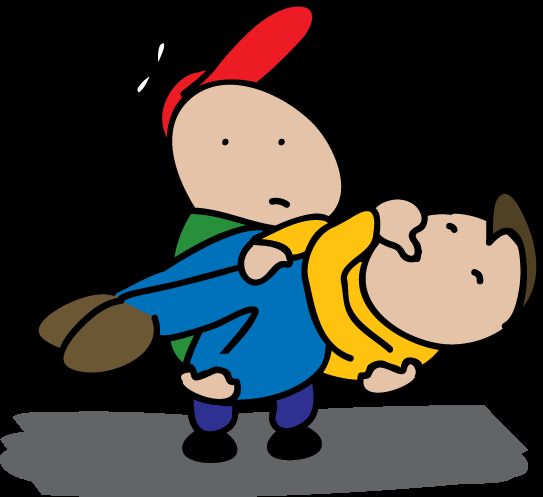
When Parents Make Their Children Partners
Covert incest occurs when a child plays the role of a surrogate husband or wife to a lonely, needy parent. The parent's need for companionship is met through the child. The child is bound to the parent by excessive feelings of responsibility for the welfare of the parent. As adults, these children struggle with commitment, intimacy and expressions of healthy sexuality.
There is no physical, sexual contact in this form of incest. Yet, inherent in the relationship is an archetype of feelings and dynamics more comparable to young love than a nurturing parent-child alliance. They become psychological or emotional lovers.
Many books and movies depict these children as heroes and saviors. Surrogate partnerships are romanticized by the culture and seen as a noble journey. Mom's little man, daddy's little girl, the golden boy and princess are a few of the names given to this role. However, there is a tremendous tragedy that befalls these children: the demand for loyalty to the lonely and needy parent overwhelms the child and becomes the major organizing experience in the development of the child's life.
It has also been labeled emotional or psychological incest, but these labels mislead by implying an absence of sexual damage. In fact, the developing sexuality is the major casualty of covert incest. Sexuality is the battlefield where the demand for loyalty to the parent and, the wishes of the developing self, clash.
Feelings of entrapment and guilt weave themselves into the developing sexuality. Erotic urges toward a love object other than the parent are experienced as disloyal. Forced to declare loyalty to the needy parent, the developing sexuality is shrouded in feelings of overstimulation, danger, engulfment, rage, ambivalence and shame. In order to survive and function, the child splits-off their sexuality from the developing self.
Many problems arise from the feeling of disloyalty caused by covert incest. Common consequences include:
* difficulty with attaching and separating in relationships
* avoiding relationships
* difficulty making commitments
* premature ending of relationships
* sexual addiction or compulsivity
* sexual dysfunction
* confusion regarding sexual orientation
* absence of sexual feelings or desires
* difficulty identifying personal needs
* being loyal in situations or relationships which are chronically difficult, neglectful or traumatic
* difficulty ending relationships.
Sexually addicted families and other dysfunctional families create a vacuum in functioning that leaves a child vulnerable to being in the role of a surrogate spouse to a lonely, needy parent. Covert incest is an important link in understanding the generational patterns of sexual addiction and incest occurring in families.
For more information on covert incest, refer to the book Silently Seduced: When Parents Make their Children Partners, Understanding Covert Incest, by Kenneth M. Adams, Ph.D., Health Commuications, Deerfield Beach, FL (1991).
ORIGINAL
Labels: abuse, adult children of narcissists, boundaries, children, covert incest, manipulation, narcissists, parents, partners, triangulation
Tuesday, May 21, 2019
Pathological Narcissism - A Spiritual Disorder
Dr. Maria Hsia Chang, Professor
Political Science, University of Nevada
In psychology, personality disorders refer to individual traits that reflect ingrained, inflexible, and maladaptive patterns of behavior that cause discomfort and impair a person’s ability to function--including her relations with friends and family. At least ten distinct personality disorders have been identified, one of which is the narcissistic personality disorder (NPD) that the American Psychological Association (APA) classifies as a "cluster B" disorder.
NPD is a highly complex psychological-behavioral syndrome that confounds and baffles those close to the afflicted. Once understood, however, one achieves clarity of vision.
Socio-biologists maintain that narcissism is natural for both individuals and groups because self-love is an instinctive, natural-selection trait. That is why all children are narcissists. As individuals mature into adulthood, however, they become less narcissistic because their insecurity tends to diminish as a result of concrete achievements and successes. A certain degree of healthy self-love nevertheless continues into adulthood. It is when narcissism in adults is excessive that psychologists consider it to be a sign of immaturity or worse, a pathology--that of narcissistic personality disorder.
Although the phenomenon of excessive narcissism is as old as humanity, the formal diagnosis of NPD was made by the APA only as recently as 1990.
I’ve compiled the following, after having read, assimilated, and synthesized a great deal of the literature on this subject. Instead of the typical approach taken by the psychological literature on NPD--which describes the disorder as a syndrome of various attributes--what I attempt to do here is to uncover the central logic that accounts for the syndrome. In the following description of the NPD syndrome, I use the pronoun "she" to refer to the narcissist, for the sake of avoiding the cumbersome "he/she" and " his/her."
Some psychological literature, claims that male NPDs outnumber females. The literature also claims that the incidence of NPD is relatively rare, afflicting an estimated 1% of the population. Both of these claims, however, are not verified by my own personal experiences. The problem, as the psychological literature itself admits, is that the very nature of NPD prevents narcissists from admitting they have a problem and to seek professional help. As psychiatrist M. Scott Peck explains: "To receive treatment one must want it, at least on some level. And to want it one must consider oneself to be in need of it. One must, at least on some level, acknowledge his or her imperfection." The few narcissists who do seek therapy, do so when their narcissism has led to a major life crisis, such as divorce, drug addiction, unemployment, and imprisonment. Even when NPDs seek counseling, they typically do not complete the course of psychotherapy. Instead, when the therapist confronts them with their pathological narcissism, the NPD would simply abandon treatment and flee. Given this, I have every reason to conclude that the statistics claimed in the literature are suspect. The simple truth, I believe, is that psychologists don’t really know how many NPDs there are in the population, nor do they really know that male NPDs outnumber females.
The NPD Syndrome
At the core of the NPD syndrome is the construction of a false self as a way to cope with the external world by compensating for the individual’s feelings of insecurity and uncertainty of identity.. Like its namesake, the mythic Narcissus who is in love with his reflection in water, the self that the narcissist loves is not her real self, but a false self that is grandiose, perfect, and superior. The particular basis of the grandiosity is what the narcissist loves herself for. That varies according to the individual, and may be physical beauty, intellect, talent, power, etc. As a consequence, psychologists divide narcissists into two types: the somatic and the cerebral. The former are those whose narcissism is focused on their bodies; the latter are those who have a grandiose conception that they have a superior intellect.
I would add a third type: the spiritual narcissist. These are those who ooze with false piety, having a false conception of themselves as supremely virtuous.
Regardless of the particular basis of grandiosity, the narcissist strives to maintain and protect that false self at all costs. In effect, the grandiose false self acts like the center of a wheel, to which are affixed the spokes. The latter are the syndromatic attributes of NPD, which function to protect and maintain the grandiose false self. The constellation of attributes is not accidental because there is a functional reason for the various attributes. This is the underlying logic that accounts for the syndrome.
Together with the APA’s DSM IV criteria, those "spokes" may constitute a particularly malignant form of narcissism.
They include the following attributes
Using people—even supposed loved ones—as tools of self-aggrandisement to affirm and maintain the false self. The narcissist is hollow inside and derives her sense-of-self from seeing her reflection in the eyes of others. The psychological literature calls this "mirroring": the narcissist mainly uses other people as a mirror to reflect her grandiose self-conception. Like a vampire who must feed on others’ blood in order to live, the narcissist feeds on other people’s love, approval, admiration, and compliments. Once the source is sucked dry, the narcissist no longer has use of that person and will abruptly and mercilessly cast him/her aside.
To lure people into her web, the successful narcissist puts on an attractive social mask. She can be charming, gracious, socially adept, even obsequious. She must also be a consummate actor, skilled at simulating the whole range of human emotions, especially those of love, compassion, and kindness. The more successful she is at simulation, the greater her circle of friends and acquaintances who function as her primary and secondary feeding sources.
More than to lure people into her web, the narcissist’s charming social mask also conceals the false self from scrutiny. Concealment requires secrecy, evasion, dishonesty, and lying. In effect, the narcissist is a consummate pathological liar, i.e., she habitually lies, even about seemingly trivial, inconsequential matters.
Using other people as her "bloodbank" requires that the narcissist be a human emotional radar. The successful narcissist is psychologically astute and shrewd so that she can "size up" everyone she encounters for their potential to be her blood-donor.
Cynically using other people also requires that the narcissist be lacking in empathy. Do not be fooled by her simulations at empathy. A good experiment is for you to withhold your approval and compliments. You will discover that, overnight, the narcissist has lost her kindness and even simple civility.
The maintenance and protection of the false self also requires the narcissist to be constantly vigilant against being "attacked" by others. This is why the narcissist overreacts with rage and humiliation to any perceived criticism, no matter how minor or trivial the perceived criticism.
As the saying goes, "the best defense is offense." More than reacting with rage to criticisms, the narcissist attacks the critic. This is called scapegoating--projecting one’s own faults (what Carl Jung called our "shadow") onto another person, and blaming the other for the narcissist’s own inadequacies. The narcissist is very skilled at this.
The false self must be impervious, which requires the narcissist to resist self-examination and introspection. Doing so would open the narcissist to reality-based assessment--a dangerous undertaking because the false self is, by definition, unreal. As a consequence, instead of the insecurities of normal human beings, the narcissist exhibits an impassive and uncritical acceptance of herself.
The inability or unwillingness to be introspective, in turn, results in cognitive dissonance, cognitive gaps, and non sequiturs. Trying to engage a narcissist in serious dialogue--especially about herself or her beliefs and values--can be a disconcerting experience because nothing she says makes sense.
Since the false self is superior and grandiose, it needs no one. The narcissist dreads becoming dependent on others, but asserts and clings to an exaggerated independence. Since her love of herself is all-consuming, she is incapable of love and emotional commitments to other people. This is why the narcissist reacts to sincere declarations of love (verbal or in the form of behavior, such as significant gifts) by emotionally distancing herself and, in some cases, outright abandonment--because she is unable to reciprocate that commitment..
In effect, the narcissist’s grandiose self-conception makes her a god unto herself. Gods are not subject to the morality that governs lesser beings--"rules don’t apply to me." The narcissist refuses to subscribe to society’s moral rules and ethical standards. Instead, morality is subjective: "Nobody can judge me." One NPD I know exhibited this trait when she blithely received the Holy Eucharist (believed by Catholics to be the actual body of Christ) in Mass--although she is not Catholic. Another NPD, a former student of mine, responded with rage to my critique of his essay-exam, which garnered a respectable "B" grade, insisting that he was not subject to the grammatical rules of the English language.
Lacking an abstract universal system of moral codes--and being cognitively impaired--the narcissist lives in a world of feelings and sensations: "What’s good is that which makes me feel good." Narcissists tend to wallow in cheap "feel good" sentiments. • Since the false self is grandiose and perfect, relationship problems are never the fault of the narcissist. She blames everyone, but herself. This also means that narcissists do not ever apologize or admit that they are wrong or at fault. Instead, they will always subtly, if not blatantly, turn things around to blame you.
All of this means that narcissists do not, as a rule, seek therapy. In the few cases that do, it is because their problems have become so serious that they cannot be ignored (e.g., divorce, drug abuse, job loss, imprisonment). Even then, the narcissist resists therapy and is likely to blame the therapist (scapegoating!) and flee from treatment.
How to Deal With a Narcissist
The first rule is: Give up on your fantasy that you have an authentic relationship with the narcissist. Sadly, the person you think you love/like never existed.
The second rule is: Don’t be a bloodbank for the narcissist.
The third rule is: Be emotionally detached.
The fourth rule is: If you must interact with her, challenge the narcissist’s false conceptions of herself by insisting on reality-based assessment. Doing so, however, is guaranteed to alienate you from the narcissist--which is a good thing because the narcissist is incapable of genuine friendship and love. In the last analysis, you are better off without the narcissist.
If, unfortunately, you must have her in your life because your survival depends on her, as in the case of a child needing the narcissistic mother’s care, the way to get along with her is to feed her fantasies by lavishing compliments on her, i.e., by letting yourself be her bloodbank.
Pathological Narcissism is a Spiritual Disorder
A fifth-century theologian who called himself Dionysius the Aereopagite once wrote in The Divine Names that, "The denial of the true Self is a declension from Truth." In the last analysis, in constructing and clinging to their false selves, the entire persona of the NPD is a big lie. That being so, I have come to believe that NPD is not a psychological disorder at all, but a moral and spiritual disorder. Allow me to explain. An intrinsic attribute of the NPD syndrome is deception--of oneself and of others--in the service of maintaining the grandiose false self. Philosopher René Descartes wrote that "willful deception evinces maliciousness and weakness."A person does not deceive without thinking about and willing it. One does not lie unless one intends to hide the truth, which means that one knows that one is being deceptive. Nor can the NPD put together and maintain the elaborate and intricate NPD syndrome of attributes (e.g., using others for self-aggrandisement, attractive social mask, secrecy, evasion, lying, scapegoating, etc.) without conscious effort.
Psychologists say that, in their quiet moments, NPDs know that they are not really as grandiose as they pretend:
When NPDs cynically use others to "feed" their false self, they know it.
When they overreact to perceived criticisms, they know what the truth is.
When they lie to conceal their inadequacies, they have chosen to deceive.
When they scapegoat others, they do so with deliberation.
When they refuse to apologize, they know they are in the wrong.
All of which means that free will is fully engaged in this so-called "disorder."
In effect, the NPD is more than a mental sickness. Pathological narcissism is not some noxious virus or bacteria that overtakes a person. Whatever the early childhood experiences, free will is still operative here. Rather, NPD is a moral disorder, because it is immoral to lie and to use, exploit, blame, and hurt others.
More than immoral, NPD is, at its foundation, a spiritual blight. Since the false self of the narcissist is extremely grandiose, she excludes herself from the moral norms that govern "lesser" beings: "rules don’t apply to me." That makes NPDs their own gods. In so doing, they are in denial of the fundamentally flawed nature of all human beings.
The malignant narcissist is more than immoral, she/he is evil.
In his book, People of the Lie, Peck proposed to the psychological profession a new diagnostic category of the "evil personality disorder" (EPD) as a sub-type of NPD. As he put it, "The evil are ‘the people of the lie,’ deceiving others as they also build layer upon layer of self-deception." And when the narcissist intentionally hurts another, she has crossed the line from being an NPD to being an EPD. In Peck’s words, "evil individuals will flee self-examination and guilt by blaming and attempting to destroy whatever or whoever highlights their deficiencies.". Except for atheists (who must be very grandiose because they claim to know a negative, i.e., that God does not exist),viall of us--the religious as well as agnostics--believe in the existence of some supreme moral being or force in the universe.
Recognizing that, most of us harken to these words of Descartes: "I have been so constituted as to be some kind of middle ground between God and nothing .
I am not the supreme being, I lack quite a few things.
Dionysius the Areopagite concluded that being self-centered is "inherently wrong" because we have "no right to be the centre of things" as only God is the rightful center of all things.
Not only is vanity and pride the first of the Seven Deadly Sins, I believe that narcissism is the root of all evil. Decrying the ills that he saw rampant in modern society--the relativization of all moral norms and the reduction of life to the immediate pursuit of material gain without regard to its general consequences--VaÇlav Havel observed that "Given its fatal incorrigibility, humanity will have to go through many more Rwandas and Chernobyls before it understands how unbelievably short-sighted a human being can be who has forgotten that he is not God."
It is the misdiagnosis of pathological narcissism as a "personality disorder" instead of a moral-spiritual condition which accounts for psychiatrists’ characterization of it as "one of the most . . . difficult-to-treat conditions in the lexicon of mental illness.
JOIN OUR FACEBOOK SUPPORT GROUP FOR VICTIMS OF NARCISSISTS & PSYCHOPATHS
Labels: evil, exploitative, manipulative, narcissism, narcissists, spirituality




















