Sanctuary for the Abused
Sunday, January 17, 2021
How They Exploit Others
(note from site owner: this wonderful description deception & exploitation can also apply to narcissists, sociopaths and other types of abusers)

by Jennifer Copley
Psychopaths, also known as sociopaths, comprise 20-25% of the prison population, but 50% of those who have committed serious crimes. However, the majority of psychopaths are not violent — most are users, scam artists and shady businesspeople. There is some evidence that psychopaths may be overrepresented in the fields of business, politics and entertainment.
Targeting the Vulnerable
Psychopaths are good at spotting exploitable vulnerabilities in others. Many psychopathic scam artists seek lonely individuals and promise them a lifetime of love and partnership. Others target the grief-stricken or those who have suffered a recent setback or breakup and are therefore less apt to look closely at what appears to be a compassionate helping hand.
Alternatively, psychopaths may exploit someone’s need to be needed, finding a motherly or fatherly soul that they can milk for sympathy and cash. They are also inclined to marry people with low self-esteem and convince them that they are somehow to blame for any abuse they suffer in the marriage.
The Sympathy Ploy
Psychopaths usually play on the sympathies of others. When people’s empathic responses are aroused, they are less inclined to scrutinize an individual’s behaviour, or they will attribute bad behaviour to an abusive childhood or other trauma. This provokes the sort of nurturing response that enables the psychopath to manipulate and extract what he wants from others.
While often appearing cold and deadpan, when they are trying to manipulate others, psychopaths often engage in dramatic, short-lived emotional displays designed to provoke sympathy or guilt, or even cause people to believe that they must be crazy for questioning the psychopath’s motives.
Psychopaths say whatever will get people to give them what they want. Many work hard to give the impression that all of their problems stem from cruel treatment at the hands of others, and that they could change for the better if only some kindly soul would take an interest in them and support them.
They usually reward these people by breaking their hearts and cleaning out their bank accounts, as well as ...abusing them ...
The Dynamic Persona
The psychopath can be an exciting companion at first because he takes risks that others wouldn’t take and thus can appear courageous and impressive. Psychopaths often pose as brilliant eccentrics, misunderstood geniuses or difficult artistic types, and so people are inclined to attribute bad behaviour to a creative temperament.
Self-assured, cool under pressure and socially adept, they may appear larger than life. Their tendency to maintain intensive eye contact and move into the personal space of others enhances the image of forcefulness and confidence.
Because many psychopaths have a surplus of charm and the gift of gab, they are able to dazzle their audiences and con them into believing all sorts of outrageous stories. Excellent self-promoters and fast talkers, they boast and dazzle their targets with a variety of grandiose plans.
The target usually experiences a wild ride and is left disappointed, financially poorer and wondering how everything the psychopath said could have seemed so plausible at the time.
The Flatterer
In The Miser, Moliere noted that “People can be induced to swallow anything, provided it is sufficiently seasoned with praise.” A common tool of the psychopath is excessive flattery. Most people enjoy receiving compliments, and those who suffer from either low self-esteem ...can be particularly vulnerable to this sort of approach.
Beware of those who tell you everything you want to hear all the time. A compliment or two is nice, but someone who continually peppers the conversation with flattery should be suspect.
Excuses and Empty Promises
A psychopath does not keep his commitments or obligations. He breaks his word, stands people up, abandons those who care about him at critical times in their lives, cheats with impunity, and makes promises he has no intention of delivering on to get what he wants.
Psychopaths may disappear and reappear in the lives of friends and family, causing worry and heartbreak, without ever adequately explaining what they’ve been up to. However, they always have excuses, and it is always someone else’s fault.
Psychopaths abandon their partners, spouses and children without the slightest concern. And while many don’t commit crimes for which they can be convicted, they often live what could be termed as a sub-criminal existence, engaging in a variety of secretive and shady dealings.
When they do achieve success, it is usually through causing harm to others. Their lack of commitment to anything is evident in the many contradictory and hollow statements they make.
However, they hang onto the people in their lives by promising to change, or even changing, briefly, only to revert back to their old ways in time.
SOURCE
(personal thanks to Jennifer Copley!)
Modes of Sociopathic Deception and Manipulation
by Jennifer Copley
Psychopaths, also known as sociopaths, comprise 20-25% of the prison population, but 50% of those who have committed serious crimes. However, the majority of psychopaths are not violent — most are users, scam artists and shady businesspeople. There is some evidence that psychopaths may be overrepresented in the fields of business, politics and entertainment.
Targeting the Vulnerable
Psychopaths are good at spotting exploitable vulnerabilities in others. Many psychopathic scam artists seek lonely individuals and promise them a lifetime of love and partnership. Others target the grief-stricken or those who have suffered a recent setback or breakup and are therefore less apt to look closely at what appears to be a compassionate helping hand.
Alternatively, psychopaths may exploit someone’s need to be needed, finding a motherly or fatherly soul that they can milk for sympathy and cash. They are also inclined to marry people with low self-esteem and convince them that they are somehow to blame for any abuse they suffer in the marriage.
The Sympathy Ploy
Psychopaths usually play on the sympathies of others. When people’s empathic responses are aroused, they are less inclined to scrutinize an individual’s behaviour, or they will attribute bad behaviour to an abusive childhood or other trauma. This provokes the sort of nurturing response that enables the psychopath to manipulate and extract what he wants from others.
While often appearing cold and deadpan, when they are trying to manipulate others, psychopaths often engage in dramatic, short-lived emotional displays designed to provoke sympathy or guilt, or even cause people to believe that they must be crazy for questioning the psychopath’s motives.
Psychopaths say whatever will get people to give them what they want. Many work hard to give the impression that all of their problems stem from cruel treatment at the hands of others, and that they could change for the better if only some kindly soul would take an interest in them and support them.
They usually reward these people by breaking their hearts and cleaning out their bank accounts, as well as ...abusing them ...
The Dynamic Persona
The psychopath can be an exciting companion at first because he takes risks that others wouldn’t take and thus can appear courageous and impressive. Psychopaths often pose as brilliant eccentrics, misunderstood geniuses or difficult artistic types, and so people are inclined to attribute bad behaviour to a creative temperament.
Self-assured, cool under pressure and socially adept, they may appear larger than life. Their tendency to maintain intensive eye contact and move into the personal space of others enhances the image of forcefulness and confidence.
Because many psychopaths have a surplus of charm and the gift of gab, they are able to dazzle their audiences and con them into believing all sorts of outrageous stories. Excellent self-promoters and fast talkers, they boast and dazzle their targets with a variety of grandiose plans.
The target usually experiences a wild ride and is left disappointed, financially poorer and wondering how everything the psychopath said could have seemed so plausible at the time.
The Flatterer
In The Miser, Moliere noted that “People can be induced to swallow anything, provided it is sufficiently seasoned with praise.” A common tool of the psychopath is excessive flattery. Most people enjoy receiving compliments, and those who suffer from either low self-esteem ...can be particularly vulnerable to this sort of approach.
Beware of those who tell you everything you want to hear all the time. A compliment or two is nice, but someone who continually peppers the conversation with flattery should be suspect.
Excuses and Empty Promises
A psychopath does not keep his commitments or obligations. He breaks his word, stands people up, abandons those who care about him at critical times in their lives, cheats with impunity, and makes promises he has no intention of delivering on to get what he wants.
Psychopaths may disappear and reappear in the lives of friends and family, causing worry and heartbreak, without ever adequately explaining what they’ve been up to. However, they always have excuses, and it is always someone else’s fault.
Psychopaths abandon their partners, spouses and children without the slightest concern. And while many don’t commit crimes for which they can be convicted, they often live what could be termed as a sub-criminal existence, engaging in a variety of secretive and shady dealings.
When they do achieve success, it is usually through causing harm to others. Their lack of commitment to anything is evident in the many contradictory and hollow statements they make.
However, they hang onto the people in their lives by promising to change, or even changing, briefly, only to revert back to their old ways in time.
SOURCE
(personal thanks to Jennifer Copley!)
Labels: abuse, brainwashing, cheating, emotional rape, exploitation, gaslighting, harm, lie, narcissist, psychopath, sociopath, use, vulnerable


Wednesday, October 03, 2018
The Contradictory Nature of Narcissists
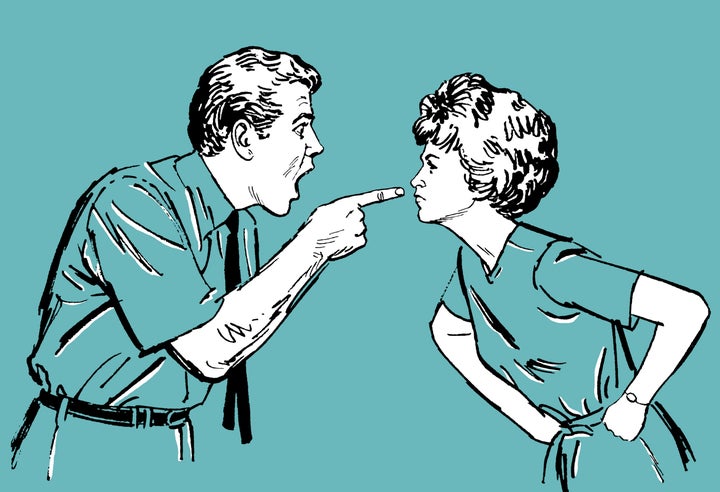
THE CONTRADICTORY NATURE OF NARCISSISTS
EXCERPTS:
NO MATURE CONSCIENCE
Narcissists lack a mature conscience and seem to be restrained only by fear of being punished or of damaging their reputations -- though, again, this can be obscure to casual observation if you don't know what they think their reputations are, and what they believe others think of them may be way out of touch with reality. Their moral intelligence is about at the level of a bright five- or six-year-old; the only rules they recognize are things that have been specifically required, permitted, prohibited, or disapproved of by authority figures they know personally.
Anyhow, narcissists can't be counted on not to do something just because it's wrong, illegal, or will hurt someone, as long as they think that they can get away with it or that you can't stop them or punish them (i.e., they don't care what you think unless they're afraid of you) .
ENTITLEMENT
Narcissists feel entitled to whatever they can take. They expect privileges and indulgences, and they also feel entitled to exploit other people without any trace of reciprocation
CASUAL DISHONESTY & CRUELTY
If you're like me, you get into disputes with narcissists over their casual dishonesty and cruelty to other people. Trying to reform narcissists by reasoning with them or by appealing to their better nature is about as effective as spitting in the ocean. What you see is what you get: they have no better nature.
The fundamental problem here is that narcissists lack empathy. Lacking empathy is a profound disturbance to the narcissist's thinking (cognition) and feeling (affectivity). Even when very intelligent, narcissists can't reason well. One I've worked with closely does something I characterize as "analysis by eggbeater." They don't understand the meaning of what people say and they don't grasp the meaning of the written word either -- because so much of the meaning of anything we say depends on context and affect, narcissists (lacking empathy and thus lacking both context and affect) hear only the words. (Discussions with narcissists can be really weird and disconcerting; they seem to think that using some of the same words means that they are following a line of conversation or reasoning. Thus, they will go off on tangents and irrelevancies, apparently in the blithe delusion that they understand what others are talking about.)
And, frankly, they don't hear all the words, either. They can pay attention only to stuff that has them in it. This is not merely a bad habit -- it's a cognitive deficiency. Narcissists pay attention only to themselves and stuff that affects them personally. However, since they don't know what other people are doing, narcissists can't judge what will affect them personally and seem never to learn that when they cause trouble they will get trouble back. They won't take other people's feelings into consideration and so they overlook the fact that other people will react with feeling when abused or exploited and that most people get really pissed off by being lied to or lied about.
CONTRADICTORY
The most telling thing that narcissists do is contradict themselves. They will do this virtually in the same sentence, without even stopping to take a breath. It can be trivial (e.g., about what they want for lunch) or it can be serious (e.g., about whether or not they love you). When you ask them which one they mean, they'll deny ever saying the first one, though it may literally have been only seconds since they said it -- really, how could you think they'd ever have said that? You need to have your head examined! They will contradict FACTS. They will lie to you about things that you did together. They will misquote you to yourself. If you disagree with them, they'll say you're lying, making stuff up, or are crazy. [At this point, if you're like me, you sort of panic and want to talk to anyone who will listen about what is going on: this is a healthy reaction; it's a reality check ("who's the crazy one here?"); that you're confused by the narcissist's contrariness, that you turn to another person to help you keep your bearings, that you know something is seriously wrong and worry that it might be you are all signs that you are not a narcissist].
NOTE: Normal people can behave irrationally under emotional stress -- be confused, deny things they know, get sort of paranoid, want to be babied when they're in pain. But normal people recover pretty much within an hour or two or a day or two, and, with normal people, your expressions of love and concern for their welfare will be taken to heart. They will be stabilized by your emotional and moral support. Not so with narcissists -- the surest way I know of to get a crushing blow to your heart is to tell a narcissist you love her or him. They will respond with a nasty power move, such as telling you to do things entirely their way or else be banished from them for ever.
THEIR RELIGIOUSNESS
Narcissists I've known also have odd religious ideas, in particular believing that they are God's special favorites somehow; God loves them, so they are exempted from ordinary rules and obligations: God loves them and wants them to be the way they are, so they can do anything they feel like -- though, note, the narcissist's God has much harsher rules for everyone else, including you. [Many readers have questions about narcissism and religion.
Here is an interesting article on the Web: "Narcissism Goes to Church: Encountering Evangelical Worship" by Monte Wilson. An excerpt:
"Modern American Christianity is filled with the spirit of narcissism. We are in love with ourselves and evaluate churches, minist,ers and truth-claims based upon how they make us feel about ourselves. If the church makes me feel wanted, it is a good church. If the minister makes me feel good about myself, he is a terrific guy. If the proffered truth supports my self-esteem, it is, thereby, verified."]READ MORE HERE
(note - the male gender was used in the above; Narcissists can also be female)
Labels: abuse, contradict, cruelty, lie, moral insanity, narcissism, narcissist. casual dishonesty, religion
Wednesday, March 14, 2018
Law Enforcement & the Abuser
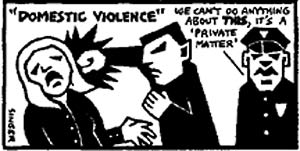
HOW ABUSERS INTERACT WITH LAW ENFORCEMENT
WHEN THE POLICE COME, THEY MAY DO THE FOLLOWING:
*Denial and Minimization
* Refusing to admit their violent behavior. Makes statements such as:
o "I didn't do anything."
o "She just bruises easily."
o I had my fist out and she ran into it."
* Admitting less than actually happened in the incident or making the assault sound trivial.
o "It was only a love tap."
o "I just gave her a little push."
o "Her ribs are just a little bruised (not broken)."
* Effective Police Response: Inform the offender that he has already broken the law and explain how his/her behaviors met that criteria. Get a detailed account of the scope of the violence by conducting a partner contact interview and by using police reports and hospital records.
~~~
*Focusing on Intentions
* Defending one's behavior by pointing to good goals.
o "I was trying to keep her from hurting herself."
o "She was hysterical and yelling nonstop so I slapped her to calm her down."
* Effective Response: Point out the effects of violence: terror, fear, distrust, pain, injury, destruction, etc. Even if his intentions are good, violence not justified and it is illegal.
~~~~
*Victim Blaming
* Most popular of the excuses, the offender will make the case that the victim is a bad person and the abuse is deserved. The offender hopes you will focus on the victim's behavior rather than abuser misconduct. If you begin to criticize the victim, you become allied with the batterer.
o "I found her with another man."
o "She is a drunk (alcoholic, drug addict, bad mother, thief etc.)."
o "She assaulted me."
* Effective Response: A woman doesn't have to be Betty Crocker (a perfect mother or housewife) in order to deserve not to be beaten. People do not have to earn the right to be free from violence and fear. The act of battering is illegal, just like bank robbery is illegal even if you are very poor.
~~~~
*Loss of Control
* Batterer doesn't take responsibility for what happened.
o "I exploded but it wasn't really me."
o "I lost it and the next thing I knew, she was down on the floor bleeding and screaming."
o "I saw a white (blue, red, yellow etc.) light and I just blacked out. When I came to she was lying on the ground."
* Effective Response: If you're convinced you have no control, then we should surrender you now since treatment will be totally useless. Do you get violent the same way whenever someone gets you really upset? With your boss? Getting violent with someone is not an automatic response once you get upset with another person.
~~~~~
*Provocation
* The offender claims the other person drove him/her over the edge so they don't take responsibility for what occurred.
o "She made me do it."
o "She knew it was coming and she pushed me into it."
* Effective Response: No one can make you violent. People may hurt, frustrate or anger you but there are many alternative ways to respond that don't involve violence.
~~~~
*Lack of Time and Money
* Offender cannot attend treatment because of work and cannot afford it.
* States that they have changed, victim no longer feels threatened by them or that the counselor's no longer feel treatment is necessary.
* Effective Response: Most batterer programs have a sliding scale fee system. Reinforce that the abuser must make time for treatment. If you are a probation officer, it is important to communicate frequently with the treatment program and the victim to avoid confusion and manipulation.
~~~~
OTHER MANIPULATIONS ABUSERS USE
* Pretend they are sleeping when the officers arrive.
* Will be apologetic, friendly, polite and very courteous to the officers.
* Will express frustration/sadness over their inability to get the "alcoholic" and/or "drug addicted" victim help for their problem.
* Will attempt to get sympathy by presenting themselves as a "victim" to their partner's nagging and/or verbal abuse.
* Will attempt to get the officers to relate to their situation. For example, "You know how those women are."
Labels: abusers, charming, inadequate police response, lie, manipulate, narcissists, police, polite. psychopaths
Monday, January 15, 2018
People of the Lie


Review from Amazon.com
"This book really scared the daylights out of me, amazed me, and also gave me terrific insight into hidden evil. From blatant wartime evil, to deeply hidden malevolency in people around you. Conscious evil, (evil parents really disturbed me...wait till you get to the story of the rifle... absolutely horrific and 100% FACT). Dr. Peck really has studied how evil hides, lies, and distorts facts to manipulate those around it.
A great read. You'll be amazed at how evil manifests itself and stunned at the same time."
A great read. You'll be amazed at how evil manifests itself and stunned at the same time."
Labels: evil, lie, m. scott peck, narcissists, people, psychopath, sociopaths




















