Sanctuary for the Abused
Saturday, February 25, 2023
Why Not Everyone Can Just "Move On" and "Get Over It"

Victim, survivor, victimology, victim abuse... why are victims being told to deny their reality?
You have been methodically and diabolically abused and suddenly you hear "don't be a victim, choose to be a survivor." The concept that a victim can always consciously choose how to proceed, is wrong.
The phrase, "move on with your life" is common. In a commanding, offhand and arrogant tone, those who have fought and lost a custody battle, their home, car and savings, family, job and may be suffering physically (adrenal fatigue, fibromyalgia, chronic fatigue syndrome, lupus, crohn's disease, etc. are common) are stunned to be told, "well, better move on with your life."
The entire infrastructure of a life is often destroyed leaving the victim, stunned, numb, hypervigilant, indigent, betrayed and perplexed as to why they are expected to "choose" to not be a victim. Give them a time machine and this can be done. Give them revictimization abuse and it cannot. They are victims.
It's time to give that word back its status and in doing so, give respect to the abused. Respect comes in the form of providing help. An empowering, compassionate approach to those who have been stripped of dignity through repeated abuse in courts of law, or by their partners, begins with recognizing and defining the situation of the victim.
What is the definition of a "victim"?
According to the dictionary a victim is: One who is harmed by, or made to suffer from an act, circumstance, agency, or condition; a person who is tricked, swindled, or taken advantage of.
The victim of a narcissist or abuser is traumatized. There are biochemical changes in the body and structural changes in the brain. Thought patterns change, memories are lost, immune system strongly affected, brain cells die, there is chest pain, muscle pain, feelings are intense and emotions chaotic. Victimization is never deserved.
Why are victims revictimized?
So why does someone brutalized, abused, and traumatized have to be afraid of the word "victim" ? Because it's politically correct to say, "I'm not a victim, I'm a survivor." Much the same way, people think the capitalist economy gives everyone an equal chance to become wealthy (which of course it does not - if everyone started with the same funding, self esteem, contacts, educational background, health, then that would be true) but when the playing field is not level some have an advantage.
Not everyone who is the victim of emotional, verbal, and narcissistic abuse are the same. Some have more resiliency than others. Some are numb, some are without any resources or support. Many have physiological changes that need to be addressed. And when those who need help come looking for it, instead of being welcomed, they find "helpers" that tell them they are responsible for their healing and they better choose it now or they will always be a victim and never a survivor. These people are revictimizing those they want to help because "choice" is NOT always an option.
Dr. Frank Ochberg, Harvard trained MD and trauma expert, says our culture now disparages, blames, isolates, and condemns someone for being a victim.We must reclaim the word "victim" and renew our commitment to those who are victims. We should examine the role of a victim impact statement and victim advocate for those who are traumatized emotionally as well as from a criminal act.
Are you being victimized again by someone who says, "if you won't stop being a victim. I won't help you"? Maybe your attorney, therapist. siblings, or friends are claiming you can just choose to stop being a victim. Maybe they think you can start a company without money, and buy a house with bad credit. Maybe they don't know what they are talking about.
As a victim of any kind of abuse you deserve:
1. Compassion
2. Validation
3. Freedom from therapeutic verbal abuse
4. A support team to open doors to resources
5. A friend, therapist or counselor who can teach you the skills to rebuild your life.
Depending on who you are, this may take a long time or not. Variables include amount and length of abuse, health, supportive family or not, finances, genetic explanatory style (optimism or pessimism), coping skills you may already have and many others. As a victim, you have the right to say, "STOP" to those who blame the victim. An entire self help industry has arisen that believes if you just really really wanted to, you can be happy and healthy and fully functional as soon as you choose to be. A starting point for recovery are post traumatic stress sites. There you will find trained and compassionate support people with articles that explain trauma healing methods.
The Scientific Basis of Healing, Happiness and Recovery
It doesn't matter if you call yourself a victim, survivor or Martian. No one should deny you victim status. It is what is. A victim is not a slothlike creature, nor stupid. Nor is a victim responsible for what happened to her and we must stop worrying about language and start helping. A victim is a person with a life in chaos. What matters is that you get the help you need and the compassionate trained person to give you the skills.
The good news is that happiness is trainable, resiliency comes back and psychologists are moving from the Freudian model which has dominated psychology for too long and was wrong to boot, to a model that moves from pathology as the dominant scheme. The process of de-traumatization begins with validation. It then moves to retraining explanatory style. Depending on the depth and time of the abuse, it may take a long or short time to process to empowerment and control. IT IS NOT NECESSARY to analyze every event. It IS necessary to be heard and listened to and to tell your story. Validation is critical.
SOURCE
Labels: abuse survivors, blame the victim, cognitive dissonance, denial, empower, get over it, move on, narcissism, psychopathy, ptsd, sociopathy


Saturday, April 11, 2020
Domestic violence victims, stuck at home, are at risk during coronavirus pandemic

"It is the perfect storm for someone who wants to isolate or hurt their partners," said Val Kalei Kanuha, assistant dean of Diversity, Equity and Inclusion at the University of Washington's School of Social Work.
Domestic violence will likely increase in social isolation
Stress heightens the likelihood for violence
Coronavirus throws a wrench in victims' plans
Child abuse is more prevalent
How services are adjusting
Resources for victims of domestic violence
National Domestic Violence Hotline Call 1-800-799-7233 or text LOVEIS to 22522
Available 24/7. Can connect callers with local resources and immediate support. Also available through online chat tool.
Labels: abuse survivors, abused, adult children of narcissists, COVID-19, disabilities, guns, sexual violence
Monday, October 29, 2018
Safety Nets Often Fail Abuse Victims
By SCOTT GUTIERREZ
Victims of domestic violence often turn to a neighbor instead of the police, and even if they sought court protection they often weren't given help to stay safe, according to a recent study of domestic violence homicides in Washington.
In addition, women of color were two or three times more likely than Caucasian women to be killed by an intimate partner, according to the report, and often faced cultural and language barriers to escaping an abusive relationship. The same trend was apparent with 43 men who have been killed since the biennial Domestic Violence Fatality Review began in 1997, according to the report.
The report, which was presented Monday by the Washington State Coalition Against Domestic Violence, looks at trends in domestic violence homicides in an effort to improve the criminal justice system and community response to better protect victims.
Sixty-eight people were killed as the result of domestic violence in the latest two-year period examined, between July 2006 and June 2008. Of those cases, 11 were chosen for an in-depth look.
In six of those cases, victims went to a neighbor or community member instead of calling the police. Private citizens often didn't know what to do and weren't aware of organizations that they could call for advice about how to help a victim of abuse.
In the past, the fatality review mostly focused on improving how police and courts handle domestic violence. This year, the focus shifted more toward how community members could better prepare if someone sought help from them, including how to help without jeopardizing their own safety, she said.
"In general, who do you turn to when in a crisis? I think most go to the people who are closest to us before we go to a stranger," said Kelly Starr, a coalition spokeswoman. "We can't rely on all of these systems as the answer."
The report recommended that block watches and crime-prevention groups learn more about domestic violence resources and share information. It also suggested that the media give contact information about advocacy services when reporting on domestic violence.
"I think the next piece is building the community's capacity to respond to this. We all have to build ourselves up so we're ready," Starr said.
Still, the report found areas where the court system needed improvement. For instance, victims often had no help from advocates when petitioning for court protection orders against their abusers. Without someone helping them make that decision, they could increase their risk in some cases, according to the report. An advocate can help plan where to go or what to do if the abuser retaliates or with deciding whether obtaining an order is the safest option.
One woman was killed last year in Federal Way just three hours after her boyfriend was served with an anti-harassment order.
In King County, the Prosecutor's Office provides a protection order advocacy program that victims have used in 73,000 cases since it was established 20 years ago. Generally, advocates serve about 5,000 cases each year, in addition to 2,500 walk-ins seeking advice, said David Martin, who supervises the domestic violence unit.
"For some folks, these are very difficult decisions to make -- life-altering decisions. There could be children involved, or a long-term relationship," Martin said. "We want people to understand what's going on and to make a good, informed decision."
Most Washington courts that provide protection orders, however, don't offer advocacy services, according to the report.
In those cases, court clerks' offices could consider referring victims to community-based organizations, which wouldn't cost extra money, Starr said.
SOURCE
Labels: abuse survivors, domestic violence, failure, harassment, hotline, protective order, safety, victims
Sunday, September 23, 2018
An Open Letter to Christian Pastors & Clergy
 (can be applied to Imams, Rabbis, Priests, etc)
Pastors, have you ever preached a sermon against domestic violence? Odds are, you haven’t. I’ve listened to approximately 4,000 sermons and have yet to hear a pastor condemn domestic violence from the pulpit.
Southern preachers prefer to pontificate on matters like abortion and homosexuality. Sometimes they rail against feminism. On occasion they preach against pornography, using the occasion to slam churchwomen over immodest attire. In every denomination, pastors preach often enough on tithing, and never fail to pass the plate. Yet they fail at addressing an issue faced by approximately one fourth of their congregation.
Recently a wildly popular pastor shoved the problem of Christian violence into the spotlight when he choked, kicked and stomped his wife in the parking lot of an Atlanta hotel. In the South, beating your wife may or may not be a crime. Records show that the most common law enforcement response to domestic violence is “separating the parties.”
Victims rarely press charges because they fear reprisal. Law enforcement rarely presses their own charges (though they could and should), essentially treating wife-beating as a “victimless crime.”
Bishop Thomas W. Weeks, III crossed the line that even Georgia will not tolerate: He was wearing shoes when he kicked his wife. That’s a felony. Besides that, he committed the acts publicly and on video surveillance tape. He also threatened to kill her, which is another Georgia felony.
The abused wife, Juanita Bynum, is an internationally acclaimed televangelist and best-selling author who empowers Christian women with her preaching. Church members say that couple of weeks before the attack, Weeks announced that Bynum would no longer be preaching at the church they founded.
Bynum is pressing charges against Weeks and seeking to end the marriage. Attorneys for Weeks say he will contest the divorce on the grounds that she was cruel. The strangest part of this story is not that the man who kicked and stomped his wife is contesting the divorce or fighting the charges; that happens all the time. What is so bizarre is where this man was just a few days after the beating: He was behind his pulpit telling his congregation that the devil made him do it.
Finally, a preacher is talking about domestic violence! If only his congregation had responded with a resounding movement down the aisle – and right out the church door. No one should sit under the teaching of a wife-beater. The elders should have stripped this man of his title and never let him behind the pulpit again.
T. D. Jakes, the famous televangelist who helped bring Bynum to power, condemned violence against women in a written statement two weeks after the attack. He pointed out that every day, four American men murder their wives or girlfriends, resulting in 1,400 deaths per year. That’s an FBI statistic. He also mentioned that over half a million cases of intimate assault are reported each year. Most cases go unreported. According to the most conservative estimates, between 2,000,000 and 4,000,000 women are battered each year. In 1990, the U.S. had 3,800 shelters for animals, and only 1,500 shelters for battered women.
Other Christian leaders even try to blame the victims. Christian author Gillis Triplett claims that there are thirteen traits common to abused wives, including “THEY LOVE THE DRAMA!” (Emphasis his.)
Trait #1. They Don’t Know What Domestic Violence IsEvangelical leaders John MacArthur and James Dobson have both gone on record stating that women must be careful not to “provoke” abuse. In the 1996 printing of “Love Must Be Tough,” Dobson told a story about a woman who was physically beaten by her husband. Dobson concluded that the woman “baited” her husband to hit her so that she could show off her black eye, which he calls her “prize.”
An act of domestic violence takes place every 12 to 15 seconds. It is rare that a week goes by without us hearing about a husband, boyfriend or lover who assaulted or killed his wife or girlfriend. Call any Police precinct and they will tell you the lion’s share of their calls are not related to robberies, drugs or drunk drivers, but to domestic disputes. We hear about domestic violence on Oprah, Court TV, the Channel 5 News and V-103. Every year, the entire month of October is dedicated to this prevalent issue. In Manhattan, New York, one City Councilwoman proposed a bill that would require all newlyweds to receive a brochure on spousal abuse when they receive their marriage license.
Even with all of the public outcry and the private and government agencies that dedicate themselves to domestic violence awareness, amazingly some ladies still don’t know what domestic violence is or that it exists on such a large scale. They don’t comprehend that some men believe they have a God-given right to abuse women. They don’t understand that there are devious misogynistic men who intentionally seek to lure women into domestic nightmares. Due to their lack of knowledge, these ladies become prime targets for abusive men.
Trait #2. They Don’t Know The Warning Signs
In today’s society, every woman actively engaged in dating or seeking a mate should know the warning signs of abusers, but most don’t! At least not until they find themselves booby-trapped in an abusive nightmare. Abusers give off warning signs and they use certain techniques and tricks to lure their victims into their vise-grip like clutches. With domestic violence so pervasive, not knowing the warning signs of abusers is self-annihilation. I advise all ladies not to date until they can identify abusers. Ladies who don’t know or refuse to learn these tell-tale signs are soft, exploitable targets for these hardened men.
According to family therapist, Dr. Torri Griffin, LPC, domestic violence takes on many forms, some of which leave no visible wounds. “Many ladies experience the non-verbal types of abuse from their partners long before experiencing the physical ones. Social isolation, financial deprivation, verbal abuse and emotional abuse are usually present when the physical abuse begins. Most ladies excuse these behaviors as his temperament rather than as serious signs of worse things to come.”
Trait #3. They Intentionally Ignore The Warning Signs
Karen did it again! She covered for her boyfriend’s short fuse and hair trigger temper. They were on their way to a restaurant after leaving church. While stopped at a traffic light, Eric became peeved because the light was taking too long to turn green. When one of the passengers gently reminded Eric that they were on their way to have soup and salad and no one was in a hurry, Eric lit into her with a verbal tirade that shocked everyone in the vehicle; except for Karen. She was used to it! Not to Eric’s outbursts. He scared the daylights out of her with his unpredictable anger. Karen was used to intentionally ignoring the warning signs. She had an abusive man and she knew it. People warned her and pleaded with her to stop dating Eric, but she ignored them. These types of ladies are literal magnets for abusers.
Trait #4. Some Women Believe They Can Change Abusers
We are in the year 2005 A.D. After watching billions of women over the past two-thousand years, fail at their attempt to convert dishonorable males into honorable men, some women refuse to accept this truth: “Women cannot change men!” Secretly, many of these women have convinced themselves that their physical beauty, sexual prowess, feminine wiles and magnetic personalities are powerful enough forces to magically convert misogynistic men into princes. Abusive males, especially repeat offenders, love these types of women.
Trait #5 They Don’t Know What True Love Is
I once did a survey of 4000 men and women to find out what they believed love to be. All told, they presented me with about forty-four definitions; many of which were very scary. Some believed: Love makes you do crazy things; sometimes love hurts; love makes you do wrong and the much publicized… love is blind. News flash: Love does not hurt and it does not make you do crazy things. Jealousy makes people do crazy things! Abusers, inconsiderate and emotionally callous men and women, intentionally hurt the people they claim to love. People with True Love in their hearts ARE NOT abusers and NEVER will be!
Furthermore, love IS NOT blind! It is the men and women who are naïve or unlearned who are blind! Actually they are not blind. Like Karen, they squint their eyes at the truth. Women who don’t know what True Love is are easy pickings for abusive men. These men will slap a woman in the face and afterwards claim, “I love you!” With those three words, these women display unyielding allegiance to their tormentors.
They tell their family, friends, pastor, concerned neighbors, a judge and the police, “You don’t know him like I know him, he’s really sweet and he loves me!” The hard truth is… the love in his Dr. Jekyll side is not strong enough to control or eradicate the hatred in his Mr. Hyde side. Not knowing what true love is what entraps some women in abuse.
Trait #6. They Have A Hard Time Loving Themselves
Some women act as if they simply do not love themselves. They demonstrate self-hatred, no self-respect and low self-esteem by doing things such as: (a) engaging in promiscuity, (b) becoming chronic victims of abusive men and bad relationships, (c) freely, willingly and knowingly entering into risky relationships and marriages doomed for failure, and (d) otherwise putting themselves in situations with untrustworthy men who gladly jeopardize their spiritual, emotional, mental and physical well-being.
It is a fact: women who properly love themselves don’t become or remain victims of abusive men. They refuse to allow hateful and disrespectful males to torment their souls or bruise their bodies.
Trait #7. They Don’t Understand Love’s Booby Traps
Most abusers are smooth… super smooth. They primarily prey on women who don’t know about the love, sex and relationship booby traps. With untrained women, abusive men are capable of easing into their lives with the tactical precision of an F-117 Stealth Bomber. These low lives are masters at short-circuiting women’s intuition—seducing and manipulating their feelings and emotions—and once snared, controlling them with the barbaric weapon of sheer fear.
In today’s society, few women receive training on love, sex, relationship or pre-marital booby traps prior to dating. Consequently, most women have no idea they need this vital training! They know nothing about the engagement ring trick, the desert island trick or the family feud trick. Those are all commonly used tactics employed by abusive men to snare unsuspecting women. Due to their lack of knowledge, these ladies are fair game for any of the predatory males.
Trait #8. Some Women Wear The Scent of Desperation
These women have got to have a man and quite frankly ANY MAN will do! Whatever their reasons; they’re lonely or they need companionship, sex or money, their desperation seeps into the atmosphere as a scent that attracts: thugs, abusers, wife-beaters and sociopathic liars. The scent of desperation is a powerful aphrodisiac for abusive males.
Trait #9. Some Women Choose Men Indiscriminately
To choose a man indiscriminately means to be unselective; it means to choose a man without careful consideration or good judgment; to randomly choose a man. On one hand, women with this mindset give little or no consideration to the men they allow into their lives. On the other hand, their evaluations are superficial. Usually based solely on a man’s material possessions and perceived assets, like the car he drives.
His track record and character are insignificant afterthoughts. In addition, in this day and age, some women boast about their attraction to thugs and hardened criminals. They make no secret about their love for jerks! Some of their boyfriends, lovers and husbands are dead give aways with nicknames and aliases such as: Pimp Juice, I-Murder, Lady Killa and Glock Gotti. Others fall in love with men who are addicted to alcohol, drugs and pornography; not understanding how these hazardous and addictive vices exacerbates violent prone men.
Because of their lack of proper evaluation, some women are easily swayed into relationships by abusers. After tracking over 2600 domestic violence cases and speaking with countless victims, I found multitudes of incidents in which the woman was the second, third and forth victim of a serial offender. Whether these ladies were black or white, college educated or barely made it out of high school, made no difference. Often, their tormentors already had domestic violence convictions, warrants looming, cases pending or restraining orders filed against them by other women. When a woman indiscriminately chooses a mate, she indiscriminately puts herself in harm’s way.
Trait #10. Some Women Love The Drama
If you have a hard time believing that statement, log on to one of the numerous Internet relationship discussion groups on the World Wide Web. Go sit in a beauty or nail salon for a few hours and just listen and observe. Or go to your local bookstore and make a b-line to the romance or relationship section. What you will read and hear about is plenty of DRAMA, DRAMA and more DRAMA! The fact is; some women love drama! Take note: I said, SOME, not all! Please don’t falsely accuse me of making any sweeping generalizations about women.
The women that love drama do bizarre things such as move in with a man they met at church last Sunday; end result: DRAMA! Marry a man they met last month at a bar; end result: DRAMA! Leave their child with a lover they only know by his alias; end result: DRAMA! Get pregnant by a man who has sired five kids by four different women; end result: DRAMA! Fall in love with a crack addict; end result: DRAMA! Although they are clearly in perilous relationships with impudent men, these women still insist on being treated like queens; end result: DRAMA!
No matter what you, I or anyone else says, they forge ahead into these chaotic relationships simply because THEY LOVE THE DRAMA! You can plead with them, pray for them, cry over them and scratch your head and go hmmm? You can suggest church, therapy or counseling and you show them the alarming domestic violence statistics, but it will all be for naught! Why? Because THESE WOMEN LOVE THE DRAMA! Although their Hollywood heroines and romance novel divas turn out OK, these women rarely walk from their dysfunctional abusive lovers unscathed.
Trait #11. A Lack of Positive Male Role Models During Upbringing
Women who have had no positive male role models in their lives, (e.g., good father, grandfather, stepfather, uncles, big brothers) have no real (authentic and legitimate) points of reference to help them distinguish between dishonorable doggish males and honorable men. This puts most women at great risk because their views and beliefs about the opposite sex are usually derived from three confirmed totally unreliable sources: (a) the media, music and Hollywood, (b) women who know little or nothing about men, and (c) conniving, ungodly males.
This lack of positive male role models usually leaves the average woman unprepared to properly deal with the male gender: particularly with respect to detecting and rejecting harmful males. Many women with this trait have a pattern of choosing untrustworthy men… again and again.
Trait #12. For Some Women Abuse Is All They Know
These women come from abusive environments. They’ve watched their mother get abused or be an abuser. They’ve been victims of abuse. Some grew up in abusive foster homes or juvenile facilities. I once tracked a 13-year-old girl who was thrust into a state run facility by her heartless parents. After years of maltreatment, (i.e., starvings, beatings and locking her in closets for hours and days at a time) they gave her up. Her new parents; the state, put her into a penal system type dorm with kids who had no semblance of a conscience and no inkling of morals or values. The petrified little girl was attacked numerous times.
She had never known love or what it was like to have someone care for her. From the time she was small, all she had known was persecution. Because of her traumatic childhood, she had come to expect abuse. Sadly, her mindset was, “Cruelty and betrayal comes with all inter-family relationships.” Some women who grow up in these types of environments feel that abuse is par for the course. Consequently, abusive men are drawn to them. It usually takes long-term therapy to help these women develop the proper depictions of true love.
Trait #13. Some Women Are Contentious
These women love to yell, scream, argue and engage in endless debates and fruitless verbal jousting matches with MEN. They have taken the war of the sexes to a new level, albeit dangerous and oftentimes deadly. Their weapons of choice include: name-calling, put downs, curse words, 911 blackmail calls, threats, I dare ya’s, parental alienation, attacks on manhood and their silver bullet: false rape and abuse allegations. Once they find a combatant, (A.K.A., husband, lover or boyfriend) these women get hyped up for war and the conflict is on!
Unfortunately, they unwittingly thrust themselves into a dark hole of retaliation; which leads to abuse, domestic violence and spousal murder. If it sounds like I’m justifying abuse, you are not reading me right. It is an irrefutable fact; some women are contentious, belligerent and combative. They choose to be that way and they have a knack for provoking and inciting men to domestic warfare. Some of these women are known for pushing otherwise easygoing men to their wits end.
SOURCE
Following the advice and example of such leaders, thousands of pastors regularly dismiss domestic violence and send women back into dangerous situations. With “saving the marriage” as the highest aim, these pastors seek to prevent divorce at all costs.
Women receive the subtle message that their pain – or even their lives -- are not as important as keeping the marriage intact.
One woman told a victims’ support group how she took her children and fled the state in fear of her life. Her church responded by sending her a letter of ex-communication.
In the introduction to her new book "Woman Submit! Christians & Domestic Violence,” Jocylen Andersen states that "
The practice of hiding, ignoring, and even perpetuating the emotional and physical abuse of women is ... rampant within evangelical Christian fellowships and as slow as our legal systems have been in dealing with violence against women by their husbands, the church has been even slower." The Christian wife abuse cover-up is every bit as evil as the Catholic sex abuse cover-up.Christian leaders set the stage for domestic violence by perpetuating pop-culture stereotypes of femininity and masculinity. T. D. Jakes claims in his book “Woman, Thou Art Loosed” that all women were created to fulfill the vision of some man. Jakes bases his gender theology solely on the physical characteristics of male and female genitalia, insisting that all women are “receivers” and all men are “givers.” This false dichotomy breaks down quickly when one considers that female sexuality includes giving birth and giving milk. More importantly, Jakes deviates from Scripture in claiming that women and men must operate like their genitalia in every facet of life.
John MacArthur also does his part to set the stage for female subjugation. He calls the women’s movement “Satanic.” In a sermon called “God’s Design for a Successful Marriage: The Role of the Wife” MacArthur blames working women for everything from smog to prison overcrowding. As an antidote, he offers this quote from Charles Haddon Spurgeon on the disposition of a godly wife toward her husband: “He is her little world, her paradise, her choice treasure. She is glad to sink her individuality in him.”
Finally, consider Paige Patterson, president of Southwestern Baptist Theological Seminary. Patterson recently dismissed Hebrew professor Sheri Klouda, simply because she was female. He claims the Bible does not allow women to instruct men. Patterson then launched a new major at the seminary: Homemaking. Only women are allowed to take these courses, which focus on childcare, cooking and sewing -- as well as a woman’s role in marriage. The courses are taught by Patterson’s wife, who is the only surviving female in the school’s 42-person theology faculty.
Considering Patterson’s view of women, we should not be surprised at his response to domestic violence. Participating in a panel on “How Submission Works in Practice,” Patterson tells abused wives to do three things:
Pray for their husbands, submit to them, and “elevate” them. He admits that this advice sometimes leads to beatings, but also claims that the men eventually get saved. Apparently, it’s only the men that matter.
Pastors who truly want to help people and save marriages should stop attacking feminism. Instead, teach couples never to hit, choke, kick, threaten or verbally batter their spouse.
Preach against domestic violence from your pulpit.
Help abuse victims to escape their batterers – permanently.
Encourage them to press charges so that justice can be served.
Pastors, if you want to defend marriage, set an example of a loving relationship. Instruct couples to live in a way that makes their spouse want to stay with them. It really does not take a six-tape series to teach the number one tool of a successful marriage: the golden rule.
SOURCE
Labels: abuse survivors, beatings, christians, domestic violence, misogyny, pastors, submit
Sunday, August 19, 2018
Gimme Shelter: The Case for Domestic Violence Reform

For millions of victims, domestic violence is a matter of life and death, but victims of domestic abuse are being victimized again- ignored and abandoned by the very victim service providers that claim to help them. These publicly and privately funded agencies have no oversight – and are in desperate need of reform.
It’s hard to comprehend, but each month its estimated thousands of victims of abuse are turned away from state and federally domestic violence shelters and agencies. Many shelters refuse women with children, charge fees battered women cannot afford, and reject women because of their immigration status, their sexual orientation or their abuser’s occupation. A majority of those shelters that DO accept all victims are not funded by the private and pubic sector through NNEDV, NCADV, and state coalitions, so they are limited to the numbers of victims they can shelter.
When a victim of domestic violence calls a hotline at the local, state or national level, instead of help, they are often referred to another agency, which in turn refers them to yet another agency. Many women tell of being referred back to the same agencies, but receiving little or no practical help.
Maria DiBari, an abuse survivor who has since created the Tri-County Crisis Center in New York, says, “A victim will reach out in need of a specific resource and no one can provide it. Hotlines will refer to shelters and shelters will refer to other agencies and programs and those programs and agencies will refer them back to the shelters. So it becomes a vicious circle.”
DiBari approached many agencies including LSHV, OPDV, NCADV, NYS Coalition, every shelter in NY, Justice Centers in NYS, and she contacted all of her state officials for assistance and still could not get the resources she needed.
Alexis Moore, head of Survivors in Action, and also a former victim of abuse, agrees. “I was referred and referred and referred… until finally I was referred back to the same agencies that I had already been through.”
They both point to battered women like Heather Williams, of Connecticut,who has reached out to more than 50 state and local agencies, but has yet to receive the help she needs. Heather’s most dire need: legal representation.
“I am a victim of domestic violence and stalking. I have a four year-old daughter and have been in an ongoing custody battle with my abuser. In the past, I’ve had numerous orders of protection that have been violated, have been unable to obtain my own police reports, and, most recently, have been falsely charged with domestic violence. I’ve already spent $100,000 in attorneys’ fees for child custody and have been unsuccessful in my attempts to protect my daughter and myself from my abuser. I live in fear of retaliation. Once you’ve left, the danger is far from over. Now your abuser is on the war-path, and there’s no one to help you.”
Finding and obtaining legal representation is the biggest challenge for victims. Many victims go without legal counsel because they can’t afford lawyers. Agencies will often refer them to Legal Aid, a service that provides free representation, but few if any of their attorneys are experienced in domestic violence law, an essential to help victims of abuse navigate the courts, DCF/CPS, the paperwork, the endless bureaucracy, and the legal tricks their abusers will play.
Heather, after requesting assistance from more than 50 government and private agencies in New York and Connecticut, as well as the National Coalition Against Domestic Violence, has yet to find a pro-bono attorney to take her case.
Often services offered women are simply denied. Lily Morales contacted the National Coalition Against Domestic Violence – one of the most heavily funded agencies in the United States – for free reconstructive surgery after her abuser disfigured her face. Though surgery is advertised as a service the NCADV provides, Morales was refused.
Other women are simply given incorrect or bad advice. Alexis Moore was told by prosecutors, law enforcement, victim advocates, domestic violence shelters, and other agencies to change her social security number for safety reasons, only to have her request repeatedly denied by the social security administration, for “lack of ongoing abuse” – the standard reply in such cases. When the SSA does grant a social security number changes, victims have actually been arrested and accused of identity theft or fraud.
Karen Elkins, a pro-bass angler, abuse survivor, SIA advisory board member and DV Reform supporter was denied social security number change for safety in 2009. The letter she received from SSA denying her social security number change for safety is like what is estimated to be millions of letters received by abuse victims from SSA each denied by SSA for the same reason, “lack of ongoing abuse”.
There is little oversight of how federal and state funded agencies spend their money: no assessment as to whether or not these agencies are meeting the victims’ needs. Even worse, victims have no recourse when this happens – no place to report this second victimization.
The problem is NOT money but instead how monies and resources are allocated by publicly-funded agencies.
Everyone knows all too well what DV is. The problem now is victims who are reaching out for help find that no real help exists and there is no place to turn when they are left behind to complain or file a formal complaint.
We are advocating for their to be a federal domestic violence oversight committee for EVERY agency who operates in U.S. that receives funding from public or private sector – where victims can document experience and file complaints.
By writing to local, state and federal officials in support of DV Reform, individuals can use social media platforms to promote this cause as well and join with Tri-County Crisis Center and Survivors In Action by visiting our web sites and contacting us there. www.SurvivorsInAction.org and DVREFORM.org
SOURCE
(REMEMBER your abuser may well be female. Both men & women can abuse)
Labels: abuse survivors, accountability, dv reform, dv run around, lack of real help, tricounty crisis center
Thursday, August 01, 2013
"YOU LOOK A LOT LIKE ME" - Documentary on Domestic Violence
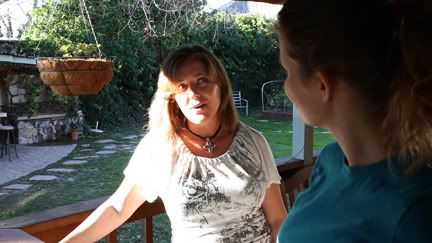
...about the documentary film, “You Look a Lot Like Me", a feature-length documentary focused on raising awareness about some of the complexities surrounding domestic abuse.
We have been in production for four years now, and during that time, my crew and I have traveled all over the country meeting with victims, survivors, abusers, advocates, and shelter and coalition directors in an attempt to create a film that effectively explores some of the complexities of intimate partner violence and domestic abuse in our society, while working to tear down stereotypes that still exist around this issue.
This film is important because it gives victims a voice. It gives them the chance to tell people, in their own words, why they didn’t “just leave.” It sends a message that victims and survivors of domestic abuse matter, that they are not invisible, and that they can, in fact, move on from their situations and help others to do the same.
Most importantly, it allows victims of domestic violence to see and hear that they are not alone in their situations and their feelings, and that help is out there, waiting.
The individuals you'll meet in this film are real people - real women and men sharing their stories - and, as you can imagine, they’re not easy stories to hear, or to tell. The stories you will witness in this trailer are taken from just a fraction of the interviews that will wind up in the final film, and we’re barely scratching the surface. The reality is that no one is immune to domestic violence. It exists in our poorest and in our wealthiest communities, and affects women and men of all colors, creeds, and orientations.
---------------
Here are just a few of the numbers for you:
~ 1 in 4 women report being raped and/or physically assaulted by a current or former spouse, cohabitating partner, or date at some time in their lifetime.[1]
~ Approximately 4.8 million intimate partner rapes and physical assaults are perpetrated against U.S. women annually, and approximately 2.9 million intimate partner physical assaults are committed against U.S. men annually.[2]
~ In one 24-hour period in 2010, more than 70,648 victims of domestic violence and their children received life-saving services from local domestic violence programs. Domestic violence experts answered more than 23,522 emergency hotline calls. In one day alone, 9,541 requests for services went unmet, largely due to lack of funding.[3]
~ According to data from the National Coalition of Anti-Violence Programs (NCAVP), LGBTQ domestic/intimate partner violence reports rose 15% between 2008 and 2009, and it is a pervasive social problem at a time when LGBTQ-specific programs are losing staff or closing altogether due to the economic crisis.[4]
While this data is some of the most current available, it’s important to remember that, unfortunately, it potentially underestimates the magnitude of intimate partner violence, because domestic violence often goes unreported. If you do the math, the chances are pretty good that, even if you haven’t experienced domestic violence in your own intimate relationships, you do know someone who has. And it might very well be the person you’d least imagine when your mind calls up that image of a “victim” of domestic abuse.
It is our goal to have “You Look a Lot Like Me” finished by the end of this year, and we can’t do that without finishing funds, so we’re turning to Kickstarter, and to you, to help us raise the funds we need to make that happen. Our goal of $4,800 is the minimum amount needed to complete this project. And that’s if we all abide by our strict Lettuce-Only diets in the editing room!
Your donation today will be used to pay for things like: final shooting of survivor interviews, equipment rentals, final-stage transcription services, editing and post-production sound engineering, mastering fees, music and other licensing, DVD production ...the list really does go on and on.
In addition to some of our project-related rewards, we have some really wonderful art and wares to offer, thanks to some amazing artists from around this country and others, who care, like we all do, about ending all forms of violence in intimate relationships.
Thank you, again, for taking the time to visit. We really appreciate your support!
Chloe McFeters and the Crew of "You Look a Lot Like Me"
***For more detailed information on this project, or to learn more about the contributing artists (including samples of their work), please visit our website at http://tortoiseandfinch.com
Labels: abuse survivors, communication, documentary, domestic violence, just move on, leaving, victims
Monday, May 16, 2011
Why Abuse Survivors Attract The Wrong Sort of People

An abuse survivor e-mailed me saying how she seemed to attract men who want to exploit her. On the other hand, good people seem to run from her. Tragically, this is the common experience of abuse survivors. I have always puzzled as to why this is. She sent me a couple of photos of herself. Then something clicked. I was a little gentler, but here is the essence of my e-mail to her:
Your photos, though nice, give the impression that you are sad, shy, lacking in confidence and aching for love. An evil man might look at those photos and think to himself, "Her need for love and for a boost in self-esteem seem so overwhelming that if I let her think that I could meet these needs, she would be so scared of losing me that she would find it hard to resist the urge to do anything I want. If I initially treat her tenderly and kindly and flatter her, I'll have a good chance of turning her into virtually my slave. I could then treat her however I wish."Regardless of how resistant to sexual pressure she really is, a person with low self-esteem and who craves love gives the impression that she is vulnerable to seduction.
If, on the other hand, a man saw you as happy, confident and relatively content, he'd assume you are quite choosy as to who you relate to and how far you would go. He'd assume you have none of the desperation that pressures some women to compromise their morals to get the love they crave.
Not only could this be a factor in men with evil intent being attracted to you, it could cause good men (or good women) to feel tempted to try to get their way with you. Because they are honorable, they might run for fear that if they stayed close to you they might yield to that temptation.
Upon finding such a person, immoral men feel emboldened to test their suspicion that they have found someone they could seduce.
To resist sexual advances, a woman craving love and lacking in self- esteem needs far superior self-control to that of other women, if she perceives that she must yield to those advances in order to receive the love she desperately needs.
Furthermore, an abuse survivor is strongly tempted to accept the lie that because she has been mistreated before, she has little purity left to protect. This lie is yet another burden weighing down abuse survivors.
Moreover, in addition to these strong pressures, she will find resisting an evil man much harder than other women find it because she has a history of having done everything possible to resist and she was still overpowered. Her past tragedies cause her to lose hope that she could ever successfully prevent a man from exploiting her. She feels sure that any attempt to resist would be a futile waste of effort.
Sexual & Emotional predators know this, so they are on the look out for abuse survivors. A tragically large number of abuse survivors have mistakenly thought that perhaps they have low morals or are evil or that God is against them, since that they seem to attract sexual predators. This is most certainly not so. The thought is so obviously incorrect that, theoretically, there should be no need to deny it.
Sadly, it needs to be spelt out because predators are skilled at cruelly manipulating tender consciences, causing their victims to have a mistaken view of themselves. The truth is that abuse survivors tend to attract repeat offenses simply because they are hurting; and sexual predators, like beasts of prey, think the wounded might be an easier target.
If sexual predators imagine they have a chance with you, it means nothing. Simply by refusing their advances, you can prove them wrong.
Knowing why the wrong sort of people might try to exploit you can be a relief. The is nothing wrong with you other than the simple fact that you are hurting. I am sure what you really want to know, however, is how to prevent this attention. It's easy to say that self-esteem, confidence and feeling loved is the answer, but the difficulty is knowing how to grow in these things.
Labels: abuse survivors, evil. predators, exploitation, low self-esteem, predators hunt the wounded, prey, seduce, vulnerable