Sanctuary for the Abused
Saturday, August 17, 2019
How Friends & Family Can Help an Abuse Victim

Family can have a great impact on the recovery of an abuse victim. Here is a brief description of things that family can do to help heal the heaviest of hearts and the deepest of wounds.
LISTEN: Although the thought of addressing an abusive relationship can be a difficult one, an abuse victim needs communication to help heal. Something as simple as letting the abuse victim talk to you and "vent" can make such a considerable difference in their recovery.
THINGS TO DO TO SHOW YOUR SUPPORT: Be supportive. Really listen and indicate that you care
Help them receive help. See to it that they receive sensitive, concerned, and competent medical attention and/or counseling.
Recognize your own limitations in dealing with the abuse. If the survivor is a person you really care about, you are probably experiencing a number of different emotions from outrage to helplessness. Try to resist the urge to express your feelings to the survivor, especially in those silent periods when she may be crying or find it difficult to talk.
Block the abuser and do not communicate with them: 'Not taking sides' or 'remaining neutral' is anything but. Block the abuser, support the victim. Period.
Block the abuser and do not communicate with them: 'Not taking sides' or 'remaining neutral' is anything but. Block the abuser, support the victim. Period.
Remember to take care of yourself. It can be emotionally exhausting to be supportive to the survivor, while keeping your feelings bottled up. Find someone you can talk to-your feeling matter too. By talking out your feelings with someone other than the survivor, you will be better able to provide the continuing support that the survivor needs.
Remember to put your frustration and anger where it belongs, not on the survivor. They are not "damaged property"; but instead a person who has been abused and violently mistreated.
Your personal revenge against the abuser will not help, and in fact only make matters worse.
HOW FRIENDS AND FAMILY CAN HURT
How many times have you heard the phrase, "well, why don't you just leave him/her?" Probably more times then you can count. Although the topic of abuse is something that many of us can relate to, there are those out there who don't quite understand. In fact, one of the common reasons that abuse victims stay with their abuser is because of family issues, and fear of their family's rejection.
How many times have you heard the phrase, "well, why don't you just leave him/her?" Probably more times then you can count. Although the topic of abuse is something that many of us can relate to, there are those out there who don't quite understand. In fact, one of the common reasons that abuse victims stay with their abuser is because of family issues, and fear of their family's rejection.
DENIAL/ MISPLACED BLAMING:
Accepting the fact that you or someone you love is in an abusive relationship is very difficult, and often times we do anything we can to push that possibility away. We would all like to believe that it "can not happen to us/those around us" but unfortunately, it can and it does. A common defense mechanism for friends and family of abuse victims is to pretend that the abuse is not taking place. Friends and family attempt to change the subject, become upset once the topic is unavoidable, and even accuse the victim of lying. Some even say "it was your choice" which it wasn't. Not at all.
Although this is not the case in every situation, it happens more often then not. Through this system of lack of support or denial the victim becomes more isolated and eventually more connected to their abuser. Once this feeling of isolation has thoroughly sunk in the mind of an abuse victim, it becomes even more difficult to leave. An abuser has a powerful hold on their victim, and without assistance from family or friends, that hold can become almost unbreakable. After all, why leave if there is nothing else to go to?
Although this is not the case in every situation, it happens more often then not. Through this system of lack of support or denial the victim becomes more isolated and eventually more connected to their abuser. Once this feeling of isolation has thoroughly sunk in the mind of an abuse victim, it becomes even more difficult to leave. An abuser has a powerful hold on their victim, and without assistance from family or friends, that hold can become almost unbreakable. After all, why leave if there is nothing else to go to?
THINGS YOU SHOULD NOT DO:
Ask for specifics and details. Allow the survivor to express their feelings, fears and reactions as they choose.
Tell the survivor what they must and must not do. It is their decision whether or not to report the abuse to the police. If they do not decide to report the abuse, still remain supportive and help them in any way possible.
Make the survivor feel guilty. The survivor has already been through an ordeal; try not to make it worse by using statements such as, "Why did you" or "How could you" or "Why didn't you just leave" or "Just forget them" or "move on/ get over it" or "I don't believe that - are you for real?" or "Don't answer the phone/ etc" ? These statements will only make the survivor feel worse, and further isolate them from seeking help.
Tell anyone about the abuse, unless specified by the survivor. If you need to talk out your feelings, that is fine. But please remember that this is a hard time for the survivor, and they do not want any unnecessary people knowing about the abuse, unless it is on their terms. Let the survivor tell people at their own pace, and in their own way.
Labels: abuse, believe, communication, family, friends, help, support


Saturday, February 24, 2018
The 10 Most Dysfunctional Things Ever Uttered

(if anyone says these to you, they are dysfunctional - run from them!! even if they are family. - Barbara)
They don’t get worse than these — the ten comments that signify the very most dysfunction possible.
In no particular order:
1. “I did nothing wrong. You’re just oversensitive.”
It’s not that there aren’t people in the world who are highly sensitive. It’s just that even if the person being spoken to were oversensitive, this comment is only going to make them feel much worse! It offers no help, and only rubs salt in the wound.
It is a critical statement of low empathy — there’s no effort to truly understand the other person’s feelings or to consider that maybe the speaker could possibly have done even one small thing a little more considerately to try helping matters.
In addition, it’s most often said by people who are not actually dealing with someone who’s “too sensitive”, but instead, someone who is actually expressing normal dismay about a valid concern.
2. “That’s just the way it is.”
While it’s true there’s no point denying that the sky has always been blue and grass will be forever green, making the above comment in order to shut down someone’s concerns or curiosity about a given situation is a different matter.
Such a comment displays a high level of dysfunctionality, typically related to disempowerment, denial, defensiveness, closed-mindedness and attempts at control of others.
Inflexibility and difficulty with change is common in the personality disorder called OCPD, and in autism spectrum disorders.
3. “Why can’t you be more like so-and-so?”
Trying to tell someone to be more like someone else is self-centered. If you’re dealing with a person who is self-important enough to think that other people should conform to their personal preferences (and need only be asked to do so) you’re likely dealing with someone characteristically narcissistic.
4. “I’m sorry you feel that way/I’m sorry if you…/I’m sorry, but…”
If a person cannot say, “I’m sorry I did that/I’m sorry I hurt you/I’m sorry I was wrong”, and dodges emotional responsibility with the kind of fake apologies and substitutions above, there’s a problem.
Healthy relationships require genuine apologies that are the result of empathy. Inability to truly sense other people’s feelings is at the root of an incredible amount of dysfunction, and unwillingness to admit mistakes is highly dysfunctional behavior.
5. “You always/You never…”
It’s unlikely the person NEVER or ALWAYS does whatever is complained about. It’s more likely it happens a lot. Or, it happens too often for the person’s liking.
Saying “always” or “never” when complaining about someone’s behavior makes them feel as if you aren’t trying to resolve the matter with them — you’re trying to condemn them.
When people have difficult issues they wish they didn’t struggle with, and they’re making very little progress on them, it’s very painful to be told by someone they care about that they “always” or “never” do something. It causes them to lose hope, and more importantly, it causes them to lose hope that you are on their side against the difficulty, and that you do believe in them and see their hard-earned minor improvements.
6. “You’re not smart enough to do that /you’ll never amount to anything /you’re an idiot.”
This one needs no explanation. It’s just abusive, plain and simple. If this has been said to you, remember, it’s projection — people who say this have a tremendous fear that they themselves are the “stupid” one.
Everyone has something to offer. Everyone is good at something, and a comment like this is nothing but a reflection of the speaker’s own insecurities and fears. Typically, abusive people will pick the moment of a mistake to utter this, but everyone makes mistakes, including the person saying it, and their comment means nothing about the listener. People are not their mistakes, and are not necessarily what other people say they are.
7. “I told you so.”
All people have a right to make their own choices, and to disagree with others. People who tell other people what’s supposedly best and then pounce on them if their alternate choice doesn’t work are seeking to gain future control of the independent person by shaming them. Shame fuels dysfunction, and should not be accepted.
8. “You are ‘choosing’ to feel bad about the upsetting thing I did or said.”
This is highly invalidating. The person who says this is not making any effort to empathize, is refusing to take responsibility for the impact of their behavior on others, and is trying to blame the person they have hurt.
Feelings aren’t even processed in the same area of the brain as thoughts. If someone threatens you, you will feel fear. You’re not “choosing” fear; fear is an immediate, natural and healthy response to being in a threatening situation. If someone you love dies, you will feel sad. You are not “choosing” to feel sad about their death. Sadness is a normal, healthy response to the loss of someone. If your sibling, partner or other person you are close to says something insensitive or cruel, you will feel hurt. You’re not “choosing” to feel hurt; it is a natural and healthy response to unkindness.
Telling someone who feels hurt that they have “chosen” to feel hurt is generally a way of avoiding responsibility by making the hurt person retreat in shame that they have done “wrong”. They’re supposed to “choose” properly by letting the person who hurt them off the hook, and instead, focusing on their own “bad choices”.
9. “You wouldn’t understand”.
This kind of dismissiveness and condescension is seen in people who harbor the belief that they are superior and should ideally be the one in control, because of their supposed superiority. The arrogance of such a statement is more than rude and devaluing — it indicates that the person’s intention is to shut you out and shut you down so they can propagate the perception that they are “better” than you.
10. “What they don’t know can’t hurt them.”
If a person hasn’t found out that their spouse is cheating, or that somebody took advantage of them in some way they haven’t realized, it’s true that they won’t feel hurt.
But… the person who says this is a cheater; the person who says this is taking advantage. It’s wise to steer clear of people like this, because they care much more about themselves than other people, and they lack integrity. This is highly characteristic of mentally disordered thinking, and the person who says it will most likely one day be the person who takes advantage of you, too. The presence of a good conscience doesn’t depend on circumstances or individuals present.
If there’s no conscience nagging at them when they take advantage of someone other than you, there will be no conscience nagging at them when it’s your turn to be the one in their way.
from this fantastic blog!
Labels: abuse, abusive, arrogant, communication, dismissed, dysfunction, fake, invalidating, sensitive, verbal abuse
Thursday, August 01, 2013
"YOU LOOK A LOT LIKE ME" - Documentary on Domestic Violence
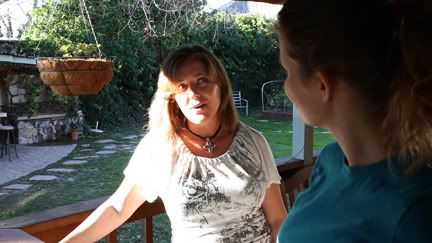
...about the documentary film, “You Look a Lot Like Me", a feature-length documentary focused on raising awareness about some of the complexities surrounding domestic abuse.
We have been in production for four years now, and during that time, my crew and I have traveled all over the country meeting with victims, survivors, abusers, advocates, and shelter and coalition directors in an attempt to create a film that effectively explores some of the complexities of intimate partner violence and domestic abuse in our society, while working to tear down stereotypes that still exist around this issue.
This film is important because it gives victims a voice. It gives them the chance to tell people, in their own words, why they didn’t “just leave.” It sends a message that victims and survivors of domestic abuse matter, that they are not invisible, and that they can, in fact, move on from their situations and help others to do the same.
Most importantly, it allows victims of domestic violence to see and hear that they are not alone in their situations and their feelings, and that help is out there, waiting.
The individuals you'll meet in this film are real people - real women and men sharing their stories - and, as you can imagine, they’re not easy stories to hear, or to tell. The stories you will witness in this trailer are taken from just a fraction of the interviews that will wind up in the final film, and we’re barely scratching the surface. The reality is that no one is immune to domestic violence. It exists in our poorest and in our wealthiest communities, and affects women and men of all colors, creeds, and orientations.
---------------
Here are just a few of the numbers for you:
~ 1 in 4 women report being raped and/or physically assaulted by a current or former spouse, cohabitating partner, or date at some time in their lifetime.[1]
~ Approximately 4.8 million intimate partner rapes and physical assaults are perpetrated against U.S. women annually, and approximately 2.9 million intimate partner physical assaults are committed against U.S. men annually.[2]
~ In one 24-hour period in 2010, more than 70,648 victims of domestic violence and their children received life-saving services from local domestic violence programs. Domestic violence experts answered more than 23,522 emergency hotline calls. In one day alone, 9,541 requests for services went unmet, largely due to lack of funding.[3]
~ According to data from the National Coalition of Anti-Violence Programs (NCAVP), LGBTQ domestic/intimate partner violence reports rose 15% between 2008 and 2009, and it is a pervasive social problem at a time when LGBTQ-specific programs are losing staff or closing altogether due to the economic crisis.[4]
While this data is some of the most current available, it’s important to remember that, unfortunately, it potentially underestimates the magnitude of intimate partner violence, because domestic violence often goes unreported. If you do the math, the chances are pretty good that, even if you haven’t experienced domestic violence in your own intimate relationships, you do know someone who has. And it might very well be the person you’d least imagine when your mind calls up that image of a “victim” of domestic abuse.
It is our goal to have “You Look a Lot Like Me” finished by the end of this year, and we can’t do that without finishing funds, so we’re turning to Kickstarter, and to you, to help us raise the funds we need to make that happen. Our goal of $4,800 is the minimum amount needed to complete this project. And that’s if we all abide by our strict Lettuce-Only diets in the editing room!
Your donation today will be used to pay for things like: final shooting of survivor interviews, equipment rentals, final-stage transcription services, editing and post-production sound engineering, mastering fees, music and other licensing, DVD production ...the list really does go on and on.
In addition to some of our project-related rewards, we have some really wonderful art and wares to offer, thanks to some amazing artists from around this country and others, who care, like we all do, about ending all forms of violence in intimate relationships.
Thank you, again, for taking the time to visit. We really appreciate your support!
Chloe McFeters and the Crew of "You Look a Lot Like Me"
***For more detailed information on this project, or to learn more about the contributing artists (including samples of their work), please visit our website at http://tortoiseandfinch.com
Labels: abuse survivors, communication, documentary, domestic violence, just move on, leaving, victims




















