Sanctuary for the Abused
Thursday, October 25, 2018
Abuse is More Than Physical
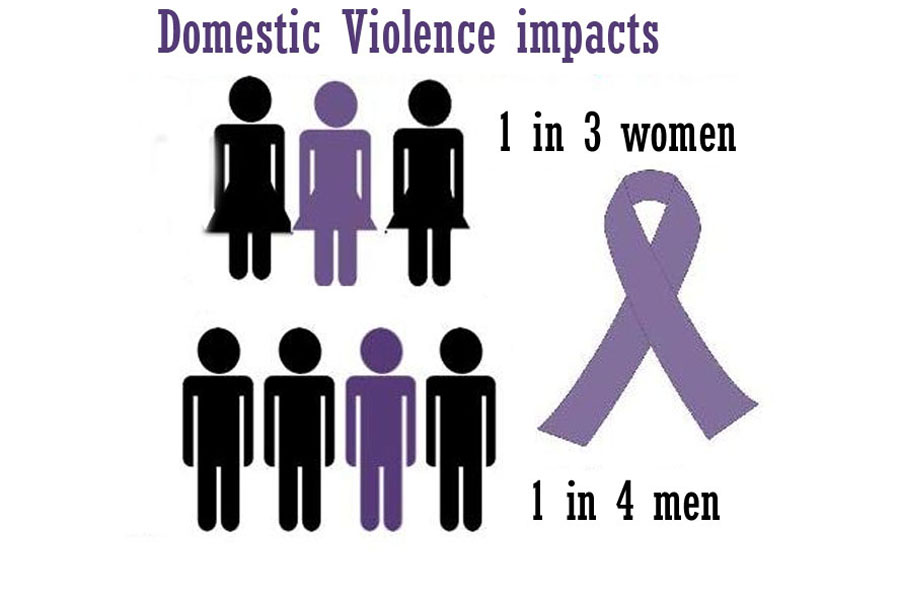
When the general public thinks about domestic violence, they usually think in terms of physical assault that results in visible injuries to the victim.
This is only one type of abuse.
There are several categories of abusive behavior, each of which has its own devastating consequences. Lethality involved with physical abuse may place the victim at higher risk, but the long term destruction of personhood that accompanies the other forms of abuse is significant and cannot be minimized.
CONTROL
Controlling behavior is a way for the batterer to maintain his dominance over the victim. Controlling behavior, the belief that he is justified in the controlling behavior, and the resultant abuse is the core issue in abuse of women. It is often subtle, almost always insidious, and pervasive. This may include but is not limited to:
Checking the mileage on the odometer following her use of the car
Monitoring phone calls, using caller ID or other number monitoring devises, not allowing her to make or receive phone calls
Not allowing her freedom of choice in terms of clothing styles, makeup or hairstyle. This may include forcing her to dress more seductively or more conservatively than she is comfortable
Calling or coming home unexpectedly to check up on her. This may initially start as what appears to be a loving gesture, but becomes a sign of jealousy or possessiveness
Invading her privacy by not allowing her time and space of her own, reading her mail, computer communications or listening to her phone calls
Forcing or encouraging her dependency by making her believe that she is incapable of surviving or performing simple tasks without the batterer or on her own
Using the children to control the mother by using the children as spies, threatening to kill, hurt or kidnap the children, physical and/or sexual abuse of the children, and threats to call Child Protective Services if the mother leaves the relationship
PHYSICAL ABUSE
According to the AMEND Workbook for Ending Violent Behavior, physical abuse is any physically aggressive behavior, withholding of physical needs, indirect physically harmful behavior, or threat of physical abuse. This may include but is not limited to:
Hitting, kicking, biting, slapping, shaking, pushing, pulling, punching, choking, beating, scratching, pinching, pulling hair, stabbing, shooting, drowning, burning, hitting with an object, threatening with a weapon, or threatening to physically assault
Withholding of physical needs including interruption of sleep or meals, denying money, food, transportation, or help if sick or injured, locking victim into or out of the house, refusing to give or rationing necessities
Abusing, injuring, or threatening to injure others like children, pets, or special property
Forcible physical restraint against her will, being trapped in a room or having her exit blocked, being held down
The batterer hitting or kicking walls, doors, or other inanimate objects during an argument, throwing things in anger,destruction of property
Holding the victim hostage
SEXUAL ABUSE
Sexual abuse is using sex in an exploitative fashion or forcing sex on another person. Having consented to sexual activity in the past does not indicate current consent. Sexual abuse may involve both verbal and physical behavior. This may include, but is not limited to:
Using coercion, guilt, or manipulation.
Not considering the victim's genuine desire to have sex. This may include making her have sex with others, have unwanted sexual experiences, or be involuntarily involved in prostitution
Using her circumstances to lure her into an inappropriate relationship
Exploiting a victim who is unable to make an informed decision about involvement in sexual activity because of being asleep, intoxicated, drugged, disabled, too young, too old, in an already abusive relationship or dependent upon or afraid of the perpetrator
Laughing or making fun of anther's sexuality or body, making offensive statements, insulting, or name-calling in relation to the victim's sexual preferences/behavior
Making contact with the victim in any nonconsensual way, including unwanted penetration (oral, anal or vaginal) or touching (stroking, kissing, licking, sucking or using objects) on any part of the victim's body
Exhibiting excessive jealousy resulting in false accusations of infidelity and controlling behaviors to limit the victim's contact with the outside world
Having affairs with other people and using that information to taunt the victim
Making fun of or being judgmental or nasty to the victim during sex
Withholding sex from the victim as a control mechanism
EMOTIONAL ABUSE AND INTIMIDATION
According to the AMEND Workbook for Ending Violent Behavior, emotional abuse is any behavior that exploits anther's vulnerability, insecurity, or character. Such behaviors include continuous degradation, intimidation, manipulation, brainwashing, or control of another to the detriment of the individual(AMEND 3). This may include but is not limited to:
Insulting or criticizing to undermine the victim's self-confidence. This includes public humiliation, as well as actual or threatened rejection
Threatening or accusing, either directly or indirectly, with intention to cause emotional or physical harm or loss. For instance, threatening to kill the victim or himself, or both
Using reality distorting statements or behaviors that create confusion and insecurity in the victim like saying one thing and doing another, stating untrue facts as truth, and neglecting to follow through on stated intentions. This can include denying the abuse occurred and/or telling the victim she is making up the abuse. It might also include crazy making behaviors like hiding the victim's keys and berating her for losing them.
Consistently disregarding, ignoring, or neglecting the victim's requests and needs
Using actions, statements or gestures that attack the victim's self-esteem and self-worth with the intention to humiliate
Telling the victim that she is mentally unstable or incompetent
Telling her its "her own fault"
Forcing the victim to take drugs or alcohol
Not allowing the victim to practice her religious beliefs, isolating her from the religious community, or using religion as an excuse for abuse
Using any form of coercion or manipulation which is disempowering to the victim
ISOLATION
Isolation is a form of abuse often closely connected to controlling behaviors. It is not an isolated behavior, but the outcome of many kinds of abusive behaviors. By keeping her from seeing who she wants to see, doing what she wants to do, setting and meeting goals, and controlling how she thinks and feels, he is isolating her from the resources (personal and public) which may help her to leave the relationship.
By keeping the victim socially isolated the batterer is keeping her from contact with the world which might not reinforce his perceptions and beliefs. Isolation often begins as an expression of his love for her with statements like if you really loved me you would want to spend time with me, not your family.
As it progresses, the isolation expands, limiting or excluding her contact with anyone but the batterer. Eventually, she is left totally alone and without the internal and external resources to change her life.
Some victims isolate themselves from existing resources and support systems because of the shame of bruises or other injuries, his behavior in public, or his treatment of friends or family.
Self-isolation may also develop from fear of public humiliation or from fear of harm to herself or others. The victim may also feel guilty for the abuser's behavior, the condition of the relationship, or a myriad of other reasons, depending on the messages received from the abuser.
VERBAL ABUSE: COERCION, THREATS, BLAMING
Verbal abuse is any abusive language used to denigrate, embarrass or threaten the victim. This may include but is not limited to:
Threatening to hurt or kill the victim or her children, family, pets, property or reputation
Name calling ("ugly," "bitch," "whore," or "stupid")
Telling victim she is unattractive or undesirable
Yelling, screaming, rampaging, terrorizing or refusing to talk (the 'silent treatment')
Threatening to take victim's children from her
USING MALE PRIVILEGE
As long as we as a culture accept the principle and privilege of male dominance, men will continue to be abusive. As long as we as a culture accept and tolerate violence against women, men will continue to be abusive.
According to Barbara Hart in Safety for Women: Monitoring Batterers' Programs:
All men benefit from the violence of batterers. There is no man who has not enjoyed the male privilege resulting from male domination reinforced by the use of physical violence. . . . All women suffer as a consequence of men's violence.
Battering by individual men keeps all women in line. While not every woman has experienced violence, there is no woman in this society who has not feared it, restricting her activities and her freedom to avoid it. Women are always watchful knowing that they may be the arbitrary victims of male violence.
Only the elimination of sexism, the end of cultural supports for violence, and the adoption of a system of beliefs and values embracing equality and mutuality in intimate relationships will end men's violence against women.
Domestic violence is about power and control. A feminist analysis of woman battering rejects theories that attribute the causes of violence to family dysfunction, inadequate communications skills, women's provocation, stress, chemical dependency, lack of spiritual relationship to a deity, economic hardship, class practices, racial/ethnic tolerance, or other factors.
These issues may be associated with battering of women, but they do not cause it. Removing these factors will not end men's violence against women.
Batterers behave abusively to control their partner's behavior, thereby achieving and maintaining power over their partners and getting their own needs and desires met quickly and completely.
There are also many secondary benefits of violence to the batterer. A batterer may choose to be violent because he finds it fun to terrorize his partner, because there is a release of tension in the act of assault, because it demonstrates manhood, or because violence is erotic for him. Violence is a learned behavior and batterers choose to use violence. The victim is not part of the problem.
The victim may accept responsibility for causing the batterer to lose their temper, but the truth is, the abuser must be held accountable for his behavior.
Four widespread cultural conditions allow and encourage men to abuse women. These are:
Objectification of women and the belief that women exist for the "satisfaction of men's personal, sexual, emotional and physical needs" (includes such things as using 'love' as a coercion method; the use of prostitutes; use of guilt; use of marital 'obligation')
An entitlement to male authority with a right and obligation to control, coerce, and/or punish her independence
That the use of physical force is acceptable, appropriate, and effective
Societal support for his dominance, controlling and assaultive behavior. By failing to intervene aggressively against the abuse, the culture condones the violence
ECONOMIC ABUSE
Financial abuse is a way to control the victim through manipulation of economic resources. This may include, but is not limited to:
Controlling the family income and either not allowing the victim access to money or rigidly limiting her access to family funds. This may also include keeping financial secrets or hidden accounts, putting the victim on an allowance or allowing her no say in how money is spent, or making her turn her paycheck over to him
Causing the victim to lose a job or preventing her from taking a job. He can make her lose her job by making her late for work, refusing to provide transportation to work, or by calling/harassing/calling her at work
Spending money for necessities (food, rent, utilities) on nonessential items (drugs, alcohol, stereo equipment, hobbies)
Material from Women's Center and Shelter of Greater Pittsburgh Volunteer Training Manual, AMEND, and the AzCADV safety plain Manual were used to develop this section.
ORIGINAL HERE
(note: women can be just as abusive as men)
Labels: abuse, coercion, emotional, financial, guilt, intimidation, misogyny, sexual, types


Sunday, September 23, 2018
An Open Letter to Christian Pastors & Clergy
 (can be applied to Imams, Rabbis, Priests, etc)
Pastors, have you ever preached a sermon against domestic violence? Odds are, you haven’t. I’ve listened to approximately 4,000 sermons and have yet to hear a pastor condemn domestic violence from the pulpit.
Southern preachers prefer to pontificate on matters like abortion and homosexuality. Sometimes they rail against feminism. On occasion they preach against pornography, using the occasion to slam churchwomen over immodest attire. In every denomination, pastors preach often enough on tithing, and never fail to pass the plate. Yet they fail at addressing an issue faced by approximately one fourth of their congregation.
Recently a wildly popular pastor shoved the problem of Christian violence into the spotlight when he choked, kicked and stomped his wife in the parking lot of an Atlanta hotel. In the South, beating your wife may or may not be a crime. Records show that the most common law enforcement response to domestic violence is “separating the parties.”
Victims rarely press charges because they fear reprisal. Law enforcement rarely presses their own charges (though they could and should), essentially treating wife-beating as a “victimless crime.”
Bishop Thomas W. Weeks, III crossed the line that even Georgia will not tolerate: He was wearing shoes when he kicked his wife. That’s a felony. Besides that, he committed the acts publicly and on video surveillance tape. He also threatened to kill her, which is another Georgia felony.
The abused wife, Juanita Bynum, is an internationally acclaimed televangelist and best-selling author who empowers Christian women with her preaching. Church members say that couple of weeks before the attack, Weeks announced that Bynum would no longer be preaching at the church they founded.
Bynum is pressing charges against Weeks and seeking to end the marriage. Attorneys for Weeks say he will contest the divorce on the grounds that she was cruel. The strangest part of this story is not that the man who kicked and stomped his wife is contesting the divorce or fighting the charges; that happens all the time. What is so bizarre is where this man was just a few days after the beating: He was behind his pulpit telling his congregation that the devil made him do it.
Finally, a preacher is talking about domestic violence! If only his congregation had responded with a resounding movement down the aisle – and right out the church door. No one should sit under the teaching of a wife-beater. The elders should have stripped this man of his title and never let him behind the pulpit again.
T. D. Jakes, the famous televangelist who helped bring Bynum to power, condemned violence against women in a written statement two weeks after the attack. He pointed out that every day, four American men murder their wives or girlfriends, resulting in 1,400 deaths per year. That’s an FBI statistic. He also mentioned that over half a million cases of intimate assault are reported each year. Most cases go unreported. According to the most conservative estimates, between 2,000,000 and 4,000,000 women are battered each year. In 1990, the U.S. had 3,800 shelters for animals, and only 1,500 shelters for battered women.
Other Christian leaders even try to blame the victims. Christian author Gillis Triplett claims that there are thirteen traits common to abused wives, including “THEY LOVE THE DRAMA!” (Emphasis his.)
Trait #1. They Don’t Know What Domestic Violence IsEvangelical leaders John MacArthur and James Dobson have both gone on record stating that women must be careful not to “provoke” abuse. In the 1996 printing of “Love Must Be Tough,” Dobson told a story about a woman who was physically beaten by her husband. Dobson concluded that the woman “baited” her husband to hit her so that she could show off her black eye, which he calls her “prize.”
An act of domestic violence takes place every 12 to 15 seconds. It is rare that a week goes by without us hearing about a husband, boyfriend or lover who assaulted or killed his wife or girlfriend. Call any Police precinct and they will tell you the lion’s share of their calls are not related to robberies, drugs or drunk drivers, but to domestic disputes. We hear about domestic violence on Oprah, Court TV, the Channel 5 News and V-103. Every year, the entire month of October is dedicated to this prevalent issue. In Manhattan, New York, one City Councilwoman proposed a bill that would require all newlyweds to receive a brochure on spousal abuse when they receive their marriage license.
Even with all of the public outcry and the private and government agencies that dedicate themselves to domestic violence awareness, amazingly some ladies still don’t know what domestic violence is or that it exists on such a large scale. They don’t comprehend that some men believe they have a God-given right to abuse women. They don’t understand that there are devious misogynistic men who intentionally seek to lure women into domestic nightmares. Due to their lack of knowledge, these ladies become prime targets for abusive men.
Trait #2. They Don’t Know The Warning Signs
In today’s society, every woman actively engaged in dating or seeking a mate should know the warning signs of abusers, but most don’t! At least not until they find themselves booby-trapped in an abusive nightmare. Abusers give off warning signs and they use certain techniques and tricks to lure their victims into their vise-grip like clutches. With domestic violence so pervasive, not knowing the warning signs of abusers is self-annihilation. I advise all ladies not to date until they can identify abusers. Ladies who don’t know or refuse to learn these tell-tale signs are soft, exploitable targets for these hardened men.
According to family therapist, Dr. Torri Griffin, LPC, domestic violence takes on many forms, some of which leave no visible wounds. “Many ladies experience the non-verbal types of abuse from their partners long before experiencing the physical ones. Social isolation, financial deprivation, verbal abuse and emotional abuse are usually present when the physical abuse begins. Most ladies excuse these behaviors as his temperament rather than as serious signs of worse things to come.”
Trait #3. They Intentionally Ignore The Warning Signs
Karen did it again! She covered for her boyfriend’s short fuse and hair trigger temper. They were on their way to a restaurant after leaving church. While stopped at a traffic light, Eric became peeved because the light was taking too long to turn green. When one of the passengers gently reminded Eric that they were on their way to have soup and salad and no one was in a hurry, Eric lit into her with a verbal tirade that shocked everyone in the vehicle; except for Karen. She was used to it! Not to Eric’s outbursts. He scared the daylights out of her with his unpredictable anger. Karen was used to intentionally ignoring the warning signs. She had an abusive man and she knew it. People warned her and pleaded with her to stop dating Eric, but she ignored them. These types of ladies are literal magnets for abusers.
Trait #4. Some Women Believe They Can Change Abusers
We are in the year 2005 A.D. After watching billions of women over the past two-thousand years, fail at their attempt to convert dishonorable males into honorable men, some women refuse to accept this truth: “Women cannot change men!” Secretly, many of these women have convinced themselves that their physical beauty, sexual prowess, feminine wiles and magnetic personalities are powerful enough forces to magically convert misogynistic men into princes. Abusive males, especially repeat offenders, love these types of women.
Trait #5 They Don’t Know What True Love Is
I once did a survey of 4000 men and women to find out what they believed love to be. All told, they presented me with about forty-four definitions; many of which were very scary. Some believed: Love makes you do crazy things; sometimes love hurts; love makes you do wrong and the much publicized… love is blind. News flash: Love does not hurt and it does not make you do crazy things. Jealousy makes people do crazy things! Abusers, inconsiderate and emotionally callous men and women, intentionally hurt the people they claim to love. People with True Love in their hearts ARE NOT abusers and NEVER will be!
Furthermore, love IS NOT blind! It is the men and women who are naïve or unlearned who are blind! Actually they are not blind. Like Karen, they squint their eyes at the truth. Women who don’t know what True Love is are easy pickings for abusive men. These men will slap a woman in the face and afterwards claim, “I love you!” With those three words, these women display unyielding allegiance to their tormentors.
They tell their family, friends, pastor, concerned neighbors, a judge and the police, “You don’t know him like I know him, he’s really sweet and he loves me!” The hard truth is… the love in his Dr. Jekyll side is not strong enough to control or eradicate the hatred in his Mr. Hyde side. Not knowing what true love is what entraps some women in abuse.
Trait #6. They Have A Hard Time Loving Themselves
Some women act as if they simply do not love themselves. They demonstrate self-hatred, no self-respect and low self-esteem by doing things such as: (a) engaging in promiscuity, (b) becoming chronic victims of abusive men and bad relationships, (c) freely, willingly and knowingly entering into risky relationships and marriages doomed for failure, and (d) otherwise putting themselves in situations with untrustworthy men who gladly jeopardize their spiritual, emotional, mental and physical well-being.
It is a fact: women who properly love themselves don’t become or remain victims of abusive men. They refuse to allow hateful and disrespectful males to torment their souls or bruise their bodies.
Trait #7. They Don’t Understand Love’s Booby Traps
Most abusers are smooth… super smooth. They primarily prey on women who don’t know about the love, sex and relationship booby traps. With untrained women, abusive men are capable of easing into their lives with the tactical precision of an F-117 Stealth Bomber. These low lives are masters at short-circuiting women’s intuition—seducing and manipulating their feelings and emotions—and once snared, controlling them with the barbaric weapon of sheer fear.
In today’s society, few women receive training on love, sex, relationship or pre-marital booby traps prior to dating. Consequently, most women have no idea they need this vital training! They know nothing about the engagement ring trick, the desert island trick or the family feud trick. Those are all commonly used tactics employed by abusive men to snare unsuspecting women. Due to their lack of knowledge, these ladies are fair game for any of the predatory males.
Trait #8. Some Women Wear The Scent of Desperation
These women have got to have a man and quite frankly ANY MAN will do! Whatever their reasons; they’re lonely or they need companionship, sex or money, their desperation seeps into the atmosphere as a scent that attracts: thugs, abusers, wife-beaters and sociopathic liars. The scent of desperation is a powerful aphrodisiac for abusive males.
Trait #9. Some Women Choose Men Indiscriminately
To choose a man indiscriminately means to be unselective; it means to choose a man without careful consideration or good judgment; to randomly choose a man. On one hand, women with this mindset give little or no consideration to the men they allow into their lives. On the other hand, their evaluations are superficial. Usually based solely on a man’s material possessions and perceived assets, like the car he drives.
His track record and character are insignificant afterthoughts. In addition, in this day and age, some women boast about their attraction to thugs and hardened criminals. They make no secret about their love for jerks! Some of their boyfriends, lovers and husbands are dead give aways with nicknames and aliases such as: Pimp Juice, I-Murder, Lady Killa and Glock Gotti. Others fall in love with men who are addicted to alcohol, drugs and pornography; not understanding how these hazardous and addictive vices exacerbates violent prone men.
Because of their lack of proper evaluation, some women are easily swayed into relationships by abusers. After tracking over 2600 domestic violence cases and speaking with countless victims, I found multitudes of incidents in which the woman was the second, third and forth victim of a serial offender. Whether these ladies were black or white, college educated or barely made it out of high school, made no difference. Often, their tormentors already had domestic violence convictions, warrants looming, cases pending or restraining orders filed against them by other women. When a woman indiscriminately chooses a mate, she indiscriminately puts herself in harm’s way.
Trait #10. Some Women Love The Drama
If you have a hard time believing that statement, log on to one of the numerous Internet relationship discussion groups on the World Wide Web. Go sit in a beauty or nail salon for a few hours and just listen and observe. Or go to your local bookstore and make a b-line to the romance or relationship section. What you will read and hear about is plenty of DRAMA, DRAMA and more DRAMA! The fact is; some women love drama! Take note: I said, SOME, not all! Please don’t falsely accuse me of making any sweeping generalizations about women.
The women that love drama do bizarre things such as move in with a man they met at church last Sunday; end result: DRAMA! Marry a man they met last month at a bar; end result: DRAMA! Leave their child with a lover they only know by his alias; end result: DRAMA! Get pregnant by a man who has sired five kids by four different women; end result: DRAMA! Fall in love with a crack addict; end result: DRAMA! Although they are clearly in perilous relationships with impudent men, these women still insist on being treated like queens; end result: DRAMA!
No matter what you, I or anyone else says, they forge ahead into these chaotic relationships simply because THEY LOVE THE DRAMA! You can plead with them, pray for them, cry over them and scratch your head and go hmmm? You can suggest church, therapy or counseling and you show them the alarming domestic violence statistics, but it will all be for naught! Why? Because THESE WOMEN LOVE THE DRAMA! Although their Hollywood heroines and romance novel divas turn out OK, these women rarely walk from their dysfunctional abusive lovers unscathed.
Trait #11. A Lack of Positive Male Role Models During Upbringing
Women who have had no positive male role models in their lives, (e.g., good father, grandfather, stepfather, uncles, big brothers) have no real (authentic and legitimate) points of reference to help them distinguish between dishonorable doggish males and honorable men. This puts most women at great risk because their views and beliefs about the opposite sex are usually derived from three confirmed totally unreliable sources: (a) the media, music and Hollywood, (b) women who know little or nothing about men, and (c) conniving, ungodly males.
This lack of positive male role models usually leaves the average woman unprepared to properly deal with the male gender: particularly with respect to detecting and rejecting harmful males. Many women with this trait have a pattern of choosing untrustworthy men… again and again.
Trait #12. For Some Women Abuse Is All They Know
These women come from abusive environments. They’ve watched their mother get abused or be an abuser. They’ve been victims of abuse. Some grew up in abusive foster homes or juvenile facilities. I once tracked a 13-year-old girl who was thrust into a state run facility by her heartless parents. After years of maltreatment, (i.e., starvings, beatings and locking her in closets for hours and days at a time) they gave her up. Her new parents; the state, put her into a penal system type dorm with kids who had no semblance of a conscience and no inkling of morals or values. The petrified little girl was attacked numerous times.
She had never known love or what it was like to have someone care for her. From the time she was small, all she had known was persecution. Because of her traumatic childhood, she had come to expect abuse. Sadly, her mindset was, “Cruelty and betrayal comes with all inter-family relationships.” Some women who grow up in these types of environments feel that abuse is par for the course. Consequently, abusive men are drawn to them. It usually takes long-term therapy to help these women develop the proper depictions of true love.
Trait #13. Some Women Are Contentious
These women love to yell, scream, argue and engage in endless debates and fruitless verbal jousting matches with MEN. They have taken the war of the sexes to a new level, albeit dangerous and oftentimes deadly. Their weapons of choice include: name-calling, put downs, curse words, 911 blackmail calls, threats, I dare ya’s, parental alienation, attacks on manhood and their silver bullet: false rape and abuse allegations. Once they find a combatant, (A.K.A., husband, lover or boyfriend) these women get hyped up for war and the conflict is on!
Unfortunately, they unwittingly thrust themselves into a dark hole of retaliation; which leads to abuse, domestic violence and spousal murder. If it sounds like I’m justifying abuse, you are not reading me right. It is an irrefutable fact; some women are contentious, belligerent and combative. They choose to be that way and they have a knack for provoking and inciting men to domestic warfare. Some of these women are known for pushing otherwise easygoing men to their wits end.
SOURCE
Following the advice and example of such leaders, thousands of pastors regularly dismiss domestic violence and send women back into dangerous situations. With “saving the marriage” as the highest aim, these pastors seek to prevent divorce at all costs.
Women receive the subtle message that their pain – or even their lives -- are not as important as keeping the marriage intact.
One woman told a victims’ support group how she took her children and fled the state in fear of her life. Her church responded by sending her a letter of ex-communication.
In the introduction to her new book "Woman Submit! Christians & Domestic Violence,” Jocylen Andersen states that "
The practice of hiding, ignoring, and even perpetuating the emotional and physical abuse of women is ... rampant within evangelical Christian fellowships and as slow as our legal systems have been in dealing with violence against women by their husbands, the church has been even slower." The Christian wife abuse cover-up is every bit as evil as the Catholic sex abuse cover-up.Christian leaders set the stage for domestic violence by perpetuating pop-culture stereotypes of femininity and masculinity. T. D. Jakes claims in his book “Woman, Thou Art Loosed” that all women were created to fulfill the vision of some man. Jakes bases his gender theology solely on the physical characteristics of male and female genitalia, insisting that all women are “receivers” and all men are “givers.” This false dichotomy breaks down quickly when one considers that female sexuality includes giving birth and giving milk. More importantly, Jakes deviates from Scripture in claiming that women and men must operate like their genitalia in every facet of life.
John MacArthur also does his part to set the stage for female subjugation. He calls the women’s movement “Satanic.” In a sermon called “God’s Design for a Successful Marriage: The Role of the Wife” MacArthur blames working women for everything from smog to prison overcrowding. As an antidote, he offers this quote from Charles Haddon Spurgeon on the disposition of a godly wife toward her husband: “He is her little world, her paradise, her choice treasure. She is glad to sink her individuality in him.”
Finally, consider Paige Patterson, president of Southwestern Baptist Theological Seminary. Patterson recently dismissed Hebrew professor Sheri Klouda, simply because she was female. He claims the Bible does not allow women to instruct men. Patterson then launched a new major at the seminary: Homemaking. Only women are allowed to take these courses, which focus on childcare, cooking and sewing -- as well as a woman’s role in marriage. The courses are taught by Patterson’s wife, who is the only surviving female in the school’s 42-person theology faculty.
Considering Patterson’s view of women, we should not be surprised at his response to domestic violence. Participating in a panel on “How Submission Works in Practice,” Patterson tells abused wives to do three things:
Pray for their husbands, submit to them, and “elevate” them. He admits that this advice sometimes leads to beatings, but also claims that the men eventually get saved. Apparently, it’s only the men that matter.
Pastors who truly want to help people and save marriages should stop attacking feminism. Instead, teach couples never to hit, choke, kick, threaten or verbally batter their spouse.
Preach against domestic violence from your pulpit.
Help abuse victims to escape their batterers – permanently.
Encourage them to press charges so that justice can be served.
Pastors, if you want to defend marriage, set an example of a loving relationship. Instruct couples to live in a way that makes their spouse want to stay with them. It really does not take a six-tape series to teach the number one tool of a successful marriage: the golden rule.
SOURCE
Labels: abuse survivors, beatings, christians, domestic violence, misogyny, pastors, submit
Sunday, August 26, 2018
The Elements of Power & Control
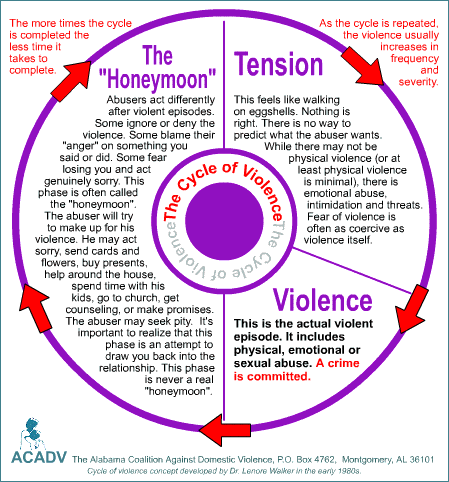
The Power and Control Wheel
Using isolation. One of the most effective ways to begin to overpower another person is to keep her from having contact with others. By systematically severing her relationships with family, friends, and co-workers, the batterer insures that his victim has little support. He becomes her only point of reference, thereby defining and controlling her world. Batterers can isolate their partners in a variety of ways, from excessive jealousy to restricting their access to education and jobs or controlling where they go or with whom they spend their time. For women with disabilities, lesbians, older women, immigrant women, or others who are marginalized by mainstream society, isolation takes on an increased potency.
Minimizing, denying, and blaming. Batterers often minimize or deny the abuse, or they blame their partners for provoking it. He may minimize the severity of her injuries, or outright deny that he caused them. Unfortunately, "victim-blaming" is prevalent in our society. Sometimes abusers play mind games with their victims trying to make them feel crazy. Often violent behavior towards women is justified by saying things like "she asked for it" or "she needed to be put back in her place." In so doing, the blame and accountability shifts from the abusive behavior of the batterer to the "weakness" of the victim.
Using children. Using children is yet another way that a batterer can instill feelings of guilt and incompetence in his partner, making her feel like a "bad" mother. Some batterers will force children to turn against their mothers, or will threaten to take the children away if the victim were to try to leave. There is also evidence that in homes where there is abuse towards the mother, there is an increased likelihood of abuse towards the children. Girls whose fathers batter their mothers are 6.5 times more likely to be sexually assaulted by their fathers than are girls from non-violent homes.
Using male privilege. In our patriarchal society, men are often raised to believe that they have been given the right to be dominating and aggressive. Being "tough" and "in charge" are accepted and expected as part of one´s manhood. It is all too often the case that batterers use this gender imbalance as a justification for violent or controlling behavior.
Using economic abuse. By controlling and limiting a woman´s access to financial means, a batterer can assure that his victim will have limited resources if she has thoughts of leaving. She may have to turn over her paycheck, leave her job, or account for every penny spent. Too often women have to choose between staying in an abusive relationship or being thrust into economic ruin or poverty.
Using coercion and threats. Threats are used to control by creating intense fear that can paralyze the victim's ability to act or keep herself constantly on guard in an effort to protect our lives or well-being. Some common threats are suicide, threats to kill her or the children, threats to damage property, etc. The victim may also be coerced into acting in ways that contradict her values, such as prostitution or fraud.
Using intimidation. Abusers will often commit terrifying acts in order to keep their partner in a state of continuous fear. This may include smashing things, killing pets, harassing friends and family, setting fires, driving recklessly, suicide and homicide. Intimidation periodically reinforced with assault, makes violence a daily part of the victim´s reality and, therefore, makes her easier to control.
Using emotional abuse. Emotional abuse is the most common form of control and can often exist in relationships where there is not physical battering. This includes put-downs, insults to the victim´s intelligence and abilities, name-calling, etc. In so doing, the batterer systematically breaks her spirit and self-esteem. She may begin to feel as if the abuse is her fault or that she must deserve it.
These forms of abuse are used in multiple combinations. Constant violence and criticism leaves women uncertain, humiliated, and much easier to control.
(while this was written in the Male, your abuser may well be Female)
Labels: blame shifting, coercion, denying, economic, emotional abuse, intimidation, isolation, minimizing, misogyny, narcissist, psychopath
Sunday, June 17, 2018
10 Reasons Abusers Don't Change

Ten Reasons to Stay the Same
From "Why Does He Do That? Inside the Minds of Angry and Controlling Men" by Lundy Bancroft.
To answer the question "Why Does He Do That?" we have to examine the foundation on which abusive behaviors are based. On the first level are the abuser's attitudes, beliefs and habits-- the thinking that drives his behavior day in and day out, which we have been looking at. On the second level is the learning process by which some boys develop into abusive men or, in other words, where abusive values come from, which is the topic of ch 13.
There is also a third level, which is rarely mentioned in discussions of abuse but which is actually one of the most important dynamics: the benefits that an abuser gets that make his behavior desirable to him. In what ways is abusiveness rewarding? How does this destructive pattern get reinforced?
Consider the following scenario: Mom, Dad, and their children are having dinner on a Wed night. Dad is snappy and irritable, criticizing everybody during the meal, spreading his tension around like electricity. When he finishes eating, he leaves the table abruptly and heads out of the room. His 10 yr old daughter says, "Dad, where are you going? Wed is your night to wash dishes." Upon hearing these words, Dad bursts into flames, screaming, "You upstart little shit, don't you dare try to tell me what to do! You'll be wearing a dish on your face!" He grabs a plate off the table, makes like he is going to throw it at her, and then turns away and smashes it on the floor. He knocks a chair over with his hand and storms out of the room. Mom and the children are left trembling; the daughter bursts into tears. Dad reappears in the doorway and yells that she'd better shut up, so she chokes off her tears, which causes her to shake even more violently. Without touching a soul, Dad has sent painful shock waves through the entire family.
We move ahead now to the following Wed. Dinner passes fairly normally, without the previous week's tension, but Dad still strolls out of the kitchen when he finishes eating. Does a family member remind him that it's his turn to wash the dishes? Of course not. It will be many, many months before anyone makes that mistake again. They quietly attend to the cleanup, or they squabble among themselves about who should do it, taking out their frustrations over Dad's unfairness and volatility on each other. Dad's scary behavior has created a context in which he won't have to do the dishes anytime he doesn't feel like it, and no one will dare take him to task for it.
Any incident of abusive behavior brings the abuser benefits just as this one did. Over time, the man grows attached to his ballooning collection of comforts and privileges. Here are some of the reasons why he may appear so determined not to stop bullying:
1. The intrinsic satisfaction of power and control
The abusive man gains power through his coercive and intimidating behaviors -- a sensation that can create a potent, thrilling rush. The wielder of power feels important and effective and finds a momentary relief from life's normal distresses. It isn't the woman's pain that appeals to him; most abusers are not sadists. In fact, he has to go to some lengths to shield himself from his own natural tendenty to empathize with her. The feeling that he rules is where the pleasure lies.
Yet the heady rush of power is the bare beginning of what the abuser gains through his mistreatment of his partner. If the rewards stopped here, I would find it much easier than I do to prevail upon my clients to change.
2. Getting his way, especially when it matters to him most
A romantic partnership involves a never-ending series of negotiations between 2 people's differing needs, desires, and preferences. Many of the differences that have to be worked out are matters of tremendous importance to the emotional life of each partner, such as:
-- Are we spending Christmas with my relatives, whom I enjoy, or with your relatives who get on my nerves and don't seem to like me?
-- Are we eating dinner tonight at my favorite restaurant, or at a place that I'm tired of and where the children seem to get wound up and irritating?
-- Am I going to have to go alone to my office party, which makes me feel terrible, or are you going to come with me even though you would rather spend the evening doing almost anything else on earth?
It is important not to underestimate theimpact of these kinds of day-to-day decisions. Your happiness in a relationship depends greatly on your ability to get your needs heard and taken seriously. If these decisions are taken over by an abusive or controlling partner, you experiences disappointment after disappointment, the constant sacrificing of your needs. He, on the other hand, enjoys the luxury of a relationship where he rarely has to compromise, gets to the things he enjoys, and skips the rest. He shows off his generosity when the stakes are low, so that friends will see what a swell guy he is.
The abuser ends up with the benefits of being in an intimate relationship without the sacrifices that normally come with the territory. That's a pretty privileged lifestyle.
3. Someone to take his problems out on
Have you ever suffered a sharp disappointment or a painful loss and found yourself looking for someone to blame? Have you, for example, ever been nasty to a store clerk when you were really upset about your job? Most people have an impulse to dump bad feelings on some undeserving person, as a way to relieve-- temporarily-- sadness or frustration. Certain days you may know that you just have to keep an eye on yourself so as not to bite someone's head off.
The abusive man doesn't bother to keep an eye on himself, however. In fact, he considers himself entitled to use his partner as a kind of human garbage dump where he can litter the ordinary pains and frustrations that life brings us. She is always an available target, she is easy to blame-- since no partner is perfect-- and she can't prevent him from dumping because he will get even worse if she tries. His excuse when he jettisons his distresses onto her is that life is unusually painful-- an unacceptable rationalization even if it were true, which it generally isn't.
4. Free labor from her; leisure and freedom for him
No abusive man does his share of the work in a relationship. He may take advantage of his partner's hard work keeping the house, preparing the meals, caring for the children, and managing the myriad details of life. Or, if he is one of the few abusers who carries his weight in these areas, then he exploits her emotionally instead, sucking her dry of attention, nurturing, and support, and returning only a trickle.
All this uncompensated labor from her means leisure for him. During the house he spends talking about himself he is relieved of the work of listening. The long weekend days when she cares for the children are his opportunity to watch sports, go rock climbing, or write his novel. My clients don't make the connection that someone takes care of the work; they think of it as just mysteriously getting done and refer to women as "lazy." Yet on a deeper level the abuser seems to realize how hard his partner works, because he fights like hell not to have to share that burden. He is accustomed to his luxury and often talks exaggeratedly about his exhaustion to excuse staying on his read end.
Studies have shown that a majority of women feel that their male partners don't contribute fairly to household responsibilities. However, a woman whose partner is not abusive at least has the option to put her foot down about her workload and insist that the man pick up the slack. With an abusive man, however, if you put your foot down he either ignores you or makes you pay.
The abuser comes and goes as he pleases, meets or ignores his responsibilities at his whim, and skips anything he finds too unpleasant. In fact, some abusers are rarely home at all, using the house only as a base for periodic refueling.
5. Being the center of attention, with priority given to his needs
When a woman's partner chronically mistreats her, what fills up her thoughts? Him, of course. She ponders how to soothe him so that he won't explode, how to improve herself in his eyes, how she might delicately raise a touchy issue with him. Little space remains for her to think about her own life, which suits the abuser; he wants her to be thinking about him. The abuser reaps cooperation and catering to his physical, emotional and sexual needs. And if the couple has children, the entire famly strives to enhance his good moods and fix his bad ones, in the hope that he won't start tearing pieces out of anyone. Consistently at the center of attention and getting his own way, the abuser can ensure that his emotional needs get met on his terms-- a luxury he is loath to part with.
6. Financial control
Money is a leading cause of tension in modern relationships, at least in families with children. Financial choices have huge quality of life implications, including: Who get to make the purchases that matter most to him or her; what kind sof preparations are made for the future, including retirement; what types of leisure activities and travel are engaged in; who gets to work; who gets to not work if he or she doesn't want to; and how the children's needs are met. To have your voice in these decisions taken away is a monumental denial of your rights and has long-term implications. On the lfip side, the abuser who dominates these kinds of decisionsextorts important benefits for himself, whether the family is low income or wealthy. One of the most common tactics I hear about, for example, is that the abuser manages to finagle dealings so that his name is on his partner's belongings-- such as her house or her car-- along with, or instead of, her name. In fact, I have had clients whose abuse was almost entirely economically based and who managed to take many thousands of dollars away from their partners, either openly or thorugh playing financial tricks.
An abuser's history of economic exploitation tends to put him in a much better financial position that his partner if the relationship splits up. This imbalanace makes it harder for her to leave him, especially is she has to find a way to support her children. He may also threaten to use his economic advantage to hire a lawyer and pursue custody, on of the single most terrifying prospects that can face an abused woman.
7. Ensuring that his career, education or other goals are prioritized
Closely interwoven with financial control is the question of whose personal goals receive priority. If the abuser needs to be out several evening studying for a certificate that will improve his job advancement potential, he's going to do it. If a career opportunity for him involves moving to a new state, he is likely to ignore the impact of his decision on his partner. Her own goals may also advance at times, but only as long as they don't interfere with his.
8. Public status of partner and/or father without the sacrifices
With his strong people-pleasing skills and his lively energy when under the public gaze, the abusive man is often thought of as an unusually fun and loving partner and a sweet, committed dad. He soaks up the smiles and appreciation he receives from relatives, neighbots, and people in the street who are unaware of his behavior in private.
9. The approval of his friends and relatives
An abuser often chooses friends who are supportive of abusive attitudes. On top of that, he may come from an abusive fmaily; in fact, his father or stepfather may have been his key role model for how to treat female partners. If these are his social surroundings, he gets strokes for knowing how to control his partner, for "putting her in her place" from time to time, and for ridiculing her complaints about him. His friends and relatives may even bond with him on the basis of his view of women in general as being irrational, vindictive, or avaricious. For this man to renounce abuse, he would have to give up his cheerleading squad as well.
10. Double standards
An abusive man subtly or overtly imposes a system in which he is exempt from the rules and standards that he applies to you. He may allow himself to have occaisonal affairs, "because men have their needs," but if you so much as gaze at another man, you're a "whore". He may scream in arguments, but if you raise your voice, you're "hysterical". He may pick up one of your children by the ear, but if you grab your son and put him in timeout for punching you in the leg, you're a "child abuser". He can leave his schedule open and flexible while you have to account for your time. He can point out your faults, while setting himself above criticism, so that he doesn't have to deal with your complaints or be confronted with the effects of his selfish and destructive actions. The abusive man has the privilege of living by a special set of criteria that were designed just for him.
Glance back quickly over this impressive collection of privileges. Is it any wonder that abusive men are reluctant to change? The benefits of abuse are a major social secret, rarely mentioned anywhere. Why? Largely because abusers are specialists in distracting our attention. They don't want anyone to notice how well this system is working for them (and usually don't even want to admit it to themselves). If we caught on, we would stop feeling sorry for them and instead start holding them accountable for their actions. As long as we see abusers as victims, or as out-of-control monsters, they will continue getting away with ruining lives. If we want abusers to change, we will have to require them to give up the luxury of exploitation.
When you are left feeling hurt or confused after a confrontation with your controlling partner, ask yourself: What was he trying to get out of what he just did? What is the ultimate benefit to him? Thinking through these questions can help you clear your head and identify his tactics.
Certainly the abusive man also loses a great deal through his abusiveness. He loses the potential for genuine intimacy in his relationship, for example, and his capacity for compassion and empathy. But these are often not things that he values, so he may not feel their absence. And even if he would like greater intimacy, that wish is outweighed by his attachment to the benefits of abuse.
Labels: approval, control, free labor, misogyny, payoffs, power, priority, stay the same
Thursday, April 04, 2013
The Misogynist
[Gk. misogunia] - mis'sog'y-nist n. - mi-sog'y-nis'tic or mi-sog'y-nous adj.
Do any of these characteristics sound familiar?
If you or someone you know has 4 or more of these, we encourage seeking help to deal with the issues that have created these characteristics. Behaviors don't come out of a vacuum, there are reasons (not excuses) for this behavior, and it can be dealt with... often by you getting out of the situation.
* A Knight In Shining Armor, "I'll save you."
* Zeros in on a woman; he chooses her.
* Extremely possessive, always wanting to know where you are; who you're with.
* Obsessively jealous, even of your women friends.
* Has first class spending habits; always wanting more.
* Can't stand criticism; always on the defense.
* Exciting, fun, charismatic.
* A product of a dysfunctional family.
* Had a poor relationship with his mother. He had an abusive or passive father.
* Has a distorted view of reality.
* Uncomfortable with feelings; contemptuous of other's weaknesses.
* Has problems with authority figures.
* If you share a secret with him it may be used against you.
* Threats of withdrawal if you don't comply, "If you really loved me, you would…"
* Makes fun of you, calls you names and inflicts little digs; hostile humor.
* You feel awkward and incompetent around him; controlled.
* Embarrasses you in public, or flatters you then cuts you down when alone.
* Is nasty behind the wheel and feels that others' mistakes are directed toward him.
* Wants or demands undivided attention; you are to be available when he wants you.
* Cruelty may be directed toward animals.
* Has a dual personality (Jekyll/ Hyde).
* Has grandiose behavior; is cocky, controlling, self-centered.
* Is preoccupied with sex and is sexually controlling.
* Is competitive; must always win; his way or no way at all.
* As a child, he enjoyed playing with fire; more than curiosity.
* Was or is involved in a violent sport. (What is he doing now?).
*Comes on too strong and/or too fast, love bombing at first.
* Believes in the traditional stereo-type role modeling and roles.
* Is an habitual liar; he twists facts to make it look as if he were the victim.
* Has extreme mood swings (extreme high to low).
* Takes no responsibility for anything; blames others/ things/ circumstances for his behavior.
* Treats you rough at times; twisting your arm, grabbing, shoving.
* Is nice to others, but treats you badly; shows no respect.
* Steals, uses people, cheats them out of their money; always borrowing, never pays back.
* Professes to be religious then attacks YOUR religious beliefs or practices.
* Gives gifts then demands favors.
* Makes jokes and puts women down in front of you then ridicules you for being upset.
* Encourages pity from others; convinces you to feel sorry for him for all he's had to endure.
*Constantly cuts down your family and friends; isolates you. You must account for your time.
* Very impatient and when he gets angry will destroy property; usually yours.
*Overly sensitive and sulks when he doesn't get his way.
* Tells you everything to do; what to do, how to do it, when to do it; what to wear
(how many of these is your significant other?)
(While this is about the male abuser, your abuser may well be FEMALE!)
Labels: casual dishonesty, defensive, hatred, jealous, manipulation, martyr, misogyny, twisted thinking, women