Sanctuary for the Abused
Sunday, January 17, 2021
How They Exploit Others

by Jennifer Copley
Psychopaths, also known as sociopaths, comprise 20-25% of the prison population, but 50% of those who have committed serious crimes. However, the majority of psychopaths are not violent — most are users, scam artists and shady businesspeople. There is some evidence that psychopaths may be overrepresented in the fields of business, politics and entertainment.
Targeting the Vulnerable
Psychopaths are good at spotting exploitable vulnerabilities in others. Many psychopathic scam artists seek lonely individuals and promise them a lifetime of love and partnership. Others target the grief-stricken or those who have suffered a recent setback or breakup and are therefore less apt to look closely at what appears to be a compassionate helping hand.
Alternatively, psychopaths may exploit someone’s need to be needed, finding a motherly or fatherly soul that they can milk for sympathy and cash. They are also inclined to marry people with low self-esteem and convince them that they are somehow to blame for any abuse they suffer in the marriage.
The Sympathy Ploy
Psychopaths usually play on the sympathies of others. When people’s empathic responses are aroused, they are less inclined to scrutinize an individual’s behaviour, or they will attribute bad behaviour to an abusive childhood or other trauma. This provokes the sort of nurturing response that enables the psychopath to manipulate and extract what he wants from others.
While often appearing cold and deadpan, when they are trying to manipulate others, psychopaths often engage in dramatic, short-lived emotional displays designed to provoke sympathy or guilt, or even cause people to believe that they must be crazy for questioning the psychopath’s motives.
Psychopaths say whatever will get people to give them what they want. Many work hard to give the impression that all of their problems stem from cruel treatment at the hands of others, and that they could change for the better if only some kindly soul would take an interest in them and support them.
They usually reward these people by breaking their hearts and cleaning out their bank accounts, as well as ...abusing them ...
The Dynamic Persona
The psychopath can be an exciting companion at first because he takes risks that others wouldn’t take and thus can appear courageous and impressive. Psychopaths often pose as brilliant eccentrics, misunderstood geniuses or difficult artistic types, and so people are inclined to attribute bad behaviour to a creative temperament.
Self-assured, cool under pressure and socially adept, they may appear larger than life. Their tendency to maintain intensive eye contact and move into the personal space of others enhances the image of forcefulness and confidence.
Because many psychopaths have a surplus of charm and the gift of gab, they are able to dazzle their audiences and con them into believing all sorts of outrageous stories. Excellent self-promoters and fast talkers, they boast and dazzle their targets with a variety of grandiose plans.
The target usually experiences a wild ride and is left disappointed, financially poorer and wondering how everything the psychopath said could have seemed so plausible at the time.
The Flatterer
In The Miser, Moliere noted that “People can be induced to swallow anything, provided it is sufficiently seasoned with praise.” A common tool of the psychopath is excessive flattery. Most people enjoy receiving compliments, and those who suffer from either low self-esteem ...can be particularly vulnerable to this sort of approach.
Beware of those who tell you everything you want to hear all the time. A compliment or two is nice, but someone who continually peppers the conversation with flattery should be suspect.
Excuses and Empty Promises
A psychopath does not keep his commitments or obligations. He breaks his word, stands people up, abandons those who care about him at critical times in their lives, cheats with impunity, and makes promises he has no intention of delivering on to get what he wants.
Psychopaths may disappear and reappear in the lives of friends and family, causing worry and heartbreak, without ever adequately explaining what they’ve been up to. However, they always have excuses, and it is always someone else’s fault.
Psychopaths abandon their partners, spouses and children without the slightest concern. And while many don’t commit crimes for which they can be convicted, they often live what could be termed as a sub-criminal existence, engaging in a variety of secretive and shady dealings.
When they do achieve success, it is usually through causing harm to others. Their lack of commitment to anything is evident in the many contradictory and hollow statements they make.
However, they hang onto the people in their lives by promising to change, or even changing, briefly, only to revert back to their old ways in time.
SOURCE
(personal thanks to Jennifer Copley!)
Labels: abuse, brainwashing, cheating, emotional rape, exploitation, gaslighting, harm, lie, narcissist, psychopath, sociopath, use, vulnerable


Saturday, March 14, 2020
NO CONTACT

"Self Discipline is Self Esteem"
Abbreviations: N=Narcissist, P=Psychopath,
D&D = devalued & discarded
- "We want closure which is never going to come in a way that we want but we can find closure by No Contact. We want to be heard, want them to know the pain they've caused but they are never going to listen and if they do, they don't hear the words. What we often miss is the beauty of "No Contact." You are finally saying No More. It is your voice without the words but they hear it loud and clear as if you screamed from the top of your lungs - "Go to the Devil." No Contact is your pure and sweet rejection. It is empowering. It is your last word. It is your closure. It is one of the most hurtful narcissistic injuries you could inflict. They have finally come to understand you know just who and what they are. They know the tricks do not work anymore. They know you are no longer prey or a pawn in their game. It is your last word."
- "The no contact rule was the best thing I ever did...please stay strong."
- "No contact is so essential. Your pride and dignity are riding on it."
- "We don't want the NP back in our life... we only want them when we are hurting."
- "No contact is the strongest statement I can make to him"
- "NO CONTACT is the best to be hoped for; and this principle of recovery must be held to with tenacious trust that this is the best thing we can do for ourselves --- AND the N!"
- "We must all let go of people who hurt us whether we understand why or not."
- "I had to treat no contact like a drug addiction. There were times I had to count the minutes, then hours of no contact. I marked days off on the calendar. My entire life went to hell and I finally got mad and took it back. I am making my own happiness these days. It's still a struggle but it gets better every day. I had to force myself through the initial no contact but once I started to see our relationship for what it was it became easier and easier."
- "Things he said to me when I was D&D'd are what made me begin the no contact... and I would have wasted all that I had established, for myself, if I ever contact him again. I have often been asked what I would do if he tried to re-establish contact with me. Up until a few days ago, I did not really have an answer. But, I have climbed up to another level and I know now that I would do exactly what is recommended...thanks, but no thanks. I am not the same person, I have nothing more to give to you, I know that you have absolutely nothing to give to me."
- "You have the upper hand with no contact. Hang on to it for dear life."
- "Keep that list of horrors he'd done and print off those articles that really zing in on what he really is and read them both with your breakfast cereal. This helps reinforce our No Contact commitment and keeps the malignant optimisms/magical thinking we're often prone to away."
- "I have no contact with my brother who is a P he still tries the manipulation through emails and my mother is a P. She tries through letters, same words, same game. It is very hard not to respond, you just have to keep reminding yourself what would happen to you if you did respond. It is as though they still have part of your mind and it takes a lot of strength to break free and not respond."
- "I used those Olympic-class thinking tactics to picture how I'd react when he came up to me on the street. Well it worked. I just said "I have to go now, goodbye" and walked away. No payoff from me! I gave myself a Gold Medal in detaching."
- "The No Contact rule is definitely it. I feel any contact with him is like sticking my hand in a snake pit."
- "I was coming out of a 18 year marriage. He saw my vulnerability a mile away!! I cannot stress the no contact rule enough."
- "Unfortunately as long as you stay with or talk to an N you will remain a form of supply for them whether it be good, bad or ugly. The only way you can achieve any type of victory over them is to walk away with your head held high and have no contact. The longer you stay, the longer you will miss out on your own life."
- "They deny they do it, deny they are the problem and lay the blame on someone else. That’s why the no contact rule is the only way out of the frustration and extra hurt."
- "I notice your N makes no effort to even acknowledge how his behaviour has hurt you. Expect him to blame you and tell you that you are the unreasonable one the whole way down the line. They deny they do it, deny they are the problem and lay the blame on someone else. That’s why the no contact rule is the only way out of the frustration and extra hurt. Waiting for an N to validate your experience or change the N behaviours could mean you will be trading emails at 90 and still not get any further going round in their crazy circles."
- "You deserve a rich full life. An N will rob you of that. Stay clear. No contact."
- "There is power in our silence. The power we gain during the No Contact period can't be emphasized enough.
- "Give it time. Use the power of silence."
- "We're strongest with No Contact. It's idiot proof, requires no effort on our part. It is free of charge and if used according to directions is, 100% guaranteed."
- "There is only one message they hear and that is the silence of No Contact."
- "I had some good old-fashioned growing up to do. No Contact thrust me into that. That's when I really started to see things as they were." It'll be the best thing you every do for yourself."
- "Time and no contact is absolutely the only way, because anytime I have anything to do with him other than leaving notes for him when he comes to see the kids, it creates a "feelings setback" for me."
- "My therapist very rarely "advises" me, as such - preferring to help me see the right answers for myself. But the one thing he's been absolutely emphatic about, ever since I told him about it, is that I must NOT contact my N, under ANY circumstances."
- "And, if you do N-dip and heaven knows we try far too hard to fix them, fix the problem and make it work, and if you do, remember to protect yourself financially and emotionally. Cut yourself some slack on this, OK. Sometimes No Contact is a learned habit."
- "There is a point where you re-find yourself (well at least that kick-start moment towards self-knowledge and emotional freedom...It's a neverending process), and life becomes an open field, your soul breathes again. No contact and time spent alone out of the crazy-making environment will help you greatly. My, you just have to stay stoic 'til you're out. Make sure that you give yourself every chance to recuperate your senses and not have your mind invaded by anyone."
- "NO CONTACT is the only way that God will work. We must not try to get in the way and do all the work, instead of God doing it."
- "After the worst of it was over, what I found to be key was to have no contact with him. None. Do not say go to hell. Do not say I love you. Do not, above all, try to sit down and have a dialogue, to reason with him. No response of any kind is the answer."
- "The months of distance from him is what FINALLY helped me reach closure. Up close, I can't keep straight what is what. I fall right back into old habits, no matter how much therapy, etc. I have. From a distance, it's all crystal clear."
- "The best therapists tell us to stick like glue to that self-imposed No Contact rule. No contact works, but we need to give it a chance".
- "The more time I stay in NC...the stronger I get."
- "It reminds me of quitting smoking, hang in there long enough and the urge for contact will pass."
- "Beware of the Contact Trap. So many of them turn our hope into hell claiming THEY ARE BEING HARASSED OR STALKED - by us!! Ns love the courts so we can end up trying to defend ourselves in a lawsuit."
SOURCE
Labels: denial, detachment, harm, healing, narcissist, no contact, pain, psychopath, trauma bonding
Thursday, August 16, 2018
What About My Pets?

Another Reason Women Don't Leave
I recently received an email from someone who reminded me of another reason why women don't leave abusive situations. They are afraid for the lives of their pets. According to Physicians Committee for Responsible Medicine, a 1997 study of the largest battered women's shelters in 48 states revealed that workers at 85 percent of those shelters had heard reports from women about incidents of animal abuse. And abusers often torture the human members of the family by hurting or killing pets, right in front of the other members of the family.
In fact, some abusers use animals to 'practice' hurting humans. In these situations the pet often becomes a sort of hostage - it is safe as long as the woman stays and obeys.
In an ideal world, there would be shelters that include pets, or safe places to place pets when anyone flees an abusive situation. Advocates are working with animals shelters and veterinarians to find a solution to this problem.
The priorities in our society make things even worse. There are not enough shelters for battered women in this country, and the prospect for improvement in the immediate future is dim. So the shelters are full, and animals are usually not permitted.
In the last ten years, more attention has been paid to the fact that violent people often manifest themselves first in violence against animals. Many states have passed laws that make cruelty to animals a felony offense. Women's rights advocates will relate, with bitter irony, that being cruel to an animal is a felony, while being cruel to a woman is only a misdemeneanor. But if you can get past that irony, the animal protection laws can be used to a woman's advantage.
The main problem with domestic violence laws is that a batterer can beat up his wife or girlfriend several times before the law gets annoyed. But if the batterer harms the family pet, the batterer can be arrested on a felony charge.
In many ways, our society at the present time values animals more than it values women and children. Humane Societies may be more prevalent in a state than women's shelters, often with more reliable funding. Please understand that I am not denigrating Humane Societies; that's where I get my cats. I am suggesting that the Humane Society can be a valuable ally that can partner with women's shelters.
If you are in a violent situation where your pet is being used as a hostage, the first step is still the same: call a hotline to get help. The advocates you reach will know the laws in your state and can help to find shelter for your pets too.
The Humane Society of the United States has a program called First Strike. There is information at their website for setting up an organization in your community. The woman who reminded me of this problem runs a website called Friends of Pets. And at DMOZ.org, there are thousands of websites listed that can help.
Ask when you call a shelter if they allow pets, or know a program in your area that will take care of your pet until your situation stabilizes. Family members and friends can be a good resource too. There may be county workers that investigate reports of animal cruelty who has ideas about sheltering your pets. I once worked with a women who has dozens of animals, including chickens and a horse. We found another women who had survived battering, had remarried and lived on a hobby farm. This survivor was happy to shelter all the women's animals while the first woman recovered.
Be sure to talk to your advocate about an Order for Protection, which can protect your animals as well as you. And as always, your best source for ideas, support, resources, and brainstorming if your local women's crisis center. The more we publicize issues like this one, the more attention it will receive. And perhaps we'll change the world.
Labels: abuse, abuser, animals, domestic violence, harm, order of protection, pets, protect, support
Saturday, July 14, 2018
How They Do It: Sociopathic Deception and Manipulation

Labels: adult children of narcissists, brainwashing, cognitive dissonance, deception, harm, manipulation, narcissist, psychopath, ptsd. coercion, seduction, sociopath
Thursday, June 07, 2018
Without Conscience

by Robert D. Hare, Ph.D
Chapter 8
Words from an Overcoat Pocket
One question runs like a refrain through the stories told by the victims of psychopaths:
And when victims aren’t asking themselves, somebody else is sure to pose the question. “How on earth could you have been taken in to that extent?” The characteristic answer: “You had to be there. It seemed reasonable, plausible at the time.” The clear--and largely valid--implication is that had we been there we too might have been sucked in.
Some people are simply too trusting and gullible for their own good--ready targets for any smooth talker who comes along. But what about the rest of us? The sad fact is that we are all vulnerable. Few people are such sophisticated and perceptive judges of human nature that they cannot be taken in by the machinations of a skilled and determined psychopath. Even those who study them are not immune; as I’ve indicated in previous chapters, my students and I are sometimes conned, even when aware that we’re dealing with a probably psychopath.
Of course, pathological lying and manipulation are not restricted to psychopaths. What makes psychopaths different from all others is the remarkable ease with which they lie, the pervasiveness of their deception, and the callousness with which they carry it out.
But there is something else about the speech of psychopaths that is equally puzzling; their frequent use of contradictory and logically inconsistent statements that usually escape detection.
Recent research on the language of psychopaths provides us with some important clues to this puzzle, as well as to the uncanny ability psychopaths have to move words--and people--around so easily. But first, here are some examples to illustrate the point, the first three from offenders who scored high on the Psychopathy Checklist.
- When asked if he had ever committed a violent offense, a man serving time for theft answered, “No, but I once had to kill someone.”
- A woman with a staggering record of fraud, deceit, lies and broken promises concluded a letter to the parole board with, “I’ve let a lot of people down. . . . One is only as good as her reputation and name. My word is as good as gold.”
- A man serving a term for armed robbery replied to the testimony of an eyewitness, “He’s lying. I wasn’t there. I should have blown his f*cking head off.”
- A tabloid television program showed a classic con man who shamelessly swindled elderly women.(1). When the interviewer asked, “Where do you draw the line between right and wrong?” he replied,"I have some morals, whether you believe it or not, I have some morals.” To the interviewer’s question, “And where do you draw the line?” he replied, “That’s a good question. I’m not trying to hedge, but that’s a good question.” When asked, “Did you actually carry around in your briefcase blank power-of-attorney forms?” his reply was, “No, I didn’t carry them around, but I had them in my briefcase, yes.”
- When Ted Bundy was asked what cocaine did to him he replied, “cocaine? I‘ve never used it. . . . I’ve never tried cocaine. I think I might have tried it once and got nothing out of it. Just snorted a little bit. And I just don’t mess with it. It’s too expensive. And I suppose if I was on the streets and had enough of it, I might get into it. But I’m strictly a marijuana man. All I do is . . . .I love to smoke a reefer. And Valiums. And of course alcohol.”
Psychopaths also sometimes put words together in strange ways. For example, consider the following exchange between a journalist and psychopathic serial killer, Clifford Olson. “And then I had annual sex with her. “ “once a year?” No. Annual... from behind.” Oh. But she was dead.”” “No, no. She was just unconscientious.”
About his many experiences, Olson said. “I’ve got enough antidotes to fill five or six books -- enough for a trilogy.” He was determined not to be an ”escape goat” no matter what the ”migrating” facts.
Of course, words don’t simply pop out of our mouths of their own accord. They are the end products of very complicated mental activity. This raises the interesting possibility that, like much of their behavior, the mental processes of psychopaths are poorly regulated and not bound by conventional rules. This issue is discussed in the following sections, which outline evidence that psychopaths differ from others in the way their brains are organized and in the connections between words and emotion.”
************************************************** ************
A CONVICTED SERIAL killer, Elmer Wayne Henley, now asking for parole, says that he was the victim of an older serial killer he worked with, and that he would not have done anything wrong on his own. Together, they killed at least twenty-seven young men and boys. “I’m passive,” he offered. “I don’t want to be no psychopath, I don’t want to be no killer. I just want to be decent people.”
Consider the following exchange between the interviewer and Henley. The interviewer says, “You make it out that you’re the victim of a serial killer, but if you look at the record you’re a serial killer.” Henley replies, “I’m not.” “You’re not a serial killer?” the interviewer asks in disbelief, to which Henley replies, “I’m not a serial killer.” The interviewer then says, “You’re saying you’re not a serial killer now, but you’ve serially killed.” Henley replies with some exasperation and condescension, “Well, yeah, that’s semantics.”
--From the May 8, 1991 episode of 48 Hours
************************************************** ***************************
Who’s in Charge?
In most people the two sides of the brain have different, specialized functions. The left cerebral hemisphere is skilled at processing information analytically and sequentially, and it plays a crucial role in the understanding and use of language. The right hemisphere processes information simultaneously, as a whole; it plays an important role in the perception of spatial relations, imagery, emotional experience, and the processing of music.
Nature probably "arranged" for each side of the brain to have different functions for the sake of efficiency. For example, it is clearly more effective for all the complex mental operations required to use and understand language to take place in one side of the brain than if they were distributed over both sides. In the latter case, information would have to be sent back and forth between the two hemispheres, which would slow down the processing rate and increase the chances of error.
Further, some part of the brain has to have primary control over the task; if the two sides of the brain were competing for this control, the conflict would reduce the efficiency of processing. Some forms of dyslexia and stuttering, for example, are associated with just such a condition: Language centers are bilateral--located in both hemispheres. Competition between the two hemispheres makes for a variety of difficulties in the understanding and production of language.
New experimental evidence suggests that bilateral language processes are also characteristic of psychopathy. This leads me to speculate that part of the tendency for psychopaths to make contradictory statements is related to an inefficient “line of authority”--each hemisphere tries to run the show, with the result that speech is poorly integrated and monitored.
Of course, others with bilateral language--some stutterers, dyslexics, and left-handers--do not lie and contradict themselves the way psychopaths do. Clearly, something else must be involved.


Labels: fraud, harm, illogical, lies, manipulation, narcissistic, predator, psychopath, sociopath, victims
Tuesday, May 08, 2018
The Huge Hurt: Betrayal
by Ann Bradley
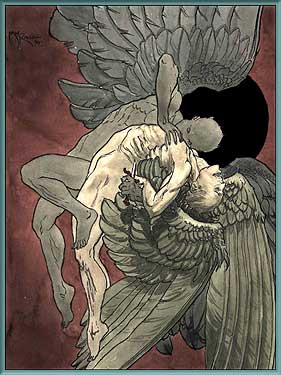
Betrayal, when realized, is a phenomenal existential feeling. Suddenly, your world is no longer the one you believed in. You question reality, but most of all you question yourself. How, you wonder, could I have been so naive, stupid, blind, trusting, unseeing, unknowing?
It may be difficult to believe, but these questions are good. YOU are the normal person, the one who aligns reality (he was so nice to me, he was my friend) with a cognitive belief: he ACTS as if he likes me, he TELLS me he likes me, I see no reason not to believe him because in my past, people who act and speak this way, CAN be trusted. There is congruency. But not now.
Suddenly, you learn that someone trusted - a spouse, lover, family member, close friend - has been putting you down, lying, manipulating others against you, and yet maintaining a stance of intimacy with you. The world is not clear, the ground you stand on is wobbly. You will never feel good about this.
But you CAN get over it. You can do so by realizing that no matter how awful the betrayal, YOU are the normal person and this betrayal comes from rage. This person envies you, is enraged about it, and MUST put you down behind your back. They MUST harm you. They have no choice.
But you do. In the world of normals, after we get over the shock, we can use this experience to become stronger, to help others, to learn to avoid this particular toxin, and to calm ourselves that the higher moral ground is ours. It's too bad this person acted as he did, we wish he did not, but we are NOT diminished by their pathology. Wiser, sadder, but never diminished.
SOURCE
Labels: beliefs, betrayal, harm, lies, shock. smear campaign, trauma, trust
Monday, October 23, 2017
Boundary Violations
by: David Mandel
When it comes to domestic violence perpetrators everyone wants to know: how dangerous is he? Or more specifically, what kind of violence is he likely to do in the future? Domestic violence survivors and their children can think and worry about this on a daily basis as they attempt to avoid or minimize the impact of the abusers’ next attack. In the judicial system, agencies such as adult probation look for information which will help them allocate supervision resources towards the most serious and dangerous offenders. Child protection service agencies want to understand whether a domestic violence abuser can be successfully prevented from harming a victim and her children through restraining and protective orders.
While researchers strive to isolate profile factors of abusers who will kill or do serious damage, anecdotal information from survivors of domestic violence continues to be the best common sense source of information about dangerousness. For instance, men who threaten to kill their partners, who have physically assaulted them when they were pregnant or have forced their partners to engage in unwanted sexual behavior are perceived as some of the most dangerous. Men who stalk their victims, willfully violate court orders and assault them in front of others also fall into this category.
What do these men have in common? Is there an aspect or pattern in their behavior that would be useful in assessing the behavior and dangerousness of all abusers? All these behaviors share a distinct quality which can be described as a "boundary violation." A "boundary violation" is an action which by its very nature penetrates the physical, emotional, and spiritual boundaries of another person. All types of violence share this characteristic to some degree. By examining the extent, severity and the frequency of the "boundary violations" in the behavior of an abuser, we can begin to see a pattern emerge that may be useful in assessing for future dangerousness as well as the path towards successful intervention approaches with an abuser.
First of all, evaluating an abusive man based on his history of violating his victims boundaries orients the assessment process towards an essential dynamic in domestic violence cases. Webster's Collegiate Dictionary uses the words, "break", "disregard", "interrupt" "disturb", "desecrate" and "rape" in association with the words violation or violate. All these words accurately describe the range of experience of battered women and their children at the hands of their abuser. By engaging in a pattern of abuse, a batterer "breaks, interrupts and disturbs" his victim's control over her own time, energy, physical space and even her thoughts. When we understand domestic violence as a boundary violation, we refocus the community dialogue on the serious impact of the behavior on the victim and her children. Our understanding of the abuser changes from seeing him as someone with a "temper problem" or someone who "lost control" to someone who is breaking the trust of his loved ones. And we are implicitly acknowledging the right and need for women and their children to have their own physical, mental, emotional and spiritual boundaries.
Second, by knowing how far a particular abuser has gone in his "boundary violations" we can begin to see his dangerousness more clearly. Was he physically violent to his partner when she was pregnant? If he was, he has demonstrated his willingness and ability to strike out against a very vulnerable form of life. Has he stalked his partner against her wishes and in disregard for court orders against him? If he has, he has demonstrated his unwillingness to respond to either his victim’s request for physical space or legal and social injunctions against his invasion of her space. Has he been violent to his partner in front of others including children, friends, family or in public? If the answer is yes, then he has displayed a willingness to humiliate and shame his partner in addition to assaulting her. Has he been sexually assaulting toward his partner? If the answer is yes, then has demonstrated his willingness to override and ignore her most basic and fundamental right: to control her own body. The questions can continue: Has he broken into her house? Has he spied on her? and so on.
Three useful perspectives emerge from examining the extent, severity and frequency of the boundary violations.
First, a profile develops of the offender centered on the most crucial aspects of his behavior. What social, ethical and moral norms is the abuser willing to violate in order to get his own way? What requests from the victim, her children and legal and social authorities is he willing to disregard in order to get what he wants? The more an abuser indicates his willingness to "break, interrupt, desecrate, and disturb" the normal human needs of his victim and accepted legal and social boundaries, the more dangerous he is.
Second, a picture forms of the abuser's level of disconnection from himself and others. To become abusive, a man must forget about everything except his goal of control. Focusing on revenge or proving oneself right takes all precedent over the impact of his behavior on his children or his partner's feelings for him. He disconnects from his other values, and he disconnects from the real long-term impact of his behavior. The more time a man spends disconnected from himself and others, the more dangerous he is. The greater the degree of disconnection the more dangerous he is.
Third, if you analyze the boundaries an abuser is willing to cross, you may also begin to see which boundaries he respects and won't cross. We know that many abusers, when they become aware of the impact of their behavior on their children, begin to make an effort to change. For instance, a study showed that a number of men who had been physically violent before their partner became pregnant stopped their physical violence during the pregnancy. This kind of information can help the court, social service workers and community agencies begin to develop individual and community strategies designed to leverage these pre-existing patterns.
A battered women intuitively understand many of these things. Her fear level can quickly rise when her partner becomes quiet. His disconnection from her and the family may be a precursor of a violent incident. The same may be true for a sarcastic or critical comment. A outside observer may fail to understand how a small, cutting comment telegraphs so much about his willingness to violate her emotional space. Battered women are constantly trying to discover the boundary the abuser will not cross to hurt her or her children. For instance, a victim might strategize "Let me invite our friends over. He's never violent when other people are around," or "I need to call the police because he always leaves me alone for a few months after the police get involved."
Professionals working with domestic violence may benefit from examining the patterns of abusers from the "boundary violations" perspective. This method of organizing our thinking about abusers can enhance our efforts to develop the most effective assessment and intervention strategies in our work to diminish and ultimately stop domestic violence in our society.
Labels: abusers, attack, boundaries, disrespect, harm, lies, trauma, victims, violation, violence




















