Sanctuary for the Abused
Thursday, December 23, 2021
Narcissism Victim Syndrome
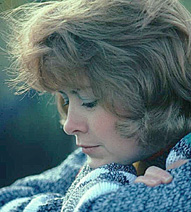
A new diagnosis?
Do you see a preponderance of middle aged women in your practices with no particular physical disease process, yet a variety of physical and/or emotional complaints, including: insomnia, weight loss or gain, depression, anxiety, phobias, (sometimes but not always, also: broken bones, lacerations, or bruises)? Some may report an overwhelming feeling of emptiness, self-hate or doom. Others may talk about or attempt suicide.
These patients are frequently rather nervous, with a guilt-ridden, anxious look and effect. They may appear restless, worried, and/or demonstrate a fake laugh that seems to hide something else.
In extreme cases they may describe sudden outbursts of rage with accompanying violence. They may have even been arrested for assault on their spouse. A few of them are men.
Who are these patients and how did they get this way? While there may be many situations with similar symptoms, it is important to recognize these may be "Victims of Narcissists" and they need your help. While narcissism itself has been a diagnosis in the DSM - IV, psychiatry's complete reference, little to nothing has been written in the medical literature surrounding those who live with the narcissist … and the torturous lives they live. And there are many of them out there.
Narcissism is a broad spectrum of behaviors. On a scale of 1 - 10, Healthy Narcissism is a one, and Pathological Narcissism, or Narcissistic Personality Disorder, (NPD) is a 10.
Healthy Narcissism is something we all can use. It's having a healthy self-esteem. It's what makes us pick ourselves up after experiencing failure and going on towards the next goal. It's what gives us the ability to help each other, and to love someone - as we already know how to love ourselves.
Yet, Pathological Narcissism is an ironic twist of this healthy state. Outwardly, it appears that these people love themselves too much - to the exclusion of anyone else. It is as if they are God himself and those around them must recognize their omnipotence, supreme knowledge, and absolute entitlement and power. Rules don't apply to them. They have an unrealistic and overblown sense of self, often without the credentials to match, as well as fantasies of unlimited power, success, and/or brilliance. They are interpersonally exploitive and have absolutely no understanding of empathy or compassion.
They are neither kind nor benevolent gods. And those who live with them end up paying the price.
While there is a range of narcissistic behaviors lying between level 1 and 10 on this scale, one doesn't need to have full-blown NPD to do incredible damage to those in the inner circle.
While victims of Narcissists are generally codependents, most have no idea how they got in this situation, because in the early stages of the relationship the Narcissistic person can be the most charming, Academy Award winning actor or actress (according to the DSM-IV, 50-75% of narcissists are men), of the century.
The early days of the dating is fast, furious, and vastly romantic. Oftentimes marriage proposals come within a few weeks. The "victim" sees the narcissist as the "Perfect Partner". She's never met someone so wonderful in her lifetime and falls head-over-heels in love. The two go on to live happily ever after - or so she thinks - until the "real" partner surfaces. The once wonderful Dr. Jekyll turns into the dangerous Mr. Hyde who quickly instills fear, anxiety, uncertainty, and total confusion to the relationship.
The change can be quick and powerful or slow and insidious.
We are all way too familiar with overt narcissists: those abusive husbands who send thousands of battered women to the emergency room each year. They feel it is their God-given right to beat, abuse, and otherwise threat their partner in whatever method they deem necessary and no one can tell them otherwise.
Then there is the verbally abusive and controlling narcissist … the one who uses emotional abuse as his weapon of choice. He tells his victim who she can see, what time she needs to be home, and when she can go to bed. Or in the case of Jamie, whose husband makes her recite every day, "I'm only worth 29 cents - the price of a bullet," he erodes her self-worth to nothing to keep her under his control.
Who else could possible want such a worthless woman as she? With that belief, she will never leave him for good, although she makes many brief attempts to do so. She always returns. The brainwashing that continues day after day is emotionally exhausting, draining, and vastly unhealthy.
Yet almost worse is the "Stealth Narcissist," so sinister and silent in his ability to drive his partner crazy that she doesn't suspect anything bad is happening until it's too late. He is the master of the little digs … "Honey, why on earth would you cook eggs in butter? NO ONE does it that way. What's wrong with you?" Or, "If you'd only do what I say then we'd both be happy."
He issues the "silent treatment" when he is slighted, punishing his family by ignoring them for hours, leaving them wondering what they did "wrong" to make him act this way. He may "forget" birthday or Christmas presents, year after year. He may show up hours late and his partner is just supposed to understand, with no explanation even offered. He may have another woman on the side and feel quite entitled to do so.
Yet, to those outside his inner kingdom he looks like a saint. He probably is president of the Rotary, volunteers at a food bank, and contributes regularly to charity … all to attain the image of being the admired Superman of his community.
No matter which type of narcissist he is, the end result is the same … a slow, insidious, breaking down of the self-esteem of his victims until there's next to nothing left, at which point, the narcissist will frequently throw his partner out in order to look for someone new and full of life to make his next target. Leaving his victim an emotional wreck wondering what she did to destroy their once "perfect" relationship.
The Narcissist himself rarely changes. After all, if you believe you're God-like, you must be perfect. Why should you change your behavior for anyone else? Yet the biggest secret is that deep inside, he loathes himself, and is desperate that no one find out who the "real" person is inside his tough, outer shell.
Victims are not only spouses. They can be coworkers, employees, children, or friends of narcissists. When the narcissist is the victim's mother, it's a difficult spot to be in, as most children (even grown children) find it almost impossible to leave the relationship. And the abuse continues for years.
However, when the narcissist is your patient's boss, coworker, or friend, it may be wise to counsel the victim to seek a new situation elsewhere to best avoid an emotional roller coaster ride that could lead to extreme health issues down the road.
How can you help those with Narcissism Victim Syndrome? First, by asking questions to determine what is going on in their environment. Health care professionals already know the effect that stress has on so many of us, but the added stress of living with a narcissist is rarely understood or recognized by the victims themselves. Knowledge is power and by asking the right questions about their situation, you might be able to help them begin to better recognize their problem and seek help.
You can help them quit being victims, quit blaming themselves for all that's wrong in their relationships, gain knowledge of this disorder, and regain their personal power. Help them to seek counseling from a therapist knowledgeable about narcissism, (not all are, and few fully understand victim issues at all - see www.helpfromsurvivors.com), in order to rebuild their shattered self-esteem and stop looking and acting like a caged animal.
Help them find hope, before years of stuffing their anger due to this abusive treatment, leads them to venting in unhealthy ways, sometimes leading to domestic violence and police intervention. Help them to stop looking like the sick one in the relationship and to start down the road of being a survivor and no longer a victim. Help them escape symptoms of depression that may, in some cases, lead to suicide.
Learn all you can about the "Narcissism Victim Syndrome". You might light a glimmer of hope for someone who's just barely hanging on for dear life.
Mary Jo Fay, RN, MSN is a national speaker, author, columnist and survivor of several narcissistic relationships. Her new book, "When Your Perfect Partner Goes Perfectly Wrong - Loving or Leaving the Narcissist in Your Life" is available at http://www.helpfromsurvivors.com or http://www.outoftheboxx.com. She can be reached at 303-841-7691.
Copyright by Mary Jo Fay, RN, MSN
Labels: anxiety, depression, narcissism, narcissists, panic, pathological, ptsd, trauma, victim


Saturday, November 16, 2019
Narcissists & Psychopaths Cause PTSD for their Victims

by Tim Field
How do the PTSD symptoms resulting from a Narcissist or Psychopath's abuse and bullying meet the criteria in DSM-IV?
A. The prolonged (chronic) negative stress resulting from dealing with a narcissist or psychopath has lead to threat of loss of job, career, health, livelihood, often also resulting in threat to marriage and family life. The family are the unseen victims.
A.1.One of the key symptoms of prolonged negative stress is reactive depression; this causes the balance of the mind to be disturbed, leading first to thoughts of, then attempts at, and ultimately, suicide.
A.2.The target of the narcissist or psychopath may be unaware that they are being exploited, and even when they do realize (there's usually a moment of enlightenment as the person realizes that the criticisms and tactics of control, etc are invalid) - victims often cannot bring themselves to believe they are dealing with a disordered personality who lacks a conscience and does not share the same moral values as themselves.
Naivety is the great enemy. The target is bewildered, confused, frightened, angry - and after enlightenment, very angry.
B.1. The target experiences regular intrusive violent visualizations and replays of events and conversations; often, the endings of these replays are altered in favour of the target.
B.2. Sleeplessness, nightmares and replays are a common feature.
B.3. The events are constantly relived; night-time and sleep do not bring relief as it becomes impossible to switch the brain off. Such sleep as is achieved is non-restorative and people wake up as tired, and often more tired, than when they went to bed.
B.4. Fear, horror, chronic anxiety, and panic attacks are triggered by any reminder of the experience, e.g.receiving threatening letters or email from the narcissist or psychopath or their friends, their family or attorneys. Additionally postings on online boards or sites about the victim by the abuser (often to try to make the victim look like the abusive one!) can add to these triggers and health related issues tremendously.]
B.5. Panic attacks, palpitations, sweating, trembling, vomitting, binge eating or forgetting to eat, ditto.
Criteria B4 and B5 manifest themselves as immediate physical and mental paralysis in response to any reminder of the narcissist or prospect being forced to take action against the narcissist.
C. Physical numbness (toes, fingertips, lips) is common, as is emotional numbness (especially inability to feel joy). Sufferers report that their spark has gone out and, even years later, find they just cannot get motivated about anything.
C.1. The target tries harder and harder to avoid saying or doing anything which reminds them of the horror of the exploitation.
C.2. Almost all Victims report impaired memory; this may be partly due to suppressing horrific memories, and partly due to damage to the hippocampus, an area of the brain linked to learning and memory.
C.3. the person becomes obsessed with resolving the experience which takes over their life, eclipsing and excluding almost every other interest.
C.4. Feelings of withdrawal and isolation are common; the person just wants to be on their own and solitude is sought.
C.5. Emotional numbness, including inability to feel joy (anhedonia) and deadening of loving feelings towards others are commonly reported. One fears never being able to feel love again.
C.6. The target becomes very gloomy and senses a foreshortened career - usually with justification. Many targets ultimately have severe psychiatric injury, severely impaired health.
D.1. Sleep becomes almost impossible, despite the constant fatigue; such sleep as is obtained tends to be unsatisfying, unrefreshing and non-restorative. On waking, the person often feels more tired than when they went to bed. Depressive feelings are worst early in the morning. Feelings of vulnerability may be heightened overnight.
D.2. The person has an extremely short fuse and is often permanently irritated, especially by small insignificant events. The person frequently visualises a violent solution, e.g. arranging an accident for, or murdering the narcissist; the resultant feelings of guilt tend to hinder progress in recovery.
D.3. Concentration is impaired to the point of precluding preparation for legal action, study, work, or search for work.
D.4. The person is on constant alert because their fight or flight mechanism has become permanently activated.
D.5. The person has become hypersensitized and now unwittingly and inappropriately perceives almost any remark as critical.
E. Recovery from a narcissist experience is measured in years. Some people never fully recover. Long term and repeated damage by disordered persons become C-PTSD.
F. For many, social life ceases and work becomes impossible. Many develop autoimmune diseases such as lupus, fibromyalgia, chronic pain or adrenal fatigue and even become totally disabled.
THERAPY can and does help. But it takes a lot of time and work. The longer you wait to get help & treatment, the deeper the damage and the more difficult to heal or manage. Hang in there!
http://bullyonline.org
Labels: abuse, anxiety, bullies, c-ptsd, complex ptsd, damaged, naive, narcissist, panic, psychopath, ptsd, sociopath
Thursday, December 21, 2017
Coping With Triggers
If Something is Scary or Upsetting: Coping With Triggers
A “trigger” is something which reminds you of something painful, frightening, dangerous or upsetting. A trigger can also be something which causes you to react or behave in a certain way—like seeing someone else using a drug and then having a more intense craving to use too, or like encountering something which ‘sets you off’—meaning something that makes you feel explosive, panicky, or like you might want to hurt yourself or someone else.
Figuring out how to take care of and protect yourself when you get triggered is a really powerful thing to do for yourself. And you deserve to feel better!
Here are some things which may be helpful to do when you get triggered. If one of these suggestions doesn’t work for you, or makes things worse—it’s okay not to use it! The most important thing is figuring out what helps you.
Separate from the trigger if you need to: If it’s possible, it may be a good idea to move away from the situation, person, or thing which is triggering you, and then figure out what happened or ask yourself “how am I feeling now?” If the trigger is something which is a present danger or threat to you, it’s very important to focus on getting safe. If the trigger is upsetting because it reminds you of something, it may still be a good idea to take a break from it.
Get grounded in the moment: When something is triggering, often it may be because it brings us back to old feelings of danger, pain or fear. If you’re not in a safe environment when you get triggered, it may help to focus on that first—telling yourself, “Okay, I’m getting triggered because I’m not safe here, so my first step is to get to a safer place if I can, and I’m also going to pay a lot of attention to how I’m feeling as soon as I can.” If you are in a safer environment, it can help to remind myself where and when and who you are—knowing what place you’re at, what day or year it is, and some things about yourself, like “I have been sober for 90 days”, or “I am 23 years old and I have my own life”, or “I have become a very strong, good person”. Reminding yourself that you are not in an old situation may help you gain comfort and strength from who and where you are now.
Remember to breathe: Taking a few slow deep breaths from your stomach can help your body know it’s okay to calm down or feel safer. Often when we’re panicked we take shallow breaths in our chest, rather than breathing from our stomach or our diaphragm. Focusing on breathing more deeply may give you a lot of relief.
Focus on things which help you feel safer or calmer: Figuring out what soothes or reassures you may be new to you, or you may already know things which help. Carrying a familiar object or touchstone with you may be helpful. Thinking about a place or person or activity which makes you feel better and safer may also help. Telling yourself kind or soothing things like “I’m safe now”, or “I don’t deserve to be hurt”, or “I don’t have to respond to that person”, or “I have choices” may also be helpful. Some people will do things like hugging your own shoulders or resting your head on your hands for awhile, something which helps you feel, physically, that you’re taking care of yourself.
Give yourself permission to be upset: Although it may be very helpful to focus on calming down, it’s also important not to beat yourself up for getting triggered. Sometimes when we’ve dealt with a lot of violence we get used to feeling like we should be strong all the time to deal with it, or we learn to feel ashamed because we’re in pain or sick or scared—like we should be handling things better, or that we should recover very quickly and not have problems anymore. It can be good to remember that as a survivor, you’ve had to deal with way too much violence and danger—and that it makes a lot of sense that you’ve been affected by that. Even if the trigger seems like it shouldn’t be such a big deal, you can remind yourself that the trauma and pain and violence you’ve had to deal with are a very big deal, and that to have survived at all—you’ve had to be very strong already.
Ask for help: Sometimes there won’t be safe or helpful people around, or it will feel too hard to reach out, but at other times it may be very helpful to tell someone—“Something made me feel frightened” or “Something made me feel pissed off” or “Something is really making me want to use right now”, and to let that person know how they can be helpful to you. It can be really important to tell them if you know what will or what won’t help you—like saying, “I just want you to listen”, or “I don’t want to talk but I need someone to sit with me for awhile”, or “Can you help me get to a quieter place”, or “I need to be really angry right now, I don’t want to calm down yet”. When you’re triggered, it can be really upsetting if you’re asking for help and someone isn’t responding the way you need—so talking about what will or won’t work can be very important! If there isn’t a friend, loved one, or counselor you can reach out to, remember that you can also call crisis lines or emergency resources if you need to talk someone soon.
How is your body?: Sometimes we can be more emotional or upset because our body is having a rough time—if you haven’t eaten anything healthy, or you need some sleep, or you’re in pain, you may be able to feel a lot better emotionally by paying attention to those needs. When you’re already upset, it’s usually a good idea to stay away from sugar or caffeine or anything that’s going to make your body more agitated or hyper.
Think about your options: One of the tough things about getting triggered is that it often may provoke or push us to want to act out in a particular way because it’s familiar, like using when you feel pain, or lashing out when you feel scared. Sometimes we can forget that we have choices and it can seem like we either have to suppress our feelings, or do whatever we’re used to. Reminding yourself that there are lots of ways to express what you feel may help a lot. Some options might include talking, writing, art, exercise, rest, taking a bath, reading, seeing a movie, or playing with pets or friends. It can help to keep reassuring yourself that you have choices—“I am upset, and I don’t have to use”, “I am angry, and I don’t have to get into it with that person”, “I am scared, and I can do things to protect myself”, “I feel bad, and I can do things to feel better instead of hurting myself”.
Make a self-care plan: Once you’ve gotten some kind of grip on what you’re feeling or what happened, figuring out what you can do to help yourself in the next minutes, the next hour, the next day, the next week can all be important steps. You may want to write down your ideas, or discuss it with a friend or counselor. If you get triggered again, or if you know something may be hard to deal with, it may help you feel stronger to know that you’ve really thought through what to do if things get hard, and you aren’t totally unprepared or powerless.
Drink water: Panic, rage, fear and other painful emotions cause our bodies to release certain kinds of hormones and substances to deal with crisis or emergency. Drinking plenty of water will help your body clean itself out and move through the painful feelings.
Keep paying attention to yourself: Even after you feel calmer or better or less triggered, it can be very important to check in with yourself every now and then, to acknowledge that you had a rough time and need a little extra care and support. Sometimes doing this will let you know if you still need to look for more help or support, or do some things for yourself to recover more.
Labels: abuse, adult children of narcissists, complex ptsd, coping, counseling, depression, panic, ptsd, triggers, victims