Sanctuary for the Abused
Friday, January 10, 2020
Couples' Counseling & Marriage Counseling Does NOT Work in Abusive Relationships!
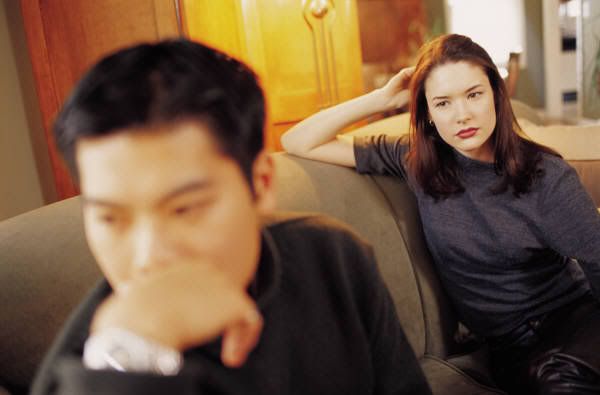
In fact, in many cases, couples' counseling has increased the violence/abuse in the home.
Couples' counseling does not work because:
Couples' counseling places the responsibility for change on both partners. Domestic violence is the sole responsibility of the abuser.
Couples' counseling works best when both people are truthful. Individuals who are abusive to their partners minimize, deny and blame, and therefore are not truthful in counseling.
Couples resolve problems in counseling by talking about problems. His abuse is not a couple problem, it is his problem. He needs to work on it in a specialized program for abusers.
A victim who is being abused in a relationship is in a dangerous position in couple's counseling. If she tells the counselor about the abuse, she is likely to suffer more abuse when she gets home. If she does not tell, nothing can be accomplished.
If you think you will benefit from joint counseling, go AFTER he successfully completes a batterer's intervention program and is no longer violent for one full year.
****
Would marriage counseling be better? He won't go for help unless I go with him.
No. Domestic violence advocates strongly advise battered women not to participate in couples counseling, family counseling, and mediation programs. It may not be safe to talk about your feelings in front of someone who could hurt you later and blame his behavior on what you say.
Many battered women say that these kinds of counseling do not stop the violence and often increase their danger. Also, going to counseling together suggests that you share responsibility for his violence.
You are never responsible for his violence. Even if your partner is not willing to change, support and assistance in figuring out what you want to do are available at your local domestic violence program. They can help you plan for your safety.
***
Couples counseling is NEVER an appropriate way to deal with domestic violence. Therapists who offer couples counseling when domestic violence has occurred or is occurring do not understand the dynamics of domestic violence, and are practicing unethical and unsafe services. Men who abuse need to be in group intervention programs with other abusers.
***
Be wary of anyone who advises couples or marriage counseling. This isn't appropriate for abusive relationships. Most communities have agencies that provide individual counseling and support groups to women in abusive relationships.
***
Perpetrator Intervention Programs For Abusers
Abusers can enter voluntarily or be court ordered to Perpetrator Intervention Programs. It is important to note that there are no guarantees that he will change his violent behavior. He is the only one that can make the decision -- and commitment -- to change.
An intervention program should include these factors:
Victim's safety is the priority.
Meets minimum standards for weekly sessions (16 weeks).
Holds him accountable.
Curriculum addresses the root of his problem.
Makes no demand on the victim to participate.
Is open to input from the victim.
What programs teach:
Education about domestic violence.
Changing attitudes and beliefs about using violence in a relationship.
Achieving equality in relationships.
Community participation.
In the program, an abuser should become aware of his pattern of violence and learn techniques for maintaining nonviolent behavior, such as "time outs" "buddy" phone cals, support groups, relaxation techniques, and exercise.
How do you know if he is really changing?
Positive signs include:
He has stopped being violent or threatening to you or others
He acknowledges that his abusive behavior is wrong
He understands that he does not have the right to control and dominate you
You don't feel afraid when you are with him.
He does not coerce or force you to have sex.
You can express anger toward him without feeling intimidated.
He does not make you feel responsible for his anger or frustration.
He respects your opinion even if he doesn't agree with it.
He respects your right to say "no."
Am I safe while he is in the program?
For your own safety and your children's safety, watch for these signs that indicate problems while he is in the program:
Tries to find you if you've left.
Tries to get you to come back to him.
Tries to take away the children.
Stalks you.
If you feel you are in danger, contact the National Domestic Violence crisis line.
Six Big Lies
If you hear your partner making these statements while he is in a treatment program for abusers, you should understand that he is lying to himself, and to you.
"I'm not the only one who needs counseling."
"I'm not as bad as a lot of other guys in there."
"As soon as I'm done with this program, I'll be cured."
"We need to stay together to work this out."
"If I weren't under so much stress, I wouldn't have such a short fuse."
"Now that I'm in this program, you have to be more understanding."
***
Questions Women Often Have About Batterers and Batterer Programs
He says that I do things to make him angry. Am I to blame for his violence?
No. Abusive men often blame other people or situations for their violence. Many say their partners provoke them. The truth is that no one can cause another person to be violent. His violence is never justified. How he behaves is his choice and his responsibility. In fact, you can probably think of times where other people made him angry and he chose not to respond to them with violence or abuse.
What is a batterer program?
Not all batterer programs are the same, but some of them include education about domestic violence, and what communities are doing to hold abusers accountable. Depending on the program, the education can include informing your partner that he alone is responsible for what he does, that abuse destroys families and that he can change if he chooses to.
How would my partner get into a batterer program?
Most batterers participate because the court ordered them to do so. Many men say that they would not have gone or stayed in the program if they had not been court ordered. Some men attend without a court order, and others go as a way to convince their partners not to leave or to take them back. Unless a batterer is truly committed to being accountable for his behavior and to stop being controlling, he is unlikely to change his behavior, with or without a batterer program.
Will he stop abusing me if he attends a batterer program?
Any man can stop being violent and abusive if he really wants to stop. Some batterer programs provide good information to participants. However, going to a batterers program does not guarantee that he will stop battering and does not guarantee that you will be safe. In fact, many men who are attending or have attended a batterer program continue to be violent and/or controlling.
To best protect yourself and your children, it is recommended that you keep in contact with your local battered women's services/program, especially while he is attending the batterer program. To find out what options and support services are available to you in your community and to learn more about batterer programs, you can contact your local domestic violence program or shelter.
My partner says he'll get help for his drinking. If he stops drinking, will he stop being violent?
Don't count on it. Alcohol and other drug abuse do not cause domestic abuse, even though batterers often use substance abuse as an excuse for their violence.
Batterers who drink or use drugs have two separate problems that need to be handled independently. Even if your partner stops using alcohol or other drugs, he is likely to continue to be abusive.
Labels: abuse, adult children of narcissists, bad relationship, batterers, change, couples counseling, emotional abuse, marriage counseling, mental, narcissist, pathological, psychopath, verbal abuse


Tuesday, October 23, 2018
Married To A Narcissist & Waiting For Good Times To Return?

By Diane England, Ph.D.
When you said your vows, what were you expecting? I suspect if you were like most women, you thought you were entering a partnership. You would enjoy shared power, right?
I bet you’ve discovered something quite different, though. I bet he likes to have power over you, isn’t that so? And to ensure he achieves and maintains this, he might well use emotional abuse, verbal abuse, economic abuse, and even sexual abuse, too.
The thing is, you might not even realize that your relationship with your narcissistic spouse is filled with these forms of abuse. You might feel badly or experience emotional pain much of the time, but still not understand why. You might well believe your narcissistic spouse when he tells you how you are the problem, and if you just changed and did these things he wanted, well, life would be grand.
For him, that is.
He keeps emotional abuse, verbal abuse, economic abuse, and sexual abuse in his marital toolbox because they work for him. Meanwhile, you believe that the two of you have a partnership.
Sorry, but a relationship with a narcissist is not about partnership.
Those suffering from unhealthy levels of narcissism don’t know what that means. They are self centered. They lack empathy. And more than anything else, they are grandiose. Whether successful or not, they feel entitled to have what they want when they want it.
Rather like the two-year-old.
The narcissistic throw tantrums when they don’t get what they want, too. The difference is, they scream more than how they hate you; those suffering from unhealthy levels of narcissism are inclined to scream obscenities and other hurtful things. All of them help your self esteem to plunge, plus make the anxiety butterflies swirl, wouldn’t you agree?
Let me back up a minute here, though. Perhaps you might want to argue that your spouse has never been diagnosed with any mental health problems, and especially not Narcissistic Personality Disorder or NPD. Please realize, however, that narcissistic tendencies or narcissistic symptoms can occur in varying degrees. So, someone need not be diagnosable as having full-fledged Narcissistic Personality Disorder to display what you’ll see referred to in various internet articles as unhealthy, pathological, or malignant narcissism. However, even lesser degrees of narcissism can be problematic in your relationship.
I might not have to tell you that. Then again, have you ever suspected your spouse’s emotional abuse and sexual abuse, for example, were associated with pathological levels of narcissism?
So, how many of the criteria for Narcissistic Personality Disorder must your narcissistic spouse meet in the Diagnostic and Statistical Manual of Mental Disorders for you to be the victim of his narcissism - which could be fueling his abuse plus perhaps alcoholism or drug addiction?
Sadly, too often, these all come together in one neatly wrapped package.
But back to the question I originally posed; I really can’t answer it.
What I will say, though, is don’t keep you eyes shut because in the beginning, things were so good between the two of you. You might have believed you had finally met your white knight. You might have been so enamored with him because of the whirlwind romance that included flowers, candlelight dinners, outrageously expensive gifts considering the time you’d been together, and romantic getaways that also included great sex.
No, don’t keep thinking if you can only get it right, or do all the things he asks, those days will probably return.
I rather hate to tell you this, but you’re probably wrong. Oh, he might act that way now and then to keep you hooked in and believing you’re about to rediscover Camelot, but he is only seducing you - again.
A narcissist is like a leopard; he can not change his spots. Okay, he might be able to change if he really wanted to do so. But if you are in love with a narcissist, you need to understand that you’ll likely be seeking counseling on how to leave a narcissist long before he’s inclined to seek help on how to alleviate himself of his narcissistic tendencies.
If you have a narcissistic husband, listen very carefully: Narcissists seduce you with their charm, the romance, and the great sex. Once they have you hooked, things change - and not for the good.
In fact, is the great sex still so great? Or instead, is it about him and his needs and wants? Also, you might feel he has to give a great performance, and you’re always expected to commend him for a job well done, too. And rather than feeling closer to him, instead, have you felt you’ve become more and more merely an object to him?
There is even a chance the great sex has switched over into sexual abuse. Perhaps the transition has been so gradual, however, that you haven’t actually seen the truth about what was happening - or where you have ended up as a result. But if you stop and think about your sexual relationship with your narcissistic spouse, you might realize you’ve been doing things that don’t appeal to you sexually, but only to him. In fact, they might make you feel degraded.
He not only doesn’t bring flowers anymore, but it is probably worse than that. You’d realize that if you got real about your marriage.
Yes, it is probably hardly a relationship in the sense that you define the word. Are you always worrying about what might please or displease him? And to ensure you do neither, do you do things against your personal values?
You probably want to avoid his narcissistic rage. And again, you hope if you’ll only do as he wants, things will be like they were in the early days - when you held hands and made love in a romantic haze.
Again, it is time to get real. That was an act to suck you in. Now, though, if he is walking around being his self centered and grandiose self, engaging in emotional abuse and verbal abuse that causes your self worth to slip away daily, he is nonetheless likely being the man he will continue to be.
You might well be able to somehow survive the emotional abuse, verbal abuse, and sexual abuse.
You might keep telling yourself that the sexual abuse is not sexual abuse because you actually are okay with what he asks of you - as kinky (and comfortable) as it perhaps has become.
I suspect you might be shut down and out of touch with your feelings, however. You also might be taking pride in your ability to cope with things you shouldn’t have to cope with anyway. And if that is the case, realize you are not the first and last woman to make this discovery. Frankly, I myself have been there; I took pride in my martyrdom. But really, what’s the sense in that?
I decided I didn’t like being in a relationship with a narcissist. I also knew I never wanted to be in a relationship with one again, though I suspect I met one or two along the path on my way to recovery.
Your life is yours to live as you please; you have to make your own choices. I suspect, though, that you give your life - and your narcissistic spouse - a good hard look. You might realize you’ve been bonded to a fantasy that was probably never more than that.
Meanwhile, you stay stuck loving a narcissist while he serves up a mixture of emotional abuse, verbal abuse, economic abuse, sexual abuse - and some great times, too - to keep you hooked in and doing exactly what he pleases.
Why should you expect differently? Remember, he is self centered, he is self absorbed, and he lacks empathy. And because of his grandiosity, he feels entitled to do as he pleases. In turn, everyone else is here to serve him and meet his needs.
They must be kept in line and under his thumb.
Yes, these are the spots of the narcissist. And no, they probably will not change. So really, is spending your life loving a narcissist the best use of both your love and your time?
I hope your moving your head back and forth.
Dr. Diane England writes for the woman married to a narcissist who is awakening to his narcissism, addictions, and perhaps not only emotional abuse and verbal abuse, but sexual abuse, too. If this is you, and you want to read more article on these topics, plus self development and spirituality or spiritual growth, visit her website at: www.NarcissismAddictionsAbuse.com
(NOTE: THIS SITE DOES NOT BELIEVE CODEPENDENCY EVER APPLIES IN ABUSIVE RELATIONSHIPS OR A RELATIONSHIP WITH A NARCISSIST. The Victim is NEVER EVER to blame in ANY WAY - NOR ARE THEY CODEPENDENT.)
Labels: abuse, divorce, emotional abuse, emotional rape, marriage counseling, narcissism, narcissist, ptsd, sexual abuse, trauma, verbal abuse
Monday, September 03, 2018
Few Religious Leaders (or Religious-Based Therapists) are Trained to Deal with Abuse

Silenced by shame; Fixing broken lives can be frightening, arduous
BY: Linda Espenshade
Religious leaders who believe it's their job to save an abusive marriage are taking on a job that gives even professional marriage counselors a headache.
"It's awfully hard to unscramble an egg," said a Mennonite minister simply. Yet that's precisely what a couple asks for when they bring their beaten marriage to their leaders.
"I don't think these ministers want these problems to be there, but because they don't know how to work with it is why it goes on," said Paul, a conservative Mennonite pastor who counsels abuse victims from all over the East Coast.
In many conservative churches, the leaders have no training in theology, family dynamics, abuse, psychology, conflict management or leadership principles, nor do many want to know more than what they read in the Bible.
Many are selected for church leadership through the lot, a kind of God-ordained lottery. The church chooses several men they believe are godly. After prayer, each man selects a book, one of which holds a special paper. The man who selects the book with the paper in it is the new leader.
Now, this man, in addition to working full time, must lead a church, preach, counsel people, go to meetings and nurture his own family in his spare time. Chances are he doesn't have time to deal with an abuse situation.
"Well, if you start getting involved in someone's life where there are marriage difficulties, it's going to take tremendous amounts of time," said Mary Boll, a Lancaster Conference woman who is a consultant for Mennonite ministers dealing with abuse."This isn't a quick thing. It's not one or two sessions and then it's done. This can be several years of involvement. I know many who have been involved for long periods of time."
In addition to the time commitment, dealing with abuse can be frightening for a minister, said Boll.
"If this guy is really doing what she says she's doing, is he dangerous? If I interfere, is he going to come after me?" a minister may ask himself, Boll said.Paul said some leaders are so concerned about keeping the church pure, they miss the needs of the person.
"The other fear that I think comes in there is, what if she wants to leave him? Heaven help us if we break up a marriage. And I don't say that lightly because I believe in marriage," said Boll, who's been married for 36 years.
"If they are a bishop, they feel like their job is to administrate and take care of ordinances...and make sure everything is straight, that everybody's following the rules...rather than to sit down and listen to somebody."Some leaders may be afraid to listen and acknowledge the abuse because then they would have to admit that they don't know how to deal with it. Then they feel powerless and impotent, said Mary Steffy, executive director of the Mental Health Association.
Even those who do know how to deal with abuse can end up feeling used and powerless when they get involved, said Boll. For example, if a minister tries to hold an offender accountable, the man can go to another church or denomination where the minister has no influence.
Or a minister may get involved in helping a woman get out of an abusive situation, only to have the victim change her mind at the last minute.
Paul said he is dealing with an abusive marital situation at his church now that won't resolve. "I've done everything books and literature say to do, but unless a person wants to fix the problem," it won't happen, he said.
Lancaster Newspapers, Inc./ INTELLIGENCER JOURNAL (LANCASTER, PA.)
Labels: abuse, christians, churches, divorce, inadequate, jewish, marriage counseling, ministers, narcisissts, psychopaths, rabbis, sociopaths, temple
Sunday, July 01, 2018
Coping with Sexual Anorexia and Aversion

Coping with Sexual Anorexia and Aversion
Note: Given the brevity of the article, it is not possible to cover all the facets of this disorder. Anyone suspecting he or she has this condition is strongly encouraged to speak with a professional counselor.
A review of the long-term effects of childhood sexual abuse (CSA) is sobering. Research has identified numerous detrimental effects:
- low self-esteem,
- social and economic failure,
- social insecurity and isolation,
- difficulties with intimacy,
- sexual problems,
- depression,
- anxiety,
- substance abuse,
- eating disorders,
- post traumatic stress,
- pessimism,
- an increased likelihood of being taken advantage of by a sexual predator,
- a sense of helplessness, and
- an increased likelihood of being raped or being the victim of domestic violence.
While it is generally recognized that abused males have a more difficult recovery from CSA, I find there are two conditions that are more prevalent among female survivors. These conditions are sexual anorexia and sexual aversion disorder.
Sexual Anorexia
You may be more familiar with the type of anorexia that occurs when a person, usually a young woman, obsesses over how to avoid food. Over time, this condition can lead to numerous health concerns – and can even be fatal, as shown by the 1983 death of singer Karen Carpenter. This condition has a parallel known as sexual anorexia.
Sexual anorexia occurs when a person – again, most often a woman – fails to possess a healthy, sexual desire. This person will most likely be unaware of the hidden drivers that compel her behaviors. These victims can be in otherwise loving marriages, but have no interest in expressing any type of sexuality. They will often fail to initiate sexual contact, but usually report that once sex is underway, they are able to enjoy the exchange.
The impact of sexual anorexia on marriage can be profound. This condition can force an unhealthy celibacy onto the spouse, or worse, help lead the spouse to a false sense of entitlement to pornography, masturbation, or extramarital sexual involvement. These behaviors, in turn, further erode intimacy in the relationship and can facilitate a destructive cycle that threatens the marriage.
Sexual Aversion Disorder
Of the two disorders, Sexual Aversion Disorder is the one that carries official diagnostic criteria from the American Psychological Association. In terms of symptoms, this disorder is more severe.
An individual who suffers from a more active form of Sexual Aversion Disorder, finds sex to be repulsive, without exception. According to the DSM IV, “The essential feature of Sexual Aversion Disorder is the aversion to and active avoidance of genital sexual contact with a sexual partner.”1 Some individuals’ aversion extends to all sexual behaviors, including kissing and touching. A person’s reaction “may range from moderate anxiety to and lack of pleasure to extreme psychological distress.”2
This disorder can injure the patient’s spouse at a deep level. The passive indifference of sexual anorexia is one thing, but the active repulsion of sexual aversion is quite another. The spouse may begin to wonder if maybe he/she is sickening to their spouse, rather than just the act of sex.
Closing Thoughts
It’s important to note that not every survivor of CSA will suffer sexual dysfunction, and not everyone who suffers anorexia or aversion has been sexually abused. Nevertheless, these conditions strongly correlate with CSA and can continue to injure the survivor as well as his or her spouse or future mate.
The husbands or wives of these individuals will need to be patient and understanding. In most cases when this kind of problem affects a couple’s marriage, there was a time when the conflicted spouse was forced into unhealthy sexual experiences as a child, or even as an adult in an abusive relationship. The marriage can be a safe place where old wounds are healed as husband and wife yield themselves to each other in the safety of their marital commitment.
Although this is only a brief overview of these conditions, if this seems to fit you or someone you love, it is worth talking to a professional. Any unresolved trauma has the potential to lead to further injury or addictions. There is hope for recovery. This healing starts when a person suffering anorexia or aversion takes “ownership” of this condition. He or she will acknowledge that this condition can only further injure the marriage – and both spouses - if left untreated. Seeking whatever resources are needed is part of this healthy ownership of the problem. Compassion for each other and respect for the marriage can motivate both spouses to do whatever it takes to restore the pleasure and joy of marital sexuality.
Copyright © 2004 Rob Jackson. All rights reserved. International copyright secured.
Labels: aversion, emotional rape, madonna whore complex, marriage counseling, narcissism, narcissist, sexual abuse, sexual anorexia, sexual violence




















