Sanctuary for the Abused
Tuesday, June 08, 2021
Leaving a High Conflict Person

by Randi Kreger
It's been tough. After many months or years, you see no alternative but to separate from your high conflict partner (HCP). The process of leaving an HCP is tougher than you may be used to. These guidelines, developed over the years by people who have separated, will help.
Make sure you're ready to leave. Some people leave impulsively. Later, they miss the person or feel guilty. If you've tried a variety of techniques designed for high conflict partners and they haven't worked, or you and your children are suffering, it's time to let go.
No take backs. Once they see you are really going to leave, HCPs usually back off from their abusive tactics. You may receive gifts, flowers, and all kinds of promises to change. Not buying in is tough, because everything in you will desperately want to believe them.
But restructuring a personality takes years. While people with borderline personality can get better, narcissists seldom do. Insist on therapy. You have issues you need to face too, and your own recovery to undertake.
To stay in reality, keep a notebook of all the reasons why you want to leave. List all the ways you've tried to change things, along with their results. Make a list of all the hurtful things your partner did and read it when you feel weak.
Avoid contact. Whether you reach out to your ex or vice versa, the results will be confusing and painful. If you contact them, you might find they've moved on. Don't invite contact or respond to it, no matter how curious you are or how validating you may think it might be.
Now is not the time to tell your ex you think they have a personality disorder. Don't write letters to their therapist or family. Don't tell your ex what to do or continue to try to fix them. It's over. Move on. If you feel guilty about leaving your partner, remember, your partner functioned without you before you met them--as did you.
Take care of yourself. You've been through an extremely stressful experience and you need time to heal. You're probably dropped the habit of caring for yourself, or have developed serious problems with depression--even traits of post traumatic stress disorder. Seek professional help if you haven't already.
Go for a walk. Go to a coffee shop and be open to conversation. If you have hobbies (especially creative and expressive ones) use this new-found time to pursue your interests. Look upon this as a great new beginning. Go back to school. Set some new goals. If you've learned unhealthy coping techniques, like drinking, seek help.
Isolation may be one of your biggest problems. Even if you don't feel like it, make new friends, reconnect with old ones, and reach out to supportive family members. Ask them for what you need. They may say you should have left long ago; on the other hand, they might tell you you're doing the wrong thing. Stay true to yourself. Be specific about what you need and don't need from them.
Continue therapy. Self-awareness is actually one of the "gifts" received from having been in an abusive situation. With enough work, you may actually come out of the experience as a stronger person.
Take time to process this journey. Even if the relationship was bad and you're happy about getting out, you may go through the stages of grief characterized by Dr. Kübler-Ross: denial, anger, bargaining, depression, and acceptance. These stages don't happen overnight, and you will go back and forth between them. Give yourself time.
Whether you were together for a long time or a short, intense time, you had hopes and dreams. You thought this person was a soul mate and you're convinced you'll never find someone you'll love as much and who will love you. This isn't true. A new relationship may not be intense, but it will be more intimate.You need time to grieve both the loss of what was and what you hoped would be.
If you were married, anticipate a difficult, high conflict divorce. You need the booklet Splitting: Protecting Yourself When Divorcing a Borderline or Narcissist by attorney Bill Eddy. (He also has a CD.) There simply is no better source.
Prepare for a distortion campaign. An abandoned partner may try retaliating and starting a "smear" campaign or distortion campaign. This consists of making false allegations or exaggerating the negative in things that may have happened years ago. If your partner degraded previous partners, assume the worst.
While you can't prevent this, you can do damage control. Quickly anticipate what your ex might say--think of old arguments and false accusations. Next, have short, informal chats with people who may be on the receiving end. Briefly mention they may hear things and ask them to talk to you to see if they're true.
If you are getting divorced and your spouse is making false accusations and gathering negative allies, you need to respond at once. See Splitting for a step-by-step process on what you must do to protect yourself and your children.
When you start dating again, be aware of red flags.of potentially abusive people. You know this person acted abusively. So why does it hurt so much now that they're gone? Why do you feel almost addicted to the other person, even missing all the drama and intensity of the relationship?
The reasons for this are complex. You brought certain issues into the relationship; so did they. The combination of trauma with intermittent good time creates a strong bond--an unhealthy one. You may be mistaking intensity for intimacy.
People who have patterns dating high conflict people may be trying to resolve issues stemming from important childhood relationships. Explore this with a therapist before getting into another relationship. This is critical.
People can be great at hiding their illness in the beginning of a relationship, but in retrospect, you will see that some early signs were there. Don't rush into any new relationships before you have fully processed the previous bad one.
In the end, you will be amazed that you even allowed yourself to stay in such a relationship, and even more amazed to find that you now have the inner strength and awareness to avoid repeating it in the future.
SOURCE
Labels: but i love them, divorce, getting out, high conflict, leaving, narcissist, no contact, psychopath, sociopath, therapy


Tuesday, February 23, 2021
Toxic Hope

Will Never Get Better
These include: depression, manic depression, or menopause disorders, post traumatic stress and anxiety disorders such as obsessive-compulsive or post-traumatic stress disorder. (Include narcissism, psychopathy, sociopathy or borderline personality in the personality disorders category)
Post traumatic Stress is often a result of abusive, neglectful or violent experiences in childhood. These can experiences can profoundly affect how someone later experiences issues of trust and conflict in current relationships. If symptoms from any of these illnesses are present and the person is unwilling to get treatment for it then there is a much reduced prospect for significant change in the relationship. First things first.
Toxic hope is waiting for someone to change when there is no realistic reason to believe that it will happen. Battered women, or men, who keep hoping something will change, perhaps even when their partner has never even admitted that they have a control problem; are in toxic hope. Even though there is a fair effort made; the frequency and magnitude of the continuing offenses are severe enough that the other partner does not feel safe enough to continue within the relationship.
We emphasize 'progress, not perfection' so the issue isn't that slips or mistakes are made. The important thing is does the person eventually recognize his or her responsibility in the conflict and can the person show some concern for how that affects you. Or, if one person is unable to reasonably follow the guidelines and is not willing to seek further help.
Using the help of others could mean going to a professional therapist who specializes in the area that needs work or it can mean going to a self -help group for that particular problem. If physical violence is the problem then my recommendation is to attend a professionally led anger management or domestic violence group. Having worked for ten years in these groups I can say that the men are pleasantly surprised that they can learn useful methods that benefit their relationships. For most of the men it is the first time that they are exposed to the principle that being vulnerable will not result in being hurt.
If violence is occuring in your home then break the isolation. And for the person whose anger is out of control, please seek the competent help of anger management specialists. Why wait for a neighbor's phone call to initiate your criminal record? Do something courageous and positive NOW! Seek the help of professionals who can help you. Stop saying "I'm sorry." and take some real steps toward repeating what probably happened in the family you grew up in.
- Does this person have all the signs of having a personality disorder (they can not be fixed or cured)?
PACIFIC SKILLS TRAINING CO.
Marc Sadoff, MSW, BCD
310 444-1951
Labels: abuse, divorce, narcissist, no change, separation, toxic hope, trauma
Thursday, August 20, 2020
The Most Dangerous Emotion After a Break-Up

Labels: broken, cheating, divorce, emotional healing, enemy, exit strategy, hopeless, narcissist, psychopath, reconciliation, sociopath, toxic hope
Thursday, June 27, 2019
How To Leave a Narcissist

IF YOU NEED TO CHAT WITH SOMEONE ABOUT NARCISSISTS PLEASE SEARCH FACEBOOK FOR ' NARCISSIST' THERE ARE NUMEROUS GROUPS HERE TO HELP
THIS IS A BLOG NOT A CHAT SITE. THANK YOU.
Labels: chained, divorce, leave, narcissism, narcissist, pathological, psychopath, reality, sociopath, spousal abuse
Saturday, October 27, 2018
LEAVING THE PASSIVE AGGRESSIVE

from this terrific blog
I’ve been asked what to expect once you’ve decided you’re leaving the passive aggressive spouse or partner. Being passive aggressive, they can actually move in two or three different directions, but they are still pretty predictable once you are prepared for all and can figure in which way he/she is moving.
I should warn you that if this is your choice, you should be well prepared ahead of time. The things that are very important to you you should slowly be packing away somewhere so they are easy to move out fast once you break the news. Remember that most stuff is just that, stuff. It can be replaced. Things that belonged to your grandmother cannot. Be real on what you really want and need.
Squirrel some money away. You don’t have to take thousands from the grocery money every month, but $20 here, $20 there, adds up. No matter what they say about “Money not buying happiness” it makes life a whole lot easier if you have some, even if you’re just moving in with family.
If you’re leaving the passive aggressive, you cannot expect him to be co-operative. He may, if he’s the 1st kind I’m going to talk about below, but don’t expect it. He’s used to punishing you for his parents mistakes, he’s certainly not going to be easier on you now that he figures in his mind that you’ve “wronged” him.
1) The first kind of passive aggressive will just pretty basically walk away. Think about it. He was never really connected to you anyway. The reason you’re probably leaving is because there’s no affection any more, no intimacy, not much of anything. It’s a little bruising to our ego that he doesn’t even try to get us back, but it’s the way they are. Even if his heart is breaking inside, you will probably never know it. He would never admit. He’ll not do anything to fix it. He is the victim. This is also one of the ways he figures he can punish you. He just moves on.
2) The second way they can act once you’ve decided you’re leaving the passive aggressive, is actually rather hostile. You’re the bitch, he could never please you, get your stuff and get out, you can take your stuff, but only your stuff and nothing else. If you remember, almost everything in your marriage that went wrong was “your fault” whether he cheated on you, or constantly belittled you, what ever it was, don’t expect that to change. And don’t expect them to co-operate in any way. Many times they will fight for something during the divorce that they don’t even want, just to keep you from getting it. At least when you get the blame this time, it will have a better ending in sight.
3) Then there’s the passive aggressive that is oh, so sorry. He’ll change. He’ll do what ever you want, just come back home (or let him come home). “I wouldn’t have been that way if you had just…” and it’s still all about what you did wrong. If they agree to change, or see a therapist or what ever it is you’re asking of them, it is usually only a temporary ploy. The same kind of temporary ploy they used to land you in the first place. Once they feel they are back on secure ground, all the changes go out the window.
It is not unusual to be talking about what needs to happen with a passive aggressive, you’re to the point that you’re willing to share a house again, and he will turn the tables on you. All of a sudden, he isn’t sure he wants to come back, or he wants you to concede that most everything is your fault and you will change. Remember, the bottom line of almost any passive aggressive is that everything is always someone else’s fault. They rarely take any responsibility for anything going wrong, in their marriage, in their job, in their lives.
If you have children, you can either expect him to fight for custody, and should he win, within a short time you’ll get the kids most of the time anyway, because generally he doesn’t really want them all the time. He just wants to punish you. Or, he will rarely see them, or be late for every visitation, or call frequently to change plans. Really not much different then when you were married to him and he “forgot” to pick up the kids, etc. The only difference now is you don’t have to live with it 24/7. Don’t think he’s going to be any different once you’ve left him than he always was.
I hope this helps a little. Of course each situation is different because each person is different. These are just the basics. If you have any comments or questions, feel free. The one thing I will say about leaving a passive aggressive is that once you are out for good, I haven’t known a whole lot of the “escapees” that would go back.
(NOTE: Passive Aggressive Personality disorder was rolled INTO Narcissistic Personality Disorder a few years ago. PA is now a component of NPD)
SOURCE
Labels: change, divorce, getting out, immaturity, leaving, narcissism, narcissist, no change, passive-aggressive, punishment
Tuesday, October 23, 2018
Married To A Narcissist & Waiting For Good Times To Return?

By Diane England, Ph.D.
When you said your vows, what were you expecting? I suspect if you were like most women, you thought you were entering a partnership. You would enjoy shared power, right?
I bet you’ve discovered something quite different, though. I bet he likes to have power over you, isn’t that so? And to ensure he achieves and maintains this, he might well use emotional abuse, verbal abuse, economic abuse, and even sexual abuse, too.
The thing is, you might not even realize that your relationship with your narcissistic spouse is filled with these forms of abuse. You might feel badly or experience emotional pain much of the time, but still not understand why. You might well believe your narcissistic spouse when he tells you how you are the problem, and if you just changed and did these things he wanted, well, life would be grand.
For him, that is.
He keeps emotional abuse, verbal abuse, economic abuse, and sexual abuse in his marital toolbox because they work for him. Meanwhile, you believe that the two of you have a partnership.
Sorry, but a relationship with a narcissist is not about partnership.
Those suffering from unhealthy levels of narcissism don’t know what that means. They are self centered. They lack empathy. And more than anything else, they are grandiose. Whether successful or not, they feel entitled to have what they want when they want it.
Rather like the two-year-old.
The narcissistic throw tantrums when they don’t get what they want, too. The difference is, they scream more than how they hate you; those suffering from unhealthy levels of narcissism are inclined to scream obscenities and other hurtful things. All of them help your self esteem to plunge, plus make the anxiety butterflies swirl, wouldn’t you agree?
Let me back up a minute here, though. Perhaps you might want to argue that your spouse has never been diagnosed with any mental health problems, and especially not Narcissistic Personality Disorder or NPD. Please realize, however, that narcissistic tendencies or narcissistic symptoms can occur in varying degrees. So, someone need not be diagnosable as having full-fledged Narcissistic Personality Disorder to display what you’ll see referred to in various internet articles as unhealthy, pathological, or malignant narcissism. However, even lesser degrees of narcissism can be problematic in your relationship.
I might not have to tell you that. Then again, have you ever suspected your spouse’s emotional abuse and sexual abuse, for example, were associated with pathological levels of narcissism?
So, how many of the criteria for Narcissistic Personality Disorder must your narcissistic spouse meet in the Diagnostic and Statistical Manual of Mental Disorders for you to be the victim of his narcissism - which could be fueling his abuse plus perhaps alcoholism or drug addiction?
Sadly, too often, these all come together in one neatly wrapped package.
But back to the question I originally posed; I really can’t answer it.
What I will say, though, is don’t keep you eyes shut because in the beginning, things were so good between the two of you. You might have believed you had finally met your white knight. You might have been so enamored with him because of the whirlwind romance that included flowers, candlelight dinners, outrageously expensive gifts considering the time you’d been together, and romantic getaways that also included great sex.
No, don’t keep thinking if you can only get it right, or do all the things he asks, those days will probably return.
I rather hate to tell you this, but you’re probably wrong. Oh, he might act that way now and then to keep you hooked in and believing you’re about to rediscover Camelot, but he is only seducing you - again.
A narcissist is like a leopard; he can not change his spots. Okay, he might be able to change if he really wanted to do so. But if you are in love with a narcissist, you need to understand that you’ll likely be seeking counseling on how to leave a narcissist long before he’s inclined to seek help on how to alleviate himself of his narcissistic tendencies.
If you have a narcissistic husband, listen very carefully: Narcissists seduce you with their charm, the romance, and the great sex. Once they have you hooked, things change - and not for the good.
In fact, is the great sex still so great? Or instead, is it about him and his needs and wants? Also, you might feel he has to give a great performance, and you’re always expected to commend him for a job well done, too. And rather than feeling closer to him, instead, have you felt you’ve become more and more merely an object to him?
There is even a chance the great sex has switched over into sexual abuse. Perhaps the transition has been so gradual, however, that you haven’t actually seen the truth about what was happening - or where you have ended up as a result. But if you stop and think about your sexual relationship with your narcissistic spouse, you might realize you’ve been doing things that don’t appeal to you sexually, but only to him. In fact, they might make you feel degraded.
He not only doesn’t bring flowers anymore, but it is probably worse than that. You’d realize that if you got real about your marriage.
Yes, it is probably hardly a relationship in the sense that you define the word. Are you always worrying about what might please or displease him? And to ensure you do neither, do you do things against your personal values?
You probably want to avoid his narcissistic rage. And again, you hope if you’ll only do as he wants, things will be like they were in the early days - when you held hands and made love in a romantic haze.
Again, it is time to get real. That was an act to suck you in. Now, though, if he is walking around being his self centered and grandiose self, engaging in emotional abuse and verbal abuse that causes your self worth to slip away daily, he is nonetheless likely being the man he will continue to be.
You might well be able to somehow survive the emotional abuse, verbal abuse, and sexual abuse.
You might keep telling yourself that the sexual abuse is not sexual abuse because you actually are okay with what he asks of you - as kinky (and comfortable) as it perhaps has become.
I suspect you might be shut down and out of touch with your feelings, however. You also might be taking pride in your ability to cope with things you shouldn’t have to cope with anyway. And if that is the case, realize you are not the first and last woman to make this discovery. Frankly, I myself have been there; I took pride in my martyrdom. But really, what’s the sense in that?
I decided I didn’t like being in a relationship with a narcissist. I also knew I never wanted to be in a relationship with one again, though I suspect I met one or two along the path on my way to recovery.
Your life is yours to live as you please; you have to make your own choices. I suspect, though, that you give your life - and your narcissistic spouse - a good hard look. You might realize you’ve been bonded to a fantasy that was probably never more than that.
Meanwhile, you stay stuck loving a narcissist while he serves up a mixture of emotional abuse, verbal abuse, economic abuse, sexual abuse - and some great times, too - to keep you hooked in and doing exactly what he pleases.
Why should you expect differently? Remember, he is self centered, he is self absorbed, and he lacks empathy. And because of his grandiosity, he feels entitled to do as he pleases. In turn, everyone else is here to serve him and meet his needs.
They must be kept in line and under his thumb.
Yes, these are the spots of the narcissist. And no, they probably will not change. So really, is spending your life loving a narcissist the best use of both your love and your time?
I hope your moving your head back and forth.
Dr. Diane England writes for the woman married to a narcissist who is awakening to his narcissism, addictions, and perhaps not only emotional abuse and verbal abuse, but sexual abuse, too. If this is you, and you want to read more article on these topics, plus self development and spirituality or spiritual growth, visit her website at: www.NarcissismAddictionsAbuse.com
(NOTE: THIS SITE DOES NOT BELIEVE CODEPENDENCY EVER APPLIES IN ABUSIVE RELATIONSHIPS OR A RELATIONSHIP WITH A NARCISSIST. The Victim is NEVER EVER to blame in ANY WAY - NOR ARE THEY CODEPENDENT.)
Labels: abuse, divorce, emotional abuse, emotional rape, marriage counseling, narcissism, narcissist, ptsd, sexual abuse, trauma, verbal abuse
Saturday, October 13, 2018
When Others Believe Your Abuser
(Narcissistic, Sociopathic or Psychopathic) ABUSER
Since when is it good to be friendly with bad people? Since when is winking at their wrongdoing a virtue?
Perhaps someone can quote chapter and verse in the comments, because holier-than-thous really deserve to have their religion's true teachings show what frauds their twisting of religious doctrine makes them.
In the New Testament, in Revelations, I believe, in one of the letters to the churches, some holier-than-thou Christians are read the riot act for that very same pretense.
The author unloads both barrels at them with this truth: "Good people are not lukewarm toward evil" it says.
Cowards are.
Loving good is hating evil. And vice versa. Love is an attraction; hate a repulsion. But that is too simple for complex people to understand.
Now I am not saying that we must reject everyone not perfect, for then we would reject everyone, including ourselves. But decent people need no instruction.
There is a point at which behavior becomes predatory and malicious - a point at which one is morally obligated to separate themselves from that person.You thus take away a bad actor's safety in numbers. You show disapproval. You discourage others from behaving the same way. You comfort the victim by showing him or her that the pain caused them by the bad guy matters to you.
Is any of that evil?
It's just a way of discouraging the harm the bad guy is doing others by showing that you want nothing to do with someone who hurts others like that.
Where is the sin in that, pray tell? Sounds like fine, upstanding conduct to me.
Jesus spoke of this when he said that "indecent conduct" is a special case and justification for divorce even. At the time, the terms "indecent" or "lewd" conduct simply meant "lowdown" or "despicable" conduct of any sort.
And that statement of his, qualifying his disapproval of divorce, is just common sense.
Why? Let's say you are married to a Mafia boss. Is it right for you live in his big fancy house, being waited on by his hired staff? Is it right for you to PROFIT from the crimes he commits and ther damage he does to people?
To the contrary:
it is immoral for you not to divorce him when you find out what he is.
The same people who make a virtue of "accepting" abusive narcissists, relentlessly persecute anyone for any hint of racism or sexism. THAT they won't tolerate. They wouldn't DREAM of tolerating anything politically incorrect like that.
But though they know and believe that the narcissist has brutally abused you, they see no reason to show any disapproval of that.
Hmmm. Whom do they think they're fooling?
They make nothing of that narcissist's abuse of you. They countenance it.
If instead they rejected the narcissist, they would be doing the one small thing they could to get on the right side, the victim's side.
But they abandon the victim and smile in the abuser's face.
Not so holy as they pretend.
by Kathy Krajco
SOURCE: Narcissist Sympathizers
Labels: blame, cognitive dissonance, disbelief, divorce, evil, guilt, narcissist, psychopath, sociopath, sympathy
Monday, September 03, 2018
Few Religious Leaders (or Religious-Based Therapists) are Trained to Deal with Abuse

Silenced by shame; Fixing broken lives can be frightening, arduous
BY: Linda Espenshade
Religious leaders who believe it's their job to save an abusive marriage are taking on a job that gives even professional marriage counselors a headache.
"It's awfully hard to unscramble an egg," said a Mennonite minister simply. Yet that's precisely what a couple asks for when they bring their beaten marriage to their leaders.
"I don't think these ministers want these problems to be there, but because they don't know how to work with it is why it goes on," said Paul, a conservative Mennonite pastor who counsels abuse victims from all over the East Coast.
In many conservative churches, the leaders have no training in theology, family dynamics, abuse, psychology, conflict management or leadership principles, nor do many want to know more than what they read in the Bible.
Many are selected for church leadership through the lot, a kind of God-ordained lottery. The church chooses several men they believe are godly. After prayer, each man selects a book, one of which holds a special paper. The man who selects the book with the paper in it is the new leader.
Now, this man, in addition to working full time, must lead a church, preach, counsel people, go to meetings and nurture his own family in his spare time. Chances are he doesn't have time to deal with an abuse situation.
"Well, if you start getting involved in someone's life where there are marriage difficulties, it's going to take tremendous amounts of time," said Mary Boll, a Lancaster Conference woman who is a consultant for Mennonite ministers dealing with abuse."This isn't a quick thing. It's not one or two sessions and then it's done. This can be several years of involvement. I know many who have been involved for long periods of time."
In addition to the time commitment, dealing with abuse can be frightening for a minister, said Boll.
"If this guy is really doing what she says she's doing, is he dangerous? If I interfere, is he going to come after me?" a minister may ask himself, Boll said.Paul said some leaders are so concerned about keeping the church pure, they miss the needs of the person.
"The other fear that I think comes in there is, what if she wants to leave him? Heaven help us if we break up a marriage. And I don't say that lightly because I believe in marriage," said Boll, who's been married for 36 years.
"If they are a bishop, they feel like their job is to administrate and take care of ordinances...and make sure everything is straight, that everybody's following the rules...rather than to sit down and listen to somebody."Some leaders may be afraid to listen and acknowledge the abuse because then they would have to admit that they don't know how to deal with it. Then they feel powerless and impotent, said Mary Steffy, executive director of the Mental Health Association.
Even those who do know how to deal with abuse can end up feeling used and powerless when they get involved, said Boll. For example, if a minister tries to hold an offender accountable, the man can go to another church or denomination where the minister has no influence.
Or a minister may get involved in helping a woman get out of an abusive situation, only to have the victim change her mind at the last minute.
Paul said he is dealing with an abusive marital situation at his church now that won't resolve. "I've done everything books and literature say to do, but unless a person wants to fix the problem," it won't happen, he said.
Lancaster Newspapers, Inc./ INTELLIGENCER JOURNAL (LANCASTER, PA.)
Labels: abuse, christians, churches, divorce, inadequate, jewish, marriage counseling, ministers, narcisissts, psychopaths, rabbis, sociopaths, temple
Monday, July 02, 2018
VERBAL ABUSE IN A MARRIAGE & RELATIONSHIP

(written from a Christian perspective)
Verbal abuse in any marriage or relationship is very destructive. It is designed to destroy the relationship! If it is not corrected, the marriage will be no more. Therefore, if a spouse is unyielding to correct the abuse, it is better to end the marriage while you can still start again. Otherwise, it will end in disaster anyway.
Verbal Abuse
I am not going to discuss physical or sexual abuse because there are many good books written on the subject already. I’d rather expose the other two types of abuse that are rarely ever mentioned.
A person can be so verbally abused that they don’t know what’s true anymore. This abuse is designed to put a person in a numb state so they are unable to make clear, concise decisions. The path of verbal abuse leads a person from what they know as truth into a confused state. This confused state arises because the abuser consistently interjects lies as truth until the abused no longer knows what to believe. For example, we can see this happen when the abuser uses truths from the Bible to justify a lie, or the abuser twists the Bible’s true intent to satisfy his own selfish motive. The sad part comes when the abused embraces the lies from the abuser as truth, thereby disregarding the real truth. At this point the abused feels like they are in chains of bondage with no way out. A trusted godly person is like a life preserver to the abused at this point. For “the mouth of the righteous is a well of life” (Proverbs 10:11a).
There are three very important factors in verbal abuse. They are deception, confusion and reality or truth. We go through these steps during our lives until our belief system is built on a firm foundation of truth. The verbally abused spend most of their lives without a foundation of truth in their hearts and minds, but are in continual deception and confusion.
Confusion is a path — a means to reality (truth). Confusion is good ONLY when leaving deception and entering into reality (truth). When the Scripture says, “...God is not the author of confusion...” (1Corinthians 14:33), it is saying that GOD DOES NOT GIVE BOTH TRUTH AND A LIE TO DECIDE FROM. HE IS TRUTH!
Deception:
You think you understand, and believe you know the truth, when in fact you have embraced a lie as truth. Remember, THE POWER OF DECEPTION IS THAT YOU DON’T KNOW YOU’RE DECEIVED.
Confusion:
You have opened your heart to receive new understanding, which now conflicts with what you believed to be true. You’re no longer sure. The “previously held” belief or knowledge may not be true in light of the new belief. TWO OPPOSING THOUGHTS APPEARING TO BE TRUE IS CONFUSION.
Reality (Truth):
We understand which is truly REAL and which is the counterfeit or false, then make the decision to embrace the truth; we leave confusion and enter into reality (truth). TRUTH IS ALWAYS ABSOLUTE. IT DOES NOT CHANGE IN THE PRESENCE OF “NEW TRUTH.”
If someone is “ignorant” instead of deceived, that is, they hold no knowledge or belief one way or another, they go from “ignorance to reality” without passing through any confusion. This is because the decision to choose between a lie and truth does not have to be made. A lie and truth are not always present at the same time to choose from.
The opposite often happens to people concerning their relationship with the true God. Instead of progressing from deception or being ignorant to truth, they digressed by exchanging the truth that they knew for a lie, and went back into deception — darkness. “Because they knew God, they did not glorify Him as God, nor were thankful, but became futile in their thoughts, and their foolish hearts were darkened. WHO EXCHANGED THE TRUTH OF GOD FOR A LIE ...they did not like to retain God in their knowledge, [so] God gave them over to a debased mind, to do those things which are not fitting...” (Romans 1:21,25,28). We must retain the truth of God in our hearts, which is the ONLY truth; otherwise we are dead while we live.
FROM: DIVORCE HOPE
MORE: ABUSE IN MARRIAGE
Labels: christians, deception, divorce, emotional abuse, god, knowledge, verbal abuse
Tuesday, June 26, 2018
Parental Alienation
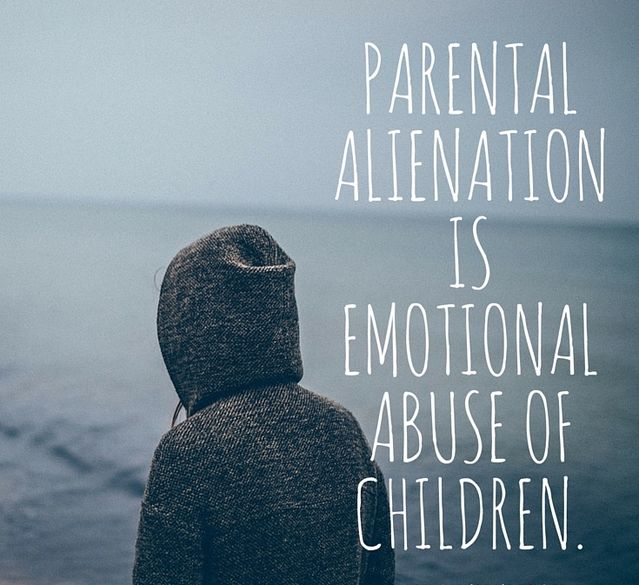
Parental alienation varies in the degree of severity, as seen in the behaviors and attitudes of both the parents and the children. The severity can be of such little consequence as a parent occasionally calling the other parent a derogatory name; or it could be as overwhelming as the parent's campaign of consciously destroying the children's relationship with the other parent. Most children are able to brush off a parent's off hand comment about the other parent that is made in frustration. On the other hand, children may not be able to resist a parent's persistent campaign of hatred and alienation.
Parental Alienation: Symptoms of Alienation:
To prevent the devastating effects of Parental Alienation, you must begin by recognizing the symptoms of Parental Alienation. After reading the list, don't get discouraged when you notice that some of your own behaviors have been alienating. This is normal in even the best of parents. Instead, let the list help sensitize you to how you are behaving and what you are saying to your children.
1. Giving children choices when they have no choice about visits. Allowing the child to decide for themselves to visit, because when the court order says there is no choice sets up the child for conflict. The child will usually blame the non-residential parent for not being able to decide to choose whether or not to visit. The parent is now victimized regardless of what happens; not being able to see his children or if he or she sees them, the children are angry.
2. Telling the child "everything" about the marital relationship or reasons for the divorce is alienating. The parent usually argues that they are "just wanting to be honest" with their children. This practice is destructive and painful for the child. The alienating parent's motive is for the child to think less of the other parent.
3. Refusing to acknowledge that children have property and may want to transport their possessions between residences.
4. Resisting or refusing to cooperate by not allowing the other parent access to school or medical records and schedules of extracurricular activities.
5. A parent blaming the other parent for financial problems, breaking up the family, changes in lifestyle, or having a girlfriend/boyfriend, etc.
6. Refusing to be flexible with the visitation schedule in order to respond to the child's needs. The alienating parent may also schedule the children in so many activities that the other parent is never given the time to visit. Of course, when the targeted parent protests, they are described as not caring and selfish.
7. Assuming that if a parent had been physically abusive with the other parent, it follows that the parent will assault the child. This assumption is not always true.
8. Asking the child to choose one parent over another parent causes the child considerable distress. Typically, they do not want to reject a parent, but instead want to avoid the issue. The child, not the parent, should initiate any suggestion for change of residence.
9. Children will become angry with a parent. This is normal, particularly if the parent disciplines or has to say "no". If for any reason the anger is not allowed to heal, you can suspect parental alienation. Trust your own experience as a parent. Children will forgive and want to be forgiven if given a chance. Be very suspicious when the child calmly says they can not remember any happy times with you or they cannot say anything they like about you.
10. Be suspicious when a parent or stepparent raises the question about changing the child's name or suggests an adoption.
11. When children can not give reasons for being angry towards a parent or their reasons are very vague without any details.
12. A parent having secrets, special signals, a private rendezvous, or words with special meanings are very destructive and reinforce an on-going alienation.
13. When a parent uses a child to spy or covertly gather information for the parent's own use, the child receives a damaging message that demeans the victimized parent.
14. Parents setting up temptations that interfere with the child's visitation.
15. A parent suggesting or reacting with hurt or sadness to their child having a good time with the other parent will cause the child to withdraw and not communicate. They will frequently feel guilty or conflicted not knowing that it's "okay" to have fun with their other parent.
16. The parent asking the child about his or her other parent's personal life causes the child considerable tension and conflict. Children who are not alienated want to be loyal to both parents.
17. When parents physically or psychologically rescue the children when there is no threat to their safety. This practice reinforces in the child's mind the illusion of threat or danger, thereby reinforcing alienation.
18. Making demands on the other parent that is contrary to court orders.
19. Listening in on the children's phone conversation they are having with the other parent.
20. One way to cause your own alienation is making a habit of breaking promises to your children. In time, your ex-spouse will get tired of having to make excuses for you.
Provided by Douglas Darnell, Ph.D.
FOR ORIGINAL ARTICLE & MORE RESOURCES CLICK HERE
Labels: abuse, anger, court orders, demands, divorce, lies, mistrust, parental alienation, separation
Tuesday, May 15, 2018
Unhappy Relationships May Harm Women's Hearts
By Amy Norton
An unhappy marriage can break a woman's heart, figuratively and literally. New research suggests that married women who are dissatisfied with their relationships face a higher risk for heart disease.
In a study of nearly 500 middle-aged women, researchers at the University of Pittsburgh in Pennsylvania found that marital ''distress'' was linked to a higher risk for heart problems, independent of other threats to heart health such as smoking, high cholesterol and high blood pressure. Moreover, women's marital woes appeared to be unique from overall stress, depression and other psychological factors in their effects on the heart.
Lead researcher Wendy Troxel presented the findings last week in Monterey, California, at the annual meeting of the American Psychosomatic Society. Previous research has suggested that for men, marriage generally confers heart benefits. The health effects of marriage on women has been less clear, according to co-author Dr. Linda Gallo, who is now at Kent State University in Ohio. This study, which followed the women over about 11 years, was an attempt to gauge how marital satisfaction affects heart health as women go through menopause, Gallo explained in an interview.
She and her colleagues found that women who reported marital dissatisfaction were more likely than satisfied women to have significant plaque build-up in the main artery of the heart. They were also more likely to have blockages in the carotid arteries in the neck, a known risk factor for stroke. Of course, all marriages have their ups and downs, and this study did not look at the normal stresses that come up from time to time, according to Gallo.
Instead, she said, it looked at women's overall happiness with their husbands--their communication, amount of time spent together, sex lives and a range of factors. Unhappiness in a marriage may harm the heart by inflicting ''wear and tear'' on the body, according to Gallo. Like stress in general, marital dissatisfaction may lead to habitual elevations in heart rate, blood pressure and stress hormones. But, she noted, marital problems are likely one part the equation--triggering behaviors that take a toll on health, including sleeplessness and changes in eating and exercise.
"It's my guess that marital dissatisfaction might put women on a trajectory to poorer health," she said.
Labels: abuse, cardiac, depression, divorce, heart problems, unhappy, women
Wednesday, May 09, 2018
Religion and Victimhood

RECOMMENDED READING
Labels: abuse, catholic, christians, divorce, jewish, marriage, narcissism, narcissist, religion, victims