Sanctuary for the Abused
Sunday, May 17, 2020
Psychologist Explains the Psyche of Psychopaths
By April Wilkerson
When news broke of the alleged BTK Killer's capture in Wichita, it sparked new discussions and feelings toward a decades-old case: fear, relief, intrigue about such a person.
Public interest in serial killings and psychopaths is always high, says a local psychologist. But her involvement in the field is from a more analytical perspective.
Dr. Sue Stone is a clinical psychologist at the Citizen Potawatomi Nation in Shawnee, a position she's held since January. Although her work here is in general psychology and therapy, her specialty area is psychopathy, and she came from three years' work at the Department of Corrections, doing criminal court evaluations, consulting on capital murder cases and more.
Stone says there's an adage in her field: Not all psychopaths are serial killers, but all serial killers are psychopaths. While psychopaths as serial killers are a relatively rare phenomenon, there are people functioning in society who exhibit various degrees of psychopathic behavior in their daily lives, she said.
That makes the term psychopath a relative one, but there are definite characteristics of such people, Stone said.
Psychopaths demonstrate antisocial behavior and an aggressive narcissism -- they use people through charm, intimidation or violence, she said.
"They have a parasitic lifestyle -- they live off people. Their whole mindset is domination over other people," she said. "Psychopaths are not necessarily criminal in their activities, but they are attracted to positions of power. They have no anxiety about their behavior.
"Psychopaths see themselves as wronged. They can be paranoid, feel persecuted, feel a need for revenge. They harbor a lot of persecutory beliefs." (i.e. - They are the victim, not you, in their heads)
There also is a lot of thrill-seeking with psychopathic behavior, Stone said. Over time, there will be an escalation of their behavior because they've gotten sensitized to a certain act, but then have to "up the ante" to capture the thrill they seek, she said.
That may be the case with the alleged BTK Killer, who resurfaced with letters to the media after not being heard from in a while, Stone said.
"Psychopaths have a need for recognition, not just a need for attention," she said. "They have a sense of being invincible, of 'I can outsmart you.' They're taken in by their own narcissism. It's almost like a game."[Sociopaths] often take "souvenirs" from their victims -- pictures, jewelry, lock of hair -- to remind them later, Stone said. "They want to keep that image, the fantasy of that control going," she said.
In the BTK case, Dennis Rader has been arrested and charged in the killings of 10 people beginning in 1974. His seemingly normal life as a churchgoer and Scout leader has shocked many, but that type of appearance is not unheard-of in psychopaths, Stone said.
"It's a misnomer to think that if we saw a psychopath, he would look odd. Often, that's not the case," she said. "A psychopathic individual can be a chameleon and learn to act a certain way. That advances their opportunity to engage in certain behaviors because who would suspect?"
Often, people think that childhood abuse can create psychopathy in adults, Stone said. Childhood trauma certainly can aggravate psychopathic tendencies, but it's not a cause-effect relationship, she said. Research over the last 10-15 years is supporting the notion that psychopathy is related to a genotype (aka - GENETIC), she said.
Psychopaths also differ in that their intellectual and emotional understanding of things don't match. Stone said psychologist Robert Hare has a saying for this condition: Psychopaths know the words but don't know the music when it comes to emotions.
"They know intellectually what it is to be sad, but their empathy and regard for other people is not there," Stone said. "They can mimic the feeling, but they really can't put words to how they feel because they don't have that internal experience."
There is no known treatment for psychopaths; rather, behavior management is the course of action, Stone said. Psychopaths don't say, "I need help" because they see others as the cause of their problems; they don't have anxiety to prohibit their behavior, she said.
And studies have shown that group therapy not only doesn't work for psychopaths, it makes their behavior worse, Stone said. They use the therapy setting as practice for manipulating people.
One percent of the general population in the United States meets the criteria for psychopaths, Stone said. But the percentage is 15-20 percent in prisons because of the criminal activity psychopaths often engage in.
Instances like the BTK case often create anxiety or spark fears in people, Stone said. But it can be a good time for people to reassess their safety precautions in their homes, cars and when dealing with strangers.
"There's a certain amount of trust that goes into our daily interactions with people," Stone said. "It's important for people to realize when dealing with strangers that they need to take some precautions."Most people want to trust and help others, but that's just the position that Ted Bundy took advantage of, she said. He would act hurt and request assistance from women -- even using props like a cast -- then as soon as they were close enough, he would abduct them, she said.
Simple actions such as locking doors at home and in the car are important, but so is protecting yourself in a vulnerable position, Stone said. It's OK to call the office of a repair company to check a person's credentials, she said, and if a stranger comes to your door asking to use the phone, ask him to step to the curb, then call the police.
"It doesn't mean we need to be suspicious of everybody. We couldn't function in life; we have to have some sense of trust," she said. "The BTK case brings up issues of safety. It's a good time to look at what areas we can be safer in our day-to-day life, while realizing that serial killers are a relatively rare phenomenon."
SOURCE
BUT SOCIOPATHS ARE NOT A RARE PHENOMENON - THE MAJORITY OF SOCIOPATHS EXPLOIT OTHERS BUT DO NOT KILL - CLICK HERE FOR MORE
Labels: control, exploitative, mental, narcissism, power, psychopath, sociopath


Friday, January 10, 2020
Couples' Counseling & Marriage Counseling Does NOT Work in Abusive Relationships!
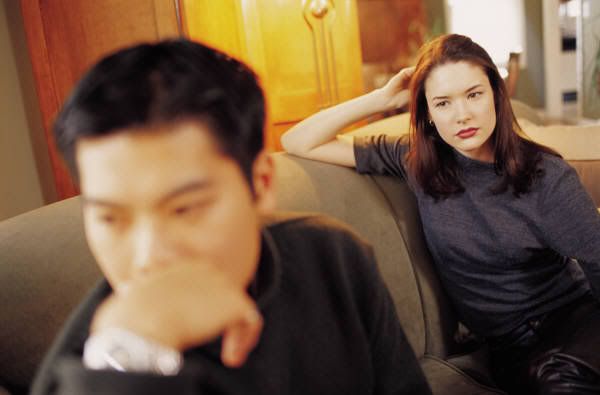
In fact, in many cases, couples' counseling has increased the violence/abuse in the home.
Couples' counseling does not work because:
Couples' counseling places the responsibility for change on both partners. Domestic violence is the sole responsibility of the abuser.
Couples' counseling works best when both people are truthful. Individuals who are abusive to their partners minimize, deny and blame, and therefore are not truthful in counseling.
Couples resolve problems in counseling by talking about problems. His abuse is not a couple problem, it is his problem. He needs to work on it in a specialized program for abusers.
A victim who is being abused in a relationship is in a dangerous position in couple's counseling. If she tells the counselor about the abuse, she is likely to suffer more abuse when she gets home. If she does not tell, nothing can be accomplished.
If you think you will benefit from joint counseling, go AFTER he successfully completes a batterer's intervention program and is no longer violent for one full year.
****
Would marriage counseling be better? He won't go for help unless I go with him.
No. Domestic violence advocates strongly advise battered women not to participate in couples counseling, family counseling, and mediation programs. It may not be safe to talk about your feelings in front of someone who could hurt you later and blame his behavior on what you say.
Many battered women say that these kinds of counseling do not stop the violence and often increase their danger. Also, going to counseling together suggests that you share responsibility for his violence.
You are never responsible for his violence. Even if your partner is not willing to change, support and assistance in figuring out what you want to do are available at your local domestic violence program. They can help you plan for your safety.
***
Couples counseling is NEVER an appropriate way to deal with domestic violence. Therapists who offer couples counseling when domestic violence has occurred or is occurring do not understand the dynamics of domestic violence, and are practicing unethical and unsafe services. Men who abuse need to be in group intervention programs with other abusers.
***
Be wary of anyone who advises couples or marriage counseling. This isn't appropriate for abusive relationships. Most communities have agencies that provide individual counseling and support groups to women in abusive relationships.
***
Perpetrator Intervention Programs For Abusers
Abusers can enter voluntarily or be court ordered to Perpetrator Intervention Programs. It is important to note that there are no guarantees that he will change his violent behavior. He is the only one that can make the decision -- and commitment -- to change.
An intervention program should include these factors:
Victim's safety is the priority.
Meets minimum standards for weekly sessions (16 weeks).
Holds him accountable.
Curriculum addresses the root of his problem.
Makes no demand on the victim to participate.
Is open to input from the victim.
What programs teach:
Education about domestic violence.
Changing attitudes and beliefs about using violence in a relationship.
Achieving equality in relationships.
Community participation.
In the program, an abuser should become aware of his pattern of violence and learn techniques for maintaining nonviolent behavior, such as "time outs" "buddy" phone cals, support groups, relaxation techniques, and exercise.
How do you know if he is really changing?
Positive signs include:
He has stopped being violent or threatening to you or others
He acknowledges that his abusive behavior is wrong
He understands that he does not have the right to control and dominate you
You don't feel afraid when you are with him.
He does not coerce or force you to have sex.
You can express anger toward him without feeling intimidated.
He does not make you feel responsible for his anger or frustration.
He respects your opinion even if he doesn't agree with it.
He respects your right to say "no."
Am I safe while he is in the program?
For your own safety and your children's safety, watch for these signs that indicate problems while he is in the program:
Tries to find you if you've left.
Tries to get you to come back to him.
Tries to take away the children.
Stalks you.
If you feel you are in danger, contact the National Domestic Violence crisis line.
Six Big Lies
If you hear your partner making these statements while he is in a treatment program for abusers, you should understand that he is lying to himself, and to you.
"I'm not the only one who needs counseling."
"I'm not as bad as a lot of other guys in there."
"As soon as I'm done with this program, I'll be cured."
"We need to stay together to work this out."
"If I weren't under so much stress, I wouldn't have such a short fuse."
"Now that I'm in this program, you have to be more understanding."
***
Questions Women Often Have About Batterers and Batterer Programs
He says that I do things to make him angry. Am I to blame for his violence?
No. Abusive men often blame other people or situations for their violence. Many say their partners provoke them. The truth is that no one can cause another person to be violent. His violence is never justified. How he behaves is his choice and his responsibility. In fact, you can probably think of times where other people made him angry and he chose not to respond to them with violence or abuse.
What is a batterer program?
Not all batterer programs are the same, but some of them include education about domestic violence, and what communities are doing to hold abusers accountable. Depending on the program, the education can include informing your partner that he alone is responsible for what he does, that abuse destroys families and that he can change if he chooses to.
How would my partner get into a batterer program?
Most batterers participate because the court ordered them to do so. Many men say that they would not have gone or stayed in the program if they had not been court ordered. Some men attend without a court order, and others go as a way to convince their partners not to leave or to take them back. Unless a batterer is truly committed to being accountable for his behavior and to stop being controlling, he is unlikely to change his behavior, with or without a batterer program.
Will he stop abusing me if he attends a batterer program?
Any man can stop being violent and abusive if he really wants to stop. Some batterer programs provide good information to participants. However, going to a batterers program does not guarantee that he will stop battering and does not guarantee that you will be safe. In fact, many men who are attending or have attended a batterer program continue to be violent and/or controlling.
To best protect yourself and your children, it is recommended that you keep in contact with your local battered women's services/program, especially while he is attending the batterer program. To find out what options and support services are available to you in your community and to learn more about batterer programs, you can contact your local domestic violence program or shelter.
My partner says he'll get help for his drinking. If he stops drinking, will he stop being violent?
Don't count on it. Alcohol and other drug abuse do not cause domestic abuse, even though batterers often use substance abuse as an excuse for their violence.
Batterers who drink or use drugs have two separate problems that need to be handled independently. Even if your partner stops using alcohol or other drugs, he is likely to continue to be abusive.
Labels: abuse, adult children of narcissists, bad relationship, batterers, change, couples counseling, emotional abuse, marriage counseling, mental, narcissist, pathological, psychopath, verbal abuse
Wednesday, September 11, 2019
Why Abusers Choose the Victims They Choose

Thoughts from an Abuser
Why they choose the victims they choose:
"I am very much attracted to vulnerability, to unstable or disordered personalities or to the inferior. Such people constitute more secure sources of better quality narcissistic supply. The inferior offer adulation.
The mentally disturbed, the traumatized, the abused become dependent and addicted to me. The vulnerable can be easily and economically manipulated without fear of repercussions."
Labels: abuse, abuser, exploitative, inferior, mental, narcissist, psychopath, thoughts, use, vulnerable
Monday, August 06, 2018
Emotional & Mental Rape
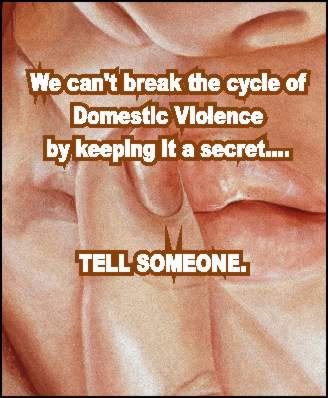
After a long seven hour night waiting tables and dealing with horny men drinking to oblivion, Jessica came home to find that her husband was ready for sex. Being exhausted both physically and mentally, she tried explaining to him that she was too tired and that her back was killing her; that the only thing she wanted to do was take a hot bath and go to sleep.
Of course, her husband grilled her. Accusing her of not working and sleeping with some customer she supposedly picked up at the restaurant. She pleaded with him and tried to make him understand that it was not personal. He continued his badgering and called her every name in the book. He, then proceeded to go on the bed laying on his back naked saying, "Look at me...I am Jessica the slut."
She proceeded to walk out the bedroom door when her husband followed her like a nagging kid. Exhausted as she was, she started crying. Dealing with her back pain and her tiredness, the last thing she needed was her abusive husband pressuring her for sex. After a long hour of persuasion and manipulation from her husband, Jessica gave in just to shut him up!
When the abuser emotionally and mentally abuses the victim, this is emotional and mental rape.
At times, a woman who is abused will have sex with their partner only to pacify the abuser to stop the "abuse." But a lot of women don't realize that when this happens, they are being "raped." Although, the victim says "yes" to the act, it is the "way" the act happened that makes it emotional rape.
In turn, the aftermath of this type of rape leaves the woman feeling dirty and cheap. She may eventually not trust or believe what people say...and if the woman were to ever leave her abusive partner; sex may become a dirty memory and therefore handicap the victim to not want sex at all.
Verbal, emotional, and mental abuse amongst other types of abuse is not "protected" or "accepted" as abuse as much as physical abuse. This leaves the victim feeling lonely and isolated.
The only way, I believe, to avoid this type of rape is to not give in. As much as the abuser can be a pain in the butt (and that is saying it lightly) just like any kind of abuse it is important to walk away, don't respond, call 911, or just walk out of the house - if possible.
NOTE: Emotional and Mental Rape described on the internet is very different from what I believe it actually is. I have chosen not to share links to emotional rape as it sends the viewer to porn sites.
Labels: abuse, adult children of narcissists, emotional, manipulation, mental, narcissist, psychopath, rape, victim
Saturday, May 26, 2018
Why Do Abusive Men Abuse?

(we have used the male gender, your abuser could be female)
('battering' can be extended to verbal, emotional & psychological abuse)
Abusive men batter women as a means of power and control, to manipulate, intimidate and rule their intimate partner.
Men who abuse their partners come from all races, religions, socioeconomic classes, areas of the world, educational levels and occupations.
They often appear charming and attentive to outsiders, and even to their partners, at first.
Many batterers are very good at disguising their abusive behavior to appear socially acceptable. Once they develop a relationship with a partner however, they become more and more abusive.
Characteristics of Domestic violence perpetrators:
seek control of the thoughts, beliefs and conduct of their partner.
punish their partner for resisting control.
Men who batter:
minimize the seriousness of their violence.
act impulsively.
distrust others.
need to control people and situations.
express feelings as anger.
A batterer covers up his violence by denying, minimizing, and blaming the victim. He often convinces his partner that the abuse is less serious than it is, or that it is her fault. He may tell her that "if only" she had acted differently, he wouldn't have abused her. Sometimes he will say, "You made me do it."
Victims of abuse do not cause violence. The batterer is responsible for every act of abuse committed.
Domestic violence is a learned behavior. It is learned through:
observation.
experience.
culture.
family.
community (peer group, school, etc.).
(Personality disorders, mental illness, and other problems may compound domestic violence, but the abusive behavior must be addressed separately. )
Abuse is NOT caused by:
mental illness.
ADD/ ADHD.
genetics.
alcohol and drugs.
out-of-control behavior.
anger.
stress.
behavior of the victim.
problems in the relationship.
Many men blame their violence on the effects of drug and alcohol use.A batterer abuses because he wants to, and thinks he has a "right" to his behavior. He may think he is superior to his partner and is entitled to use whatever means necessary to control her.
Alcohol abuse is present in about 50 percent of battering relationships.
Research shows that alcohol and other drug abuse is commonly a symptom of an abusive personality, not the cause. Men often blame their intoxication for the abuse, or use it as an excuse to use violence. Regardless, it is an excuse, not a cause. Taking away the alcohol, does not stop the abuse.
Substance abuse must be treated before or in conjunction with domestic violence treatment programs.
Some ways batterers deny and minimize their violence:
"I hit the wall, not her head."
"She bruises easily."
"She just fell down the steps."
"Her face got in the way of my fist."
Characteristics of a Potential Batterer
Jealousy
Controlling behavior
Quick involvement
Unrealistic expectations
Isolation of victim
Blames others for his problems
Blames others for his feelings
Hypersensitivity
Cruelty to animals or children
"Playful" use of force during sex
Verbal abuse
Rigid sex roles
Jekyll and Hyde type personality
History of past battering
Threats of violence
Breaking or striking objects
Any force during an argument
Objectification of women
Tight control over finances
Minimization of the violence
Manipulation through guilt
Extreme highs and lows
Expects her to follow his orders
Frightening rage
Use of physical force
Closed mindedness
Manipulation
Abusers often try to manipulate the "system" by:
Threatening to call Child Protective Services or the Department of Human Resources and making actual reports that his partner neglects or abuses the children.
Changing lawyers and delaying court hearings to increase his partner's financial hardship.
Telling everyone (friends, family, police, etc.) that she is "crazy" and making things up.
Using the threat of prosecution to get her to return to him.
Telling police she hit him, too.
Giving false information about the criminal justice system to confuse his partner or prevent her from acting on her own behalf.
Using children as leverage to get and control his victim.
Accusing her of stalking him and/or his family
Accusing her of harrassment
Abusers may try to manipulate their partners, especially after a violent episode.
He may try to "win" her back in some of these ways:
Invoking sympathy from her, her family and friends.
Talking about his "difficult childhood".
Becoming overly charming, reminding her of the good times they've had.
Bringing romantic gifts, flowers, dinner.
Crying, begging for forgiveness.
Promising it will "never happen again."
Promising to get counseling, to change.
Abuse gets worse and more frequent over time
Lies Abusers Tell
Abusers often tell lies about their violence to themselves (their partners and society):
"I just need to be understood".
"I had a bad childhood."
"I can't control it."
"I get angry."
"She fights too."
"She pushes my buttons."
"If I don't control her, she will control me."
"My smashing things isn’t abusive, it’s venting."
"I have a lot of stress in my life."
"I just have an anger management problem."
"I just have a problem when I drink or use drugs."
Labels: abuse, abusive, battering, control, emotional blackmail, manipulation, men, mental, power, verbal abuse
Wednesday, April 25, 2018
Boundaries & Detachment
Lessons About Emotional Detachment / Boundaries
Part 1: The Incredible Shrinking Relatives
Learning to set boundaries is part of the healing process after any form of abuse. This task can be complicated. It seems there will always be people who want to upset you. They could be family members who deny that abuse took place. They could be the offenders or their allies who are still a part of your life. Their comments, expressions, or attitudes can hurt you and make your life much more difficult.
You handle people like this by using an emotional tool called detachment. Like any other emotional process, it is a skill you can learn. It takes practice. But keep working, and you will diminish the effect these people have on your life.
EMOTIONAL DETACHMENT LESSONSMake Them Smaller
Let Go
Stock Phrases
Set Boundaries
Handling the Rough Stuff
Take Care of Yourself First
Practice, Practice, Practice
Make Them Smaller
The first step to detachment is to "shrink" the unhealthy person.
Make the person a smaller part of your life by making other parts of your life bigger. Start a new hobby, a job, learn something new, focus on other people, join a club, take a class, have more contact with friends - you get the idea. The only way to reduce someone's power over your life is to fill your time with other people, places, and things to squeeze them out.
This equation in emotional mathematics means adding things to your life automatically reduces the space taken up by unhealthy people and relationships. Expand your horizons. Occupy your mind with new ideas. The unhealthy person will occupy a smaller portion of your mind, and therefore your life.
Let Go
The unhealthy people in your life use guilt to keep you enslaved. When you begin to detach, you are upsetting the status quo, and they will use guilt to bludgeon you back into place.
Resisting this tactic is difficult but not impossible. Learn to recognize the guilt trip. Think about why they are doing this. You are trying to take care of yourself, and some people will go to great lengths to stop you. They want to maintain the status quo.
Accept that these unhealthy people will never grant their approval. This is a vital part of letting go. In fact, withholding approval is a most effective weapon to keep you enslaved.
When you let go, and honestly don't care if they approve of you, they will have a hard time hiding their surprise. Watch as they mentally scramble to think of another tactic to keep you entangled.
Realize that the other person's problem is not yours. One of the hardest lessons to learn is that no matter how hard you try, you can never, ever, ever change how another person acts. The only thing you can change is your reaction to them. You can fight the guilt they inspire. You can take care of yourself.
Stock PhrasesThe unhealthy people in your life often try to catch you off guard, or will try to ensnare you in a hopeless problem. The response to both tactics is to memorize some stock phrases. Some examples: "Hm. Interesting." "Wow, that's too bad." Or my favorite: "Huh. What are you going to do about that?" The last one is very effective, since these people want you to fix their problems. This response turns the tables on them. You express interest without offering to fix the problem, and force them to offer solutions. Then you conclude with, "Well, that sounds like a good plan. Good luck with it!"
When I felt required to fix things for other people, I remember my therapist asking, "Has this person been declared incompetent? Has the state institutionalized them? No? Then they have the ability to act responsibly and fix this by themselves."
This good point inspires another type of stock response: flattery. "You're a smart person. I have confidence in your ability to solve this." How can they argue with that? Are they going to insist that they're not smart?
Part 2: Set Your Boundaries
It is critical to spend less time with the person you are detaching from. You can decline invitations. You can make excuses and stay away. You can claim illness. You can complain about your crowded work schedule, or how busy you are with the kids. Sure, you have been taught that it's wrong to lie. Well, in this case, it's good to lie. Taking care of yourself is more important than showing up every time. Besides, they lie to you all the time, don't they?
Another effective tactic using this point is to complain at length about how busy you are. The person you're detaching from doesn't care about your problems. Often, they want to talk about their problems. If they keep hearing about your problems, they may stop calling.
Handling The Rough Stuff
The person you're detaching from can be very abusive.
Often, the reward they seek is to see the hurt in your eyes and the feeling of power they receive from being the cause of that hurt.
Recognizing this fact will give you unexpected power. The verbal jab is blunted when you know it's only meant to hurt you. And you can deny them the pleasure they seek. Don't debate the point. They want to keep the topic going because they know it's hurting you. Think of the verbal jab as a spitball thrown at you. If you laugh, or pretend you didn't hear it, or do anything else instead of looking hurt, it's the equivalent of ducking and letting the spitball sail by. Shrug off the comment as lightly as possible, and then bring up a topic of your own -- one that you know is distasteful to your tormentor. Doing this will deny them their reward, and give negative reinforcement. Eventually, they will stop attacking you. Bullies like an easy target.
Some examples are in order here. I know a man with verbally abusive parents. He learned to respond -- every time! -- by talking about his brother, who was gay. He described his brother's romantic exploits with enthusiasm, knowing his parents were very uncomfortable with the whole subject.
I know a woman whose uncle was verbally abusive and constantly made comments about her childhood molestation by another uncle. This woman learned to respond by staring at him, appearing distracted (and pretending she wasn't listening), then pointing to a spot on her uncle's face, neck or arms, and asking, "Does that look cancerous to you? Maybe you should get it checked."
Her uncle knew she was saying that as a defense. But he still hated it. And he stopped bothering her.
Take Care Of Yourself
In every life, there are other parts that are good. You have a right and a duty to focus on the good parts. If you have a good husband and child, or sweet pets who adore you, but your mother is making your life a living hell, give yourself permission to focus your time and energy on the good things.
Remember the old phrase, "Listen to your gut?" Don't do that. The unhealthy people in your life use guilt and manipulation to inspire a gut reaction from you. I remember my therapist telling me, "Of course they're good at pushing your buttons! They installed them!" Instead, use your intellect to talk back to your gut feelings. You know that person is no good for you. You know your energies are better spent elsewhere. Take care of yourself. Do what's right for you. Say to yourself over and over again, "Taking care of myself must be my first emotional priority."
There's a book that is very helpful for this step. It's called Feeling Good by Dr. David Burns. Buy it and read it.
Practice, Practice, Practice
When you start this process, realize that you will slip up. You have spent all of your life in your relationship with this person, so give yourself a break. Don't punish yourself if you don't detach perfectly. Learn from every experience and try to do a little better next time. Be patient and persistent.
Detaching is a vital skill to practice on someone you are unable or unwilling to completely shut out of your life. You can even still love that person if you want to, even though you have detached. Your goal is to recognize the relationships that are not good for you, and make them a smaller part of your life. You can still care about unhealthy people, if you choose. But at the same time, you can prevent them from running (or ruining) your life.
******************************
KUDOS TO DOUG LARSEN (http://incestabuse.about.com/mbiopage.htm)
Doug Larsen is a trained grassroots women's advocate.
Experience:
Doug has counseled battered women, rape survivors, handled the Crisis Hotline, and has looked into the eyes of four-year-old molested children. He also chairs a local HIV/AIDS support group.
Education:
Doug holds a Bachelor of Arts degree in English and Political Science from St. Olaf College and -- almost -- has a Master's in Business Communication from The University of St. Thomas. He just never got around to writing his darned thesis.
From Douglas Larsen:
"I believe that education and communication are keys to preventing abuse and incest. Whether you are a survivor, friend, or family member, you will find resources available for help. You don't have to be alone."
This equation in emotional mathematics means adding things to your life automatically reduces the space taken up by unhealthy people and relationships. Expand your horizons. Occupy your mind with new ideas. The unhealthy person will occupy a smaller portion of your mind, and therefore your life.
Let Go
The unhealthy people in your life use guilt to keep you enslaved. When you begin to detach, you are upsetting the status quo, and they will use guilt to bludgeon you back into place.
Resisting this tactic is difficult but not impossible. Learn to recognize the guilt trip. Think about why they are doing this. You are trying to take care of yourself, and some people will go to great lengths to stop you. They want to maintain the status quo.
Accept that these unhealthy people will never grant their approval. This is a vital part of letting go. In fact, withholding approval is a most effective weapon to keep you enslaved.
When you let go, and honestly don't care if they approve of you, they will have a hard time hiding their surprise. Watch as they mentally scramble to think of another tactic to keep you entangled.
Realize that the other person's problem is not yours. One of the hardest lessons to learn is that no matter how hard you try, you can never, ever, ever change how another person acts. The only thing you can change is your reaction to them. You can fight the guilt they inspire. You can take care of yourself.
Stock PhrasesThe unhealthy people in your life often try to catch you off guard, or will try to ensnare you in a hopeless problem. The response to both tactics is to memorize some stock phrases. Some examples: "Hm. Interesting." "Wow, that's too bad." Or my favorite: "Huh. What are you going to do about that?" The last one is very effective, since these people want you to fix their problems. This response turns the tables on them. You express interest without offering to fix the problem, and force them to offer solutions. Then you conclude with, "Well, that sounds like a good plan. Good luck with it!"
When I felt required to fix things for other people, I remember my therapist asking, "Has this person been declared incompetent? Has the state institutionalized them? No? Then they have the ability to act responsibly and fix this by themselves."
This good point inspires another type of stock response: flattery. "You're a smart person. I have confidence in your ability to solve this." How can they argue with that? Are they going to insist that they're not smart?
Part 2: Set Your Boundaries
It is critical to spend less time with the person you are detaching from. You can decline invitations. You can make excuses and stay away. You can claim illness. You can complain about your crowded work schedule, or how busy you are with the kids. Sure, you have been taught that it's wrong to lie. Well, in this case, it's good to lie. Taking care of yourself is more important than showing up every time. Besides, they lie to you all the time, don't they?
Another effective tactic using this point is to complain at length about how busy you are. The person you're detaching from doesn't care about your problems. Often, they want to talk about their problems. If they keep hearing about your problems, they may stop calling.
Handling The Rough Stuff
The person you're detaching from can be very abusive.
Often, the reward they seek is to see the hurt in your eyes and the feeling of power they receive from being the cause of that hurt.
Recognizing this fact will give you unexpected power. The verbal jab is blunted when you know it's only meant to hurt you. And you can deny them the pleasure they seek. Don't debate the point. They want to keep the topic going because they know it's hurting you. Think of the verbal jab as a spitball thrown at you. If you laugh, or pretend you didn't hear it, or do anything else instead of looking hurt, it's the equivalent of ducking and letting the spitball sail by. Shrug off the comment as lightly as possible, and then bring up a topic of your own -- one that you know is distasteful to your tormentor. Doing this will deny them their reward, and give negative reinforcement. Eventually, they will stop attacking you. Bullies like an easy target.
Some examples are in order here. I know a man with verbally abusive parents. He learned to respond -- every time! -- by talking about his brother, who was gay. He described his brother's romantic exploits with enthusiasm, knowing his parents were very uncomfortable with the whole subject.
I know a woman whose uncle was verbally abusive and constantly made comments about her childhood molestation by another uncle. This woman learned to respond by staring at him, appearing distracted (and pretending she wasn't listening), then pointing to a spot on her uncle's face, neck or arms, and asking, "Does that look cancerous to you? Maybe you should get it checked."
Her uncle knew she was saying that as a defense. But he still hated it. And he stopped bothering her.
Take Care Of Yourself
In every life, there are other parts that are good. You have a right and a duty to focus on the good parts. If you have a good husband and child, or sweet pets who adore you, but your mother is making your life a living hell, give yourself permission to focus your time and energy on the good things.
Remember the old phrase, "Listen to your gut?" Don't do that. The unhealthy people in your life use guilt and manipulation to inspire a gut reaction from you. I remember my therapist telling me, "Of course they're good at pushing your buttons! They installed them!" Instead, use your intellect to talk back to your gut feelings. You know that person is no good for you. You know your energies are better spent elsewhere. Take care of yourself. Do what's right for you. Say to yourself over and over again, "Taking care of myself must be my first emotional priority."
There's a book that is very helpful for this step. It's called Feeling Good by Dr. David Burns. Buy it and read it.
Practice, Practice, Practice
When you start this process, realize that you will slip up. You have spent all of your life in your relationship with this person, so give yourself a break. Don't punish yourself if you don't detach perfectly. Learn from every experience and try to do a little better next time. Be patient and persistent.
Detaching is a vital skill to practice on someone you are unable or unwilling to completely shut out of your life. You can even still love that person if you want to, even though you have detached. Your goal is to recognize the relationships that are not good for you, and make them a smaller part of your life. You can still care about unhealthy people, if you choose. But at the same time, you can prevent them from running (or ruining) your life.
******************************
KUDOS TO DOUG LARSEN (http://incestabuse.about.com/mbiopage.htm)
Doug Larsen is a trained grassroots women's advocate.
Experience:
Doug has counseled battered women, rape survivors, handled the Crisis Hotline, and has looked into the eyes of four-year-old molested children. He also chairs a local HIV/AIDS support group.
Education:
Doug holds a Bachelor of Arts degree in English and Political Science from St. Olaf College and -- almost -- has a Master's in Business Communication from The University of St. Thomas. He just never got around to writing his darned thesis.
From Douglas Larsen:
"I believe that education and communication are keys to preventing abuse and incest. Whether you are a survivor, friend, or family member, you will find resources available for help. You don't have to be alone."
Labels: boundaries, detachment, lying, mental, pretending, verbal abuse