Sanctuary for the Abused
Monday, March 01, 2021
Phrases Abusers Love to Use

Bullies all seem to have read the same phrase book. Compare notes with other victims of other bullies and abusers and you will think they're describing your life and the things that you get to hear on a regular basis.
"You make me feel …."
I can not make you feel anything, nor am I responsible for anything that you may be feeling. If I am doing something specific that bothers you, then be specific and we'll discuss what I am doing and why you respond with those feelings.
If you want me to make you happy, forget it. It is way beyond my capabilities to orchestrate your emotions.
"You never .."
Never is a big word. Do you mean that out of the 7354 mornings we have woken up together I have not once made you a cup of coffee? Do you mean that out of the 7475 days that we have been married I have not once listened to anything that you have said to me? No? Then please define "never".
"You always .."
This is just as bad as "never". Both are absolutes that are impossible to address in any realistic way. It is also a highly offensive exaggeration that is designed to put you on the defensive.
"You don't understand me"
For a bully this is a classic cop-out that is part of the "blame shifting" package. For a narcissist it is a deeply held belief.
Let's start with the common bully. By telling you that you don't understand him it implies that you are not performing up to scratch. First of all there is the underlying demand that you must understand him fully and secondly there is the silent accusation that you are failing and need to try harder. The onus has shifted from him squarely onto you.
I don't know about you, but I have a hard enough time fully understanding myself sometimes. It is unrealistic to expect someone else to always understand you. They are not in your head. They are not in your heart. They have not lived through and assimilated your lifetime's junk.
If someone doesn't understand me it is either because they simply cannot relate to my experiences and inner processes, or it is because I am doing a lousy job explaining. One is the result of their own life experiences and the other is the result of my ineptitude. Neither gives me cause to hold them responsible.
When it comes to the narcissist, the same rules apply - you cannot understand anyone 100%. However, the dynamic is a little different. The narcissist believes that he is so unique and special that nobody can possibly understand him. He believes that this is a large part of all his life's problems. He is surrounded by inferior beings and it gets really tiring to have to constantly stoop to such a low level just to maintain a source of supply. However, he is such a magnanimous superior being that he exercises immense tolerance and patience, despite the perpetual frustration and despair it causes him.
Finally, when he is saying, "you don't understand me" what he is really saying is that you are not allowing him to get away with something, he is feeling cornered and he just wants you to shut up and let it go now.
"You don't care"
This obviously also includes, "you don't love me" or "you don't love me as much as I love you" and a host of other phrases that are designed to make you jump to assure him that he is wrong.
Pure emotional blackmail and a really nifty catch-22 for you. Unless you now go out of your way to try to disprove the statement, you will in fact have proved it. It is a real "damned if you do and damned if you don't" set up.
Even if you give it your very best but slip up on the smallest thing, you have proved him right. You can't win, so why twist yourself in knots in the first place?
Love is an emotion or choice for the giver and an act of faith for the recipient. How does anyone prove an emotion? - This is exactly what they want you to realise, because then you will also have to conclude that the only way to prove it is by your actions - lots of them - all the time - to perfection. Exactly what they want.
"You provoked me" along with "you made me …"
The saddest thing about this is how often it works. The victim gets turned into the abuser and the abuser gets off without an ounce of accountability. The victim even ends up apologising for causing the abuser such agony that he was forced to abuse her in the first place.
- "Oh honey, I'm so sorry that I made you hit me".
- "Oh daddy, I'm sorry that I made you so mad that you hurt your hand on me".
- "Oh darling, I'm so sorry I hurt you so much you went and had an affair"
"I have the right "
I know that there are female bullies and female narcissists as well, but this particular stock phrase seems to be more pronounced in the male persuasion, mainly because they have the odds on their side before they even begin.
We live in a male dominated world and although it is slowly changing, the attitude is deeply ingrained. As men, they automatically believe that they have certain irrefutable rights, like the right of ownership and dominance over women and children. Unfortunately many religions support and encourage this view, or are interpreted to support it by the very same males who stand behind the pulpits. - One of their rights being to interpret and enforce religious precepts and principles.
So having this "God-given" right to total control, it is no wonder that they believe they have the right to say what they want, demand what they want and do what they want.
While bullies may still have some hope, the narcissist is way beyond it. If he is religious, then he honestly believes that he holds a favoured position with God and that when he speaks, it is as good as God Himself speaking.
The main purpose of invoking these different rights is very simply to strip you of all yours, or at least to convince you that you had none in the first place. He now has absolute power to control you and you can do nothing - because it is his divine right. Are you going to argue with God?
If you are living with this particular dynamic, please google "christians and abuse." It may salvage both your sanity and your faith.
Tied in with this absolute right, it would follow then that phrases like, "you're lying" or "you will" and "you won't" come so naturally to them. Right along with these come all the religious scriptures that they have at the ready, all bringing you instruction directly from God himself that you are to submit to, obey and all but worship the man in your life, whether dad, husband or boyfriend. I have even seen brothers using this against their sisters.
I am not anti religion. I am however anti abuse and exploitation in any shape or form.
These claims to rights are no more than base-level manipulation, blackmail and the abuse of power in order to exercise dominance and control over the life of another.
I have focused on men here and therefore need to reiterate that they are not the only guilty ones. I have in fact seen women come into power and become more abusive than any male I have ever encountered. I have also seen abusive mothers and abusive wives, so I am certainly not excluding the female gender from this evil.
Abuse is not gender specific, it is power driven. The thing that makes it worse with men is purely these supposedly inbuilt rights that they believe are genetically encoded and therefore absolute. The structure of most societies sadly supports this as well, making men far more prone to being abusers than women.
SOURCE
Labels: always, blame shifting, gender, guilt, manipulation, narcisissts, never good enough, pathological, rights, sociopaths, stock phrases


Friday, May 15, 2020
How Con Artists Choose Their Victims
- Pride,
- Anxiety,
- Dreams
- Security,
- Insecurity,
- Fear,
- Success,
- Illness,
- Self-Confidence,
- Desperation,
- Vulnerability,
- Wisdom,
- Loving,
- any trait will do.
- Yuppies,
- Volunteers,
- Attorneys,
- Wannabes,
- Do-gooders,
- Politicians,
- Law Enforcement Officers,
- Single Moms,
- Students,
- Officials,
- Bankers,
- Sports Figures,
- Professors,
- Scientists,
- Psychologists,
- Blue Collar Workers,
- Unemployed,
- Doctors,
- Nurses,
- Physically Challenged,
- Elders,
- Children,
- Corporate Executives,
- Insurance Agents,
- Accountants,
- Real Estate Agents,
- ... You name it!
- Many don't know where to turn, so they don't file a report anywhere.
- Many are so distraught that they contact every agency they can think of, which has no effect at all.
- Many are extremely upset when they try to talk to law enforcement, end up merely sounding hysterical, no clear story emerges, and they give up without having given the police anything to go on.
- Many have been threatened in one way or another by the scammer and are afraid of retribution from either the con artist himself or law enforcement.
- Many have gone to law enforcement only to not be believed or told it was THEIR FAULT.
- And finally, the majority feel themselves to be damn fools and are not about to make it worse by going public. They just can't bring themselves to admit they've made a mistake. They cannot bring themselves to admit that they have been set up by a scammer.
Labels: brainwashing, con artist, emotional blackmail, fraud, guilt, romance, scammer, shame, threats
Wednesday, April 29, 2020
Reactive Abuse - What Is It?

“…stop making out people to be evil if they fight back. Or run away. As in divorce.
You cannot force people to submit to abuse. That is the Sin of Sodom, otherwise known as making someone bend over for it. It violates the Laws of Nature. And common sense.” - Kathy Krajco
If you’ve ever been in an abusive relationship like I have, it’s likely your abuser tried to convince you that YOU are the abusive one: that YOU have PMS (a favorite accusation of male partners), YOU are over-reacting, YOU are making it all up, YOU are the crazy one, that YOU are responsible for all the issues in the relationship, that YOU are the “time-bomb” that explodes on a regular basis. My ex-abuser even called me “Time Bomb” and mocked me about my reactions and responses to his constant abuse during the last 3-3.5 years of our relationship.
It’s a pretty safe assumption that if you’re getting this type of constant blame, mockery, and guilting from a partner in response to any and all issues that arise, you’re in an abusive relationship.
As for your partner’s assertion, yes - you may have sent angry emails or yelled or slammed doors or called names. So your abuser claims YOU were abusing him/her. Or YOU are a Narcissist, Sociopath or Psychopath.
But it’s more likely you were REACTING to being abused by your partner. What can make it even more difficult for you to see and understand at this point is that some of their abuse may be subtle and covert rather than obvious and overt. This causes further difficulty for you in identifying the abuse - and makes it easier for your abuser to convince you that it’s all your fault, or the problem is really with YOU - that you’re “crazy”, or “imagining things”.
They’ll abuse you, and when you react to that abuse, they accuse YOU of abusing THEM and they play the victim role. They don’t call it “crazymaking” for nothing!
This is the stage at which an abused partner often describes as being in the “fog” of abuse. Their abusive partner has guilted them in to accepting ALL blame for the issues in the relationship, and caused them to doubt their own perceptions of the mistreatment they’re receiving.
It’s not at all unusual for a person in an abusive relationship to REACT abusively. This does not mean YOU are the abuser, that you are crazy, have PMS etc. etc. — though the abusive partner will try to convince you that YOU are THE problem and will often succeed in guilting you into believing it. I believed it for a LONG time before I began to recognize and question the pattern of abuse and the subsequent constant blame for the abuse, and worse, the ensuing mockery because I dared respond at all to having been hurt by it.
An interesting thing to note is that an abusive partner will often be very calm when you are upset and angry. This is because when they have finally succeeded in causing your reaction of hurt, upset or anger, then THEY are in power and control over you. THIS is what abuse is about: POWER and CONTROL. And like a drug addict, they get a lot of satisfaction out of that feeling of power and control. Abusers are very disordered people in this way.
The important thing for you to know is that this relationship and this person is toxic, unhealthy, and you need to get out of it and away from this person ASAP. They are emotional vampires, sucking away from you every iota of self-esteem and spirit you ever had. (then they will complain when you have none!)
If someone can drive you to be so upset on a regular basis (and abusers are experts at this - it gives them the sense of superiority, power and control they absolutely LIVE for) then the best thing to do is GET OUT and have NO FURTHER contact with that toxic person, if it is possible for you to do so.
The thing with abusers is that they are pathologically backwards people.
Lundy Bancroft touches on this in his book. Abusive, toxic people only consider and notice THEIR own feelings and their partner’s behavior. They never, EVER consider or notice their PARTNER’S FEELINGS and their own behavior.
When they’re abusive, (verbally, emotionally, sexually, physically, financially - covertly or overtly) it is always someone else’s fault. When their partner/victim finally reacts to that abuse with anger or upset at having been abused - then that is their partner/victim’s fault too.
In their minds, it never gets down to their OWN behavior and how it affects their partner’s feelings. They like to pretend that isn’t relevant, or anything they should ever be responsible for. They ALWAYS lack empathy for their partners (beyond the early “romance” stages when they’re trying to pull you in). This lack of empathy is the mark of the beast of abuse - more than anything else.
Here’s some information that may also help explain this “reactive abuse” concept a little more:
How do you know that you are not the one who is crazy or PMS’ing and that he is really emotionally abusive?
Answer:You may well be abusing him - but that does not mean that he is not being abusive towards you. Both parties are sometimes abusive towards each other.
You are being abused if:
(1) He repeats a certain bad behavior (ie: pattern of behavior).
(2) You asked him to stop (for whatever reason) and...
(3) He refuses and continues to behave the way he has.
People who are abusers rarely consider that they might be abusive. Even if the stresses of the relationship lead into what might be considered reactive abuse, anyone who honestly tries to adjust to the other person’s actual needs, actively listens to the other person, and makes every attempt to stop such behavior, probably is not an abuser.
Abusers do not take responsibility for their own actions, and in fact often blame the abused. When the abused person reacts to the abuse, the abuser calls that reaction abuse, and will use guilt to try to get the abused to feel responsible for the arguments or difficulties, as well as for the abuser’s actions.
This is one of the reasons getting away from an abuser is so important. Everything clarifies then.
SOURCE
While this article is written with the male as an abuser, your abuser may well be female!
Labels: abuse, behavior, blame, covert, crazy-making, gaslighting, guilt, reactions, reactive abuse, responsibility
Friday, September 13, 2019
The Art of Saying "NO"

A lot of people just don't like the idea of having to tell people they can't do something. Or they feel obligated when a colleague asks a favour; or feel pressurised when someone senior to them needs something done.
There are even some work places where saying no is definitely frowned upon; and in, say, the police force, could be a sackable or disciplinary offence.
After having worked for some time with people where saying no either feels impossible or just isn't allowed, we created a body of work to address it. In some cases it is indeed, how to say no without ever saying the word.
Of course, there are times when saying the 'n' word is a necessity. But in our experience, there is so much anxiety around the possible consequences of using it, that people don't say anything at all, or agree to things they'd rather not, or get landed with work that isn't theirs and so on.
That can't be good for anyone, but especially the person who finds themselves staying late at the end of the day to get their own work done after they've finished everyone else's; or who swallows their resentment when they are 'volunteered' for something they don't want to do; or who quakes at the idea of having to be a bit tougher with a supplier or even someone they manage.
It's Not Assertiveness
The reason we've been asked this is that assertiveness training has been around for some time, and people wonder if this art of saying no business isn't just more of the same.
Well, no it isn't, and here's why.
We believe the very term 'assertiveness' is limiting. For instance, people say you should be assertive rather than aggressive, as if assertiveness is the only way to deal with a difficult situation. It isn't. If you are being attacked or abused, then aggressively fighting back may well be an appropriate thing to do. The key word here is appropriate.
So yes, aggressiveness may be appropriate, assertiveness may be appropriate, but there's a greater range of choice of behaviour than those two types that could be equally appropriate.
Before we discuss them, though, we want to talk about some of the things that happen to people when what they think and feel is different from what they do.
Many 'unassertive' people recognise that their pattern of behaviour is to be nice or compliant for far longer than they really want to until they reach the point of no longer being able to hold it in; then they explode nastily and inappropriately all over whoever happens to be around.
There are three ways this 'explosion' can happen. The first is that the rage happens inside the head and remains unexpressed. The second is that it is inappropriately expressed, and someone not involved, like a work colleague or secretary or even a bus conductor, becomes the recipient. The third is properly directed at the 'offending party' but is out of all proportion to the probably small, but nonetheless final-straw-event that unleashes it.
Not Nice Not Nasty
This leaves people with the impression that there are only two states or behaviours they can do: Nice or Nasty. When, in fact, they have forgotten a whole range of behaviour that lies between Nice and Nasty that can be termed Not-Nice (or even Not-Nasty).
What we've seen with assertiveness, is that it is often seen as a single form of behaviour: just say no, stand your ground, be a broken record - all quite difficult if you are truly unassertive, or in our jargon - simply too nice for your own good. The concept of asserting yourself, (getting your voice heard, being understood, being taken into account, getting your own way) needs to be broadened to include all forms of behaviour. It can include humour, submission, irresponsibility, manipulation, playfulness, aggressiveness, etc.
The key point here is that the behaviour - nice, not-nice, nasty - is chosen. We emphasise the word key, because until people are able to choose behaviour that's free from the limiting effects of their fear of possible consequences, they will not be able to act no matter how well they are taught to be assertive. They will still feel overwhelmed in difficult situations.
Managing Feelings
It needs to be acknowledged that the strong feelings associated with changing behaviour are real and valid. Once people do that, then these (usually difficult) feelings can be looked upon as a good thing, a sign that something new is happening. At this point people can start to 'choose' to have these feelings rather than having to endure them or trying to pretend they are not happening.
The idea of choice is very important. If people feel they have real choice about how they behave, they start to realise that it can be OK to put up with something they don't like. They can choose it because they want to; it is to their advantage. They then avoid the disempowering tyranny of always having to assert themselves. (Which is almost as bad as feeling you always have to be compliant or nice.)
Many people think that in order to be assertive, you need to ignore what you are feeling and just 'stand your ground'. In fact, you ignore those feelings at your peril.
Often the magnitude of peoples' feelings is way out of proportion to what the situation warrants. They may well reflect a previous difficult event more accurately. But because that previous difficulty was so difficult, it feels as though every similar situation will be the same.
It is only by beginning to experience and understand how crippling these feelings can be that people can start to do anything about changing their behaviour. Many people know what they could say; they know what they could do. Most 'unassertive' people have conversations in their heads about how to resolve a conflict they're in; but still, their mouths say 'yes', while their heads say 'no'. Knowing what to do or say is not the issue here.
Therefore, in looking at practising 'the art of saying no', it is wise to broaden the brief to so that it isn't about becoming more assertive; rather it's about changing your behaviour to fit the circumstances.
While in many circumstances assertiveness can be a straight jacket of it's own (often creating resistance and resentment), the full lexicon of behaviour can be freeing, because there is choice in the matter. Using charm, humour, telling the truth or even deliberate manipulation, may well get you what you want without having to attempt behaviour that may go against your personality.
If you add a dash of fun or mischief, The Art of Saying No becomes a doable prospect, rather than another difficult mountain to climb.
Saying No
Here are some pointers of what could make it easier to say 'no'.
If you're saying something serious, notice whether you smile or not. Smiling gives a mixed message and weakens the impact of what you're saying.
If someone comes over to your desk and you want to appear more in charge, stand up. This also works when you're on the phone. Standing puts you on even eye level and creates a psychological advantage.
If someone sits down and starts talking to you about what they want, avoid encouraging body language, such as nods and ahas. Keep your body language as still as possible.
Avoid asking questions that would indicate you're interested (such as, 'When do you need it by?' or 'Does it really have to be done by this afternoon?' etc.)
It's all right to interrupt! A favourite technique of ours is to say something along the lines of, 'I'm really sorry; I'm going to interrupt you.' Then use whatever tool fits the situation. If you let someone have their whole say without interrupting, they could get the impression you're interested and willing. All the while they get no message to the contrary, they will think you're on board with their plan (to get you to do whatever...)
Pre-empt. As soon as you see someone bearing down on you (and your heart sinks because you know they're going to ask for something), let them know you know: 'Hi there! I know what you want. You're going to ask me to finish the Henderson report. Wish I could help you out, but I just can't.'
Pre-empt two. Meetings are a great place to get landed with work you don't want. You can see it coming. So to avoid the inevitable, pre-empt, 'I need to let everyone know right at the top, that I can't fit anything else into my schedule for the next two weeks (or whatever).'
Any of these little tips can help you feel more confident and will support your new behaviour. For that's what this is: If you're someone whom others know they can take advantage (they may not even be doing it on purpose, you're just an easy mark!) you need to indicate by what you do that things have changed.
Here's an Analogy:
Let's say you're a burglar. There's a row of identical houses and you're thinking of having a go at five of them. The first house has a Yale lock on the front door. The second house has a Yale and a Chubb lock on the front door. The third house has a Yale and a Chubb lock on the front door and bars on the window. The fourth house has a Yale and a Chubb lock on the front door, bars on the window and burglar alarm. The fifth house has a Yale and a Chubb lock on the front door, bars on the window, a burglar alarm and a Rottweiler.
Which would you burgle?
When you make it easy for other people, they will naturally keep coming back. By learning more effective ways of saying 'no' you make it harder for others to expect you to do what they want without taking into account what's going on for you. You become more burglar-proof.
Changing Others by Changing Yourself
A lot of us wish that the person we are in conflict with, or feel intimidated by, would change. Then everything would be all right. We've all heard this from a colleague, friend, partner and even said it ourselves: 'If only he'd listen to me, then I wouldn't be so frightened.' 'If only she'd stop complaining about my work, I'd be much happier.'
'If only' puts the onus on the other person to change how and who they are and makes them responsible for how we feel. By using some of the tools outlined above, people can get a sense of being in charge of situations, rather than being victims to what other people want.
It does seem to be part of human nature to blame others when things go wrong in our lives, or when we're feeling hard done by. If you take away the 'if only' excuse you also take away the need to blame and make the other person wrong. It's also rather wonderful to think that rather than waiting for someone else to change to make things all right, we all have the ability to take charge of most situations and make them all right for ourselves.
What also makes it easier is that we all just have to get better at 'the art of saying no'; none of us has to change our whole personalities to create a more satisfying outcome!
Labels: blame, excuses, feelings, guilt, responsibility, saying no, take charge
Friday, August 23, 2019
Manipulation

another person's thoughts, feelings or behaviors.
From this definition, manipulation would seem to have no advantages. However, if you are [trauma bonded] and defined by others, there can be many advantages. When you allow others to control your thoughts, feelings, behaviors, and make decisions for you,
-- you do not have to think for yourself;
-- you can avoid taking risks and making difficult decision;
-- you can avoid taking a stand on controversial issues;
-- you can avoid feeling responsible for negative outcomes;
-- you get to blame others when things go wrong;
-- you can believe, when others tell you how to behave, what to think, how to feel and what to decide, that you are "being loved" because they "want what is best for you";
-- you can avoid feeling separate and alone by avoiding conflict;
-- you can avoid the hard work of emotional growth and development.
Appreciating the advantages of not being manipulated is to accept the hard work of living and interacting with others. It is about being willing to grow and develop emotionally.
These advantages can be that,
-- you learn to know who you are, what you like, what you think, and how you feel;
-- you learn to make difficult decisions;
-- you get to take credit for your decisions;
-- you learn to handle risks and uncertainty;
-- you learn to handle differences and conflicts;
-- you get to be in control of your life and know the freedom of personal self-reliance;
-- you get to have an increased sense of self worth by feeling competent and capable of taking responsibility for your life and personal happiness.
Manipulation is usually attempted using power, unsolicited helping, rescuing, guilt, weakness, and/or dependence, in order to achieve a desired outcome. For example,
1) Power - physical, verbal, intellectual intimidation or threats, put-downs, belittling, withholding of things needed or wanted. The goal is to be in a "one up, I am right and you are wrong" position;
2) Unsolicited helping/rescuing - doing things for others when they do not request it, want it, or need it; helping others so they become indebted, obligated, and owe you. The goal is to be in the "after all I have done for you, and now you owe me" position;
3) Guilt - shaming, scolding, blaming others, attempting to make others responsible, trying to collect for past favors. The goal is to be in the "it is all your fault," or "after all I have done for you and now you treat me like this" position;
4) Weakness/dependence - being (or threatening to become) helpless, needy, fearful, sick, depressed, incompetent, suicidal. The goal is to confuse want with need, with the message "if you do not take care of me, something bad is going to happen and it will be all your fault" position.
With manipulation, there is a physical and emotional response, such as a heightened level of anxiety or irritation, although it may not be perceived as such.
Manipulation feels like a struggle or contest, not free communication. The reason is the manipulator is always invested in the outcome of a situation.
This is where boundaries differ from manipulation.
Boundaries (or limits) are statements about our values and where we stand on issues. True boundaries are not threats or about getting the other person to do what we want. True boundaries are not compromised by another's response.
For example, you discover that your spouse has lied to you and has run up a large gambling debt. You discover the problem by chance, get financial and professional help and are back on track. However, there are new signs of trouble. It is time for some hard decisions.
- What is your bottom line?
- What will you tolerate?
- What manipulative tactics do you use to change your spouse's behavior - check up on them constantly, bird-dog them, never let them be alone, hide the credit cards, lie to your creditors, parents, and children?
- How much rescuing, guilt, power plays, threats, and protection do you run on the gambler?
- At what point do you stop trying to change their behavior and let them know your bottom line?
You cannot make them do or not do anything. You can only let them know what your position is and what you are willing to do to protect yourself and those you are responsible for.
The problem with loud, threatening bottom lines, is that they keep getting louder, more threatening, and redrawn lower and lower.
We tend to determine what our position and action is by what the other person does, instead of voicing our true position and then responding accordingly. This is the time for tough decisions and actions.
In another example, a friend asks you for a ride to work because she is having car trouble. This is the time to establish ground rules, such as, how long will she need
your help, pick up times, expense sharing, days off, etc. A boundary or limit is set when you clearly let your friend know what you are willing to do and not do.
Problems arise - she is frequently not on time morning and evening. Do you wait and be late, or do you leave her? Her car has been in the shop six weeks because she cannot afford to get it out. She has not offered to help with the expense, nor does she seem concerned about the arrangement.
Your friend is using weakness to manipulate and be dependent on you. She has transferred her problem to you and you have accepted it by rescuing and not setting boundaries or limits on your participation in her problem. If you refuse to wait when she is late and she has problems as a result, she will blame you and try to make you feel guilty. What we really want are for others to be responsible and play fair; however, when they do not, we either have to set boundaries, or feel manipulated and victimized with the accompanying advantages and disadvantages.
Lastly, often we confuse UNDERSTANDING with AGREEMENT.
This is when people confuse their decisions with wanting the recipient of a decision to like or agree with it. When we make decisions that oppose the desires of others, there is a cost. We usually attempt to minimize that cost by explaining, in exhaustive detail, our rationale for that decision, somehow thinking if they could just understand our position, they would agree.
Applying that scenario to parent and child - if a parent makes a decision based on the best interest of the child, it needs to be made separate from whether the child is going to like it.
When a child knows it is important to the parent that they be happy with a decision, then it will never be in the child's personal interest to be happy with an unwanted
decision.
If a child knows that their happiness with a parental decision is of equal importance to the decision itself, then all a child has to do is be unhappy in order to make their parent uncomfortable and doubt their decision -- after all, it is always worth a try. This same dynamic can apply to interactions among adults also.
How do we manage manipulation? By becoming more aware of our interaction with others.
Is the interaction an attempt to communicate or does it feel like a contest?
Are you beginning to feel anxious or irritated?
Do you want to get out of the conversation?
Does the interaction fit into a manipulative style?
Is there an attempt to use power, service, guilt, or weakness to get your cooperation?
Are you a willing participant in your own manipulation? Is it easier not taking responsibility?
Are you attempting to manipulate others instead of setting clear boundaries?
Are you making a distinction between a value and a preference?
Preferences can be negotiated, but values should not.
Our society does not deal well with differences in values and preference. We tend to take it as a personal affront and insult when others disagree with us. We will avoid conflicts at all costs, because it feels like rejection. What we need is to communicate to others, clearly and calmly, our values, preferences, and boundaries. We need to be respectful and dedicated to listening, hearing and appreciating, if not understanding, how we all are different.
Mary Treffert, LCSW, ACSW, is a Licensed, Clinical Social Worker, who is an individual, couple, and family therapist in Baton Rouge, LA.
www.marytreffert.com
This is one of a short serise of articles from VictimBehavior.com http://www.victimbehavior.com/
You may reprint/reproduce any of these provided you include the entire copy, especially this credit.
Labels: agreement, behavior, boundaries, control, covert, guilt, listening, manipulation, respect, values
Saturday, November 03, 2018
Emotional Abuse or Going Crazy?

The blows of physical or sexual abuse are oftentimes obvious. Broken bones, bruises, and lacerations leave scars as evidence. Yet worst of all are the scars of emotional abuse - nearly invisible to the naked eye. Unfortunately, these can be more caustic, long-lasting, and life-altering than those left by any other type of abuse and the psychological damage the most profound.
What is emotional abuse? Sometimes called "Ambient Abuse," it is an extremely subtle form of control and manipulation that may go unrecognized for months or years -- many times even by those on the receiving end -- at least until it is too late. By the time the victim is aware of the actual abusive behaviors, she has oftentimes become a bundle of nerves and finds it difficult to see her way off the emotional roller coaster ride she's stuck on. Worse yet, she can't even explain what's happening to her, and in some cases, she may actually think she is going crazy; struggling with anxiety, depression, fear, or eventually -- apathy. She may quit doing anything, for fear of doing it "wrong" - at least according to the controller in her life.
Abusers and controllers may start out using little digs like, "Honey, everyone knows that you do it this way," as just another way to say, "How stupid are you that you don't know this?"
Constant criticism becomes part of the game. "You are too fat, dumb, ugly," or even, "I wish I had that abortion instead of having you!" These are all ammunition in emotional abuse.
Even teasing can be abusive, for it frequently has some truth at its core. Jane lives in a marriage where her husband's teasing-type cuts are constant. "The Ayatollah says dinner is ready," he announces regularly whenever they have guests. He thinks it's funny. She certainly doesn't. And what are we, the guests supposed to think -- that he is paying her a compliment? Absolutely not. I don't care how much he smiles or laughs when he throws it out there -- it is meant to wound. And she knows it. And he knows that she knows it.
Emotional abuse may take the form of the controller limiting the "victim's" outside contacts. "You don't need anybody but me," he may remind you constantly, and can actually get angry if you spend time with your friends or family, even on the phone. The more he can lock you away from your external support systems, the more he locks you in his boxx of control.
Deanna's husband tells her what time she can go to bed, what she is allowed to eat, and just how long she'd better be gone when she goes out to do errands. He never gives her a birthday or Christmas gift. He threatens to kill her and hide her car if she doesn't obey him. He makes her recite each day that she is worthless -- that he will tell her what she is worth, what she can and can't do, and who she is allowed to see when. This is obviously extreme emotional abuse.
Unfortunately, all these situations may seem extremely difficult to escape for the victim. The brainwashing of weeks, months, and years of constant demeaning remarks are meant to make her feel worthless and as though no one else in the world could love her. Thus, her fear of leaving exceeds the fear of staying, and even worse -- many times she blames herself for all that is wrong. Guilt becomes her constant companion. Leaving seems impossible. And besides, it's "not that bad." For if it were, there would certainly be broken bones to prove it. Or so she believes.
If you find yourself trapped in the boxx of emotional abuse, it's important to know you CAN escape! The long-term emotional damage caused by this type of situation will affect your physical as well as your mental health -- and that of your children. While there may not be laws protecting you from the constant verbal attacks, you do have the ability to recognize it for what it is -- definitely NOT something that goes hand-in-hand with a loving relationship. Furthermore, teaching your children that this is an acceptable behavior only leads them to believe that emotional abuse is an acceptable part of a normal relationship. Would you wish this for your child? Or your grandchild?
Mary Jo Fay is a speaker and writer. http:// www.outoftheboxx.com.
SOURCE
Labels: abuser, controller, criticism, emotional abuse, guilt, narcissist, psychopath, sarcasm, truth, verbal abuse
Thursday, October 25, 2018
Abuse is More Than Physical
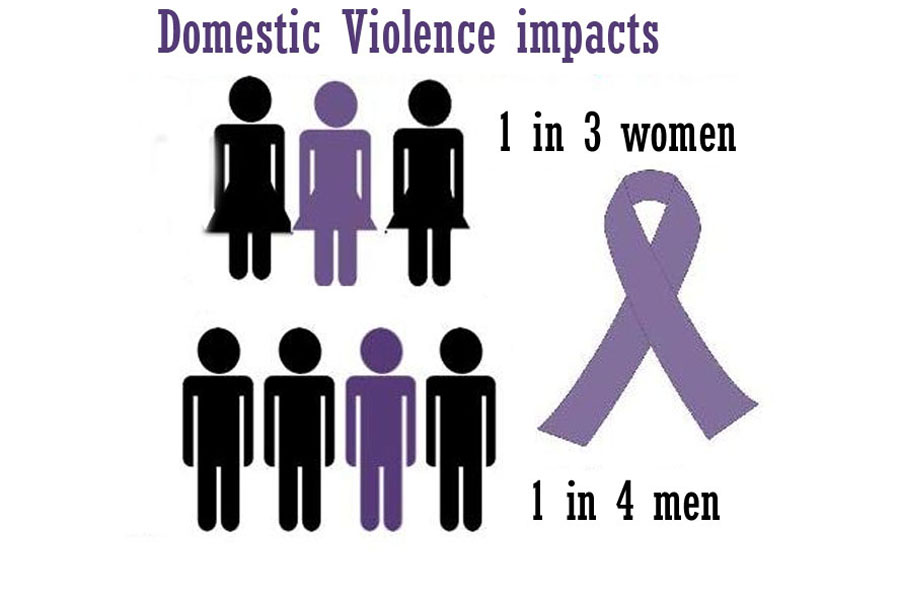
When the general public thinks about domestic violence, they usually think in terms of physical assault that results in visible injuries to the victim.
There are several categories of abusive behavior, each of which has its own devastating consequences. Lethality involved with physical abuse may place the victim at higher risk, but the long term destruction of personhood that accompanies the other forms of abuse is significant and cannot be minimized.
CONTROL
Controlling behavior is a way for the batterer to maintain his dominance over the victim. Controlling behavior, the belief that he is justified in the controlling behavior, and the resultant abuse is the core issue in abuse of women. It is often subtle, almost always insidious, and pervasive. This may include but is not limited to:
Checking the mileage on the odometer following her use of the car
Monitoring phone calls, using caller ID or other number monitoring devises, not allowing her to make or receive phone calls
Not allowing her freedom of choice in terms of clothing styles, makeup or hairstyle. This may include forcing her to dress more seductively or more conservatively than she is comfortable
Calling or coming home unexpectedly to check up on her. This may initially start as what appears to be a loving gesture, but becomes a sign of jealousy or possessiveness
Invading her privacy by not allowing her time and space of her own, reading her mail, computer communications or listening to her phone calls
Forcing or encouraging her dependency by making her believe that she is incapable of surviving or performing simple tasks without the batterer or on her own
Using the children to control the mother by using the children as spies, threatening to kill, hurt or kidnap the children, physical and/or sexual abuse of the children, and threats to call Child Protective Services if the mother leaves the relationship
PHYSICAL ABUSE
According to the AMEND Workbook for Ending Violent Behavior, physical abuse is any physically aggressive behavior, withholding of physical needs, indirect physically harmful behavior, or threat of physical abuse. This may include but is not limited to:
Hitting, kicking, biting, slapping, shaking, pushing, pulling, punching, choking, beating, scratching, pinching, pulling hair, stabbing, shooting, drowning, burning, hitting with an object, threatening with a weapon, or threatening to physically assault
Withholding of physical needs including interruption of sleep or meals, denying money, food, transportation, or help if sick or injured, locking victim into or out of the house, refusing to give or rationing necessities
Abusing, injuring, or threatening to injure others like children, pets, or special property
Forcible physical restraint against her will, being trapped in a room or having her exit blocked, being held down
The batterer hitting or kicking walls, doors, or other inanimate objects during an argument, throwing things in anger,destruction of property
Holding the victim hostage
SEXUAL ABUSE
Sexual abuse is using sex in an exploitative fashion or forcing sex on another person. Having consented to sexual activity in the past does not indicate current consent. Sexual abuse may involve both verbal and physical behavior. This may include, but is not limited to:
Using coercion, guilt, or manipulation.
Not considering the victim's genuine desire to have sex. This may include making her have sex with others, have unwanted sexual experiences, or be involuntarily involved in prostitution
Using her circumstances to lure her into an inappropriate relationship
Exploiting a victim who is unable to make an informed decision about involvement in sexual activity because of being asleep, intoxicated, drugged, disabled, too young, too old, in an already abusive relationship or dependent upon or afraid of the perpetrator
Laughing or making fun of anther's sexuality or body, making offensive statements, insulting, or name-calling in relation to the victim's sexual preferences/behavior
Making contact with the victim in any nonconsensual way, including unwanted penetration (oral, anal or vaginal) or touching (stroking, kissing, licking, sucking or using objects) on any part of the victim's body
Exhibiting excessive jealousy resulting in false accusations of infidelity and controlling behaviors to limit the victim's contact with the outside world
Having affairs with other people and using that information to taunt the victim
Making fun of or being judgmental or nasty to the victim during sex
Withholding sex from the victim as a control mechanism
EMOTIONAL ABUSE AND INTIMIDATION
According to the AMEND Workbook for Ending Violent Behavior, emotional abuse is any behavior that exploits anther's vulnerability, insecurity, or character. Such behaviors include continuous degradation, intimidation, manipulation, brainwashing, or control of another to the detriment of the individual(AMEND 3). This may include but is not limited to:
Insulting or criticizing to undermine the victim's self-confidence. This includes public humiliation, as well as actual or threatened rejection
Threatening or accusing, either directly or indirectly, with intention to cause emotional or physical harm or loss. For instance, threatening to kill the victim or himself, or both
Using reality distorting statements or behaviors that create confusion and insecurity in the victim like saying one thing and doing another, stating untrue facts as truth, and neglecting to follow through on stated intentions. This can include denying the abuse occurred and/or telling the victim she is making up the abuse. It might also include crazy making behaviors like hiding the victim's keys and berating her for losing them.
Consistently disregarding, ignoring, or neglecting the victim's requests and needs
Using actions, statements or gestures that attack the victim's self-esteem and self-worth with the intention to humiliate
Telling the victim that she is mentally unstable or incompetent
Telling her its "her own fault"
Forcing the victim to take drugs or alcohol
Not allowing the victim to practice her religious beliefs, isolating her from the religious community, or using religion as an excuse for abuse
Using any form of coercion or manipulation which is disempowering to the victim
ISOLATION
Isolation is a form of abuse often closely connected to controlling behaviors. It is not an isolated behavior, but the outcome of many kinds of abusive behaviors. By keeping her from seeing who she wants to see, doing what she wants to do, setting and meeting goals, and controlling how she thinks and feels, he is isolating her from the resources (personal and public) which may help her to leave the relationship.
By keeping the victim socially isolated the batterer is keeping her from contact with the world which might not reinforce his perceptions and beliefs. Isolation often begins as an expression of his love for her with statements like if you really loved me you would want to spend time with me, not your family.
As it progresses, the isolation expands, limiting or excluding her contact with anyone but the batterer. Eventually, she is left totally alone and without the internal and external resources to change her life.
Some victims isolate themselves from existing resources and support systems because of the shame of bruises or other injuries, his behavior in public, or his treatment of friends or family.
Self-isolation may also develop from fear of public humiliation or from fear of harm to herself or others. The victim may also feel guilty for the abuser's behavior, the condition of the relationship, or a myriad of other reasons, depending on the messages received from the abuser.
VERBAL ABUSE: COERCION, THREATS, BLAMING
Verbal abuse is any abusive language used to denigrate, embarrass or threaten the victim. This may include but is not limited to:
Threatening to hurt or kill the victim or her children, family, pets, property or reputation
Name calling ("ugly," "bitch," "whore," or "stupid")
Telling victim she is unattractive or undesirable
Yelling, screaming, rampaging, terrorizing or refusing to talk (the 'silent treatment')
Threatening to take victim's children from her
USING MALE PRIVILEGE
As long as we as a culture accept the principle and privilege of male dominance, men will continue to be abusive. As long as we as a culture accept and tolerate violence against women, men will continue to be abusive.
According to Barbara Hart in Safety for Women: Monitoring Batterers' Programs:
All men benefit from the violence of batterers. There is no man who has not enjoyed the male privilege resulting from male domination reinforced by the use of physical violence. . . . All women suffer as a consequence of men's violence.
Battering by individual men keeps all women in line. While not every woman has experienced violence, there is no woman in this society who has not feared it, restricting her activities and her freedom to avoid it. Women are always watchful knowing that they may be the arbitrary victims of male violence.
Only the elimination of sexism, the end of cultural supports for violence, and the adoption of a system of beliefs and values embracing equality and mutuality in intimate relationships will end men's violence against women.
Domestic violence is about power and control. A feminist analysis of woman battering rejects theories that attribute the causes of violence to family dysfunction, inadequate communications skills, women's provocation, stress, chemical dependency, lack of spiritual relationship to a deity, economic hardship, class practices, racial/ethnic tolerance, or other factors.
These issues may be associated with battering of women, but they do not cause it. Removing these factors will not end men's violence against women.
Batterers behave abusively to control their partner's behavior, thereby achieving and maintaining power over their partners and getting their own needs and desires met quickly and completely.
There are also many secondary benefits of violence to the batterer. A batterer may choose to be violent because he finds it fun to terrorize his partner, because there is a release of tension in the act of assault, because it demonstrates manhood, or because violence is erotic for him. Violence is a learned behavior and batterers choose to use violence. The victim is not part of the problem.
The victim may accept responsibility for causing the batterer to lose their temper, but the truth is, the abuser must be held accountable for his behavior.
Four widespread cultural conditions allow and encourage men to abuse women. These are:
Objectification of women and the belief that women exist for the "satisfaction of men's personal, sexual, emotional and physical needs" (includes such things as using 'love' as a coercion method; the use of prostitutes; use of guilt; use of marital 'obligation')
An entitlement to male authority with a right and obligation to control, coerce, and/or punish her independence
That the use of physical force is acceptable, appropriate, and effective
Societal support for his dominance, controlling and assaultive behavior. By failing to intervene aggressively against the abuse, the culture condones the violence
ECONOMIC ABUSE
Financial abuse is a way to control the victim through manipulation of economic resources. This may include, but is not limited to:
Controlling the family income and either not allowing the victim access to money or rigidly limiting her access to family funds. This may also include keeping financial secrets or hidden accounts, putting the victim on an allowance or allowing her no say in how money is spent, or making her turn her paycheck over to him
Causing the victim to lose a job or preventing her from taking a job. He can make her lose her job by making her late for work, refusing to provide transportation to work, or by calling/harassing/calling her at work
Spending money for necessities (food, rent, utilities) on nonessential items (drugs, alcohol, stereo equipment, hobbies)
Material from Women's Center and Shelter of Greater Pittsburgh Volunteer Training Manual, AMEND, and the AzCADV safety plain Manual were used to develop this section.
ORIGINAL HERE
(note: women can be just as abusive as men)
Labels: abuse, coercion, emotional, financial, guilt, intimidation, misogyny, sexual, types
Saturday, October 13, 2018
When Others Believe Your Abuser
(Narcissistic, Sociopathic or Psychopathic) ABUSER
Since when is it good to be friendly with bad people? Since when is winking at their wrongdoing a virtue?
Perhaps someone can quote chapter and verse in the comments, because holier-than-thous really deserve to have their religion's true teachings show what frauds their twisting of religious doctrine makes them.
In the New Testament, in Revelations, I believe, in one of the letters to the churches, some holier-than-thou Christians are read the riot act for that very same pretense.
The author unloads both barrels at them with this truth: "Good people are not lukewarm toward evil" it says.
Cowards are.
Loving good is hating evil. And vice versa. Love is an attraction; hate a repulsion. But that is too simple for complex people to understand.
Now I am not saying that we must reject everyone not perfect, for then we would reject everyone, including ourselves. But decent people need no instruction.
There is a point at which behavior becomes predatory and malicious - a point at which one is morally obligated to separate themselves from that person.You thus take away a bad actor's safety in numbers. You show disapproval. You discourage others from behaving the same way. You comfort the victim by showing him or her that the pain caused them by the bad guy matters to you.
Is any of that evil?
It's just a way of discouraging the harm the bad guy is doing others by showing that you want nothing to do with someone who hurts others like that.
Where is the sin in that, pray tell? Sounds like fine, upstanding conduct to me.
Jesus spoke of this when he said that "indecent conduct" is a special case and justification for divorce even. At the time, the terms "indecent" or "lewd" conduct simply meant "lowdown" or "despicable" conduct of any sort.
And that statement of his, qualifying his disapproval of divorce, is just common sense.
Why? Let's say you are married to a Mafia boss. Is it right for you live in his big fancy house, being waited on by his hired staff? Is it right for you to PROFIT from the crimes he commits and ther damage he does to people?
To the contrary:
it is immoral for you not to divorce him when you find out what he is.
The same people who make a virtue of "accepting" abusive narcissists, relentlessly persecute anyone for any hint of racism or sexism. THAT they won't tolerate. They wouldn't DREAM of tolerating anything politically incorrect like that.
But though they know and believe that the narcissist has brutally abused you, they see no reason to show any disapproval of that.
Hmmm. Whom do they think they're fooling?
They make nothing of that narcissist's abuse of you. They countenance it.
If instead they rejected the narcissist, they would be doing the one small thing they could to get on the right side, the victim's side.
But they abandon the victim and smile in the abuser's face.
Not so holy as they pretend.
by Kathy Krajco
SOURCE: Narcissist Sympathizers
Labels: blame, cognitive dissonance, disbelief, divorce, evil, guilt, narcissist, psychopath, sociopath, sympathy
Wednesday, October 10, 2018
When Your Perfect Partner Goes Perfectly Wrong

by Mary Jo Fay
It felt like I was on a never-ending roller coaster ride and I just couldn't figure out how to get off.
I felt like we lived inside a tornado.
The silent treatment was constant and deafening
I never knew what I did wrong.
I always felt so stupid.
Everything was always my fault.
I carried such guilt every day of my life.
The fact is that life with one of these people is like living in a storm always struggling to find the eye of the tornado for a moment of peace. On the other hand, I believe that when we rely on seeking validation from others instead of ourselves, that's how we fall into their tempest to begin with. True validation is not something you can seek outside yourself. It is the fruit of an inner journey and discovery. To know oneself from the inside-out, rather than from the outside-in. Like love, we think it is outside ourselves so we try to grab it, hold it, and then control it ... then poof! It's gone, like an illusion or dream. Sometimes it takes falling apart to wake up and see what is real. That's when the inner work begins and passion becomes a product of grace, rather then greed or need.
The last week he was living in the house I realized suicide was the only alternative to divorce. Thank God he left.
Labels: abuser, betrayal, confusion, guilt, narcissists, psychopath, ptsd, sociopaths, victims, walking on eggshells




















