Sanctuary for the Abused
Sunday, July 03, 2022
Psychological Abuse in Intimate Relationships Increases Intensity of PTSD Symptoms

The act of using pressure … to have sexual contact (physical or verbal/mental):
Pressure in this case can mean physical pressure, verbal pressure or emotional pressure. Physical pressure can include hitting, kicking and slapping the victim; holding the victim down; continuing with the sexual behavior after the victim has been told to stop; and even continuing to kiss the victim as he/she tries to pull away.
Verbal pressure includes behaviors like threatening to use physical force against the victim, yelling at the victim, name calling, tricking, lying, blackmailing and badgering the victim.
Emotional pressure is used much more frequently than physical and verbal pressure and is the most subtle of all the sexual coercion tactics. Using emotional pressure includes the perpetrator convincing the victim that he/she cares more for the victim than he/she actually does, threatening a break-up, wearing the victim down by using the same tactic over and over again, making the victim feel obligated to participate in sexual acts, guilting the victim participating, utilizing peer pressure and even the perpetrator using his/her position of authority over the victim.
Labels: coercion, complex ptsd, emotional abuse, gaslighting, intimidation, narcissist, physical abuse, pressure, psychological, psychopath, threats, verbal abuse


Wednesday, July 10, 2019
Be Very Specific in Custody Agreements

A child custody agreement is an extremely important document that will largely influence your life as a co-parent. Child custody agreements essentially lay out how you, your co-parent, and your child will be living your daily lives. For this reason, you and your co-parent must ensure that the rules of raising your child are clearly defined in the document. Including provisions in your custody agreement is a good way to thoroughly cover every aspect of your responsibilities as co-parents.
Before adding provisions to your custody agreement
Child custody agreements must be given a lot of time and thought. They must be thorough and include everything that you will need to know as a co-parent for your child. Before adding provisions to your custody agreement there are a few major issues that must be accounted for. A basic child custody agreement should include:-
A definition for the type of legal custody that will be
implemented. Legal custody refers to the decisions making
responsibilities for the child. These responsibilities can be given to
one or both co-parents.
-
A definition for the type of physical custody that will be
implemented. Physical custody refers to the day-to-day caretaking
responsibilities for the child. These responsibilities can be given to
one or both co-parents.
-
A method should be defined for making modifications to the custody
agreement if circumstances are to change in the future and the custody
agreement needs to be changed.
-
A basic visitation schedule must be created following the
determination of physical custody. This visitation schedule will
determine how the child’s time will be divided among both co-parents.
Including your own provisions in your custody agreement
Now that the basic issues of your custody agreement have been defined, you and your co-parent will be able to add your own provisions if you feel that its necessary. These provisions will be useful in saving you and your co-parent a lot of stress and unneeded conflict in the future. The easiest way to come up with these provisions is to reflect on what issues you and your co-parent have currently regarding your co-parenting relationship. You may also come up with provisions by trying to predict and problems that may arise in the future and creating preventative provisions.The most common types of provisions are used to provide more detail to the issues included in your basic child custody agreement. For instance, if you and your co-parent agree that details need to be added to your legal or physical custody agreements you may do so. Other provisions may also be added regarding separate issues such as how you will allow your child to interact with new partners or how you and you co-parent choose to contact one another. Any stipulation can be created as long as you and your co-parent come to an agreement on it. If you and your co-parent wish to make a provision but you cannot come to an agreement on the situation, you may request that a judge make a determination.
Remember that a judge must approve all provisions. A judge may also request you to state your argument as to why a provision is needed. Be sure to have a valid reason for creating each provision otherwise it is likely that it will not be approved.
SOURCE
Labels: child custody, co-parenting, coparenting, custody, narcissist, psychological, psychopath, responsibility, sociopath, supervision, time
Sunday, October 14, 2018
REVICTIMIZATION

© 2009 Pandora's Project
I am a survivor of sexual and other abuse in my childhood, as well as domestic violence and partner rape. As I began to heal, it occurred to me that many of the things I had felt in the abusive relationship were things I had felt much earlier as an abused child.
While it is important not to subscribe to stereotypes that a certain "type" of person is repeatedly raped or experiences domestic violence, it is known that the risk of revictimization by sexual assault is approximately doubled for survivors of child sexual abuse (1). For example, in Diana Russell's study of women who had experienced incestuous abuse as children, two thirds were subsequently raped (2).
This article discusses revictimization drawing on literature together with my understanding of how it worked for me. It should not be seen as a generalization that only child abuse survivors experience repeated rape or domestic violence - or that survivors of child sexual abuse are sitting ducks for further abuse. Sometimes, even people from stable, loving families are subject to the dynamics of later domestic violence. And it cannot be stated strongly enough that any person can be subject to sexual assault. Nevertheless, child sexual and other abuse can leave us with vulnerabilities that abusers may be quick to exploit. It's important that we see repeated victimization not as a reason to hate ourselves, but as stemming from wounds incurred through no fault of our own and for which we deserve our own compassion.
Read through, and if this fits for you, please know that there is help available.
CHILD SEXUAL / OTHER ABUSE AND REVICTIMIZATION
The phenomenon of repeated victimization, indisputably real, calls for great care in interpretation. For too long, psychiatric opinion has simply reflected the crude social judgment that survivors “ask for abuse." The earlier concepts of masochism and the more recent formulations of addiction to trauma imply that victims seek and derive gratification for repeated abuse. This is rarely true (3)
So, why does revictimization happen? Before we go on to look at just some of the reasons, a reminder: This is not an exercise in how to blame ourselves more. Even if there`are factors that make some of vulnerable to further abuse, perpetrators alone are responsible for the abuse they commit.
WHY REVICTIMIZATION HAPPENS - SOME OF THE REASONS
Personalities forged in an environment of early abuse : Children who are abused by people they are close to learn to equate love with violence and sexual exploitation. They have not learned to create safe and appropriate boundaries with people, and they grow up unable to see themselves as having any right to choice. Their self-image is so damaged that they may see nothing wrong with even extremely abusive treatment of them by others. It is seen as unavoidable and the ultimate cost of love. Some women sexually abused as children may believe that their sexuality is all they have of any worth. (4).
Compulsion to repeat trauma : Bessel van der Kolk writes, "Many traumatized people expose themselves, seemingly compulsively, to situations reminiscent of the original trauma. These behavioral reenactments are rarely consciously understood to be related to earlier life experiences (5)". Survivors of earlier rape and abuse may put themselves at risk of further harm, not because they want to be abused or hurt, but because they may be seeking a different, better`outcome, or to have more control. It may also be because they believe they deserve the pain inflicted on them. Often, reenactment has a compulsive and involuntary feel. Survivors may feel completely numb, and unaware of how reenactment is taking place (6). Conversely, it may call forth the same terror and shame as experienced in childhood. van der Kolk further explains,
People who are exposed early to violence or neglect come to expect it as a way of life. They see the chronic helplessness of their mothers and fathers' alternating outbursts of affection and violence; they learn that they themselves have no control. As adults they hope to undo the past by love, competency, and exemplary behavior. When they fail they are likely to make sense out of this situation by blaming themselves. When they have little experience with nonviolent resolution of differences, partners in relationships alternate between an expectation of perfect behavior leading to perfect harmony and a state of helplessness, in which all verbal communication seems futile. A return to earlier coping mechanisms, such as self-blame, numbing (by means of emotional withdrawal or drugs or alcohol), and physical violence sets the stage for a repetition of the childhood trauma and "return of the repressed (7)
The effect of trauma : It is true that some people may have a series of violent partners, or encounters with rapists. I had a friend who was subjected to rape three times in two years . A family member - echoing typical victim-blame - sneeringly asked me "why she kept leaving herself open to it. - wouldn't you think that if she went through it once, she should have known how to steer clear of creeps?" This reflects a lack of knowledge about the workings of trauma: While some survivors may be overly cautious about everybody, other traumatized people actually have a harder time forming accurate assessments of danger (8). The above question also absolves the perpetrator who falsely seeks to engage the trust of a trauma survivor in order to abuse them.
Traumatic Bonding : Judith Herman writes about the tendency of abused children to cling tenaciously to the very parents who hurt them (9) Perpetrators of sexual abuse may capitalize on this tendency by giving their victim the only sense of specialness, or being loved, that they have ever had. Bessel van der Kolk tells us that people subjected to trauma and neglect are vulnerable to developing the tendency to traumatically bond with those who harm them. Traumatic bonding is often behind the excuses of battered women for the violence of their partners, and for the repeated returning to a batterer (10).
REVICTIMIZATION AND ME
Unfortunately my adult experiences of rape and battering were not new to me. Being battered by both my parents since infancy and sexually abused throughout childhood and early teens (by non-related perpetrators), and receiving little in the way of protection or belief taught me some powerful lessons, which I brought to an abusive partner. I remember exactly what I felt the first time he hit me. He cracked me across the face, and as I cradled my rapidly swelling cheekbone, I was certainly upset. But there was another, deeper feeling of validation; something went "click" inside me. It was a sense of correctness about what he had done, an utter familiarity which confirmed a bone-badness I had always felt. The first time he raped me, there was a similar - and terribly powerful - sense of meeting with something I seemed destined for. It works differently for different people, but let me share with you some of the specific lessons of childhood that I believe made me fair game for a battering and raping partner - you may identify:
- The belief that I was dirty and utterly corrupt: From a very early age, the sexual abuse I experienced combined with the words and actions of my parents left me with a sense that I had been born inherently dirty. Judith Herman writes that children who experience abuse and abandonment conclude - need to conclude - that their inner badness is responsible for the abuse, in order to sustain attachments to those who hurt them (11). By the time I was 18 and met my abusive partner, that sense of me - but not an abuser - being bad had been intact for a long time
- The belief that I was not worth standing up for: Abandoned to my fate as a child, there were times in the violent relationship where I honestly felt embarrassed and foolish for complaining about the violence; it was, after all, only me it was being done to. As a 4 year old child, I had disclosed sexual abuse to my mother, who had said she didn't want to hear about it. I concluded - and I remember thinking it - that if something bad happens to me, it doesn't matter. In short, I didn't matter. This was to have a devastating impact as I grew up.
- The belief that It was my fault: Haven't many people who were beaten and sexually abused as children heard things like "you make me do this to you" or, "I wouldn't do this to you if you weren't so bad"? Hence, this is what we learn, and what we believe when people continue harming us.
- The belief that love involves pain: Love and bashing and rape were not incompatible to me. Even when I felt so hurt, and was being degraded so badly, I still believed there might be some love in it that I could get if only I was good enough. And this is what I'd been told; that I would be loved if I was good enough - which I somehow never seemed to be. By the time I was older, the computer file in my head on love always came up with themes of abuse. I had been sexually abused at 13 by a particularly nasty piece of work, a man whose kids I babysat, who told me how much he loved me; how special and beautiful I was to him. Anytime I objected to the abuse, he threatened not to love me anymore: "Don't you want to be Uncle Bill's darlin'? Don't you love your Uncle Bill?" I was so completely affection-starved - I remember this as a time in my life when nobody gave me any love - and that is no exaggeration. I did not want to be abused but I did want to be loved. Like many abusers, he preyed on that. I had only ever received love from poisonous sources; I simply did not see any other options. How can you recite a beautiful poem you've never learned? Perhaps all you know is the gutter version. I fantasized about other more ideal forms of love, but I knew that for someone as fundamentally bad as me, they were but wishful thinking. I had been taught that I was beyond the pale of the tender, safe love I desperately craved. I reasoned that if my own life-givers could not love me, whom else could I expect to love me?
- The belief that sex is supposed to degrade you: For some time, I was orally raped on a daily basis at age 4, and a close family friend started raping me when I was eight. This lasted until I was ten, and was extremely painful and frightening. These things were my first point of reference regarding sex , and for a long time, it was to determine how I viewed all other encounters. I believed that the sexual abuse in my childhood meant I was bad. Growing up did not change that view. From the unhealed child in me the belief operated that sex was actually supposed to involve hurt, degradation and no choice for me. This influenced a large part of my response, or more correctly non-response to my partner's brutality.
- The belief that you must always forgive because an abuser matters more than you: Many abused children unconditionally forgive the adults who hurt them - it's part of traumatic bonding and part of the way they blame themselves. This didn't change as I got older either: As a little girl, I picked up my battered body and went to mummy who had done the battering. I continued to offer daddy my love - even though he didn't really seem to want it, and as he raised the bar ever higher as to earning his love. If mummy cried and said she didn't mean to hurt me, I flung my arms around her, cried with her and said it was okay. I recall my mother saying often as I grew up, "Louise, you have such a forgiving heart." That unconditional forgiving for the worst treatment; the most outrageous betrayals, was also to be taken into my relationship. He hurt me - I felt sorry for him - and forgave him.
- The belief that I didn't deserve any better: I honestly believed that I was a cheap slut who had failed to be good enough to get better treatment. I was taught that men don't respect "girls like me" and any bad treatment is thus justified.
- Regression and being drawn into the same space as childhood: I believe the sexual abuse in my childhood most severely affected my autonomy. Can a child say no to an adult? Some may argue, "but an adult can say no to an adult." Yes, but not where there is an established power differential, especially one based on the fear of violence. And not when you've learned again and again that "no" has no currency. As a child I was used by whomever felt like it with no say in the matter. Even if I was older in the relationship, a sense of choice still seemed an abstract absurdity.
- Traumatic bonding: Abusers traumatically bind their victims to them by alternating threat with intermittent kindness (12). After my partner had hurt me, he sometimes offered me comfort - really warm, loving comfort, which would make everything okay again for awhile - just as it had in childhood. As the young woman being harmed, I felt very little girl-ish, and sometimes I just wanted a cuddle. It felt like only he was there for me, even if he hurt me too. As in my childhood, it did not matter that violator was also comforter, it was still better than nothing. I just needed that contact. His duality of roles as both violator and comforter was to cement my sense of entrapment further.
- Inaccurate assessments of danger: Abuse survivors are not to be blamed, of course, for not being able to second-guess that a batterer will be a batterer. But for me, there was a tendency to follow anybody who "acted nice", believing that they would be nice - and this even when niceness alternated with cruelty.
But does this need to be the case? Let's look at the next section.
SOLUTIONS AND HEALING
Socially, picking up on children who have been hurt and offering early intervention so that they carry far less damage into adulthood with them would be a great big plus. Not kicking abuse survivors in abusive relationships or who are repeatedly hurt by rape when they're down by branding them "stupid" and abandoning them - thus proving to them again that they're worthless - will also go a long way.
I think that what worked for me was that I at least had a concept of safe, nurturing love - even if I didn't feel I deserved it. Some people don't even have that concept, and I believe I am lucky that I did because it gave me a starting point. My fellow survivor, If you have identified with any of the above, I implore you to seek counselling to overturn those old scars and recognize that you too, have the same place in the scheme of fairness and love as anybody else. All that I learned, and all the ways in which it was reinforced have not, after all, stopped me from growing into a woman who knows that I don't deserve to be the recipient of other people's abuse. It was not my fault; I was not bad, and I can tell somebody with a mind to hurt me to go to hell - I owe them nothing; least of all my soul.
Does such a change in attitude rape-proof us? No, as long as there are perpetrators, we are all vulnerable regardless of what we think about ourselves. To say that somebody is raped because of their self-image is victim-blame - again - it's the perpetrator who takes advantage. But I do believe that the reduction in self-hatred and boundaries that come with healing make us less inclined to accommodate people who are disrespectful and even dangerous. Knowing I deserve to be safe - that I do not deserve to be raped - means that I listen to my gut, put distance between myself and abusive people and reduce my chances, at least for now, of being harmed again. Our safety is sometimes contingent on how much we value it; healing means changing patterns of devaluing it.
I healed. You can do it too, even if the damage is extensive. You are worth it. You are. You were not abused again and again because you deserve it. You have been traumatized, you were set up and others capitalized on it. You have nothing to be ashamed of. Please feel free to discuss multiple victimization at the Pandora's Aquarium message board and chat room - we understand, and we value you even if many others didn't.
Please give yourself compassion - you certainly have mine.
SOURCES
- Herman, J. Trauma and Recovery: From domestic abuse to political terror, BasicBooks, USA, 1992
- Cited in Judith Herman, Trauma and Recovery: From domestic abuse to political terror, BasicBooks, USA, 1992
- Herman, J. Trauma and Recovery: From domestic abuse to political terror, BasicBooks, USA, 1992
- Herman, J. Trauma and Recovery: From domestic abuse to political terror, BasicBooks, USA, 1992
- Van der Kolk, Bessel A. MD. "The Compulsion to Repeat the Trauma: Re-enactment, Revictimization, and Masochism", Psychiatric Clinics of North America, Volume 12, Number 2, Pages 389-411, June 1989 http://www.cirp.org/library/psych/vanderkolk/
- Herman, J. Trauma and Recovery: From domestic abuse to political terror, BasicBooks, USA, 1992
- Herman, J. Trauma and Recovery: From domestic abuse to political terror, BasicBooks, USA, 1992
Labels: abuse, blame, childhood abuse, emotional abuse, fault, forgiveness, psychological, repetition compulsion, revictimization, stockholm syndrome, trauma bonding, traumatic bonding, verbal abuse
Wednesday, September 12, 2018
28 Signs of An Abuser

1. Unemployed or Underemployment.
Underemployment is not necessarily an objective phenomenon; it may be the subjective response to the man's failing to meet his own expectations. Educational and occupational attainment frequently is less than wife's, such status discrepancies are painful even should the husband bring home a higher salary.
2. Emotional Dependency.
Emotional dependency on the spouse is usually not recognized or understood, but is expressed through demands for constant reassurance and gratification. This may explain in part why spouse abuse often begins during wife's pregnancy.
3. High Investment in Marriage.
Wants to preserve marriage at any cost and will go to great lengths to do so. In the event of separation or divorce, tends to immediately replace lost spouse with a new partner.
4. Boundaries.
- Violates your personal space.
- Intimidates you by getting too close.
- Touches, pinches, grabs you against your will.
- Sweeps you off your feet.
- Love at first sight.
- "You're the only one for me."
- "I have to have you." "I think about you all day / all night"
- Desperately pressures you for a commitment so you're engaged, sleeping together in less than 6 months or living together in less than 12 months.
- Controls where you go, what you do, with whom and for how long.
- Controls money and money decisions, won't allow you to share expenses or refuses to work and won't share expenses.
- Protective to the point of controlling.
- Says he's angry when you're "late" because he "cares."
- Takes your car keys, won't let you go to church, work, or school. Won't let you drive.
8. Abusive Family of Origin.
Was physically, sexually or emotionally abused as a child or witnessed spouse abuse. He sees violence as normal behavior, a natural part of family life.
9. Low Self-Esteem.
- Guards his fragile sense of self by acting tough and macho.
- Pumps up his fragile sense of self with sex.
- Imagines you threaten his manhood.
- Damages your self-esteem, demeans your growth, demands your silence.
- Abuses alcohol/drugs, tries to get you drunk, berates you if you won't get high.
- He may deny his drug problem and refuse to get help. Don't think you can change him or that alcohol/drug abuse causes violent behavior. They are two separate problems.
- Unable to identify feelings and express them directly and appropriately.
- He may say he's "hurt" and sulk when he's really angry.
- He displaces anger at his boss or himself onto you.
- Blame Shifts; he's never responsible for what happens.
- Believes others are out to get him and he's the victim.
- Blames you for everything that goes wrong.
- Will say "You make me mad," "You make me happy," "I can't help getting angry" to manipulate you.
- Holds you responsible for his suicidal or self-abusive or sexual- acting-out behavior.
Quick temper, unable to handle frustration without getting angry, easily insulted. Will "rant and rave" about minor things like traffic tickets or request to do chores.
14. Dr Jekyll and Mr Hyde.
Seems like two different people with mood swings from nice to explosive. May change his behavior around the guys. May be very sociable around others and only abusive with you.
15. Unrealistic Expectations.
- Very dependent on you for all his physical and emotional needs ("You're all I need").
- Expects you to live up to his ideals of a perfect partner, mother, lover, friend.
- Expects a woman to stay at home, serve and obey him.
- Gets angry if you don't fulfill his wishes and anticipate his needs.
- Speaks for you.
- He thinks it's OK for men to keep women "in line" by force or intimidation.
18. Disrespect for Women in General.
- Ridicules and insults women, sees women as stupid and inferior to men
- Tells sexist jokes ("dumb blond", "PMS" jokes).
- Refers to women in derogatory or non-human terms ("babe", "chick", "fox", "bitch") or as specific parts of anatomy
- Sees women only as sex-objects, uses prostitutes or has affairs
- De-values women's accomplishments and work, acts like women are second-class citizens.
- He may ignore your feelings, continually criticize you and call you names like "fat, ugly, stupid"
- curse and yell at you
- belittle your accomplishments
- manipulate you with lies, contradictions, and crazy-making tactics
- humiliate you in private or public
- Uses sarcasm and says it's 'humor.'
- regularly threaten to leave or tell you to leave, keep you awake or
- wake you up to argue or verbally abuse you.
- An acquaintance rapist will try to separate you from others to a secluded spot.
- Batterers will try to keep you from working or attending school, move you to a rural area, restrict your use of the phone or car.
- He'll try to cut you off from men, women, family and children by saying "You're a whore," "You're a lesbian," "You're tied to your parent's apron strings," or "You're spoiling the kids."
- Rapists, child molesters and men who sexually abuse or rape their wives or other women often have an abundance of pornographic literature, internet bookmarks, magazines, or videos.
- They may want to involve you in their interest by photographing you or taking you to pornographic movies or shops.
- They may coerce you into doing things sexually you are uncomfortable with or wouldn't normally do and then say that you "liked it" or "asked for it."
- Refuses platonic relationship if dating
- uses "playful" force in sex
- uses sulking, sympathy or anger to manipulate you into having sex
- emotionally coerces or forces you to have sex or hurts you during sex
- demands sex when you're scared, ill, tired or
- starts to have sex when you're asleep, drunk, or unable to give consent.
- Teases, bullies, abuses or harshly punishes animals, children, elderly, disabled weaker people or other women.
- Is insensitive to others' pain.
- Tortures or kills pets to feel powerful or hurt you.
- Threatens to kidnap the children if you leave.
- Punishes or deprives the children when angry at you.
- Punishes the children for behavior they're incapable of (whipping a 2 year-old for wet diapers).
Any history of violence to "solve" problems. Justifies hitting or abusing women in the past, but "they made me do it." Friends, relatives or ex-partners say he's abusive (Batterers beat any woman they're with. You didn't cause it and you can't control it or cure it).
25. Fascination with Weapons.
Plays with guns, knives, or other lethal weapons, threatening to "get even" with you or others. Tells you he knows how to kill someone and/or how to hide bodies; or that he has 'friends' who will 'take care of you'.
26. Threats of Violence.
- Any threats of physical force to control you or make you do something should be taken seriously.
- He may threaten to hurt you or your family. Non-batterers do not say things like "I'll kill you" or "I'll break your neck" or "I'm out to get you now."
- Posts threats or defamatory material about you on the internet.
Punishes you by breaking loved objects, terrorizes you into submission (If he doesn't want you to be a student, he may destroy school books or break lamps). Non-batterers do not beat on tables, punch holes in walls, destroy furniture, throw objects at you to threaten you. The message is "You're next! You're just an object I can control and I can break you like our china."
SOURCE
Labels: abuser, control, emotional abuse, emotional rape, fights, psychological, rules, terrorism, traits, verbal abuse
Monday, June 11, 2018
Emotional & Psychological Trauma

What is emotional or psychological trauma?
The ability to recognize emotional trauma has changed radically over the course of history. Until rather recently psychological trauma was noted only in men after catastrophic wars. The women's movement in the sixties broadened the definition of emotional trauma to include physically and sexually abused women and children. Now because of the discoveries made in the nineties known as the decade of the brain, psychological trauma has further broadened its definition.
Recent research has revealed that emotional trauma can result from such common occurrences as an auto accident, the breakup of a significant relationship, a humiliating or deeply disappointing experience, the discovery of a life-threatening illness or disabling condition, or other similar situations. Traumatizing events can take a serious emotional toll on those involved, even if the event did not cause physical damage.
Regardless of its source, an emotional trauma contains three common elements:
it was unexpected;
the person was unprepared; and
there was nothing the person could do to prevent it from happening.
It is not the event that determines whether something is traumatic to someone, but the individual's experience of the event. And it is not predictable how a given person will react to a particular event. For someone who is used to being in control of emotions and events, it may be surprising – even embarrassing – to discover that something like an accident or job loss can be so debilitating.
What causes emotional or psychological trauma?
Our brains are structured into three main parts, long observed in autopsies:
- the cortex (the outer surface, where higher thinking skills arise; includes the frontal cortex, the most recently evolved portion of the brain)
- the limbic system (the center of the brain, where emotions evolve)
- the brain stem (the reptilian brain that controls basic survival functions)
What is the difference between stress and emotional or psychological trauma?
One way to tell the difference between stress and emotional trauma is by looking at the outcome – how much residual effect an upsetting event is having on our lives, relationships, and overall functioning. Traumatic distress can be distinguished from routine stress by assessing the following:
how frequently upset is triggered
how intensely threatening the source of upset is
how long upset lasts
how long it takes to calm down
If we can communicate our distress to people who care about us and can respond adequately, and if we return to a state of equilibrium following a stressful event, we are in the realm of stress. If we become frozen in a state of active emotional intensity, we are experiencing an emotional trauma – even though sometimes we may not be consciously aware of the level of distress we are experiencing.
Why can an event cause an emotionally traumatic response in one person and not in another?
There is no clear answer to this question, but it is likely that one or more of these factors are involved:
- the severity of the event;
- the individual's personal history (which may not even be recalled);
- the larger meaning the event represents for the individual (which may not be immediately evident);
- coping skills, values and beliefs held by the individual (some of which may have never been identified); and
- the reactions and support from family, friends, and/or professionals.
What are the symptoms of emotional trauma?
There are common effects or conditions that may occur following a traumatic event. Sometimes these responses can be delayed, for months or even years after the event. Often, people do not even initially associate their symptoms with the precipitating trauma. The following are symptoms that may result from a more commonplace, unresolved trauma, especially if there were earlier, overwhelming life experiences:
Physical
Eating disturbances (more or less than usual)
Sleep disturbances (more or less than usual)
Sexual dysfunction
Low energy
Chronic, unexplained pain
Emotional
Depression, spontaneous crying, despair and hopelessness
Anxiety
Panic attacks
Fearfulness
Compulsive and obsessive behaviors
Exaggerating (especially when others chronically disbelieve them)
Feeling out of control
Irritability, angry and resentment
Emotional numbness
Withdrawal from normal routine and relationships
Cognitive
Memory lapses, especially about the trauma
Difficulty making decisions
Decreased ability to concentrate
Feeling distracted
The following additional symptoms of emotional trauma are commonly associated with a severe precipitating event, such as a natural disaster, exposure to war, rape, assault, violent crime, major car or airplane crashes, or child abuse. Extreme symptoms can also occur as a delayed reaction to the traumatic event.
Re-experiencing the Trauma
intrusive thoughts
flashbacks or nightmares
sudden floods of emotions or images related to the traumatic event
Emotional Numbing and Avoidance
amnesia
avoidance of situations that resemble the initial event
detachment
depression
guilt feelings
grief reactions
an altered sense of time
Increased Arousal
hyper-vigilance, jumpiness, an extreme sense of being "on guard"
overreactions, including sudden unprovoked anger
general anxiety
insomnia
obsessions with death
What are the possible effects of emotional trauma?
Even when unrecognized, emotional trauma can create lasting difficulties in an individual's life. One way to determine whether an emotional or psychological trauma has occurred, perhaps even early in life before language or conscious awareness were in place, is to look at the kinds of recurring problems one might be experiencing. These can serve as clues to an earlier situation that caused a dysregulation in the structure or function of the brain.
Common personal and behavioral effects of emotional trauma:
substance abuse
compulsive behavior patterns
self-destructive and impulsive behavior
lashing out
uncontrollable reactive thoughts
inability to make healthy professional or lifestyle choices
dissociative symptoms ("splitting off" parts of the self)
feelings of ineffectiveness, shame, despair, hopelessness
feeling permanently damaged
a loss of previously sustained beliefs
Common effects of emotional trauma on interpersonal relationships:
inability to maintain close relationships or choose appropriate friends and mates
sexual problems
hostility
arguments with family members, employers or co-workers
social withdrawal
feeling constantly threatened
What if symptoms don't go away, or appear at a later time?
Over time, even without professional treatment, symptoms of an emotional trauma generally subside, and normal daily functioning gradually returns. However, even after time has passed, sometimes the symptoms don't go away. Or they may appear to be gone, but surface again in another stressful situation. When a person's daily life functioning or life choices continue to be affected, a post-traumatic stress disorder may be the problem, requiring professional assistance.
How is emotional trauma treated?
Traditional approaches to treating emotional trauma include:
talk therapies (working out the feelings associated with the trauma);
Cognitive-Behavioral Therapy (CBT) involves changing one's thoughts and actions, and includes systematic desensitization to reduce reactivity to a traumatic stressor
relaxation/stress reduction techniques, such as biofeedback or breathwork; and
hypnosis to deal with reactions often below the level of conscious awareness.
There are also several recent developments in the treatment to emotional trauma. Depending on the nature of the trauma and the age or state of development at which it occurred, these somatic (body) psychotherapies might even be more effective than traditional therapies. Some of the new therapies include:
EMDR (Eye Movement Desensitization and Reprogramming)
Somatic Experiencing
Hakomi
Integrative Body Psychotherapy
EMDR THERAPIST NETWORK
Labels: anxiety, emotional, psychological, ptsd, shock, trauma, triggers, unexpected, unprepared
Tuesday, May 22, 2018
PTSD
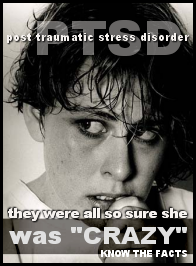
POST-TRAUMATIC STRESS DISORDER
What Is It?
Post Traumatic Stress Disorder (PTSD) is classified as a type of anxiety disorder, but is actually much more than that. It is a debilitating disorder that often develops after highly traumatizing events, such as natural disasters, personal assaults and combat. In fact, PTSD was first called "shell shock" or "battle fatigue" because it was noticed primarily in combat veterans. Over the years, however, professionals have recognized that PTSD often develops in people who experience a wide variety of traumatizing events. These include car and plane wrecks, earthquakes and floods, rape and other assaults, abuse or being held captive. The person experiencing PTSD may have felt personally threatened or may have felt that the life of someone close to him or her was threatened. It even occurs among professionals such as paramedics and firefighters who respond to plane crashes and natural disasters.
Typically, people experiencing PTSD report persistent and frightening memories of the event and feel emotionally numb and unresponsive. There is a mixture of anxiety related symptoms as well as depression and emotional numbing. Intrusive thoughts and memories of the event are hallmarks of this disorder. This combination of reactions is the key to PTSD.
The traumatic event is relived again and again. Nightmares are common. In some cases, the person suffering from PTSD will feel like he or she is reliving the event. This can include such extremes as illusions, hallucinations and dissociative flashbacks. One Vietnam veteran came to the emergency room of the base hospital, wearing jungle combat fatigues and carrying a rifle. He believed he was in Vietnam and that the year was 1968. In reality, it was Las Vegas in 1985. (No one was hurt in that incident and the veteran was sent for treatment of PTSD.) When the sufferer is exposed to things that remind them of the trauma, there is much distress and this may trigger the "flashback." The sound of helicopters often triggers reactions in Vietnam veterans.
The emotional numbing includes efforts to avoid thoughts, feelings and conversations related to the event. "I just don't want to think about it," is a common reaction and often extends to the avoidance of activities, places and people that might remind the sufferer of the trauma. This avoidance of the trauma may include actual "forgetting" of important aspects of the trauma. People with PTSD find it difficult to enjoy the things they used to find pleasurable. They feel detached from others ("No one can understand"). They find it difficult to experience positive feelings and often believe that their futures are limited.
The anxiety reactions include difficulty falling or staying asleep, irritability and outbursts of anger, difficulty concentrating, startle responses and being constantly on the look out for threats. Some people, including professionals, may interpret these behaviors as "paranoid," when in fact, they are symptoms of PTSD.
Who Experiences PTSD?
PTSD can strike anyone. Children also experience PTSD.3 People who experience PTSD do not have a history of emotional problems, nor are they from particularly "dysfunctional" families. It can happen to anyone, including professionals. The key is the experience of a traumatizing event, not some "predisposing" factor in the person. On the other hand, different people have differing abilities to cope with catastrophic events. Some people exposed to traumatic events do not develop PTSD.
PTSD typically develops shortly after the traumatizing event usually within three months, but it may be delayed for months or years. When it is delayed, there is often a triggering event that recalls the threat from long ago.
According to the National Institute of Mental Health approximately 3.6 percent of U.S. adults between the ages of 18 and 54 (5.2 million people) have PTSD during the course of a given year. About 30 percent of the men and women who have spent time in war zones experience PTSD. It is estimated that one million veterans of the Vietnam War developed PTSD. PTSD has also been detected among veterans of the Persian Gulf War, with some estimates running as high as 8 percent. 4
What is the Course of the Illness?
PTSD can become chronic, lasting for years or even decades. Sometimes it lasts a lifetime. In patients with chronic PTSD, there is often a waxing and waning of symptoms over the course of time. Even in cases where the PTSD seems to be resolved and no longer a problem, certain behaviors and reactions can persist. For example, a woman who was awoken with an intruder in her home in the middle of the night, even after nearly 20 years, can no longer sleep in a totally darkened room. This difficulty rarely causes problems in her daily life and is something she now accepts.
Other forms of mental illness often go along with PTSD. Substance abuse is common. It is possible that the substance abuse develops in an attempt to "self-medicate" for the distressing symptoms of PTSD. Major depression and various other anxiety disorders are often seen. The overlapping diagnostic criteria of the Diagnostic and Statistical Manual 4th edition (DSM-IV)1 may contribute to the multiple diagnoses of sufferers of PTSD.2 Misdiagnosis is also possible if the traumatized person fails to reveal the history of the traumatizing event.
Treatment
The most successful interventions have been Cognitive/Behavioral therapy (CBT) and medications. "Exposure" through detailed recall of the traumatizing event and cognitive restructuring have been particularly helpful. This may be highly distressing to the patient, but in the long run, it is quite helpful in helping to diffuse the trauma of the event.
Various medications are often prescribed. Sertraline (Zoloft) is a selective serotonin reuptake inhibitor (SSRI) that has been approved by the FDA as an indicated treatment for PTSD.2 Psychiatrists often also prescribe a variety of tranquilizers as well as (in some cases) antipsychotic medications. The effectiveness of these medications is less clear.
Another form of treatment that has had some success is Eye Movement Desensitization and Reprocessing (EMDR), but it is not clear if this treatment is as effective as CBT.
Group therapy is probably the best approach for mild to moderate PTSD. This has been shown in studies of combat veterans as well as survivors of natural disasters. In these settings, the sufferers can share their memories and difficulties with others who have gone through the same thing. This helps break down the isolation experienced by many people with PTSD.
References:
1. Diagnostic and Statistical Manual-IV, American Psychiatric Association, 1994.
2. National Center for PTSD..
3.National Institute of Mental Health, PTSD Info.
4. National Institute of Mental Health: Facts about PTSD.
Cathy A. Chance, Ph.D.
Labels: abuse, emotional, manipulation, memories, psychological, ptsd, trauma, verbal abuse
Thursday, May 17, 2018
Why Women Stay
Labels: emotional abuse, fear, financial, learned helplessness, no help, psychological, stockholm syndrome