Sanctuary for the Abused
Thursday, January 19, 2023
Bill of Rights for Domestic Violence Victims

Domestic Violence Victim Bill of Rights
* You have the right NOT to be abused.
* You have the right to anger over past abuse.
* You have a right to choose to change the situation.
* You have a right to freedom from fear of abuse.
* You have a right to request and expect assistance from police or social agencies.
* You have a right to share your feelings and not be isolated from others.
* You have a right to want a better role model of communication for yourself and your children.
* You have a right to be treated like an adult.
* You have a right to leave the abusive environment.
* You have a right to privacy.
* You have a right to express your own thoughts and feelings.
* You have a right to develop your individual talents and abilities without harrasssment.
* You have a right to legally prosecute the abusing spouse.
* You have a right not to be perfect.
(Adapted from; Victimology: An International Journal., Vol. 2 1977-78, No. 3-4, p.550)
Labels: abuse, anger, bill of rights, domestic violence, fear, support


Friday, May 29, 2020
Why PTSD Needs Treatment and Does Not 'Get Better' with Time

I know of no more disagreeable situation than to be left feeling generally angry without anybody in particular to be angry at. - Frank Moore Colby
(Domestic Violence Centers are a good place to contact about counseling if you have no insurance)
Labels: anger, complex ptsd, displaced, inappropriate, misplaced, ptsd, rage, victims, walking on eggshells
Wednesday, January 09, 2019
Passive-Aggressive Behavior

- Obstructionism (making things difficult)
- Hostility, anger, and bad attitude toward people in authority or people who have an advantage. Scorn and resentment.
- Issues such as specific kinds of fears, a sense of victimization, feelings of being misunderstood, etc. (see list below)
- Complaints of having it hard or being treated unfairly
- Sneaky, “Sideways” or “Backhanded” comments/compliments hidden behind a veneer of pleasantry
- Arriving late to meetings and other events, making other people wait
- Purposely doing a poor job on a required work project
- Claiming to have “forgotten” what is wanted by other people
- Making issues more difficult than they have to be
- Making excuses
- Lazy communication, failing to follow through on messages
- Lying and mental manipulation
- Procrastination and laziness at home or in the workplace
- Deliberately creating disorder in situations with friends, employer and family
- Expressing ambiguity when interacting with people
- Fear of intimacy
- Fear of competition
- Fear of dependency
- Arguing
- Enviousness
Labels: anger, chaos, difficult, forgetting, lying, narcissist, obstruction, passive-aggressive, playing games, psychopath, sarcasm, sociopath
Monday, October 22, 2018
Heartbreak, Heartache, and Cardiac Pain

A Study of Coronary-Prone Behavior
by Dr. Stephen T. Sinatra, M.D.
Coronary heart disease is the most common cause of in the industrialized world. Over the years, and particularly within the last decade, a considerable amount of research has been undertaken in an effort to discover the causes of arteriosclerotic cardiovascular disease -- a unique phenomenon of twentieth century people. This research has been mostly of a statistical nature. Risk factors such as cigarette smoking, hypercholesterolemia, and hypertension are significant variables in the relationship between life style and cardiovascular disease. Additional research studies, however, have disclosed that certain individuals are more prone to heart disease than others.
Such disease-prone individuals have a special pattern of behavior (Friedman 1984, 3-70; Eliot 1984, 35-92; S 1980). This behavior may be described as ambitious, competitive, aggressive, and hostile. Coronary-prone individual driven by achievement and performance, strive to succeed but gain no satisfaction or fulfillment from the effort. They suppress feelings; thinking becomes more important than feeling. They frequently have an over-commitment to work and a profound sense of time urgency and impatience. They project an positive self-esteem and success.
The reality of their poor esteem, depression, and various forms of sexual inadequacy are frequently hidden from the outside world. Subconsciously have a strong desire to control events, and many of them expertence a need to accomplish out of a profound sense of panic (Lowen 1980, 1-29).It can be asked: Why is there an inordinate drive for success? How did this behavior develop? What function does it serve in personalities? If one does not know drives one, one cannot act effectively to limit the drive to a reasonable level. If one can understand how these forces act in one's personality, specific actions can be taken to diminish their power and so protect one's heart from their harmful effects.
For the past three years, I have been collaborating with Al-exander Lowen in a project to arrive at a bioenergetic under-standing of cardiac disease and the individuals who are prone to it (Lowen and Sinatra, 1988). The formulations in this paper are based on our research.
It is well known that mind and body influence each other. What one thinks can elicit an emotional response in which the body participates. Thus, psychosomatic issues are key elements found in almost every illness. In general, psychosomatic illness represents suppressed emotion that eventually damages the body and its physiological system. In hypertension, the major suppressed emotions are anger, hostility and rage (Rosenman 103-135; Sinatra and Chawla 1986, 197-199). In addition to suppressing anger and hostility, coronary-prone individuals have also struggled with the heart-breaking experience loss of love and subsequent loss of a vital connection. Such feelings of heartbreak, and the great sorrow, grief, and anguish which are part of them, are subsequently expressed in one's evolving behavior, character, and body. Although the childhood injury of heartbreak may be repressed, in adulthood the body holds these experiences in its physical expression. Such individuals display an over-inflated, high-held chest, mechanical breathing, a contracted pelvis, and a general state of rigidity.
Few people would admit that they were unloved as children. Even patients undergoing analvsis have considerable difficulty accepting this possibility. Generally, it is only after thev have ex-perienced the pain of their heartbreak that they are willing to recognize that one or both parents felt negatively towards them.
Parental love is a critical component of development in humans. But unfortunately, it is withheld from some children.Type A coronary-prone behavior develops in a family situation in which love for the child is conditioned upon the child's accomplishments and achievements (Sinatra and Lowen 1988). In western culture, success has become the most important "virtue." Many parents are excessively involved in their children's status and performance in and out of school, in studies and in sports. Love conditioned upon performance is not love at all.
Conditional love always carries with it the possibility that, at some time or another, children will experience the withdrawal of love if their behavior has not fulfilled parental expectations. True love surrounds people with warmth and affection for who they are and not for what they do. If young children receive the message, "You are not acceptable the way you are," basic insecurities develop. These are the bases for the Type A personality, the drive to achieve as a way to overcome early rejections.
Fearing to love, children close their hearts to avoid subsequent rejection and heartbreak. They then pay the price loneliness and new connections are not made. If approval is based on performance alone, there is avoidance of intimacy, contact, and commitment. Children who falsely assume that successful endeavors buy them love, hope to gain acceptance and acknowledgment first at home, then at school, and later at the work place.
In the pursuit to gain lost parental love and overcome such feelings of heartbreak, children sacrifice their true self for an illusion --success. The narcissistic character develops in this way. Work and performance become newly substituted passions that replace lost love. When there is an exaggerated involvement in one's image at the expense of one's self (i.e., emphasizing what one would wish to be as opposed to be as opposed to what one actually is), the person loses the capacity to feel. With denial of feeling and without a solid sense of self, one becomes vulnerable to pushing and striving beyond normal levels. It is this tendency towards denial that is so characteristic of those who develop heart disease. It is the sacrifice of true, deep feeling, the denial and suppression of feelings, that contributes to coronary-prone behavior and subsequent cardiovascular risk.This pattern, es-tablished in childhood, is typical of the coronary-prone personality. (Sinatra and Lowen, 1988).
The heartbroken child who fears love as an adult will have a personality and character structure typical of those who develop cardiac symptoms and eventually coronary pathology (Sinatra and Lowen, 1988).
This rigid, narcissistic character structure, a survival mechanism for the child, is a bodily defense against love and heartbreak.It is characterized by immobilization - and rigidification of the chest wall. Thus the denial of the loss becomes a chronic negative factor in the body by limiting respiration and creating a condition of muscular tension, which, in itself, is a cardiac stress. As one's breathing is limited by such chronic tension, one's energy is also limited, and there is less available to deal with other stresses. Variations of the rigid narcissistic character type, in which one's image is more important than one's self leaves one vulnerable to unexpected cardiac events. This is exemplified in the following case study.
Tim came in for therapy following an extensive negative car-diological evaluation for chest pain. He had a history of resting and exertional chest pain and considerable fear about the possibility of heart disease. As -a young boy, he witnessed his father having a myocardial infarction at the age of 34. Although Tim was resistant in the first few sessions, he had considerable awareness that his chest pain had a lot to do with the feelings of heartbreak that he experienced as a young child. At the time of his therapy, his marriage was in trouble. He was experiencing little emotional feeling and was suffering from a low-grade depression. He also lived in constant fear of dying.
The initial period of therapy focused on his hurt as a child. He was the youngest of four children. He resented the fact that he had never really experienced his childhood. His childhood was full of criticism and lack of love and acceptance. He admitted to being very lonely. In order to get approval for love, Tim became a good boy and sacrificed anger and all his negative feelings. As a good boy, he did the chores, the yard work folded his clothes, counseled and listened to his mother. He recalled that his mother had constantlv corrected him in toilet training. He was alwavs told that he was a very, very good boy. In therapy, Tim had memories of being terrorized bv his father and mother. The parents split up on numerous occasions and they had many arguments in the presence of the children. Although Tim saw his father on occasion, there was no real closeness to him. Tim's recollection of his mother was one of horror and disgust. He described his mother as having a "ghoulish quality." In therapy, he also sensed the strong possibility of incestual relationship between them. Tim described his mother as sad, depressed, and not available to him. Although he felt sorrow for her, he felt that he needed her and, as any little boy would, wanted to care for her and make her feel good. Since his mother was beaten by his father and was depressed, Tim could not really experience any negative feeling toward her. His mother forbade him to express anger because this was "acting like the crazy father."
The inability to express anger and rage a child left him with considerable guilt, which was eventual reflected in his sexuality.At age four, he swallowed a bottle of aspirin as a suicidal gesture and made the false connection that "illness will buy me affection." At around that time, this feeling was reinforced since his father was hospitalized with a myocardial infarction. Throughout his childhood, Tim continued to avoid feeling. He did not cry, and he held in his anger. If he experienced true feeling, he had the fear that his father would kill him. Thus, he ran the risk of full rejection by his mother and annihilation by his father. In therapy, however, he had the awareness that his body contained an enormous amount of rage. He related two stories of loss of control and rage. On one occasion, he flung a cat across the room in a fit of rage. On another occasion, during karate class, he almost "killed someone" as a result of losing his composure. In therapy, he was able to own his rage and held in anger. This was easily facilitated with the intervention of kicking the mattress and using the word "why?" After experiencing anger in therapy, he admitted that some passion was re-awakened in his marital relationship. Communication with his wife improved, and he was able to experience more sexual feeling. The more anger Tim experienced, the better he felt. It gave him a true sense of strength and a feeling of being alive and free.
Tim's body was tight, coiled and rigid, reflecting his lack of feeling. His perpetual smile was a cover-up for his hurt and rage. His voice was constricted and at times high-pitched. His chest was over-inflated and his breathing was shallow. The pectoralis was heavily armored to protect the heart. The illusion of power and control was seen in his armored, over-inflated chest and mechan-ical way of breathing. This, too, was a cover-up for the great sorrow and anguish that he experienced as a child. The waist was tight and contracted, and he admitted to little sexual feeling. His hostility towards women was locked in severe tensions of the upper back. The musculature was prominent, however, and the shoulders rounded as if he were burdened by women. The source of Tim's guilt was his inability to feel angry toward a helpless, pathetic mother.
His underlying deep fear of women led to his fear of castration and, therefore, to the absence of sexual feeling. Although he admitted to having tremendously low self-esteem, being unlovable, and mentally and sexually inadequate, Tim's body had the stance, "I can take it."Even though his father was the president of a large corporation, Tim's oedipal situation surfaced; he had the idea that he could do better than his father. Fortunately for Tim, his bioen-ergetic therapy opened up feeling and awareness. As he lay over the bioenergetic stool, he broke down quickly into sobbing. Crying released some of his tension. Although he always felt better after crying, he frequently had episodes of intense chest and arm pain following his sessions. Tim had difficulty in utilizing his voice in therapy. Frequently he needed to extend his neck and open up the throat. Soft pressure on the diaphragm enabled the voice to break through and release feeling. At times, his soft cries had an anguished quality.
The pain of reopening the heart with subsequent release of feeling is perhaps the greatest resistance the patient can offer. Tim did not reallv want to examine the pain. He did not want to get in touch with the feeling of heartbreak he had experienced as a child. As a child he felt that he could die. The patient was confronted with a seemingly life-threatening dilemma by reexamining such feeling (Sinatra and Lowen 1986). By utilizing voice, he was able to break through into deep emotion. The hostilitv towards women was expressed by hitting and striking mattress with his fists. By using the words "leave me alone," and by connecting the voice with the hitting motion of the arms, Tim was able to get into true, deep, anger. At times, his anger assumed a theatrical quality; i.e., he tried to do with his therapist what was done to him as a child. As his therapist, I felt as if he were testing me with his anger and rage.
Tim's lack of sexual responsiveness to his wife was seen an expression of his hostility towards and fear of women. Unable to get back at his mother, he retaliated by withholding sexual feeling from his wife. His unconscious negative feeling toward women was expressed in an inability to give himself fully to sexual pleasure with his wife. His premature ejaculation was a manifestation of his deep pelvic tension. Tim was engaged in a power struggle with his wife on two levels -- sex and business. Although he felt inferior to his wife on a sexual level, he felt even more castrated on an economic level, particularly when she was making more money than he was. As a boy, he felt powerless with his mother, and as a man he felt powerless with his wife. After having repressed his memory of those experiences with his mother, he reexperienced them with his spouse, feel powerless and sexually inadequate. As Tim worked through his unconscious conflicts, he realized that his wife, as his mother, was cold and critical. When he realized that he had chosen a wife like his mother, he abruptly ended the marriage.
Thus, Tim's fear of love and his mistrust of women can traced back to the experience of heartbreak that he suffered as a small child. In trying to find love, he sets up a vicious cycle. Tim wants women to love him; however, he cannot reach out for love or experience it. He wanted his mother to love him. He wished his wife would love him. He spends his whole life trying to have people love him. Although he wants to be in a relationship with a woman and wants a woman to need him, when a woman finds him attractive and has feeling for him, he then hates her.
This powerful unconscious negative transference has had a tremendous psychological and physical life. The psychic pain of his heartache and heartbreak manifests itself in true cardiac pain from coronary artery spasm.For all practical purposes, Tim possesses a coronary-prone personality. As an engineer, he is aggressive, ambitious, and successful. He also has experienced the pain of rejection and subsequent fear of love, which places undue stress upon the heart. Unfortunately, Tim does not see his striving for success as an expression of his need for love. He does not reach out for love since he is frightened by the possibility of rejection. He strives to earn love by achievement and success, but this is a desperate striving tinged with hostility, aggressiveness, and bitterness, all of which prevents others from loving him. However, even though Tim is coronary-prone, the experience of therapy has brought him into true, deep feeling. Is Tim prone to cardiac illness? Will Tim fulfill the family tradition and face the same demise as his father who recently died of congestive heart fail-ure? The answer to these questions is negative. Although Tim has the personality, character type, and drive associated with coronary heart disease, the fact that he is feeling the pain of heartbreak and experiencing his depression and despair protects him from the perils of this disease. The mobilization of his anger and the release of his deep sadness through crying and sobbing will alleviate the tensions associated with heartbreak, and free him to the path to heart disease. In a therapeutic relationship, he is able to have profound feeling and experience his true self.
Tim's bioenergetic analysis frees up muscular rigidity and tension. Opening up breathing induces feeling. And feeling reduces rigidity in the thoracic cage. The chronic effects of sup-pressed emotions, energetic blocks, and muscular tensions set the stage for the coronary disease process. The attenuation of the coronary-prone behavior pattern with bioenergetic analysis allows the patient to experience spontaneity of feeling, and the patient can gain emotional and physical well-being. The body can feel, soften, and become truly alive.
Acknowledgement: The author wishes to thank Alexander Lowen, M.D. for participating in the study. He also wishes to thank Leslie Case, Ph.D., for supervision.
References
Eliot, R. and Breo, D. 1984. Is It Worth Dying For? NY: Bantam.
Friedman, M. and Ylmer, D. 1984. Treating Tvpe A Behavior and Your Heart. NY: Alfred A. Knopf, Inc.
Lowen, A. 1980. Stress and Illness: A Bioenergetic View. New York: IIBA.
Lowen, A. and Sinatra, S. 1988. Anticipated Title: Love, Sex and Your Heart. NY: Macmillan Publishing. In press.
Rosenman, R. 1985. "Health Consequences of Anger and Implications Treatment." In: Chesney, M. and Rosenman, R., eds. Anger and Hostility in Cardiovascular and Behavioral Disorders. Menlo Park, CA: Hemisphere Pub. Co.
Sinatra, S. and Chawla, S. 1986. "Aortic Dissection Associated with Anger, Suppressed Rage and Acute Emotional Stress." Journal of Cardio-Pulmonary Rehabilitation, v.6.
Sinatra, S. and Lowen, A. 1986. "Heartbreak and Heart Disease." British Holistic Medical Journal. In press.
Sinatra, S. and Lowen, A. 1986. "Cultural and Bioenergetic Applications Individuals with Heart Disease." In Proceedings from the 8th International Bioenergetic Congress. Brussels: Societe Belge D'Analyse Bioenergetique.
Stephen T. Sinatra, M.D., F. A.C.C., is a board certified cardiologist and certified bioenergetic analyst with more that 20 years of experience in helping patients precvent and reverse heart disease.
http://yourstressmatters.com/stress20.htm
Labels: abuse, anger, behavior, cardiac, depression, heart problems, heartbreak, narcissism
Tuesday, October 02, 2018
Abusers Deny or Minimize the Abuse
 Not all abusers are dysfunctional. Many of them are pillars of society. Abusers come in all shapes and sizes: successful professionals, or peripatetic con-artists, affluent or poor, young or old, well-educated or dropouts. There is no profile of the "typical abuser".
Yet, abusive behavior often indicates serious underlying psychopathologies, such as personality disorders (Narcissistic, Borderline, Paranoid, or Antisocial are the most common among abusers). Abuse is often associated with alcoholism, drug-use, and other reckless, addictive, or compulsive behaviors.
Denying the Abuse
Abusers deny the abuse or rationalize it. They tend to shift blame or avoid the topic altogether.
Types of Denial
1.Total outright denial
"It never happened, or it was not abuse, you are just imagining it, or you want to hurt my (the abuser's) feelings"
2. Alloplastic defense
"It was your fault, you, or your behavior, or the circumstances, provoked me into such behavior"
3. Altruistic defense
"I did it for you, in your best interests"
4. Transformative defense
"What I did to you was not abuse - it was common and accepted behavior (at the time, or in the context of the prevailing culture or in accordance with social norms), it was not meant as abuse"
Abusers are concerned with their reputation and image in the community - neighbors, colleagues, co-workers, bosses, friends, extended family.
Forms of denial in public
5. Family honor stricture
"We don't do dirty laundry publicly, the family's honor and repute must be preserved, what will the neighbors say?"
"My spouse/ partner is a wonderful person."
(supposedly the victimized person who exposes them should be an AWFUL person in comparison. NOTE: Usually this is after the abuser has told the victim for MONTHS how horrible, cold, nasty, etc. their spouse/ partner is!)
6. Family functioning stricture
"If you snitch and inform the authorities, they will take me (the abusive parent) away and the whole family will disintegrate"
"You are hurting my/ our -- family/ spouse/ friends by telling"
How to Identify an Abuser
Abusers have alloplastic defenses. They tend to blame every mistake, failure, or mishap on others, or on the world at large. They do not assume personal responsibility, do not admit to having faults and miscalculations, keep blaming others for their predicament. "Look what you made me do!" is an abuser's ubiquitous catchphrase.
The abuser is hypersensitive, picks up fights, feels constantly slighted, injured, and insulted. He rants incessantly, treat animals and children impatiently or cruelly and expresses negative and aggressive emotions towards the weak, the poor, the needy, the sentimental, and the disabled.
Abusers often have a history of battering or violent offenses. They use vile language and infused with expletives, threats, and hostility.
Abusers appear at first to be too eager. They push others to marry him, to conclude a partnership with him having dated or met only once or twice. They immediately embark on detailed and grandiose plans of having children, or making millions, or becoming famous. In a romantic encounter, the abuser casts his date in the role of the love of his life and presses her for exclusivity, instant intimacy, and sex. He acts jealous when she as much as casts a glance at another male and informs her that she should abandon her studies or resign her job and, thus, forgo her autonomy.
Abusers do not respect boundaries and privacy. They ignore other people's wishes, choices, and preferences and are the sole decision makers, not bothering to consult anyone beforehand. They treat their nearest and dearest as objects or instruments of gratification.
Many abusers are compulsive control freaks.
Abusers are patronizing and condescending, overly critical and devaluing. But this behavior alternates with idealization - exaggerating others' talents, traits, power, intellect, wealth, and skills. Abusers, in other words, are unrealistic in their expectations and emotionally labile.
Some abusers are sadists-masochists. They find sadistic sex exciting and have fantasies of rape or pedophilia. They forceful during the sexual act and like inflicting pain or find it amusing. Others "merely" abuse (usually their closest) verbally - curse, demean, call ugly or inappropriately diminutive names, or persistently criticize. Typically, they then switch to being saccharine and "loving", apologizing profusely and trying to appease their victims by buying them gifts.
Many abusers have a specific body language.
"Haughtiness – Physical posture which implies and exudes an air of superiority, seniority, hidden powers, mysteriousness, amused indifference, etc. Some abusers maintain sustained and piercing eye contact but refrain from physical proximity (observe personal territory). The abuser takes part in social interactions – even mere banter – condescendingly, from a position of supremacy and faux "magnanimity and largesse". But even when he feigns gregariousness, he rarely mingles socially and prefers to remain the "observer", or the "lone wolf".
Entitlement markers – The abuser immediately asks for "special treatment". This way, he shifts responsibility to others, or to the world at large, for his needs, failures, behavior, choices, and mishaps ("look what you made me do!"). The abuser reacts with rage and indignantly when denied his wishes and if treated the same as others whom he deems inferior. Abusers frequently and embarrassingly "dress down" service providers such as waiters or cab drivers.
Idealization or devaluation – The abuser instantly idealizes or devalues his interlocutor. He flatters, adores, admires and applauds the "target" in an embarrassingly exaggerated and profuse manner – or sulks, abuses, and humiliates her.
Abusers are polite only in the presence of a potential would-be victim - a "mate", or a "collaborator". But they are unable to sustain even perfunctory civility and fast deteriorate to barbs and thinly-veiled hostility, to verbal or other violent displays of abuse, rage attacks, or cold detachment.
The "membership" posture – The abuser always tries to "belong" while also maintaining his stance as an outsider.
Most abusers always prefers show-off to substance. They are shallow, though claim to have talents and skills bordering on genius. They never admit to ignorance or to failure in any field – yet, typically, they are ignorant and losers. The abuser's self-proclaimed omniscience, success, wealth, and omnipotence as well as his name dropping and false autobiography are easily debunked. His actual condition is evidently and demonstrably incompatible with his claims.
Emotion-free language – The abuser likes to talk about himself and only about himself. He is very impatient, easily bored, with strong attention deficits – unless and until he is the topic of discussion. He is not interested in others or what they have to say. He is never reciprocal. He acts disdainful, even angry, if he feels an intrusion on his precious time.
Abusers are divorced from their emotions. The abuser intellectualizes, rationalizes, or speaks about himself in the third person. Most abusers get enraged when required to delve deeper into their motives, fears, hopes, wishes, and needs. They use violence to cover up their perceived "weakness" and "sentimentality". They distance themselves from their own emotions and from their loved ones by alienating and hurting them.
Seriousness and sense of intrusion and coercion – No matter how good his sense of humor, the abuser is never self-deprecating. This is the outcome of the abuser's sense of grandiosity, his fantasies and delusions, and his confabulation.
The abuser is easily hurt and insulted (narcissistic injury). Even the most innocuous remarks or acts are interpreted by him as belittling, intruding, or coercive slights and demands. His time is more valuable than others' – therefore, it cannot be wasted on unimportant matters such as social intercourse, family obligations, or household chores. Inevitably, he feels constantly misunderstood.
Any suggested help, advice, or concerned inquiry are immediately perceived by the abuser as intentional humiliation, implying that the abuser is in need of help and counsel and, thus, imperfect. The abuser is both schizoid and paranoid and often entertains ideas of reference.
Finally, abusers are sometimes sadistic and have inappropriate affect. In other words, they find the obnoxious, the heinous, and the shocking - funny or even gratifying. They are sexually sado-masochistic or deviant. They like to taunt, to torment, and to hurt people's feelings ("humorously" or with bruising "honesty").
While some abusers are "stable" and "conventional" - others are antisocial and their impulse control is flawed. These are very reckless (self-destructive and self-defeating) and just plain destructive: workaholism, alcoholism, drug abuse, pathological gambling, compulsory shopping, or reckless driving.
Yet, these – the lack of empathy, the aloofness, the disdain, the sense of entitlement, the restricted application of humor, the unequal treatment, the sadism, and the paranoia – do not render the abuser a social misfit. This is because the abuser mistreats only his closest - spouse, children, or (much more rarely) colleagues, friends, neighbours. To the rest of the world, he appears to be a composed, rational, and functioning person. Abusers are very adept at casting a veil of secrecy - often with the active aid of their victims - over their dysfunction and misbehavior.
Psychological Testing of Offenders
In the court-mandated evaluation phase, first it is established whether the offender suffers from mental health disorders at the root of the abusive conduct. A qualified mental health diagnostician administers lengthy tests and personal interviews.
The predictive power of these tests - often based on literature and scales of traits constructed by scholars - is hotly disputed. Still, they are far preferable to subjective impressions of the diagnostician which are often amenable to manipulation.
The Millon Clinical Multiaxial Inventory-III (MCMI-III) tests for personality disorders and attendant anxiety and depression. The third edition was formulated in 1996 by Theodore Millon and Roger Davis and includes 175 items. The Narcissistic Personality Inventory (NPI) is used to spot narcissistic traits in abusers.
The Borderline Personality Organization Scale (BPO) was designed in 1985. It sorts the responses of respondents into 30 relevant scales. It indicates the existence of identity diffusion, primitive defenses, and deficient reality testing.
To these one may add the Personality Diagnostic Questionnaire-IV, the Coolidge Axis II Inventory, the Personality Assessment Inventory (1992), the excellent, literature-based, Dimensional assessment of Personality Pathology, and the comprehensive Schedule of Nonadaptive and Adaptive Personality and Wisconsin Personality Disorders Inventory.
The next diagnostic aim is to understand the way the abuser functions in relationships, copes with intimacy, and responds with abuse to triggers.
The Relationship Styles Questionnaire (RSQ) (1994) contains 30 self-reported items and identifies distinct attachment styles (secure, fearful, preoccupied, and dismissing). The Conflict Tactics Scale (CTS) (1979) is a standardized scale of the frequency and intensity of conflict resolution tactics - especially abusive stratagems - used by members of a dyad (couple).
The Multidimensional Anger Inventory (MAI) (1986) assesses the frequency of angry responses, their duration, magnitude, mode of expression, hostile outlook, and anger-provoking triggers.
Yet, even a complete battery of tests, administered by experienced professionals sometimes fails to identify abusers and their personality disorders. Offenders are uncanny in their ability to deceive their evaluators.
The Open Site
Labels: abusers, anger, decieve, denial, deny, manipulation, minimized, predator, rage, strategy
Tuesday, June 26, 2018
Parental Alienation
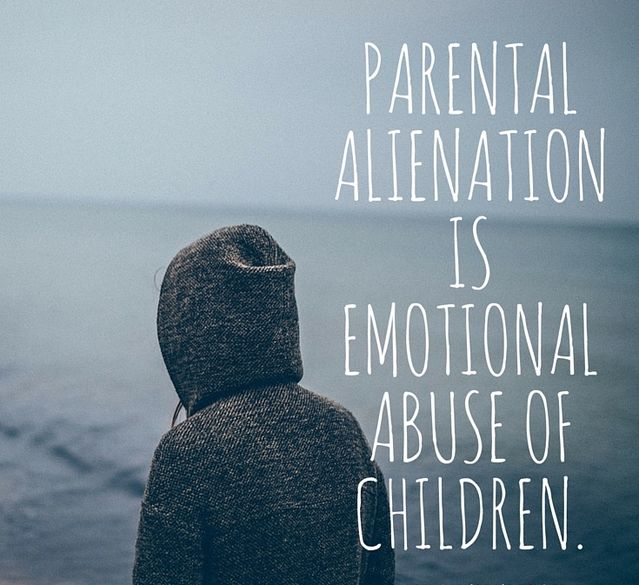
Parental alienation varies in the degree of severity, as seen in the behaviors and attitudes of both the parents and the children. The severity can be of such little consequence as a parent occasionally calling the other parent a derogatory name; or it could be as overwhelming as the parent's campaign of consciously destroying the children's relationship with the other parent. Most children are able to brush off a parent's off hand comment about the other parent that is made in frustration. On the other hand, children may not be able to resist a parent's persistent campaign of hatred and alienation.
Parental Alienation: Symptoms of Alienation:
To prevent the devastating effects of Parental Alienation, you must begin by recognizing the symptoms of Parental Alienation. After reading the list, don't get discouraged when you notice that some of your own behaviors have been alienating. This is normal in even the best of parents. Instead, let the list help sensitize you to how you are behaving and what you are saying to your children.
1. Giving children choices when they have no choice about visits. Allowing the child to decide for themselves to visit, because when the court order says there is no choice sets up the child for conflict. The child will usually blame the non-residential parent for not being able to decide to choose whether or not to visit. The parent is now victimized regardless of what happens; not being able to see his children or if he or she sees them, the children are angry.
2. Telling the child "everything" about the marital relationship or reasons for the divorce is alienating. The parent usually argues that they are "just wanting to be honest" with their children. This practice is destructive and painful for the child. The alienating parent's motive is for the child to think less of the other parent.
3. Refusing to acknowledge that children have property and may want to transport their possessions between residences.
4. Resisting or refusing to cooperate by not allowing the other parent access to school or medical records and schedules of extracurricular activities.
5. A parent blaming the other parent for financial problems, breaking up the family, changes in lifestyle, or having a girlfriend/boyfriend, etc.
6. Refusing to be flexible with the visitation schedule in order to respond to the child's needs. The alienating parent may also schedule the children in so many activities that the other parent is never given the time to visit. Of course, when the targeted parent protests, they are described as not caring and selfish.
7. Assuming that if a parent had been physically abusive with the other parent, it follows that the parent will assault the child. This assumption is not always true.
8. Asking the child to choose one parent over another parent causes the child considerable distress. Typically, they do not want to reject a parent, but instead want to avoid the issue. The child, not the parent, should initiate any suggestion for change of residence.
9. Children will become angry with a parent. This is normal, particularly if the parent disciplines or has to say "no". If for any reason the anger is not allowed to heal, you can suspect parental alienation. Trust your own experience as a parent. Children will forgive and want to be forgiven if given a chance. Be very suspicious when the child calmly says they can not remember any happy times with you or they cannot say anything they like about you.
10. Be suspicious when a parent or stepparent raises the question about changing the child's name or suggests an adoption.
11. When children can not give reasons for being angry towards a parent or their reasons are very vague without any details.
12. A parent having secrets, special signals, a private rendezvous, or words with special meanings are very destructive and reinforce an on-going alienation.
13. When a parent uses a child to spy or covertly gather information for the parent's own use, the child receives a damaging message that demeans the victimized parent.
14. Parents setting up temptations that interfere with the child's visitation.
15. A parent suggesting or reacting with hurt or sadness to their child having a good time with the other parent will cause the child to withdraw and not communicate. They will frequently feel guilty or conflicted not knowing that it's "okay" to have fun with their other parent.
16. The parent asking the child about his or her other parent's personal life causes the child considerable tension and conflict. Children who are not alienated want to be loyal to both parents.
17. When parents physically or psychologically rescue the children when there is no threat to their safety. This practice reinforces in the child's mind the illusion of threat or danger, thereby reinforcing alienation.
18. Making demands on the other parent that is contrary to court orders.
19. Listening in on the children's phone conversation they are having with the other parent.
20. One way to cause your own alienation is making a habit of breaking promises to your children. In time, your ex-spouse will get tired of having to make excuses for you.
Provided by Douglas Darnell, Ph.D.
FOR ORIGINAL ARTICLE & MORE RESOURCES CLICK HERE
Labels: abuse, anger, court orders, demands, divorce, lies, mistrust, parental alienation, separation
Saturday, June 23, 2018
Anger isn't always bad - 5 ways that anger is GOOD!

by Ron Huxley
Experience with anger may leave you with the idea that all anger is bad. Yelling at your children for cooperation doesn't leave you feeling very positively. Watching your children fight when they are angry doesn't give you any warm feelings either. But, anger does have it's purpose in our lives and can teach us a thing or two about how to have healthier, happier relationships.
Here are five ways that anger can be a good thing:
1. Anger protects. When your child is in danger your mind will automatically kick into a “fight or flight” reaction that can result in anger. You don't have time to stop and ponder a course of action when your child is in the middle of the street! Anger short cuts our thinking brain to allow us to act quickly. This is nature's way of protecting your family from harm.
2. Anger signals. The purpose of anger is to destroy problems in our lives, not our relationships. When something needs to dramatically change, anger not only lets you know but it gives you the power to do something about it. For example, if your child's doctor won't listen to your concerns, getting angry can stir things up and get a problem diagnosed and solved.
3. Anger rules. Your child left his toys all over the house again! Tired of yelling at your child to get his cooperation. That only reinforces the annoying behavior. Your anger may be telling you that expectations are too high, the rule is not clear enough, or that you are not following through on consequences consistently. Use the energy of your anger to communicate the rule (again) and then follow it up with consistent, age appropriate discipline.
4. Anger talks. What we say to ourselves affects our emotional state. If we tell ourselves we are bad parents then we may act like bad parents. If we tell ourselves we are doing the best we can under stressful circumstances we will react with less hostility and frustration. Practice listening to that little "anger voice" and challenge some of the misperceptions you hold of yourself and your child. Ask some honest friends to help you be objective in your inner inventory. If what you are saying to yourself is true, use this information to make changes in your parent/child relationship.
5. Anger teaches. Our anger management styles are learned from our own parents. If Mom was a yeller, we may follow her example, even if we vowed never to yell at our kids. Fortunately, if you learned one anger expression style you can learn another. Separate the idea that feeling anger is bad. That is natural and unavoidable but what you do with those hot emotions is completely under your control -- with some practice. Allow yourself permission to find new ways to cope with daily parenting hassles by taking a class or reading a book on anger management.
SOURCE
Labels: anger, control, expression, feelings, healthy, protect, rules, signal, talk, teaching
Thursday, April 19, 2018
Loved? No: Dishonored and Abused

Loved? Dishonored, and Abused
Hey Honey, "express yourself"...
("wife" in this article can also mean "significant other"... such as girlfriend, etc.)
- be sure to tell your wife that the only reason she married you was so she could sit around the house all day and do nothing, even though she was fifteen weeks pregnant at the time and in a high risk category due to a previous miscarriage and on doctor's orders to REST REST REST
- also tell her that the only reason she wrote for the newspaper was so she could provoke, because you were jealous of the fact that she could write what the people want to hear, and you couldn't
- act like you can never have anything by throwing everything you own in the garbage, or out the bedroom window. (I remember looking out our window one day to see stuffed toys that had been torn apart, laying on the lawn for the superintendent of the building to clean up; at first I didn't realize what the mess was until I took a good look, then I was completely stunned... even more-so when I realized they were the stuffed mementos that belonged to my husband!)
- You could even fake walking in your sleep in order to scare your wife -- pretending to attempt climbing out your bedroom window (I should have let him; we were on the third floor).
- leave the room that you're in, acting perfectly normal, then go into the bathroom and pound your fist into your hand when you're in the bathroom alone talking to yourself
- when pounding your fist into your hand be sure to whisper loudly "bam, bam, bam"
- when you're done doing this come out of the bathroom and return to the room you were in; when your wife asks you if all is okay look at her dumbfounded & answer "yes, why wouldn't it be?"
- you could take a butcher knife to your work shirts and shred them, then throw them into the closet so that when your wife is cleaning she will find them and "feel guilty because she must have upset poor little you."
- or you could just tear your shirts apart with your bare hands
- take out your anger by banging your head and your feet onto your vehicle (this was witnessed on more than one occasion by a neighbor)
- when your wife wishes to discuss something respond with yelling and screaming
- don't forget to drool like a wild animal while you're yelling and screaming, a documented trait of an abuser
-add the touch of pounding and kicking the furniture while you respond to discussion (more often than not I was sitting on this furniture)
- if perhaps you might want to respond in a reasonable tone, do so with these words: "I don't know", "I don't remember", or "I don't want to talk about it"
- after you have repeated the above words like they're the only ones in your vocabulary, sit on the sofa with your arms at your side, your shoulders slouched, your chin hanging, your eyes glazed over, and your tongue hanging slightly out of your mouth so that you appear as an "idiot" as defined in the dictionary; this intimidation is used to 'scare' your wife into thinking she's 'really done it this time' therefore she'll back off and leave poor little you alone
- when you're screwing around on your wife (or significant other) be sure to look her straight in the eye and tell her you love her and tell all your friends & family you love her too. Repeatedly.
- when your wife catches you in one of your numerous lies be sure to go ballistic and blame her
- you could also choke her and throw her to the floor by her neck, and just to make sure she learned her lesson you could also go for her throat again a few days later
- and always, always remember, that everything that goes wrong in your life is your wife's fault.
There's even more:
- your ex-wife tells your present wife that you used to start fires in the basement to keep warm after a night of drinking, with her & the baby asleep upstairs... oh, and your ex-wife knew the dents in your car were from your head and your feet
-you stay up half the night on internet porn sites then blame your step-child's boyfriend for the access charges or download history (meanwhile he hadn't even been to our residence at these times, or on our computer at all for that matter).
- the floor under where you were sitting at the computer half the night is all gooey in the morning (I am not kidding...at first I thought it was 'cat barf' but upon further inspection I came to the realization of exactly what it was. A couple of nights I walked out into the living room when he was on the computer to the wee hours of the morning; as soon as he saw me he immediately shut the computer off).
- even after it was proven that you were the only one accessing the porn sites on the net, up half the night doing who knows what to yourself, you still persist in yelling & screaming at the top of your lungs at your wife, that it wasn't you; your own ex-wife will tell the current wife that is your response when you've been caught red-handed (in this case 'one-handed') at something.
Oh, here's the best one of all:
- drink out of a glass that is obviously sitting & soaking at the back of the counter away from everything else and realize the glass has Javex in it, freak out & accuse your wife of trying to poison you, meanwhile the cupboard is full of clean glasses and you always, always get cold water from the filter jug in the fridge; just another thing to "blame your wife for"
- bang holes in the wall with an obvious object then claim to know nothing about it
- take all your friends phone numbers out of the memory system on the phone while in one of your 'feel sorry for me' moods then yell & scream at your wife that you can't have any friends (the only reason my hubby did this was because I liked his 'outside of work' friends & enjoyed visiting them; but with my hubby, I was supposed to bitch & complain about them, not have a good word to say about them, and not want him to associate with them; now you know where I'm coming from with 'mind games & twisted facts'; if you think you're confused just imagine living with this psychopath)
- tell your wife that she is insignificant, her existence is meaningless, and she is a burden, just like you told her your first wife was
- when the curtains that your wife bought from a friend who smokes interfere with her breathing, as she has asthma, and your wife has to sleep in another room, be sure to go apesh*t & accuse her of being pissed off at you because you were on the computer half the night, put your boots on & proceed to leave the house over 'her issues.'
- be sure to obliterate your wife in everyone else's eyes, especially when your own mother tells you that your temper will ruin your life & your wife comes out looking better than you do; you must destroy her image in everyone's eyes because you're afraid of the truth coming out
- you must convince everyone else that your wife is a psycho.
SOUND FAMILIAR?
(NOTE: Women can be just as abusive and crazy-making as men.)
Labels: abuse, anger, blaming, control, gaslighting, porn addiction, projection, psychopath, rage, sociopath, temper
Friday, March 09, 2018
Passive-Aggressive Behavior

Passive-Aggressive Behavior
By the time I was 7 or 8 I was being cool in a passive-aggressive response to her attempts to be close to me I would not let her touch me, I would not show happiness if something good happened or pain if something bad happened. I would just say "it's ok" no matter how much it wasn't. I also "showed" her and my dad by not getting the type of grades as I was capable of getting in school. I have spent much of my life sabotaging myself to get back at them.
Passive-aggressive behavior can take the form of sarcasm, procrastination, chronic lateness, being a party pooper, constantly complaining, being negative, offering opinions and advice that is not asked for, being the martyr, slinging arrows ("whatever have you done to your hair", "gained a little weight haven't we?"), etc. If we don't know how to set boundaries or will go along with anything to avoid conflict, then we often will agree to doing things we don't want to do - and as a result we will not be happy doing them and will get back at the other person somehow, someway because we are angry at them for "making" us do something we don't want to do. A classic scenario is being asked where you want to eat and saying "oh, I don't care, wherever you want to" and then being angry because they take us somewhere we don't like. We think they should be able to read our mind and know we don't want to do whatever. Typically, in relationships, one partner will ask the other to do something and the person who can't say "I don't want to do that" - will agree to do it and then not do it. This will result in nagging and scolding which will cause more anger and passive-aggressive behavior.
The way to stop being passive-aggressive is to start being honest (first of all with ourselves), having boundaries (the more we get in touch with our inner children the more we can have boundaries with the angry ones that are causing us to be passive-aggressive), saying no when we don't want to do something. It is easier said than done. On one level what we are doing is recreating our childhood dynamics of being criticized by our parents.
It is because at our core we feel unworthy and unlovable that we have relationships - romantic, friendship, work - where we will be criticized and given the message that we are bad or wrong. Because we don't Love our self we need to manifest people outside of ourselves that will be our critical parent - then we can resent them, feel victimized, and be passive-aggressive. They are in fact just a reflection of how we treat ourselves internally. The more we can learn to defend ourselves internally from the critical parent voice the more we will find that we don't want critical people in our lives."
SOURCE
Passive Aggressive Personality Disorder was folded into Narcissistic Personality Disorder in the DSM. It is no longer a separate disorder from Narcissism.
Labels: abuse, anger, bad relationship, behavior, dynamics, narcissism, narcissist, passive-aggressive, resist
Tuesday, October 24, 2017
The Victim's Bill of Rights

YOUR BILL OF RIGHTS
You have the right to be you
You have the right to put yourself first
You have the right to be safe
You have the right to love and be loved
You have the right to be treated with respect
You have the right to be human - not perfect
You have the right to be angry and protest if you are treated unfairly and abusively by anyone
You have the right to your own privacy
You have the right to your own opinions, to express them, and be taken seriously
You have the right to earn and control your own money
You have the right to ask questions about anything that affects your life
You have the right to make decisions that affect you
You have the right to grow and change, this includes changing your mind
You have the right to say no
You have the right to make mistakes
You have the right to not be responsible for other adult's problems
You have the right to not be liked by everyone
SOURCE
Labels: anger, bill of rights, opinion, privacy, treatment, victims
Saturday, November 24, 2012
Reactive Attachment Disorder (RAD)

RAD: What Is It?
As a fairly new diagnosis to the DSM-IV manual, Reactive Attachment Disorder (RAD), sometimes known as Attachment Disorder (AD), is frequently misunderstood, and is misdiagnosed as Bipolar Disorder or Attention Deficit Disorder (or even NPD) as often as 70% of the time.
Today, perhaps more so than at any point in history, kids are apt to be separated, ignored, or neglected by their birth parents, shuttled between multiple foster parents and day care workers, or traumatized by physical, sexual, or emotional abuse. Even while physically present, some mothers are yet incapable of providing adequate care and attention for their children.
RAD kids have learned that the world is unsafe, and that the adults around them can’t be trusted to meet their needs. They have developed a protective shell around their emotions, isolating themselves from dependency on adult caregivers. Rather than depending on their parents or other adults to protect them, the protective shell becomes the child’s only means of coping with the world.
Dependent only upon themselves for protection, they come to see anyone who is trying to remove this protective barrier as a threat, not to their emotional well being, but to their very lives. They turn on those who seek to help them the most.
People require attachments with others in order to develop psychologically and emotionally. Attachment is the bond that normally develops between a mother and her child during the first few years of a child’s life. The quality of this bond affects the relationships that a person will have for the rest of his life.
Attachment develops in the early years of life when a mother responds to her baby’s cries by meeting its needs, appropriately feeding, consoling, soothing, and comforting, as well as keeping the infant safe from abuse and harm.
Fundamental to RAD kids is that they haven’t bonded and are unable to trust. They have learned that the adults in their lives are untrustworthy. Trust hasn’t worked for them. Without trust, there cannot be love, and without love they are emotionally underdeveloped. Instead of love, rage has developed within them.
In the first few years of life, at a time even before they have learned to speak, they have learned that the world is a scary place, and that they cannot rely on anyone else to get them through it.
Normal parenting doesn’t work with RAD kids. Neither does traditional therapy, since these therapies are dependent upon the child’s ability to form relationships that require trust, something that is at the root of the problem. Sticker charts and behavioral programs don’t work because the RAD child doesn’t care what you think about his behavior. Natural consequences work better than lectures or charts. Structure is a necessity, but only when combined with nurturing.
While these kids can be healed, they have to want it, and the prognosis is not good. Without healing, these kids grow up unable to form healthy relationships with other human beings. Too often, these kids develop into sociopaths devoid of conscience or concern for anyone other themselves.
Stages of Conscience Development
Indicates stages of normal development. Some children do not move through stages within the time frames described below. Others seem to regress to Shame during adolescence. Attachment disordered children are often stuck in Pleasure/Pain.
Pleasure/Pain
The child does what brings him pleasure and avoids what brings him pain. The child has no inner moral code, and no awareness of other’s feelings or needs. This stage is typical of children under the age of three. Children with attachment disorder are often stuck here.
If I misbehave long enough, people will give up and I can do whatever I want.
You’re not my friend if you don’t take my blame.
Shame
The child feels bad when criticized or punished. The child feels shame. By apologizing, asking forgiveness, distracting behaviors, or a wide range of other coping skills, the child will focus on eradicating the feeling of shame, but not on changing the behavior that led to the feeling.
Sometimes a child will stick to one strategy for making the shame go away, whether it is effective or not. At this point in development, the child is not likely to be focused on the effects of his behavior on others. This stage is typical of children age 3 to 7.
Before the age of 5, children don’t understand the concept of possession. Normal kids may not understand stealing until the age of 9.
Children in this stage want the parent’s approval, but once they are out of your sight that’s not enough to sustain them.
I did something wrong and I want to make the shame go away.
If I think you’re watching, I’ll behave.
Mature Guilt
The child wants to live in a way that brings pleasure to himself and others. When the child hurts others, they see the effects of their behavior on on the other party, feel guilt, attempt to make amends, and change their behavior. The child tries to find another way to meet his needs without hurting others. Under good conditions, this stage is typical of children age 7 to 11.
Essentially honest and able to accept blame.
What would happen if everyone took things?
Basic Environmental Conditions for Emotional Health
A relatively stable, predictable environment in which the child knows how to get their needs met.
An environment in which the child can be stopped from hurting themselves and others.
A sense of being loved as a person, even after misbehaving.
An environment in which punishment or reward is based on the child’s behavior rather than the moods of adults.
Discipline Techniques for Each Stage of Conscience Development
Pleasure/Pain
With infants and toddlers in pleasure/pain who have little awareness of expectations, consequences, or other’s needs, our discipline approaches need to be based on:
Childproof environments to reduce tension.
Prioritize misbehaviors to be acted upon.
Rely on action and distraction rather than requests or orders.
Immediate use of timeouts after misbehavior.
Not recommended for attachment disordered children.
Continuous use of praise and rewards and other positive reinforcements.
Ignore minor misbehaviors when possible.
ShameWith young children who have some, but not enough, awareness of expectations and other’s needs, our discipline approaches need to be based on:
Communication of expectations and needs of others.
Restitution in order to make amends in addition to apologizing.
Develop a sense of empathy through constant discussion of emotional needs of others.
Use of logical and natural consequences to correct misbehaviors rather than
punishments.
Continuous praise for proper decisions made by child.
Using invectives, surprise rewards, and tangible rewards to reinforce specific expected behaviors.
Mature Guilt
Both children and adolescents benefit when the important adults in their lives encourage discussion of:
Usual feelings and typical reactions to other’s behaviors.
The effects of their behaviors on others.
Negotiating problems by looking at options and the consequences that might result.
Parental expectations that the child regulate his own behavior.
Behavioral consequences to actions, yet avoiding the tendency to over-punish.
Praise to continue to reinforce expected behavior.
Rewards are often the inner pleasure the child receives by meeting expectations.
With Older Children and Teens in Pleasure/Pain, Add the Following Recommendations:
An environment with clear, predictable structure in which there are immediate positive and negative consequences for wanted and unwanted behaviors.
A short published list of rules that the child has signed and dated.
The rewards and consequences to behaviors are determined by the adult and the youth.
Caregivers who act rather than react. It may be a waste of time and energy to tell
the child to do something or not to do something if the adult is not prepared to follow up with action.
Adults who will protect themselves by limiting the power the child has over them.
Adults who will find others to support their self-esteem, get away regularly, and not let the child provoke battles in adult relations.
In Addition to Basic Behavior Modification, Effective Approaches for Working With a Child Stuck in Shame Include:
Emphasize restitution to the person harmed by their behavior.
Adults must prepare for the child’s efforts to make them feel guilty for the punishment.
Using descriptive, specific praise frequently.
Deal with the child’s misbehaviors before the adult gets angry.
Disconnect how the adult feels from how the child feels. The child may be unhappy, but the adult doesn’t have to be.
Talk about feelings only when the level of conflict is low; otherwise focus on behavior.
Labels: anger, children, fear, reactive attachment disorder, shame, unsafe