Sanctuary for the Abused
Friday, March 11, 2022
BLAMING THE VICTIM

by Kathy Krajco
The first thing the victims of narcissists need to know is that they are not to blame.
Not one bit.
In other words, he didn't get mad because dinner was was late. She didn't blow up because you are "too this" or "too that." You didn't "ask for it" by speaking up and saying that you deserved some attention and respect.
The narcissist attacked you just because you are there, period. Don't you have a right to be there?
Let's get real. Narcissists think they have a right to punish you just for being the way you are. Think, don't you have the right to be the way you are? Do you have to be some character in the narcissist's fiction that conforms to his or her specifications?
Does that make any sense? That's as hateful as the crime against humanity of attacking people just for being a certain KIND or nationality.
The narcissist attacks because he or she is a predator, period. Predators attack any vulnerable prey that crosses their sights, period. Therefore, the prey is NEVER the one bit to blame.
It would make as much sense to blame a sheep for getting attacked by a wolf. So what if the wolf says, "I attacked her because she is an obnoxious sheep!" What idiot falls for that line? Yet narcissist sympathizers are doing precisely this and are therefore being irrational.
The narcissist attacked just to do it, and he or she attacks any prey they have some unfair advantage over. They never pick a fair fight. They are bullies, period.
They do it to vaunt themselves on others. It gives them a high. Like as in a high from a hit on drug.
Does this mean you are a saint? Of course not. Does it mean you have never said or done anything in an argument with a narcissist that you should regret? Of course not.
You are like a bank teller who gets shot in a holdup. You are totally innocent of getting shot. Don't let the sloppy thinkers like narcissists and their sympathizers convince you that you are to blame because you were rude, or because you were embezzling, or because you are a drug addict. All that is irrelevant TO HIM SHOOTING YOU.
Of course you should change those things about yourself, but the "intellectual" clowns who make out your character flaws as justifying abuse of you are complete idiots unable to see the relationship between cause and effect.
Being late with dinner is no excuse for the narcissist to attack you. Being "too this" or "too that" for his taste is no excuse for the narcissist to attack you. Demanding decent and respectful treatment is no excuse for the narcissist to attack you.
I don't care how "threatened" any of that makes the poor, twisted narcissist feel. His perverted feelings are HIS problem, not yours. The Narcissist will never run out of twisted excuses to irrationalize his attacks on you, so get off the guilt trip. His perversity is not YOUR vice.
Narcissists attack you just to do it. You are therefore 100% innocent of your victimization. Blow off this absurd "It takes two to Tango" crap.
Doubtless, you will discover that there are certain things you should stop doing. Good. Now you wise up and stop being manipulated in ways that play right into the narcissist's hands. Now you cannot be victimized.
THIS is how you stop being a victim.
But foggy-headed idiots (like those espousing the ridiculous co-dependence theory) try to claim that you stop being a victim by pretending that you have never been made one. That's crazy.
That is magical thinking, like the narcissist's. You HAVE been made a victim. That's a FACT, like it or not. And "victim" is not a dirty word. Though being a victim is nothing to aspire to and is something to avoid, being a victim is NOT a sin. It is nothing to be ashamed of. To the contrary, the most innocent are the most unsuspecting and most easily victimized ... until they have learned the hard way not to assume that other people are good. And these foggy-headed idiots who blame the victim should be able to see that. (Maybe if they stopped thinking in buzzword-laden slogans, like robots, they would.)
You stop being a victim by wising up so that you are never again victimized. It requires nothing beyond COMMON SENSE to realize that.
In some cases, the narcissist has stolen something of value from you, like your job or reputation - something you have every right to get back from the damned thief. You stop being a victim when you win justice and get it back, period.
SOURCE
Labels: attack, blame, blame shifting, blame the victim, blamers, codependence, codependency, excuses, manipulation, narcissist, psychopath, smear campaign, sociopath, trauma, victim blaming


Sunday, August 05, 2018
Are You Being Emotionally Abused?

The married couple worked together as partners in their store, but their partnership definitely was not equal. He called her “stupid” in front of employees, blew up when she made mistakes & kept her in the dark about their finances. He also pushed her around a couple of times.
But what hurt the woman most were her husband’s savage & belittling words. She became depressed, then frightened by what would happen if her husband ever left her. After all, he controlled the money.
There were no marks on her body, says Richard Tolman, an associate professor of social work at the University of Michigan who has worked with perpetrators of domestic violence & their partners. But she was a victim of domestic violence nonetheless.
Every year, an estimated two million to four million women in the United States are victims of domestic violence, a public-health problem that is difficult to track due to the shame & stigma still attached to it. Psychological abuse is even more difficult to quantify. No one goes to the emergency room after being humiliated. It’s difficult to file a complaint with law-enforcement agencies charging that your partner controls the family finances or isolates you from your friends. Further, the victims of psychological abuse may not even realize they are being abused. They may feel bad about themselves or their relationship, says Tolman, but they may not connect that feeling with their partner’s behavior.
Psychological abuse, often called emotional or verbal abuse, is the belittling, humiliation, intimidation or threatening of a partner. Isolating a partner from friends & family & controlling finances are abusive behaviors too, according to domestic-violence experts such as RosaLinda Garcia Gusman, a social worker with the Texas Council on Family Violence. While domestic violence, including psychological abuse, occurs to men & women, women are most often the victims, according to a recent study conducted by the National Institute of Justice.
“You can tell it’s emotional abuse when you start feeling bad about yourself & you’re afraid to say or do anything because it could be the wrong thing,” says Garcia Gusman.Experts such as Garcia Gusman say that emotional abuse & battery share the same root cause: One person desires power & control over another. Often, psychological abuse leads to physical violence or sexual abuse.
A husband or boyfriend who is emotionally abusive often plays games with the victim’s mind — calling her names or telling her she’s a bad mother or a bad person, says Garcia Gusman. He may tell her how to dress, how to wear her hair, how to clean their house & may decide whether she can go to the store. Typically, he criticizes her, degrades her & humiliates her.
“With all these kinds of things, after a period of time when you hear them enough, you come to believe them, so it affects your self esteem,” says Garcia Gusman.Often the abuser monopolizes his partner by making himself the center of her existence. He isolates his partner by being so rude in front of her friends or family that they don’t want to visit, says Tolman.
Withholding affection, approval or companionship is a form of psychological abuse, too, Tolman says. A 1990 study published in the Journal of Family Violence found that 72% of victims reported that emotional abuse, especially ridicule, was harder to bear than physical abuse. “There’s a sense that it gets you where you live when someone who loves you says terrible things & keeps you from your friends & people you care about,” says Tolman.
There’s also a sense of being kept off balance. After all, what is emotional abuse vs. simply a heated argument?
An abusive person uses hurtful words such as “You’re stupid” or “You’re no good” & repeats them again & again, says Anne Ganley, a psychologist in Seattle, Wash., who has worked with abusers & their victims. Typically, an abuser targets areas of a woman’s life that he knows are particularly sensitive, such as her parenting skills, her appearance or her sexual performance, says Ganley.
A person who is verbally abusive, but has not caused the victim physical harm, can still become violent. Ganley suggests that a woman ask herself if her partner has ever used physical force against someone else or property. Has he gotten into fistfights, smashed things or thrown a chair against the wall? These are signs, she says, that he has the potential to become physically or sexually abusive.
Being verbally abused is exhausting & emotionally draining for the victim.
Garcia Gusman calls emotional abuse “in-your-soul abuse” because the harm inflicted isn’t outwardly apparent, like bruises or broken bones. The damage goes much deeper.
A 1999 study published in the journal Violence & Victims showed that psychological abuse, particularly ignoring & ridiculing victims, contributed to depression & low self-esteem. Psychological abuse has also been linked to anxiety, panic attacks & suicidal thoughts. When the abuser has also used physical force, every verbal assault can trigger a response in the victim’s body & mind as if physical danger were imminent, Ganley says.
In relationships marred by both physical & psychological abuse, says Ganley, “Every time the verbal abuse happens, it’s really a double whammy. Even if the physical abuse doesn’t happen that time, it’s powerful. … A dirty look or a particular comment not only has the cut of the words, but it also carries with it the history of being shoved down the stairs.”Each time the abuse begins, the victim’s body gears up as if to fight or to flee, which can result in long-term health consequences including high blood pressure, asthma, cardiac problems, auto-immune & other illnesses triggered by stress (including PTSD), Ganley says. Victims may develop a sense of helplessness & lose the ability to protect themselves. “They may be irritable, hostile & angry a lot of the time under this threat,” Ganley says.
There is hope, however. Once a woman seeks treatment, she may begin to realize the problems with her partner are not her fault, says Garcia Gusman. Individual therapy or support groups with other victims can help a woman increase her self-esteem & her ability to recognize potentially abusive behavior.
“As she spends more time in a support group talking to others or working with a counselor,” Garcia Gusman says, “her mental health has a turn around.”
SOURCE
Labels: attack, depression, emotional abuse, pathological, ptsd, trauma, trauma bonding, verbal abuse, victims
Tuesday, January 09, 2018
Smear Campaigns - Part III in a Series

ImageShack.us
Carefully tending to his or her image as an ''innocent and upstanding' whistleblower who is 'bravely speaking up against evil' is a necessary part of the smear campaigner’s plan. Whether smear campaigners claim to be your victim or just a conscientious bystander (or both), they know that being seen as “the good one” fools the most people possible.
The smear campaigner must work to make people believe them. They will put on a good face, agree with their listeners and feign integrity and kindness.
This is a righteous and brave warrior of truth – not someone who is having a tantrum because you got in their way when they were doing something wrong. This is not a cowardly tyrant who is seething with revenge — certainly not. This is just a decent person who is bravely trying to help others by spreading the word to be careful and avoid a monster of an abuser – you!
Smear campaigners may claim that they don’t want to say anything bad about anyone, and that it’s “not like them”, but they just have to say something about you in order help good people snuff out your supposed evil. They must break with their usual humble moral humility in order to step up and save the decent people of the world by finally exposing the truth about you that nobody has ever known!
Of course, it’s not the truth; it’s a smear campaign. But most everybody wants to support a person who has been hurt by someone abusive and will rush to their defense, so that’s the role the smear campaigner often plays — the good and innocent victim-hero. Smear campaigners play on the sympathies of others, using people’s empathy to gain social leverage against their victims.
Most smear campaigners are highly narcissistic, and narcissists cannot ever be expected to apologize, come clean or admit any wrongdoing, even if caught red-handed in their lies. They truly believe, in their own way, that a smear campaign is the right thing to do to you, because you have opposed them, and you should have known better than to do such an unthinkable thing, so it’s simply all your fault they’re smearing you anyhow. They’re teaching you a lesson — agree with whatever they want, or else. You “asked for it”, and they’re teaching you better.
Smear campaigners are like spoiled playground bullies who kick another child when the teacher’s back is turned, just because the child doesn’t give them whatever they want. They cannot be made to empathize, and they are well-practiced in their abusive games, because they have been playing them all their lives. Next we’ll be discussing a list of ways to counter smear campaigns.
Labels: attack, bullies, character assassination, evil, false, harassment, libel, narcissist, pychopath, slander, smear campaign
Monday, October 23, 2017
Boundary Violations
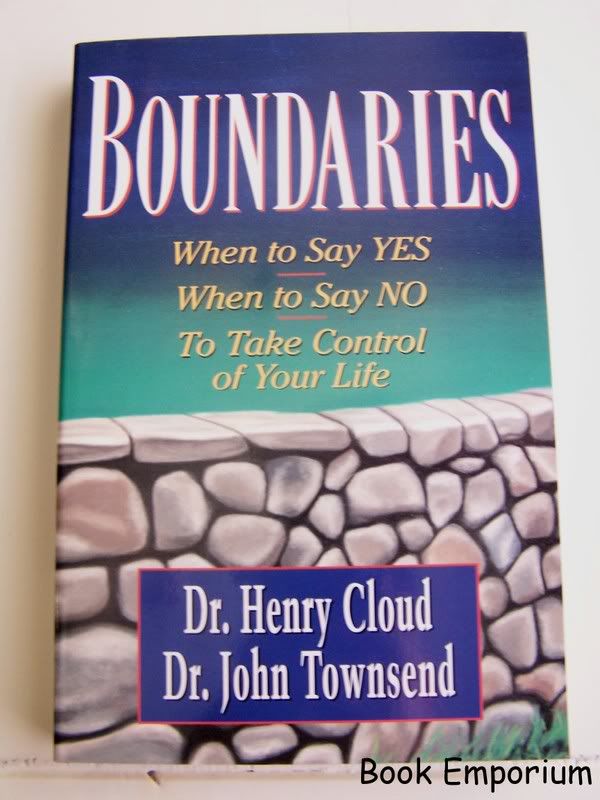
by: David Mandel
When it comes to domestic violence perpetrators everyone wants to know: how dangerous is he? Or more specifically, what kind of violence is he likely to do in the future? Domestic violence survivors and their children can think and worry about this on a daily basis as they attempt to avoid or minimize the impact of the abusers’ next attack. In the judicial system, agencies such as adult probation look for information which will help them allocate supervision resources towards the most serious and dangerous offenders. Child protection service agencies want to understand whether a domestic violence abuser can be successfully prevented from harming a victim and her children through restraining and protective orders.
While researchers strive to isolate profile factors of abusers who will kill or do serious damage, anecdotal information from survivors of domestic violence continues to be the best common sense source of information about dangerousness. For instance, men who threaten to kill their partners, who have physically assaulted them when they were pregnant or have forced their partners to engage in unwanted sexual behavior are perceived as some of the most dangerous. Men who stalk their victims, willfully violate court orders and assault them in front of others also fall into this category.
What do these men have in common? Is there an aspect or pattern in their behavior that would be useful in assessing the behavior and dangerousness of all abusers? All these behaviors share a distinct quality which can be described as a "boundary violation." A "boundary violation" is an action which by its very nature penetrates the physical, emotional, and spiritual boundaries of another person. All types of violence share this characteristic to some degree. By examining the extent, severity and the frequency of the "boundary violations" in the behavior of an abuser, we can begin to see a pattern emerge that may be useful in assessing for future dangerousness as well as the path towards successful intervention approaches with an abuser.
First of all, evaluating an abusive man based on his history of violating his victims boundaries orients the assessment process towards an essential dynamic in domestic violence cases. Webster's Collegiate Dictionary uses the words, "break", "disregard", "interrupt" "disturb", "desecrate" and "rape" in association with the words violation or violate. All these words accurately describe the range of experience of battered women and their children at the hands of their abuser. By engaging in a pattern of abuse, a batterer "breaks, interrupts and disturbs" his victim's control over her own time, energy, physical space and even her thoughts. When we understand domestic violence as a boundary violation, we refocus the community dialogue on the serious impact of the behavior on the victim and her children. Our understanding of the abuser changes from seeing him as someone with a "temper problem" or someone who "lost control" to someone who is breaking the trust of his loved ones. And we are implicitly acknowledging the right and need for women and their children to have their own physical, mental, emotional and spiritual boundaries.
Second, by knowing how far a particular abuser has gone in his "boundary violations" we can begin to see his dangerousness more clearly. Was he physically violent to his partner when she was pregnant? If he was, he has demonstrated his willingness and ability to strike out against a very vulnerable form of life. Has he stalked his partner against her wishes and in disregard for court orders against him? If he has, he has demonstrated his unwillingness to respond to either his victim’s request for physical space or legal and social injunctions against his invasion of her space. Has he been violent to his partner in front of others including children, friends, family or in public? If the answer is yes, then he has displayed a willingness to humiliate and shame his partner in addition to assaulting her. Has he been sexually assaulting toward his partner? If the answer is yes, then has demonstrated his willingness to override and ignore her most basic and fundamental right: to control her own body. The questions can continue: Has he broken into her house? Has he spied on her? and so on.
Three useful perspectives emerge from examining the extent, severity and frequency of the boundary violations.
First, a profile develops of the offender centered on the most crucial aspects of his behavior. What social, ethical and moral norms is the abuser willing to violate in order to get his own way? What requests from the victim, her children and legal and social authorities is he willing to disregard in order to get what he wants? The more an abuser indicates his willingness to "break, interrupt, desecrate, and disturb" the normal human needs of his victim and accepted legal and social boundaries, the more dangerous he is.
Second, a picture forms of the abuser's level of disconnection from himself and others. To become abusive, a man must forget about everything except his goal of control. Focusing on revenge or proving oneself right takes all precedent over the impact of his behavior on his children or his partner's feelings for him. He disconnects from his other values, and he disconnects from the real long-term impact of his behavior. The more time a man spends disconnected from himself and others, the more dangerous he is. The greater the degree of disconnection the more dangerous he is.
Third, if you analyze the boundaries an abuser is willing to cross, you may also begin to see which boundaries he respects and won't cross. We know that many abusers, when they become aware of the impact of their behavior on their children, begin to make an effort to change. For instance, a study showed that a number of men who had been physically violent before their partner became pregnant stopped their physical violence during the pregnancy. This kind of information can help the court, social service workers and community agencies begin to develop individual and community strategies designed to leverage these pre-existing patterns.
A battered women intuitively understand many of these things. Her fear level can quickly rise when her partner becomes quiet. His disconnection from her and the family may be a precursor of a violent incident. The same may be true for a sarcastic or critical comment. A outside observer may fail to understand how a small, cutting comment telegraphs so much about his willingness to violate her emotional space. Battered women are constantly trying to discover the boundary the abuser will not cross to hurt her or her children. For instance, a victim might strategize "Let me invite our friends over. He's never violent when other people are around," or "I need to call the police because he always leaves me alone for a few months after the police get involved."
Professionals working with domestic violence may benefit from examining the patterns of abusers from the "boundary violations" perspective. This method of organizing our thinking about abusers can enhance our efforts to develop the most effective assessment and intervention strategies in our work to diminish and ultimately stop domestic violence in our society.
Labels: abusers, attack, boundaries, disrespect, harm, lies, trauma, victims, violation, violence